Jeremy Thorpe
Three rules – marry, don’t pay blackmail, and be kind to dogs
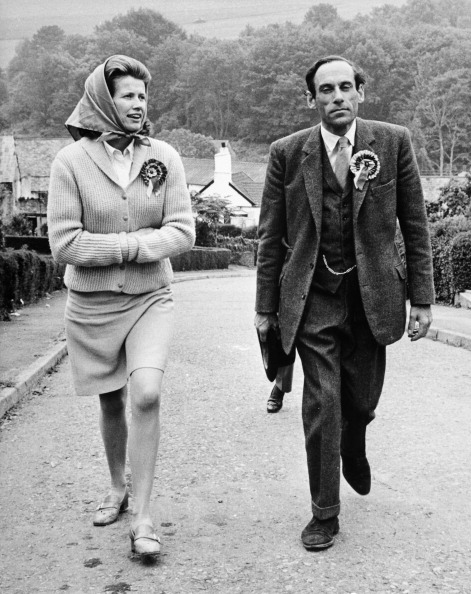


Jeremy Thorpe, leader of the tiny UK Liberal party from 1967-76, followed the first rule, twice. His first marriage of convenience in 1968 quashed rumours of rent boys, and his wife’s death in a car crash, ten days after the 1970 general election, sealed the sympathy vote. His second wife, previously married to the Queen’s cousin with a stately home near Ripon, helped the 1973 Liberal bye election victory there. In the 1974 general election the Liberals gained 14 MPs in a hung parliament, and the Prime Minister offered Thorpe a cabinet post. He turned it down. By then he had neglected rule two.
A blackmailing former lover, Norman Scott, had kept making demands, so Thorpe mused that it would be good if he was bumped off. We will never know if he was serious, but a gunman did meet up with Scott on Bodmin moor, and shots were fired. If the bullets had killed Scott, that might have been the end of the matter; the plan was to drop the friendless troublemaker down an old mineshaft. But after the assassin killed Scott’s dog Rinka, the gun had jammed and Scott got away.
Oh dear! The British may forgive a sex scandal, but killing an innocent dog? At his trial for conspiracy to murder, a witness claimed that Thorpe had said: “We’ve got to get rid of [Scott]. It is no worse than shooting a sick dog”. To everyone’ surprise he was acquitted, but at the subsequent election a comedian stood against him for The Dog Lovers Party, and he lost to his Conservative opponent. He lived another 35 years, but he’d broken the third rule and there was no way back.
Jim Thornton
See this also. I got Thorpe as a 2014 duet. For the new AOdeadpool on Facebook click here.
Laurie Lee walk
Slad valley
The “young apologist” brought in to replace the true believing vicar in Cider with Rosie (p222) was my grandfather, Cyril Hodson. My mother Helen was too young to remember much of Laurie Lee, but his redoubtable mother, Mrs Lee, made an impression. So when a route was marked out in the Slad valley to celebrate the author’s centenary (click here) her three sons walked it.


Ignore the marker at Bulls Cross car park, walk 50 yards north on the B470, and turn right down a wooded track to the dam in the valley. A hard pull up the other side takes you into the isolated Dillay Brook valley. Some signs have been vandalised – someone dislikes tourists – but who cares.



It’s a perfect walk.



But the poems set into each marker post aren’t a patch on his two great “coming-of-age” books CWR and As I Walked out One Midsummer Morning. Here’s one.
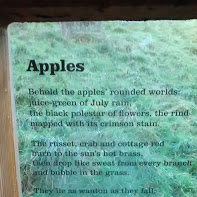
Behold the apples’ rounded worlds:
juice-green of July rain,
the black polestar of flowers, the rind
mapped with its crimson stain.
The russet, crab and cottage red
burn to the sun’s hot brass,
then drop like sweat from every branch
and bubble in the grass.
They lie as wanton as they fall,
and where they fall and break,
the stallion clamps his crunching jaws,
the starling stabs his beak.
In each plump gourd the cidery bite
of boys’ teeth tears the skin;
the waltzing wasp consumes his share,
the bent worm enters in.
I, with as easy hunger, take
entire my season’s dole;
welcome the ripe, the sweet, the sour,
the hollow and the whole.
So much is wrong; the forced rhyme of “dole”, “the cidery bite/of boys’ teeth” – who bites into a fermenting apple? Was repetition of “fall” unavoidable? Does he really eat hollowed out and sour apples?
In 1936 the young apologist climbed the steeple at nearby Uplands church to place the weather vane on top (click here), and 78 years later we toasted him in The Woolpack’s excellent cider.

Jim Thornton
The risks of postmaturity
And labour induction at term

Labour induction generates strong feelings. Parents who lose a normal baby near term (37-42 weeks) understandably wish someone had induced birth earlier. Natural childbirth enthusiasts counter that induction increases pain, Caesarean sections and medicalises childbirth. Both have a point, although the supposed effect on Caesareans may be overstated (click here).
Today I want to consider another aspect of the debate, the way in which the risk of remaining undelivered varies with gestational age.
Many critics of induction use graphs of perinatal mortality by week (e.g. solid dots above) where the risk only rises after 42 weeks, to imply that induction at say 40 or 41 weeks is illogical because the risk is not raised at these gestations.
But such graphs mislead. They express mortality as deaths per 1000 total births. i.e. the denominator for later deaths includes babies who are already safely delivered. This makes no sense if we are concerned about stillbirth because a delivered baby cannot be stillborn. The correct denominator should be babies still undelivered at the particular gestational age. As this proportion falls after 37 weeks so the risk of stillbirth per undelivered baby starts to rise.
But plotting only stillbirth risk is also misleading because babies may also die after birth from complications of labour or prematurity; delivery at 24 weeks would prevent all stillbirths but would hardly be sensible. The data we need are the rates of all deaths per 1000 undelivered babies by gestational age at delivery – the perinatal risk index (open dots above).
The idea takes a bit of getting your head around. The person who explained it to me was Gordon Smith from Cambridge. He has written about it many times. Click here for his paper, from which I nicked the graph. Or here if you have access problems Gordon Smith perinatal risk index paper.
The fact that 38 weeks is the safest gestation to be born doesn’t automatically mean we should induce everyone then; wrong dates might cause prematurity related problems. But 42 weeks is too late.
For accurately dated pregnancies induction at 39 or 40 weeks would prevent many deaths. If it didn’t increase Caesareans, what’s not to like?
Jim Thornton
Where’s my open access amniotomy trial?
Disappearing OA journals
In the early 1990s a group of obstetricians in six UK hospitals (The UK Amniotomy Group) conducted a randomised trial comparing routine immediate amniotomy, with selective and delayed amniotomy for women in first labour. Policies about amniotomy were hotly debated at the time. Partly funded by a grant from the European Union, our trial remains the world’s largest.
In 1994 it fell to me, as corresponding author, to choose where to submit it. Young and keen, and wanting to be up to date, I sent it to a new online open access journal The Online Journal of Current Clinical Trials and it was accepted and published. Click here for the PubMed abstract, but don’t try finding the full article; the journal folded in 1996 and our paper has vanished without trace.
Fortunately, I had also been able to persuade the British Journal of Obstetrics and Gynaecology (BJOG), a conventional subscription journal, to publish a shortened version in parallel (click here), now the only one available. I’ve learnt my lesson. Beware online only open access journals; they may melt away.
And the effect of routine amniotomy? It shortens labour by about an hour on average, but doesn’t alter any substantive adverse outcomes one way or the other. Obstetricians and midwives have sensibly stopped arguing about it, and follow parents’ wishes.
Remember “free” is not always best. Sometimes it’s better to pay.
Jim Thornton
Pollitici Meliora
By Frank Thompson
The author of To Iruska (click here) was much more than one of Iris Murdoch’s early boyfriends. Scholar, soldier and poet, his heroic death made him one of the most famous casualties of the Second World War, inspiring at least three books, one by his brother, the historian E.P Thompson, and most recently Peter Conradi’s A Very English Hero: The Making of Frank Thompson (2012) . A kindergarten, railway station and village are named after him in Bulgaria, but cold war politics and his supposed communist sympathies scuppered any ideas for a posthumous award from his own country.


On VJ day in 1945 The Times printed this poem, and on the 5o-year anniversary, the actor Edward Fox read it on television (click here; 4 mins 20 secs).
Polliciti Meliora*
As one who, gazing at a vista
Of beauty, sees the clouds close in,
And turns his back in sorrow, hearing
The thunderclouds begin.
So we, whose life was all before us,
Our hearts with sunlight filled,
Left in the hills our books and flowers,
Descended, and were killed.
Write on the stones no words of sadness –
Only the gladness due,
That we, who asked the most of living,
Knew how to give it too.
Frank Thompson
*Latin. “Having promised better things”
To Irushka
By Frank Thompson, Iris Murdoch’s first love


In 1939 Iris Murdoch, the 20-year-old future novelist, met fellow student and poet, Frank Thompson, in Oxford. It was first love for both, albeit chaste; they were both virgins when he was called up later the same year. They corresponded frequently, but Iris soon embarked on a series of affairs, and in January 1943 she wrote:
“I should tell you that I’ve parted company with my virginity. This I regard as in every way a good thing. I feel calmer and freer – relieved from something that was obsessing me, […] There have been two men. I don’t think I love either of them – but I like them & I know that no damage has been done. I wonder how you react to this. Don’t be angry – deep down in your heart. (I know you are far too emancipated to be angry on the surface.) I am not going wild. In spite of a certain amount of wild talk I still live my life with deliberation.”
By then there had already been more than two men. Later in the same letter she encouraged Frank to tell her about his sexual adventures.
“As a matter of interest how have you fared with women in the East? I don’t mean from the grand passion point of view, but just from the sex experience point of view”.
High-minded Frank was still in love. He wrote a long letter back:
“I could have no cause for anger. Nor can I, since I am not conventional after the modern fashion, be unreservedly glad without due reflection.”
He warned her:
“I know of course that your men are not ordinary men but parfit gentle knights. But it will take years of sorrow to realise how violently misogynistic most men are au fond. […] I am coming to the conclusion that it is better to abstain altogether until one falls head over heels in love” [… but] I remember thinking often that a good love affair would do you the devil of a lot of good.”
And worried that he might have offended her:
“On balance, it is obviously a subject for joy. If I’ve said anything here that is clumsy or stupid forgive me. I’m afraid there is no finesse about me Irushka. […] Do write me more long letters like your last. I talk a lot of baloney when I answer, but maybe I understand more than I let on.”
Around this time, winter 1943, one of Iris’s Treasury bosses found her crying on a London bus during the blackout and asked if he could help. “No thank you. I’m quite all right. It’s just this love business.”
Iris went on to have dozens more affairs, but never saw Frank again. He was parachuted into the Balkans, captured, and somewhere between 7 and 10 June 1944, aged 24, executed by firing squad. Here’s a poem he wrote for Iris that year in Oxford.
To Irushka at the Coming of War
If you should hear my name among those killed
Say you have lost a friend, half man, half boy
Who, if the years had spared him, might have built within
Courage, strength and harmony.
Uncouth and garrulous, with tangled mind
Seething with warm ideas of truth and light,
His help was worthless. Yet had fate been kind,
He might have learned to steel himself and fight.
He thought he loved you. By what right could he
Claim such high praise, who only felt his frame
Riddled with burning lead, and failed to see
His own false pride behind the barrel’s flame?
Say you have lost a friend, and then forget.
Stronger and truer ones are with you yet.
Frank Thompson
Source – Iris Murdoch; A Life by Peter Conradi. Harper Collins. London. 2001.
Nottinghamshire oil well
Whip Ridding Farm
An exploratory well was drilled here in January 2010 by Egdon Resources plc. Click here. It is a mile or so west of Kirklington well (click here) and well hidden.

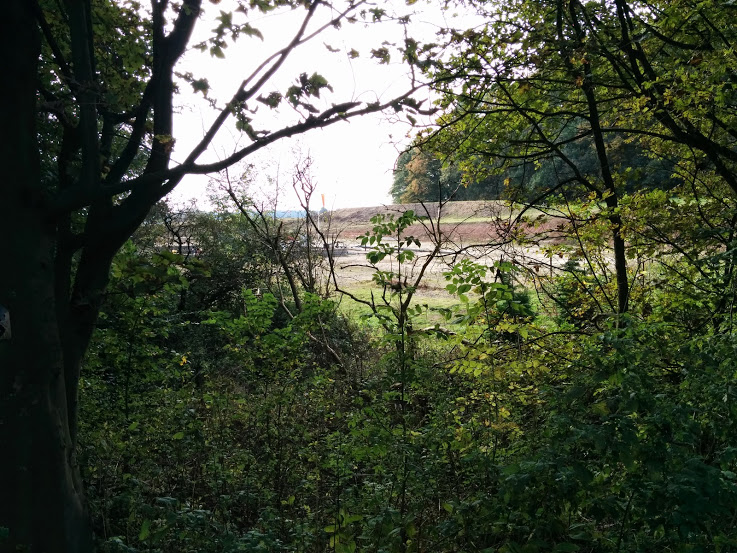

But walk through Redgate Wood from the nearby Dukes Wood oil well museum, and brave the “no-entry” signs protecting the pheasants.



It doesn’t seem to be producing. Maybe they’re waiting for the price to rise.
Jim Thornton
Breast feeding after frenotomy
Doesn’t always improve. May get worse.
No randomised trials of frenotomy to treat tongue tie (TT) (click here) report breast feeding outcomes beyond a week, and most are limited to 48 hours. Nevertheless enthusiasts often claim the immediate benefit is so obvious that trials with a “no frenotomy” arm are unethical.
Tongue-tie Babies Support (click here) advocate frenotomy, they call it revision, for a long list of problems, and link their 21,000+ members to surgeons such as Bobby Gaheri (click here) and Larry Kotlow (click here). For an example of their tone, here is the latter, writing on the group home page:
“The facts are quite simple. Revise as soon as you know there are or are potentially problems. No operating room, no general anesthesia, no waiting til older.”
However, the members questions accidentally reveal the poor results that many mother/baby dyads experience. Here are just a few quotes – all from different women.
“We had it clipped around 3 weeks but still no latch, even with a nipple shield nothing. I pumped for a while but now we are on formula.”
“Baby boy (two weeks old) is 8 days post revision and I’m feeling extremely overwhelmed/ discouraged. Baby fights at the breast during latching, does not transfer milk well (I’m having to pump and supplement after nursing), refuses the left breast 9 times out of 10, and hasn’t pooped in over 48 hours. Wants to suck but refuses to comfort nurse/cluster feed so I’ve had to introduce a pacifier. I’ve been working closely with my midwife and have seen/consulted with two LC’s [lactation consultants].”
“My 2 month old had a lip tie and posterior tongue tie revised about a week and a half ago. Her sucking hasn’t really improved, and she still struggles with reflux as I too struggle with pain during nursing still. I am doing her stretches every few hours like suggested.”
“We’re 10 days post PTT [posterior tongue tie] and ULT [upper lip tie] revision. We had two days of slight improvement, two days of bliss and now he seems to be back to his old self but worse in some ways (my pain has really increased and his gas has increased, though he’s spitting up less).”
“My little girl (4 months) had a revision of both tongue and lip almost 2 weeks ago. It was done w/ a laser and only seemed to hurt for a day or so. However, since the revision she has refused to nurse. I’m so frustrated. Hard as it was to get her to nurse well before, it was still way easier than this!”
“Two laser tongue tie revisions and a lip tie revision, CST [cranio-sacral therapy], chiro, lactation consulting, suck therapy, lots of milk supplements and my supply is dwindling more everyday :// This is so very frustrating!!”
“Just wondering if anyone who’s had their babe revised has had a period where their latch has gone waaaay downhill with constant pulling on and off the breast, almost like refusal? My four month old is 7 weeks post revision (her third) […]”
“My six month old got his ULT clipped last Tuesday, I weighed him tonight and he has lost weight since the last time. Is this typical?”
Some mothers plead for good news stories having been overwhelmed with bad ones from outside the support group.
“[name redacted] can you share your experience please? I need to hear some positive ones after revision […]” “Yes [name redacted] could you share , I think it will help … I keep hearing horror stories”
And here is a story from a bottle feeding mother.
“10 week old had ult [upper lip tie] and ptt [posterior tongue tie] revised last week. I see better upper lip latch on bottle (we are ff [formula feeding]), but leakage from bottom of mouth (before revision we saw leakage from sides). Still hear clicking sometimes. Overall, seems like slight improvement but not much. Typical? Takes time? Or just means ties weren’t really his problem (he also has high palate)?” The same mother later on writes; “Also, LO [little one] sleeping is now all messed up? He no longer sleeps for long stretches at night? Up every 2-3 hrs?and fussy to put to bed. Normal? Didn’t use to be like this pre-revision. Also, will no longer take a Paci now? Starting to second think the revision.”
This one website has hundreds, maybe thousands, of similar anecdotes, albeit mixed in with success stories. The administrators usually blame inadequate division or aftercare, and relatively few mothers blame the surgery; it’s difficult to accept that you may have cut your baby unnecessarily.
But frenotomy does not always work. People who care about breast feeding should be calling for better trials rather than advocating yet more uncontrolled surgery.
Jim Thornton
Illicit sex
Come On Up and Rhetorical Questions by Hugo Williams
In 1999 Williams published a slim volume, Billy’s Rain, about an affair. It won the TS Eliot Prize and sold well. Rhetorical Questions is not just intimate – “the blank expression comes/and you set off alone/down the hall of collapsing columns”, coo er! – but achieves much its effect through that marvellous trick of implying the opposite of what he means.
Come On Up, a later poem (Dear Room 2006), goes first for obvious reasons.
The 72 year old poet is not well. He has renal failure and his family have created a Facebook page (click here) to help him find a donor.
Come On Up
I thought about you as crudely as possible,
till my hand reached for the phone
and I heard you laughing
on the other end of the line.
I’ll never forget your rejection of my plan
to see a film at the weekend
“I can’t think that far ahead,” you explained.
“What are you doing right now?”
I wasn’t doing anything of course.
I remember your voice on the entryphone:
“Come on up Sunny Jim!”
I took the stairs two at a time.
Rhetorical Questions
How do you think I feel
when you make me talk to you
and won’t let me stop
till the words turn into a moan?
Do you think I mind
when you put your hand over my mouth
and tell me not to move
so you can “hear” it happening?
And how do you think I like it
when you tell me what to do
and your mouth opens
and you look straight through me?
Do you think I mind
when the blank expression comes
and you set off alone
down the hall of collapsing columns?
I Want You
Bob Dylan
Ali (UB40) Campbell’s fine cover (click here) of Christopher Ricks’ “favourite of all Dylan songs” (click here) inspired me look up others.
Here’s three good ones; Bruce Springsteen (click here), James Blunt (click here) and Sophie B Hawkins from the 1992 30th anniversary tribute concert (click here) which, for some reason, didn’t make it onto the record. And here is the original from Blonde on Blonde.
The guilty undertaker sighs
The lonesome organ grinder cries
The silver saxophones say I should refuse you
The cracked bells and washed-out horns
Blow into my face with scorn
But it’s not that way
I wasn’t born to lose you
I want you, I want you
I want you so bad
Honey, I want you.
The drunken politician leaps
Upon the street where mothers weep
And the saviors who are fast asleep
They wait for you
And I wait for them to interrupt
Me drinkin’ from my broken cup
And ask for me
Open up the gate for you
I want you, I want you
Yes, I want you so bad
Honey, I want you.
Now all my fathers they’ve gone down
True love they’ve been without it
But all their daughters put me down
‘Cause I don’t think about it.
Well, I return to the Queen of Spades
And talk with my chambermaid
She knows that I’m not afraid
To look at her
She is good to me
And there’s nothing she doesn’t see
She knows where I’d like to be
But it doesn’t matter
I want you, I want you
Yes, I want you so bad
Honey, I want you.
Now your dancing child with his Chinese suit
He spoke to me, I took his flute
No, I wasn’t very cute to him – Was I ?
But I did though because he lied
Because he took you for a ride
And because time was on his side
And because I ..
I want you, I want you
Yes, I want you so bad
Honey, I want you.
 Ripe-tomato.org