James Clay
Nottinghamshire photographer
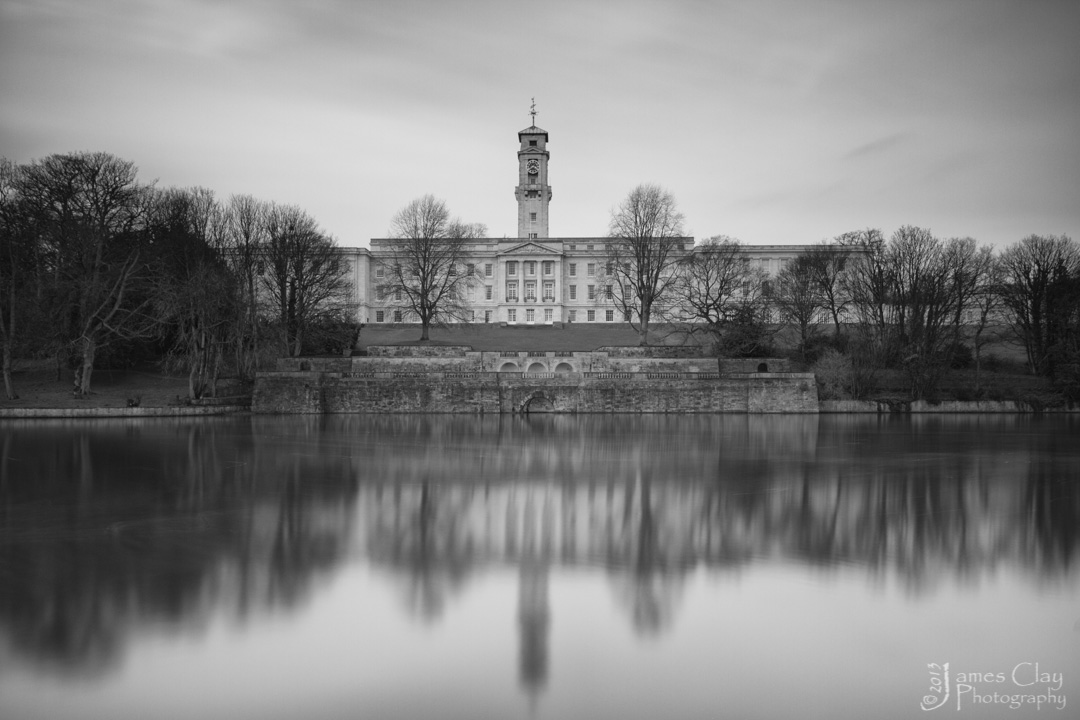
Superb exhibition by Nottinghamshire landscape photographer James Clay in Edingley today. Really atmospheric photographs taken around the East Midlands.
Here’s Edingley church, just over my garden fence.

And the Trent Building, University of Nottingham.
Take a look at his website here.
Jim Thornton
Induction increases Caesareans
No it doesn’t
According to this forthcoming paper in BJOG, induction of labour may even reduce the risk of needing a Caesarean delivery. Click here for the online pre-print. Or here wood et al BJOG 2013
This is a surprise because most people have long assumed the opposite. Induced labours often end up with Caesareans, because the labour never starts, or it goes on so long that the mother becomes exhausted or the baby develops fetal distress, and Caesarean rates for women with induced labours are generally higher than for those who go into labour on their own. Over the 1970s and early 1980’s when labour induction became popular, Caesarean rates also rose. Unsurprisingly pretty much everyone believed that induction was a factor. Labour induction rates became one of the battlegrounds between proponents of natural childbirth and those who supported more interventionist policies.
But labour is induced for a reason; because the pregnancy is overdue, the mother had raised blood pressure, or the baby is worryingly big, or small. If such problem pregnancies had been left alone perhaps they would have had even more Caesareans. Perhaps the rise in Caesarean rates over the 1970s had another cause; maybe doctors and parents just became less willing to take even small risks with their pregnancies.
The only way to prove causation is to do trials in which women are allocated at random to either have labour induced, or to be left alone to await it starting on its own. These are difficult – I was involved in some – but they were done. Some showed a slight increase in Caesareans, and some a slight decrease, but mostly the differences seen were compatible with the effect of chance – the trials were too small. But now a group from Canada have pulled them all together.
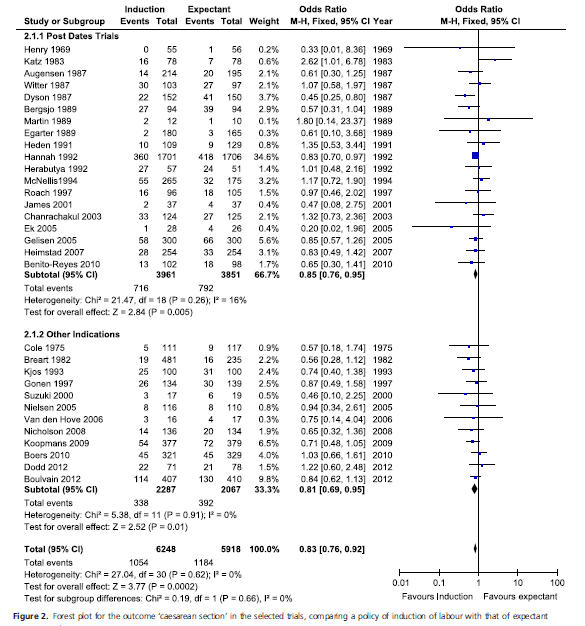
This figure summarises all the trials. For almost all the individual ones the 95% confidence interval around the odds ratio includes unity, so the result may well have occurred by chance. But overall labour induction reduces the need for Caesarean by nearly 20% (odds ratio 0.83, 95% confidence interval 0.76-0.92). This is unlikely to be due to chance.
Of course there are caveats, and the authors are appropriately cautious in claiming that they’ve proven that labour induction prevents Caesareans. But their best guess remains, that in settings like the ones where the trials were done, i.e. hospitals in the developed world over the last 30 years or so, labour induction, done for a legitimate medical reason, is very unlikely to increase Caesarean rates and probably slightly reduces them. I think they’re right.
This is an important message for obstetricians and midwives.
Jim Thornton
Needlestick or sex?
HIV transmission in Africa
Most experts believe that the African HIV epidemic is largely sexually transmitted. Hence “be faithful and wear a condom” is good advice. But what about non-sterile scarification, tattooing, or medical injections? Advice to “avoid unnecessary injections or surgery” is routine for foreign aid workers, but if spread more widely might discourage immunisation. Could it be that experts have not taken this route sufficiently seriously?
John Potterat, claims just this. He argues that there has been a public health conspiracy to downplay HIV transmission by needlestick, and not just for fear of discouraging immunisation. He claims that exaggerating heterosexual transmission helped unlock Western funding in the late 1980’s and has kept the money tap open ever since, to the detriment of the health of Africans.
He has summarised the evidence in a recent paper available here. For those who have trouble accessing it I’ve uploaded a copy here. Potterat Enigma of HIV in Africa It makes interesting reading.
He asks, why is the African epidemic so much worse than the Western one, which has largely spared heterosexual people unless they also inject drugs? Why does the pattern of infection in Africa not follow that of other sexually transmitted diseases? He says the unspoken assumption that Africans are uniquely promiscuous has been refuted again and again.
Obviously some people must have been infected by needlestick. The issue is how many? A few occasional cases? Or a substantial fraction, sufficient to drive the epidemic? Apparently no-one knows. Because, no-one has done the sort of careful studies that would measure the rate. For Potterat this is a scandal.
It’s a scandal if people are getting avoidably infected by traditional healers, or with dirty needles in unsafe health centres, and no-one is doing anything to prevent it.
It also matters when we come to consider circumcision. If infection really is all sexually transmitted, and if male circumcision reduces transmission by this route, then mass voluntary circumcision may make sense. But if a substantial proportion of transmission is through needlestick, the circumcision procedure itself might simply be another opportunity for infection. After all, Western aid workers all carry clean needles and syringes for when they unexpectedly need an injection or minor procedure. And who can blame them? Would you want a procedure in this clinic?

Potterat is right. It is a scandal that needlestick infection has not been better studied. Until it is we can never be sure that surgical programmes, such as the mass male circumcision ones, will not do more harm than good.
Jim Thornton
Singing and snoring
BBC conned by predatory publisher
Yesterday the BBC Radio 4 Today programme had a long item (click here) about a randomised trial of singing exercises to treat sleep apnoea and snoring. Quote; “A study carried out by the Royal Devon and Exeter Hospital has proved that snoring can be reduced simply by singing”. The paper is here, and trial registration here.
The trial ran between November 2005 and 2007 (not reported in the paper) but was first registered in March 2011 (late registration not reported either). This means we cannot be confident that the primary endpoint and sample size were predetermined. The reported primary endpoint, the Epworth score, differed from that reported in the pilot study (click here).
Participants were randomised to singing exercises or control after classification into four separate subgroups as follows: normal BMI snorer (n=50), raised BMI snorer (n=22), normal BMI obstructive sleep apnoea (OSA) (n= 30), and raised BMI OSA (n=25). The sample size calculation suggests that the trial was powered to show a difference within each subgroup.
There’s nothing in principle wrong with this. The problem is that the only statement of results is this;
The Epworth scale improved significantly in the experimental group compared to the control group (difference −2.5 units; 95% CI −3.8 to −1.1; p = 0.000).
That’s all. Nothing else. Zilch! No table of results. No raw data. No mean scores in either group. No indication of the data spread. No indication whether scores were similar at randomisation. No indication of how many patients contributed to this analysis. It’s not even clear whether it was on the whole sample or one of the four subgroups. Presumably the former, but if so, none of the subgroups on which the trial sample size was based were reported at all. There are innumerable other problems.
The trial took six years to get published, presumably because all respectable journals turned it down, and finally ended up in an open access one. But why would even a low impact journal publish a paper with no data? Where were the editors and referees?
One reason is that the authors paid $500. Another that the editors and referees may not even exist. Scientific Research Publishing (SCIRP), who publish the International Journal of Otolaryngology and Head & Neck Surgery, are on Jeffrey Beall’s list of predatory publishers (click here). These are publishers who create pseudo-scientific, entirely web-based journals with non-existent editorial boards, and little or no peer-review, simply to harvest open access fees. To put it bluntly the authors fell for an academic version of the Nigerian “send us $500 to unlock the $5 billion we’re holding in your name” scam.
How did the BBC get suckered by this nonsense?
My guess is they thought it was complementary medicine. It’s not, but the website pushing the singing therapy (click here) is a bit “New Agey”, and in 2000 the pilot study was published in a journal called Complementary Therapy Medicine. The BBC does to tend to suspend its critical faculties when complementary medicine comes up.
This’ll teach ’em!
Jim Thornton
Soft science
Elke Geraerts

Psychologist Elke Geraerts is a star. A TV and radio regular, she writes her own column, and has been called the ‘smartest woman in the Netherlands.’ She runs the Clinical Cognition Lab in Erasmus university in Rotterdam (click here), and leads a team of 40 or so young researchers. This TEDx talk (click here) is a good example of her communication style. The engaging mix of intellect and vulnerability is easy to fall for.
But what is she saying? That mental exercises can make you brighter? That overcoming stress may help you cope in future? Perhaps, but she hasn’t tested the idea? Many successful people had troubled childhoods, but she hasn’t studied whether they were more troubled than those of less successful people. She just repeats the platitude that what doesn’t kill us may make us stronger.
Other papers from her lab purport to show (here I paraphrase from the titles) that people can be taught to suppress memories, that victims of cyber bullying appreciate the support of a virtual cyber buddy, that by focussing your attention you can remember stuff you’ve previously forgotten.
Ring any bells? Remember Diederik Stapels (click here), who kept on proving this sort of conventional wisdom. Now there’s another similarity.
One of her publications (click here) has been retracted at the request of her co-authors because they believe that she fiddled the data. They don’t put it quite like that, but that’s what they mean. Click here for details. It certainly looks bad that Geraerts has refused to release the original dataset.
Could this really be another Stapels’ fraud? Perhaps, but I doubt it. More likely she just tortured the data till she got the result she wanted. It happens all the time. It’s not fraud, but it’s not science either.
Jim Thornton.
Another hypnosis in labour trial
Save your money
We discussed this randomised trial (click here) at our local BJOG twitter journal club this morning (#bluejc to follow or contribute). Well designed and conducted, the trial was registered here in 2006, and the sample size, treatment groups and primary endpoint were all pre-specified. We should believe the results.
Hypnosis, whether taught by a trained doctor or untrained nurse, and supplemented by a teaching video, does not reduce mother’s need for pharmacological pain relief in labour. It doesn’t reduce overall drug use, nor use of entonox, opiates or epidural separately. These are identical findings to a similar trial in February’s BJOG (click here).
Enthusiasts clutched at straws – there may be some beneficial effect among women who also practised yoga – but that wasn’t even a planned secondary analysis. At best it was a data-driven hypothesis-generating observation.
And some women rather liked the hypnosis. But they hadn’t read the results!
I don’t think the NHS spends much on hypnotherapy for pain relief in labour, but some individual women do. They should save their money for the baby.
Jim Thornton
Larkin’s animal poems – 5
Pigeons
The weakest of the seven – yes, there’s two more – wasn’t included in any of his mature collections. Rightly so, it really is just about pigeons.
First published together with First Sight (click here) as Two Winter Pieces in the Times Educational Supplement 13 July 1956, and then alone in Departure (Jan 1957).
Pigeons
On shallow slates the pigeons shift together,
Backing against a thin rain from the west
Blown across each sunk head and settled feather.
Huddling round the warm stack suits them best,
Till winter daylight weakens, and they grow
Hardly defined against the brickwork. Soon,
Light from a small intense lopsided moon
Shows them, black as their shadows, sleeping so.
Philip Larkin
See also Take One Home for the Kiddies here, At Grass here, Myxomatosis here, First Sight here, and Laboratory Monkeys here.
Rape in the Congo
Cognitive Behaviour Therapy Wins Again
Personality disorder is still pretty much untreatable, and major psychoses occasionally require drugs, but for almost all other mental illness, cognitive behaviour therapy (CBT) is the best treatment. This week we learned that it works even for rape victims in war-torn Congo (click here).
The cluster trial, with villages the unit of randomisation, run by researchers from John Hopkins Hospital in Baltimore, was registered here in June 2011. Although villages were randomised before women were recruited, a potential source of bias, recruitment and consent was done by research assistants unaware of the village allocation. The interventions, individual support (8 control villages; 248 women) or cognitive processing therapy (7 experimental villages; 157 women) were administered between April and July 2011. For those who fret about such things cognitive processing therapy is a variant on the behavioural version.
There were methodological weaknesses – the timing of the primary outcome did not appear to be pre-specified, and no reason was given as to why the planned sample size of 1000 was less than half achieved, but remember the setting, and the beneficial effects were large, and seen on all outcome measures and at both time points. Data dredging seems unlikely, and CBT works pretty much everywhere else, so the result is convincing. But what is cognitive processing therapy?
It’s basically helping clients get bad thoughts out of their heads by encouraging them to think rationally. Therapists might encourage rape victims to question the ideas that it was their own fault, or that everyone despises them. It’s hardly rocket science, although there are “tricks of the trade”, and clients need to be encouraged to persist with treatment, and to work on it without the therapist. These researchers based their treatment on a well-known manual used by the US Veterans Administration for treating Post Traumatic Stress Disorder in the armed services, Cognitive Processing Therapy Manual 8.08, which they adapted for use by people who could not read or write.
It works. This is an important trial.
Jim Thornton
Double trouble
Broadcast and The Dance
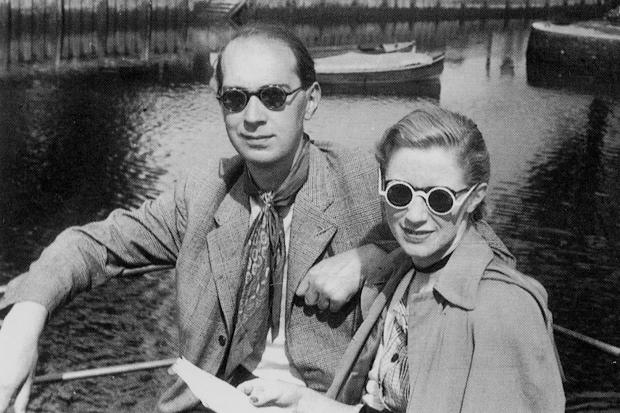

Throughout the sixties, Philip Larkin’s two lovers, Monica Jones, his long-standing lecturer friend from Leicester, and Maeve Brennan, his library colleague, each knew about the other and were not best pleased. The Maeve relationship produced the poem Broadcast, but in the effort to pacify Monica, he deprived us of a second potentially even better Maeve poem – The Dance.
Here is Maeve on the composition of Broadcast.
“[…] On my copy Philip wrote: ‘To Maeve who wd. sooner listen to music than listen to me’ and drew this sketch of himself enveloped in gloom beside his wireless, and of me, rapt in the more formal atmosphere of the concert hall.
One Sunday afternoon the previous November, the BBC Symphony Orchestra gave a concert in the City Hall, Hull which was simultaneously broadcast on the radio. Knowing I was at the live performance, Philip listened to it at home. The following day he handed me a typescript of the poem, initially called ‘Broadcast Concert’, but later shortened to ‘Broadcast’.
Elated and deeply moved, I was amused by the description of my shoes which had been the object of a shared, private joke that autumn. Elegant, with stiletto heels and pointed toes, popularly known as winkle pickers, they had been in vogue several months. Philip loved them. Never one to be ahead of fashion, rather just lagging behind it, I said in mock exasperation one day: ‘I don’t know why you make such a fuss of these shoes. They’ve been in fashion for the last six months otherwise I wouldn’t be wearing them.’ He laughed and said: ‘Well, I still adore them even if they are slightly-outmoded’ which is how they came to be described in the poem. I have attended countless concerts at the City Hall since 5 November 1961 and on each occasion I recite ‘Broadcast’ in my mind’s eye with mingled pride and delight.”
Hardly surprising that Monica had been upset when the poem first appeared in The Listener. When she saw it again, without warning, in her advance copy of The Whitsun Weddings she blew her top (7 Feb 1964);
“Well I have sat and stared, absolutely incredulous that you have published Broadcast after all your crocodile tears expressions of regret at its appearance before … I suppose it’s not so much the poem itself that I mind so much now, I had shed all the tears I’m going to shed about that, and I had with difficulty forgiven it, I mean its appearance and the way you never warned me of its appearance.”
Larkin (10 Feb 1964) had no answer:
“And now I am distressed about your reaction to Broadcast. My excuse – or if it isn’t an excuse, my answer – is as you might expect, a complete forgetfulness: I didn’t hesitate a moment about including it, because I didn’t think it wd bother you, and it seemed good enough. My regrets and promises that you remember I had – have, even now – forgotten. About the only defence in this is that I didn’t do it deliberately, but that doesn’t go very far, I know. I just didn’t think it still held any power to disturb you.”
We can imagine Larkin’s thoughts as he worked on his other Maeve poem. Begun it in June 1963 soon after she’d persuaded him, against his better judgement, to attend a university dance, it’s even more self-deprecating than usual – some liken it to The Love Song of J. Alfred Prufrock. It would have fitted in High Windows beautifully. Imagine the opening lines, “Drink, sex and jazz — all sweet things, brother: […]”, alongside “They fuck you up your mum and dad.” It’s over long but could have been shortened.
But Larkin never even finished it. I think he knew that Monica would give him hell. He fiddled with it right up to 1967, but baulked from another row.
Here is the finished version of Broadcast from TWW.
Broadcast
Giant whispering and coughing from
Vast Sunday-full and organ-frowned-on spaces
Precede a sudden scuttle on the drum,
‘The Queen’, and huge resettling. Then begins
A snivelling of the violins:
I think of your face among all those faces,
Beautiful and devout before
Cascades of monumental slithering,
One of your gloves unnoticed on the floor
Beside those new, slightly-outmoded shoes.
Here it goes quickly dark. I lose
All but the outline of the still and withering
Leaves on half-emptied trees. Behind
The glowing wavebands, rabid storms of chording
By being distant overpower my mind
All the more shamelessly, their cut-off shout
Leaving me desperate to pick out
Your hands, tiny in all that air, applauding.
And here is The Dance. This is the allegedly most complete version taken from Archie Burnett’s The Complete Poems. Following Sean O’Brien (click here) I’ve removed the obviously wrong “able” from line 95, […] How right/I should have been [able] to keep away, […], and inserted a break before the incomplete final verse.
The Dance
‘Drink, sex and jazz — all sweet things, brother: far
Too sweet to be diluted to “a dance”,
That muddled middle-class pretence at each
No one who really…’ But contemptuous speech
Fades at my equally-contemptuous glance,
That in the darkening mirror sees
The shame of evening trousers, evening tie.
White candles stir within the chestnut trees.
The sun is low. The pavements are half-dry.
Cigarettes, matches, keys —
All this, simply to be where you are.
Half willing, half abandoning the will,
I let myself by specious steps be haled
Across the wide circumference of my scorn.
No escape now. Large cars parked round the lawn
Scan my approach. The light has almost failed,
And the faint thudding stridency
Some band we have been ‘fortunate to secure’
Proclaims from lit-up windows comes to me
More as a final warning than a lure:
Alien territory…
And once I gain the upstairs hall, that’s still
Our same familiar barn ballooned and chained,
The floor reverberates as with alarm:
Not you, not here. I edge along the noise
Towards a trestled bar, lacking the poise
To look around me; served, maturer calm
Permits a leaning-back, to view
The whole harmoniously-shifting crowd,
And with some people at some table, you.
Why gulp? The scene is normal and allowed:
Professional colleagues do
Assemble socially, are entertained
By sitting dressed like this, in rooms like these,
Saying I can’t guess what — just fancy, when
They could be really drinking, or in bed,
Or listening to records — so, instead
Of waiting till you look my way, and then
Grinning my hopes, I stalk your chair
Beside the deafening band, where raised faces
Sag into silence at my standing there,
And your eyes greet me over commonplaces,
And your arms are bare,
And I wish desperately for qualities
Moments like this demand, and which I lack.
I face you on the floor, clumsily, as
Something starts up. Your look is challenging
And not especially friendly: everything
I look to for protection — the mock jazz,
The gilt-edged Founder, through the door
The ‘running buffet supper’ — grows less real.
Suddenly it strikes me you are acting more
Than ever you would put in words; I feel
The impact, open, raw,
Of a tremendous answer banging back
As if I’d asked a question. In the slug
And snarl of music, under cover of
A few permitted movements, you suggest
A whole consenting language, that my chest
Quickens and tightens at, descrying love —
Something acutely local, me
As I am now, and you as you are now,
And now; something acutely transitory
The slightest impulse could deflect to how
We act eternally.
Why not snatch it? Your fingers tighten, tug,
Then slacken altogether. I am caught
By some shoptalking shit who leads me off
To supper and his bearded wife, to stand
Bemused and coffee-holding while the band
Restarts off-stage, and they in tempo scoff
Small things I couldn’t look at, rent
By wondering who has got you now, and whether
That serious restlessness was what you meant,
Or was it all those things mixed up together?
(Drink, sex and jazz.) Content
To let it seem I’ve just been taken short,
I eel back to the bar, where they’re surprised
That anyone still wants to drink, and find
You and a weed from Plant Psychology
Loose to the music. So you looked at me,
As if about to whistle; so outlined
Sharp sensual truisms, so yearned —
I breathe in, deeply. It’s pathetic how
So much most people half my age have learned
Consumes me only as I watch you now,
The tense elation turned
To something snapped off short, and localised
Half-way between the gullet and the tongue.
The evening falters. Couples in their coats
Are leaving gaps already, and the rest
Move tables closer. I lean forward, lest
I go on seeing you, and souse my throat’s
Imminent block with gin. How right
I should have been to keep away, and let
You have your innocent-guilty-innocent night
Of switching partners in your own sad set:
How useless to invite
The sickened breathlessness of being young
Into my life again! I ought to go,
If going would do any good; instead,
I let the barman tell me how it was
Before the war, when there were sheep and grass
In place of Social Pathics; then I tread
Heavily to the Gents, and see
My coat patiently hanging, and the chains
And taps and basins that would also be
There when the sheep were. Chuckles from the drains
Decide me suddenly:
Ring for a car right now. But doing so
Needs pennies, and in making for the bar
For change I see your lot are waving, till
I have to cross and smile and stay and share
Instead of walking out, and so from there
The evening starts again; its first dark chill
And omen-laden music seem
No more than rain round a conservatory
Oafishly warm inside. I sit and beam
At everyone, even the weed, and he
Unfolds some crazy scheme
He’s got for making wine from beetroot, far
Too incoherent to survive the band;
Then there’s a Which-fed argument — but why
Enumerate? For now we take the floor
Quite unremarked-on, and I feel once more
That silent beckoning from you verify
All I remember — weaker, but
Something in me starts toppling. I can sense
By staring at your eyes (hazel, half-shut)
Endless receding Saturdays, their dense
And spot-light-fingered glut
Of never-resting hair-dos; understand
How the flash palaces fill up like caves
With tidal hush of dresses, and the sharp
And secretive excitement running through
Their open ritual, that can alter to
Anguish so easily against the carp of
of an explicit music; then
Agnetha’s comeback
Two great break-up songs
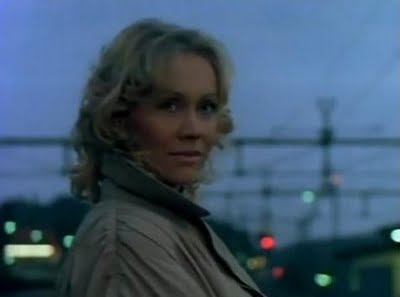
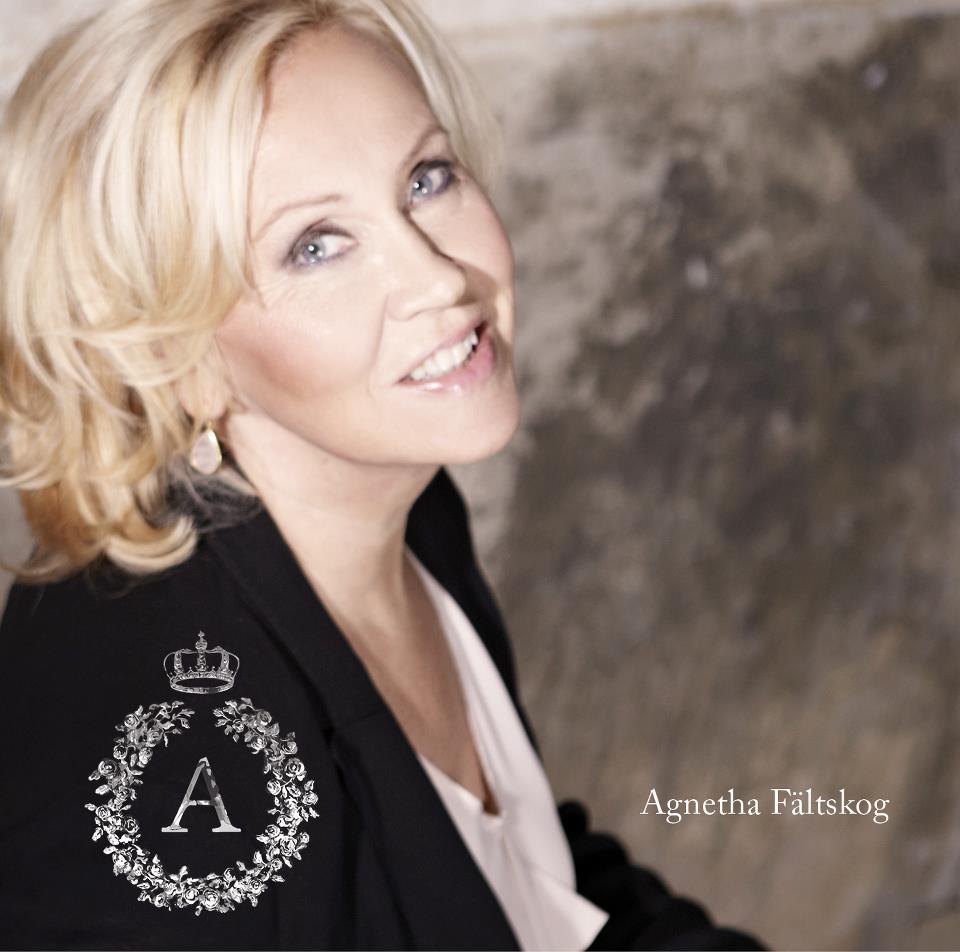
In August 1982, exhausted from ten years of super-stardom, Agnetha Fältskog sang The Day Before You Came, Abba’s last and saddest love song (listen here). Now thirty-some years later, she’s back with a new album, A, and another melancholy masterpiece, I Was A Flower (listen here). Ignore both videos.
 Ripe-tomato.org