John Updike
What happened? One of America’s finest novelists dies of lung cancer age 76, less than a month into the year, and an Englishman calls him as a solo! Surely winning a bad sex-writing award from the Literary Review last year for The Widows of Eastwick, sequel to The Witches, didn’t fool you into thinking he was younger and fitter than he really was? After all, Norman Mailer got his award posthumously.
Sex was Updike’s topic. In youth he wrote about it, and in old age he reminisced. Not gay, or group, or anything fancy. Just straight fucking – one man, one woman. He took it seriously, neither romanticising nor trivialising, but avoiding the angst of Roth, or the violence of Mailer.
His heroes, Rabbit, Bech and the rest, were promiscuous males, which may explain why some women disliked him. They failed to recognise that controversial lines like this one from Couples, “as a raped woman might struggle to intensify the deed”, could accurately describe the thoughts of a certain sort of American male, without being Updike’s own. Liberals weren’t too keen either. A churchgoing white male, who disliked the swinging sixties, he reluctantly supported the Vietnam War.
He had psoriasis, which endeared him to Amelia, and he stuttered, which endeared him to me. Fortunately for all of us, neither stopped him getting laid, and he learned enough, bonking in suburbia, to describe adultery in America better than anyone.
So why did you all miss him? Here’s an extract from his forthcoming poem Requiem.
It came to me the other day:
Were I to die, no one would say,
“Oh, what a shame! So young, so full
Of promise – depths unplumbable!”
Instead, a shrug and tearless eyes
Will greet my overdue demise;
The wide response will be, I know,
“I thought he died a while ago.”
That’s it. You thought he’d already gone.
Jim Thornton. Reprinted from AODeadpool 2009
Mats Akerlund
Obstetrician and global authority on the way the womb works
Outside the US, atosiban is the most popular drug for suppressing the contractions of premature labour, still the leading cause of perinatal death. Mats Akerlund, who has died aged 66, was the obstetrician who was instrumental in developing it into one of the most widely used medicines in pregnancy. In the early 1980s Akerlund, working in Lund University in Sweden, was the world’s leading authority on myometrial physiology, the way the muscles of the womb work.
Together with the chemist Jerzy Trojnar and the pharmacologist Per Melin, both working for the pharmaceutical company Ferring, Akerlund studied a range of synthetic peptides in the hope that they might block or enhance the actions of similar peptide hormones released by the pituitary gland. He tested their effects on uterine muscle in vitro, in pregnant animals, and eventually in women.
RWJ 22164, later renamed atosiban, and according to myometrial legend the 17th drug Akerlund tested, turned out not only to block oxytocin, a hormone that makes the womb contract, but also to be safer than other options. It remains unique as the only new chemical entity ever to have been successfully developed specifically to treat a pregnancy disease, rather than to just end the pregnancy. Most pharmaceutical companies concentrate on other diseases because of the legal and regulatory risks, and only by chance do some drugs later turn out to work in pregnancy. Under the trade name Tractocile, atosiban has now been administered to many hundreds of thousands of women.
The second of three boys, Akerlund was the opposite of premature. He weighed 5kg when he was born at Leksand vicarage in Dalarna, in central-southern Sweden. He studied medicine in Lund from 1962 to 1968 and, apart from a short spell in general practice, worked at Lund university hospital for the rest of his life. He completed his doctoral thesis on uterine contractility and blood flow in 1976 under the mentorship of Lars Philip Bengtsson, and soon became a world authority on myometrial physiology. He later claimed he was lucky to have picked atosiban so early – pharmaceutical companies typically test thousands of compounds for every one that reaches clinical use – but this was false modesty. He had carefully chosen which peptides to test.
Akerlund was a brilliant scientist who also worked on drugs to help the uterus contract after delivery to prevent bleeding, to help the embryo implant after in vitro fertilisation and to treat menstrual cramps. He was a shrewd entrepreneur who founded a number of companies to market his discoveries. Although he never developed another drug with quite the impact of Tractocile, he contributed hugely to the speciality of obstetrics and gynaecology. He was also a dedicated doctor and an inspiring teacher, loved and admired by generations of patients and students.
Sadly, Tractocile was not the billion-dollar blockbuster that early enthusiasts hoped for. It was never licensed in the US, partly because the human trials were unable to prove for certain that the baby benefited from the extra time in the womb. None of the other options was ever proved to help the baby either, but Tractocile remains controversial.
Meanwhile Akerlund faced other troubles. In his 30s he had noticed numbness in his little finger and joked that he must have multiple sclerosis. He was correct. He started using a stick in the early 1990s and by the middle of that decade, required a motorised wheelchair. He continued to travel internationally, so frequently that he was recognised by the porters at Heathrow who met him from the aeroplane steps. His final years were complicated by a number of near-fatal chest infections. His recovery from an episode three years ago, after the family had assembled at his bedside to say farewell, occurred, appropriately, on Easter Day. Despite all this he continued working until a few days before he died. Earlier this year, he was awarded a SEK2.1m (£170,000) grant to continue his studies of oxytocin.
Akerlund held a private pilot’s licence and was a keen hunter. He owned a large tract of forest near Lake Siljan in Dalarna. He was a founder member of the Amanda male voice double quartet, specialising in the songs of the Nordic composers Jean Sibelius and Carl Nielsen. He is survived by his wife Eva, two daughters and a son. A few weeks before his death, he introduced himself to a sixth, as yet unborn, grandchild, through abdominal palpation.
• Mats Akerlund, obstetrician and gynaecologist, born 20 November 1942; died 30 March 2009
Jim Thornton. Reprinted from The Guardian, Thursday 28 May 2009
Jim Pearson
Obstetrician behind ‘count to 10’ charts
Jim Pearson, who has died aged 72, was one of the most inventive clinical obstetrician/gynaecologists of his generation. With JB Weaver in 1976, he devised foetal “count to 10” charts, and with JP Calvert in 1982, graphs for plotting the growth of a baby by using a tape measure over the mother’s abdomen, both of which are still in use in nearly every antenatal clinic in Britain.
Doctors and midwives had long recognised that sick babies tend to kick less frequently in the womb before they die, but no one had found an easy way to count the movements. The problem was that normal babies move many hundreds of times in a day, and pregnant women have better things to do than to monitor them constantly. Jim’s idea of counting just the first 10 movements in the day, and recording the time when that point was reached, meant that mothers of healthy babies could stop after an hour or so. Women were instructed to call in if their baby had not moved 10 times by the evening. The charts were an immediate success – I found them in use in Africa in the early 1980s – and many thousands still use them every day.
Checking the size of the baby was also an inexact science before the wide availability of ultrasound. Doctors either palpated the abdomen and estimated the baby’s weight, or measured the woman’s girth. Jim suggested that it would be better to measure the height of the uterus (fundal height) using a tape measure, and drew up the necessary charts. The method immediately entered widespread clinical practice, not only as way to predict sick, small babies who might be better off delivered early, but also as a method to warn doctors if a baby was larger than expected.
Neither I, nor the poor woman involved, will ever forget an unwise forceps delivery that I conducted as a junior obstetrician in Cardiff. Both mother and baby were traumatised, and Jim rightly ticked me off the following morning. But he also showed me how I could have anticipated the problem using his chart, a method that survived even the widespread introduction of ultrasound. In most clinics today, a tape measure is used to screen low-risk women so that those with a suspected small or big baby can be selected for ultrasound scanning.
Jim’s parents had both started work in the Lancashire cotton mills at the age of 12, and his father and grandfather had walked from Lancashire to London in search of work on the new Wembley stadium. The family had settled there and Jim, the eldest of five boys, was born in Wembley, attending Catholic grammar schools in Gunnersbury and Finchley, north-west London. He qualified in medicine at Charing Cross hospital, and, as a junior doctor in Birmingham, worked with J Selwyn Crawford, the founder of obstetric anaesthesia in Britain.
Jim was a conservative in an era of increasing intervention in childbirth. In the 1970s, techniques for starting off labour with automated drug infusion pumps were being perfected by Alec Turnbull in Cardiff, and a vogue developed for a practice called “active management”, which involved breaking the waters early and administering drugs to speed up slow labour, as well as making sure that women were never left alone. Jim was initially an enthusiast, and had indeed been appointed as a consultant in Cardiff in 1972 specifically to develop this sort of active approach. However, he increasingly came to agree with Selwyn Crawford that, so long as women were given adequate pain relief, patient observation was usually the better course. Although he failed to test these ideas in randomised trials, he encouraged others to do so, and was eventually proved right.
A number of universities would have been delighted to have appointed Jim to a chair, but he would never leave Cardiff – he remained in post until his retirement in 1999 – partly to avoid disrupting the life of his daughter Vicky, who had suffered from birth from a severe learning disability. He is survived by his wife Denise, his daughter and three sons, who played Honky Tonk Train Blues at his funeral and remembered him as a jazz pianist, flyer of kites and explorer of first world war battlefields.
• James Francis Pearson, obstetrician, born October 16 1935; died July 19 2008
Jim Thornton Reprinted from The Guardian, Thursday 2 October 2008
James Steel Scott
Professor James Steel Scott did as much as any obstetrician of his generation to unravel the diseases caused by defects in the immunological relationship between mother and baby. Primarily a clinician, his method was observation of the natural experiment of pregnancy.
An enthusiast who constantly fired off ideas for his pupils to chase up, he was unusual both in that most of the ideas were good, and that he afterwards rarely claimed credit. I recall him almost bursting with excitement in 1977 when he learned of the discovery that hydatidiform moles, tumours of the fetal component of the placenta, were of entirely paternal origin. Many years earlier he had observed that pregnancies complicated by anatomically similar fluid collections in the placenta had a high risk of pre-eclamptic toxaemia, a disease of pregnancy characterised by high blood pressure, multi-organ damage and in severe cases by maternal convulsions and death. He also knew that, in the days when moles had been allowed to progress into the latter half of pregnancy, they were almost always associated with severe forms of pre-eclampsia. He immediately saw the research projects that would come from this dramatic discovery.
His immunological interest had begun in Liverpool in the 1950s when he met Cyril Clarke, and Ronald Finn whose rhesus disease prevention with anti-D immunoglobulin was to save the lives of millions of babies worldwide. It was an exciting time, and Scott, like others, hoped that many other pregnancy diseases would turn out to have similar causes and treatments. Sir Cyril Clarke, as he was by then, later wrote the forward to his seminal book, the Immunology of Human Reproduction, edited jointly with Warren Jones one of Scott’s pupils.
When he became professor of obstetrics and gynaecology in Leeds in 1961, at the early age of 37, he threw himself and his department into the new specialty of reproductive immunology. He was one of the first to recognise that transient forms of adult diseases in the newborn, previously regarded as curiosities, were often signs of the transplacental passage of harmful antibodies from the mother. The neonatal forms of thyroid overactivity, of bleeding due to lack of platelets, and of systemic lupus erythematosus are now recognised as the classic examples. His greatest personal success, achieved in collaboration with his wife Olive, a paediatric cardiologist, was his demonstration that transplacental passage of the anti-Ro antibody, named after the patient Madame Robert in whom it had been first detected, caused the rare but serious condition of fetal heart block.
The big prize for obstetric researchers, then as now, was to untangle the cause of pre-eclampsia. Scott believed that it might be caused by a harmful immune reaction between parent and fetus He and his collaborators observed that it was more common and more severe in pregnancies with a new male partner, but less severe if the mother had previously received an organ transplant, a blood transfusion, or been exposed for a long period to male antigens in the form of semen via non barrier-contracepted sexual intercourse. These clinical observations have stood the test of time, but he had less success in his efforts to test the hypothesis in the laboratory.
For years his laboratory, using the laborious techniques of immunology then available, tested the blood groups, tissue types and immune reactions of parents and babies from affected and unaffected pregnancies. He never found the secret combination, but nor did he miss it either. Even today with all the techniques of molecular biology at our disposal the cause of this terrible disease remains obscure.
He was the sort of clinician to whom colleagues referred their most difficult cases and he made good use of these opportunities. In the early 1980s he looked after a number of young pregnant women who had lost limbs, been blinded or had strokes as a result of vascular damage caused the lupus anticoagulant, a rare and particularly nasty type of anti-phospholipid antibody. He never tired in his efforts to treat them, but was always on the lookout to learn from them too. It was not long before he suggested that someone looked at another group of women with high rates of anti-phospholipid antibodies, those who had an unconfirmed positive test for syphilis on routine pregnancy screening; perhaps they would be more likely to suffer from pre-eclampsia. They did not, but they did suffer from an increased risk of miscarriage. Testing women with recurrent miscarriage for these antibodies is now routine practice, and a positive result is the basis for treatment with aspirin and other blood thinning agents.
He ended his career as Dean of Leeds University Medical School; a job he characteristically insisted was only part time, remaining head of his own department. But his colleagues will remember him best from his Saturday morning ward round, an occasion we juniors missed at our peril. After teaching the medical students at the bedside, he would see a dozen “special” patients, not staff or society women, although he treated many of those, but women with intractable genital ulceration, people with intersex conditions or ambiguous genitalia, or women who had lost 10 or 20 pregnancies in a row. He knew that many were untreatable but he never gave up on them, and they loved him for it. At the end of it all we would assemble in sister’s office for coffee to learn about twentieth century Irish literature, skiing, the Scottish Colourists and grand opera, but most importantly to hear him say; “Did you read [a recent paper]? It might be interesting to take a look at [a particular group of patients]?” Many of us made our own names doing just that.
Jim Thornton, Nottingham 3 October 2006. Reprinted from the Independent
Born in Glasgow on 18 April 1924 James Steel Scott went to school and university there before two years national service in West Africa. On his return he trained as an obstetrician and gynaecologist at Queen Charlotte’s Hospital in London and in Birmingham, before moving to Liverpool in 1954. He was professor of obstetrics and gynaecology at Leeds University from 1961-89 and Dean of Leeds University Medical School 1986 to 1989. He died on 17 September 2006 of prostate cancer.
iGreen extra
Readers might be interested in what I left out of the Independent. In 1967 he had been one of three or four senior professors of obstetrics and gynaecology in Britain who had publicly opposed the 1967 Abortion Act. He later was rather reticent about the episode, and I think felt that he had been hijacked by the pro-lifers.
Nevertheless his department always provided a safe refuge for conscientious objectors, and when he became Dean of Leeds Medical School he introduced the reading of the Hippocratic Oath at medical student graduation ceremonies. I had always assumed that that was in an attempt to get the words “I will not procure abortion” read out. If so, it was foiled. He ended up reading a more modern version of the oath without the controversial phrase. However, others told me he had no such aim, so I omitted the story.
Farewell Concorde
And good riddance
The decision of British Airways and Air France to stop flying Concorde has been greeted with sadness by many who admired the beauty and technological sophistication of the supersonic passenger airliner.
iGreens will also feel a pang until they reflect on the environmental damage of this gas guzzler, and the economic damage it has inflicted on Britain and France.
Concorde was conceived as a joint Anglo/French government initiative in 1962. By 1965 it was obvious that it was never going to make any money, but instead of pulling the plug, as any private company would have done, the two governments went on burning pounds and francs in a vain attempt to salvage some prestige.
By the time of its maiden flight in 1969 no airline was willing to pay for it and only 16 were ever built.
To save face the two governments bullied their nationalised airlines to fly the plane. Even then they had to give them the planes for free. BA paid £1 for its Concorde fleet and the British and French governments wrote off the entire £1 billion development costs.
Even then the plane was little more than a toy for the rich. Neither airline made any serious money flying it, although they valiantly tried to persuade themselves that somehow some prestige rubbed off on the rest of their operations[1].
It was hardly surprising that for years the planes have flown half empty. They burn 5,500 gallons of fuel per hour and carry only 100 passengers. As a result the one-way fare from London to New York was £4,000.
The airlines scraped along by offering round trips to tourists who paid through the nose for a glass of champagne and the opportunity to boast to their friends that they had flown on Concorde. The flight, which crashed on takeoff from Paris in July 2000, was not full of businessmen, film stars or diplomats, but rather a busload of German pensioners.
Since the start of the Iraq war the planes have been less than 20 percent full. On April 10th, the day BA and Air France announced the end of the service, only 12 passengers made flight AF002 from Paris to New York.
There is too much pollution from wasteful travel in the world. Most of it is caused by government subsidy of roads, and other travel budgets. Compared to that Concorde may have been small beer, but it was a high profile example of government waste.
Let us celebrate that this foolish bit of state-sponsored global warming has at last stopped.
Jim Thornton. Nottingham, 12 April 2003
via Farewell Concorde.
Return the Streets
My family lives in a semi-detached town house, half a mile from the famous Headingley cricket ground. We have a posh tree-lined front road, and a back street where we keep the bins. Although we own our bit of the front road, neither we, nor our neighbours, spend much time looking after it. The original Macadam surface disappeared long ago, and the narrow gate at one end makes a bumpy and tricky approach, as paint scrapings on the gateposts testify. Nor is it any easier for walkers. The path is punctuated with the sockets of stolen flagstones, the road is muddy in the rain, and the street lighting is dim. Now and then the residents discuss road repairs, but we rarely agree to do much more than fill a pothole or two.
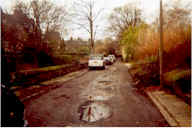
Our back street is very different. It has been adopted by the council and is regularly resurfaced, and brightly lit, with a brand new street sign at both ends. Although the flagstones still get stolen, the council replaces them quickly with tarmac, so the path is safe to walk on. Surely, this shows that roads are a job for governments.
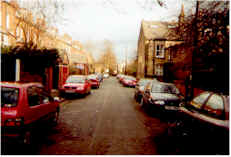
Not so fast! Although both streets join the same two minor roads, a steady trickle of rat running commuters use the adopted one each morning. Children are at risk every time they step out between parked cars on their way to school and some residents have asked the council to install sleeping policemen or traffic calming artificial chicanes. Not me. We don’t need traffic calming on our front road, the potholes and narrow entrance do the job, and our children can play safely there all day. We even have an annual bonfire on it, which we leave to burn overnight and on which the younger children toast marshmallows the next morning. If the council would leave our back street alone the children would be equally safe there.
The advantages of private owners spending less than the council on sidestreets are not confined to safety. England is slowly being covered in tarmac and residential roads add up to thousands of square miles of the stuff. Tarmac not laid is energy saved. Grass allowed to grow is not just nice to look at, but a habitat for animals. My early rising neighbour has twice come across small deer on our unsurfaced road, but only ever seen urban foxes on the adopted one. Urban light pollution is another important problem, and our dimly lit front road not only gives us the best vantage point to see comets and eclipses ourselves, but contributes in a small way to reducing the annoyance for real astronomers. Even our argumentative street meetings help us get to know our neighbours.
Of course there are trade-offs. The dim lighting may encourage crime. Potholes damage car suspensions. The point is not to dispute this, but to argue that ownership by the residents allows those most affected to make the trade-offs for themselves. Individuals can install their own intruder-activated lights if they wish. As a group we could wait for potholes to form, or install traffic calming ourselves. Some residents groups might even put gates at one or both ends of their streets. Others might take the opposite approach and charge commuter tolls. If surrounding streets had closed off key routes, the profits might induce others to compete to provide the best rat runs, although I hope they would soon come up with a less derogatory name. Many different communities owning their own roads would discover systems I cannot imagine. If they were successful new arrivals would be keen to join them. House prices would be a sensitive sign of popular policies and a powerful incentive for owners. Residents committees would respond better to people’s wishes than any local council.
As a politician I’ve attended many community meetings where local activists were lobbying the council to pay for road lights, calming schemes or whatever. None of them realised that the council had caused the problem in the first place, and that the residents would be better off asking for their money back so they can decide how to organise the road themselves. The simplest way to do this is to “un-adopt the roads”, but for it to catch on we need a better phrase. The best I’ve come up with is “Return the streets!”
The process will start small with individual streets petitioning their local council to return them to the residents. Politicians will hate to give up power, especially as part of the benefit to residents will be a reduced community charge. They’ll demand unanimity, which will be easier in smaller streets. The first task is to get a list of interested streets from which we can select some test cases. After a few successes the process will get easier. I’m confident that this iGreen movement’s time has come. Join me if you agree. Even if you get your shoes muddy, it’ll be worth it.
Email me if you’d like to have a go.
Jim Thornton
19 Sept 2004 – Rick Hughes writes from California:
“In Darlington around 1950, the arrangement was just as you describe – the front street was unadopted and potholed and the beck ran just below it, or over it in very wet weather. In my memory the potholes were always water filled, and all the delivery men used horse and cart, with the housewives lurking at the front gates, shovel at the ready. The back road was metalled and had lorries and cars, and mysterious (to a 5-year-old) businesses, including ice making! And there was definitely a community spirit – I remember only one house had a telly when the coronation happened – the whole street crowded into their front room!
If you think Britain is becoming covered with concrete and tarmac you should come and take a look round here!!! Good luck keeping your front road out of the clutches of the road layers.”
via return the streets.
Welcome to Ripe-tomato.org
Welcome to Ripe-tomato.org. Part Jim Thornton’s blog, and part an update of http://www.iGreens.org.uk. iGreens still exists but technical problems have prevented me updating it for years. I’ve copied over a few representative articles ; you can find them under iGreens.
What else will you find here? Canoeing itineraries, poetry, thoughts on maternity care, gardening and my current obsession obituaries.
 Ripe-tomato.org