Were we really so innocent then?
Shirley Temple
My obituary of her from AOdeadpool (click here)
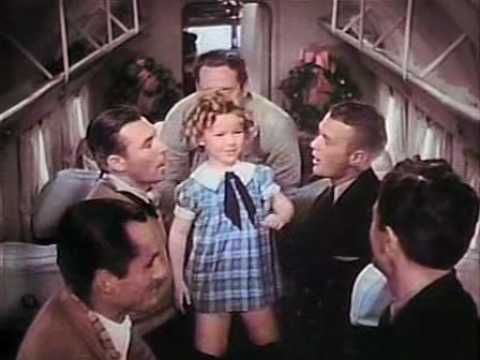


The appeal of Shirley Temple, child star of such 1930’s Hollywood tripe as Bright Eyes, Curly Top and Heidi waned when she reached puberty. She forged a successful second career as politician and diplomat, married and buried two husbands, became US ambassador to Ghana and Czechoslovakia, and survived breast cancer by forty years. But she was lucky to escape Hollywood unscathed. Watch any You Tube clip, e.g The good Ship Lollipop (click here). What was going on?
The novelist Graham Greene got the subtext immediately, and in 1938 accused the studio bosses of “procuring Shirley Temple for immoral purposes” and “middle-aged men and clergymen” of getting off on her under-age sexuality. He was successfully sued for his troubles by 20th Century Fox, who managed to convince a judge that he was libelling the actress, rather than her minders. But he was right. The middle-aged men saw it then. We can all see it now. I
Shirley Temple’s youthful flirting
Made her popular with perverts
Now we find it too disturbing
Looking up her miniskirts.
To Graham Green the films were loathsome
But the judge refused his claim.
Thought they were entirely wholesome.
Now he’d hang his head in shame
But she escaped her prurient bosses.
Outlived two husbands, even cancer.
Made her career in political causes.
Topped it off as US ambassador.
Jim Thornton
The Wave
By Don Paterson
Don Paterson occasionally punches right through our guard. He did it with Two Trees (click here) and he’s done it again in this week’s New Yorker.
I’d moved across the open water/like a frictionless wheel under its skin […], I’d drain into the shale till I was filtered pure, and the scattered sails,/the painted front and children on the pier all lull us into imagining a sunny poem, until the final line fells us.
We don’t even know if a tsunami, mass murderer, or something else hit us.
The Wave
For months I’d moved across the open water
like a wheel under its skin, a frictionless
and by then almost wholly abstract matter
with nothing in my head beyond the bliss
of my own breaking: how the long foreshore
would hear my full confession, and I’d drain
into the shale till I was filtered pure.
There was no way to tell on that bare plain
but I felt my power run down with the miles
and by the time I saw the scattered sails,
the painted front and children on the pier
I was no more than a fold in her blue gown
and knew I was already in the clear.
I hit the beach and swept away the town.
Don Paterson
Death and Life
What the Doctor Said & Late Fragment by Raymond Carver
Both poems are from A New Path to the Waterfall, published posthumously in 1989, and were on Poetry Please on BBC Radio 4 last week. What the Doctor Said is harrowing. It begins conventionally enough, with black humour getting Carver and the doctor through. But in the final three lines, by calling his death sentence its opposite, a gift for which he says thank you, Carver reveals the full extent of his anger, terror and confusion. He died of lung cancer age 50.
What the Doctor Said
He said it doesn’t look good
he said it looks bad in fact real bad
he said I counted thirty-two of them on one lung before
I quit counting them
I said I’m glad I wouldn’t want to know
about any more being there than that
he said are you a religious man do you kneel down
in forest groves and let yourself ask for help
when you come to a waterfall
mist blowing against your face and arms
do you stop and ask for understanding at those moments
I said not yet but I intend to start today
he said I’m real sorry he said
I wish I had some other kind of news to give you
I said Amen and he said something else
I didn’t catch and not knowing what else to do
and not wanting him to have to repeat it
and me to have to fully digest it
I just looked at him
for a minute and he looked back it was then
I jumped up and shook hands with this man who’d just given me
something no one else on earth had ever given me
I may have even thanked him habit being so strong
aaaa
So thank heavens for Late Fragment. The final poem in A New Path to the Waterfall.
Late Fragment
And did you get what
you wanted from this life, even so?
I did.
And what did you want?
To call myself beloved, to feel myself
beloved on the earth.
By Raymond Carver
Ruth
A tough cookie
With a whole book of the Old Testament devoted to her, and as one of the very few named female ancestors of Jesus, Ruth is important. She’s tough too. Widowed young, she not only trades her favours for a powerful man’s security, but so arranges things that she, a Gentile, retains control of her dead Jewish husband’s estate.
The story begins with a Jewish family, Naomi, her husband and two sons, moving from Bethlehem to Moab to avoid a famine. Naomi’s husband dies, the sons take Moabite wives and then they too die, leaving Naomi, Orpah and Ruth to fend for themselves. Naomi resolves to return to Bethlehem, intending to leave her widowed Gentile daughters-in-law to find new husbands in Moab. But Ruth refuses to stay behind:
Whither thou goest, I will go; and where thou lodgest, I will lodge: thy people shall be my people, and thy God my God.
She swears this oath:
Where thou diest, will I die, and there will I be buried: the LORD do so to me, and more also, if ought but death part thee and me.
The two women’s fates are bound together, and Naomi has no choice but to take her back to Bethlehem. Their return without their husbands causes a stir, which Naomi does little to calm; she’s destitute and angry. But the harvest is on, and Ruth hears about a local landowner, Boaz, related to Naomi’s ex-husband, although not so closely that he has any obligation to look after them. Ruth does not know about the relationship, but sets off to glean in his fields in the hope that he will take her under his wing. Boaz soon notices her but plays hard to get; she has to ask three times before he offers even the protection of being one of his servant girls.
So far so good. Ruth returns to Naomi with 20 kilos of corn, and explains that Boaz has befriended her. Things have clearly gone well, although at this stage no sexual favours have been exchanged.
Now Naomi has an idea. She reveals that Boaz is a kinsman, and suggests that Ruth seduces him. Wait till the harvest ends, and Boaz is in a good mood, having eaten and drunk well. Wash and perfume yourself. Put on your finery. Wait till dark, and lie down beside him, having first uncovered his feet to ensure that he wakes from the cold. “He will tell you what to do.” She could hardly be plainer.
But Ruth goes one better. Becoming Boaz’s mistress would get herself looked after, but the loss of respectability would preclude including Naomi into his family. Her oath has made that unthinkable. So she asks Boaz to also become Naomi’s redeemer, i.e. to buy some land which Naomi’s husband would have bestowed up his sons.
Boaz is pleased that she has come to him in preference to all the other younger men she could have chosen, and is happy to take her as a wife rather than mistress. However he cannot easily redeem Naomi’s land because there is another closer relative who has first refusal. He spends the night with Ruth, although we are led to believe that they didn’t go all the way, and sends her away before first light to avoid gossip.
The next day Boaz goes to the city gate where deals are done, calls over Naomi’s closer relative, and tells him he has first refusal on the land. The man says he will buy it. But then Boaz reminds him that there is a widow involved. When he buys the land he also has to marry Ruth to maintain the name of the dead with his property. Ruth’s first-born son will inherit the land. Naomi’s relative suddenly becomes less keen. Not wishing to dilute his inheritance, he relinquishes his right of first refusal, leaving Boaz free to redeem the land, marry Ruth and bring Naomi into his household.
Ruth bears Boaz a son, Obed, who fathers Jesse, who fathers David, who having seen off Goliath becomes King. Twenty eight generations later, in the direct line of David’s male descendants “Jacob begat Joseph the husband of Mary, of whom was born Jesus, who is called Christ” (Matthew 1: 16).
Another tongue-tie trial
No benefit
Yesterday’s post (click here) about the NCT campaign to encourage baby tongue-tie cutting, in the hope of helping breast feeding, generated some interest.
It turns out I missed the latest, and in my humble opinion, the best quality trial (click here). It was run in Bristol between October 2011 and June 2013, funded by the National Institute for Health Research (NIHR), Research for Patient Benefit (RfPB) programme, and registered here in October 2011. It’s not yet appeared in print but has been available as an electronic pre-print since November. For those with access problems here’s a copy, tongue tie emond.
The planned sample size was 100 and the primary outcome was the LATCH score, a mother and nurse reported measure of breastfeeding effectiveness. 107 infants were randomised (55 intervention, 52 control). As with the other four trials, follow-up was short. In this case surgery was offered to the control group after 5 days, and 35/52 of them accepted it. The procedure worked, in the sense that the Hazelbaker Assessment Tool for Lingual Frenulum Function (HATLFF) improved. This measures the anatomical severity of the tongue-tie.
But the trial results were negative. At five days the LATCH score was the same in both groups. So also were the other two pre-specified secondary outcomes, a maternal pain VAS score, and the rate of breast feeding at eight weeks. The latter means little since so many of the control group had also been cut by that time. But for what it’s worth exclusive breast feeding at 8 weeks slightly favoured controls; 30 (58%) intervention v 32 (64%) control.
The authors then did a scientifically bad thing. Having specified one primary and two secondary outcomes before starting, they then decided to measure two new outcomes, the Infant Breast Feeding Assessment Tool (IBFAT), and the Breastfeeding Self-Efficacy score – short form (BSES-SF). A sceptic might wonder if they were going on measuring until eventually something showed a difference! But I’m inclined to forgive them because they openly admitted that these were unplanned secondary outcomes. And it doesn’t matter anyway, because the IBFAT and BSES-SF were also the same in both groups.

Nice trial. I wonder why the NCT doesn’t mention it on its campaign site.
Jim Thornton
Leave their tongues alone!
NCT calls for more newborn cutting!
The normally sensible National Childbirth Trust has just launched a campaign (click here*) for more NHS doctors and midwives to cut the frenulum, the fold of skin joining the tongue to the floor of the mouth, for babies having trouble breast feeding. They reckon 3 to 10% of babies need it doing. If they are right, that would amount to between 18 and 60 thousand babies a year in theUK. Their website (click here) reads like a circumcision site for tongue-tie cutters!
“It’s quick and simple, and young babies usually don’t need any pain relief. […] Although some babies may cry briefly, the procedure doesn’t seem to cause discomfort or distress. […] Research has shown that […] division results in improved feeding for the majority of babies. […] there are some risks, such as significant bleeding rather than a few drops of blood when the cut is made, but the chances of this happening are small.”
NCT spokespeople make much of the fact that the National Institute for Clinical Excellence (NICE) has issued guidance (click here) that there are “no major safety concerns about division of ankyloglossia (tongue‐tie) and limited evidence suggests that this procedure can improve breastfeeding.”
But this is a long way from a recommendation. Cutting tongue-tie is an old-fashioned procedure, of doubtful scientific rationale, which has crept into use without proper evidence. NICE conducted their review to check if there was sufficient evidence of harm to advise stopping it. There was not.
But the evidence for benefit remains very thin. There is no Cochrane review. One non-Cochrane review (click here) included the following four randomised trials. They are not pretty! All were tiny, two were never registered at all and two were registered late, none used independent third party randomisation, and none reported any hard endpoints. Importantly the researchers and parents were so convinced of the benefits that they all cut the control babies within a few days!
Hogan et al. 2005 (click here) randomised 58 babies with breast feeding problems to immediate cutting (n=28) or cutting after 48 hours, using sealed envelopes. Apparently 27/28 early, and 28/29 delayed “improved” within 24 hours of the procedure! Full text pdf available here tongue tie trial hogan.
Dollberg et al. 2006 (click here) randomised 25 babies to real (n = 14) or sham (n = 11) cutting using sealed envelopes. The mother’s nipple pain score was reduced after the real cutting. Again the control group also got cut – this time delayed by one feed! Full text here tongue tie dollberg.
Berry et al 2012 (click here) registered their trial (click here) seven years late! Conducted between 2003 and 2004 and registered in 2011! Sixty breastfed babies were randomised using sealed envelopes to cutting or not. 21/27 in the cutting group reported improvement in feeding compared with 14/30 controls. Again the controls got cut one feed later. Full text here tongue tie berry.
Boryuk et al 2012 (click here) registered here in August 2009 after recruitment (Dec 2007 – Dec 2008) was complete. 58 patients were randomised using “a random number generator […] implemented by a research assistant” to frenotomy (n=30) or sham (n=28) operation. Short term breast feeding scores were better in the frenotomy group but by 2 weeks all but one patient in the control group had also undergone frenotomy. Full text here frenotomy boryuk rct.
In summary no randomised trial, comparing cutting with no treatment, has measured any outcomes beyond 48 hours! There’s no data at all on rate or duration of breast feeding, weight gain, stress to the baby, speech, or any other baby health outcome. Nor can there be, because all the controls got cut as well. This evidence cannot possibly justify cutting thousands of babies. The NCT should call for decent research, not more widespread use.
Jim Thornton
*5th May 2014 update. The link above is now dead (thank you SouthwarkBelle) and the NCT campaign seems to have been quietly dropped. Sadly their tongue-tie advice (click here) remains uncritically supportive of frenotomy. Further update, see comment below, the campaign apparently continues.
Thames Canoeing -1
Lechlade to Northmoor
A politics free update of the iGreens.org.uk itinerary (click here).
You can start at Cricklade, 10.5 miles above Lechlade, but that section is narrow and shallow. Although it’s nice to avoid motorboats, the best time is the winter. By early summer reeds make paddling a chore.
Start – Ha’penny Bridge Lechlade (1792)
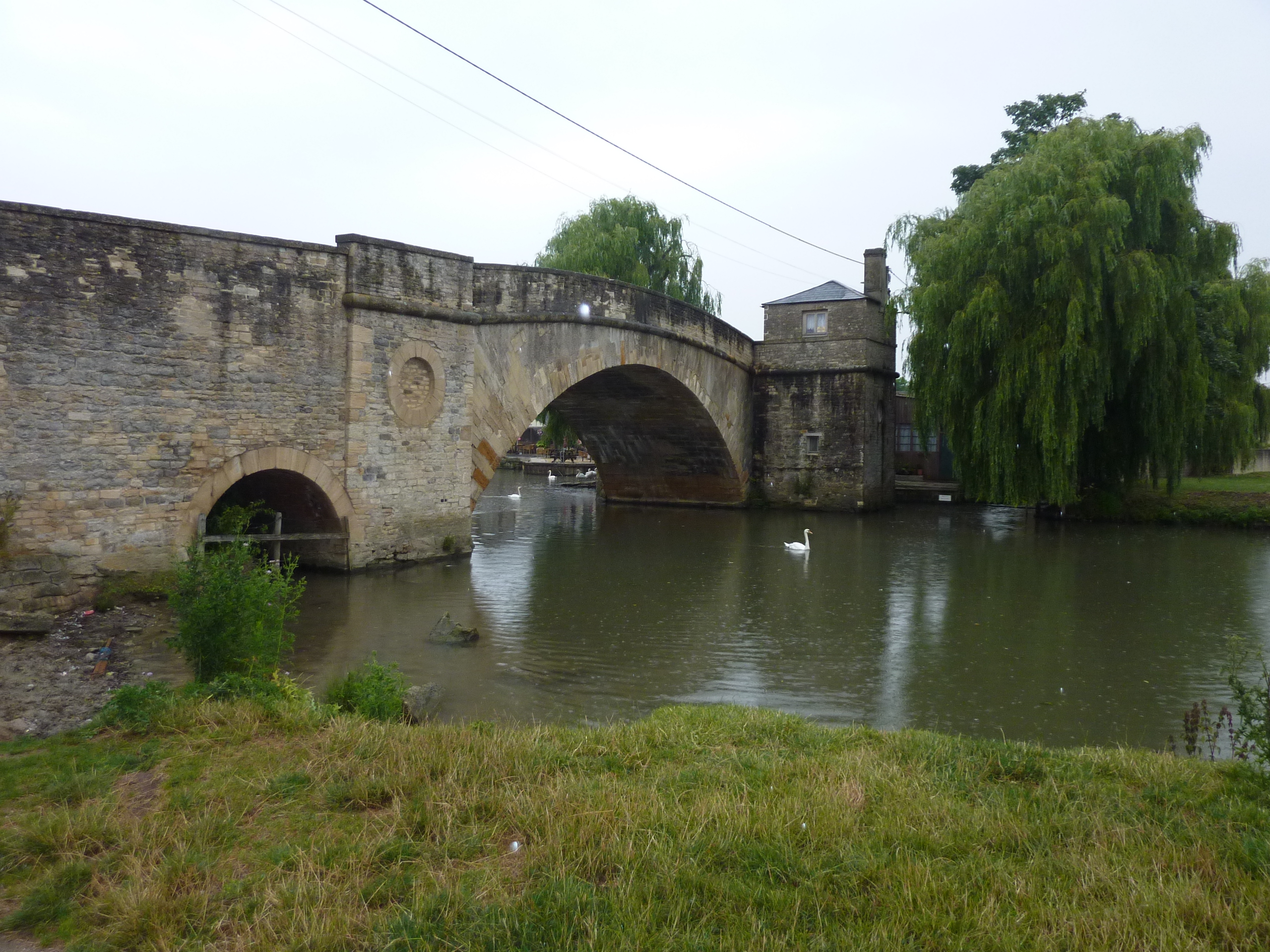
Old toll house left. Camping at Bridge House click here. £8 per adult, £4 child. An easy carry to the river. (2019 update; £10 adult. The price increase seems to have been spent on “dog lead police”. Still a lovely site.)
1 mile – St John’s Lock (1790)
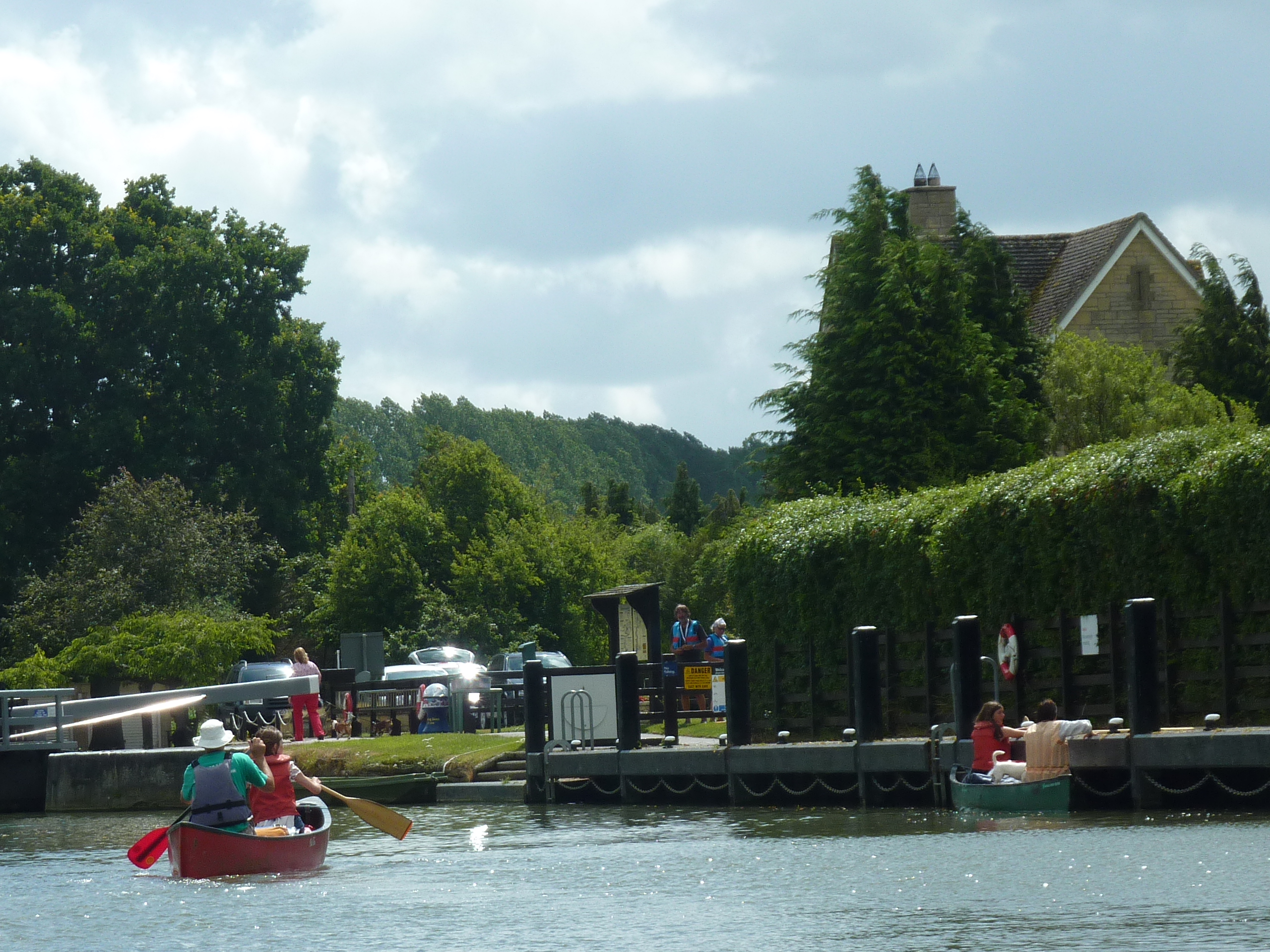
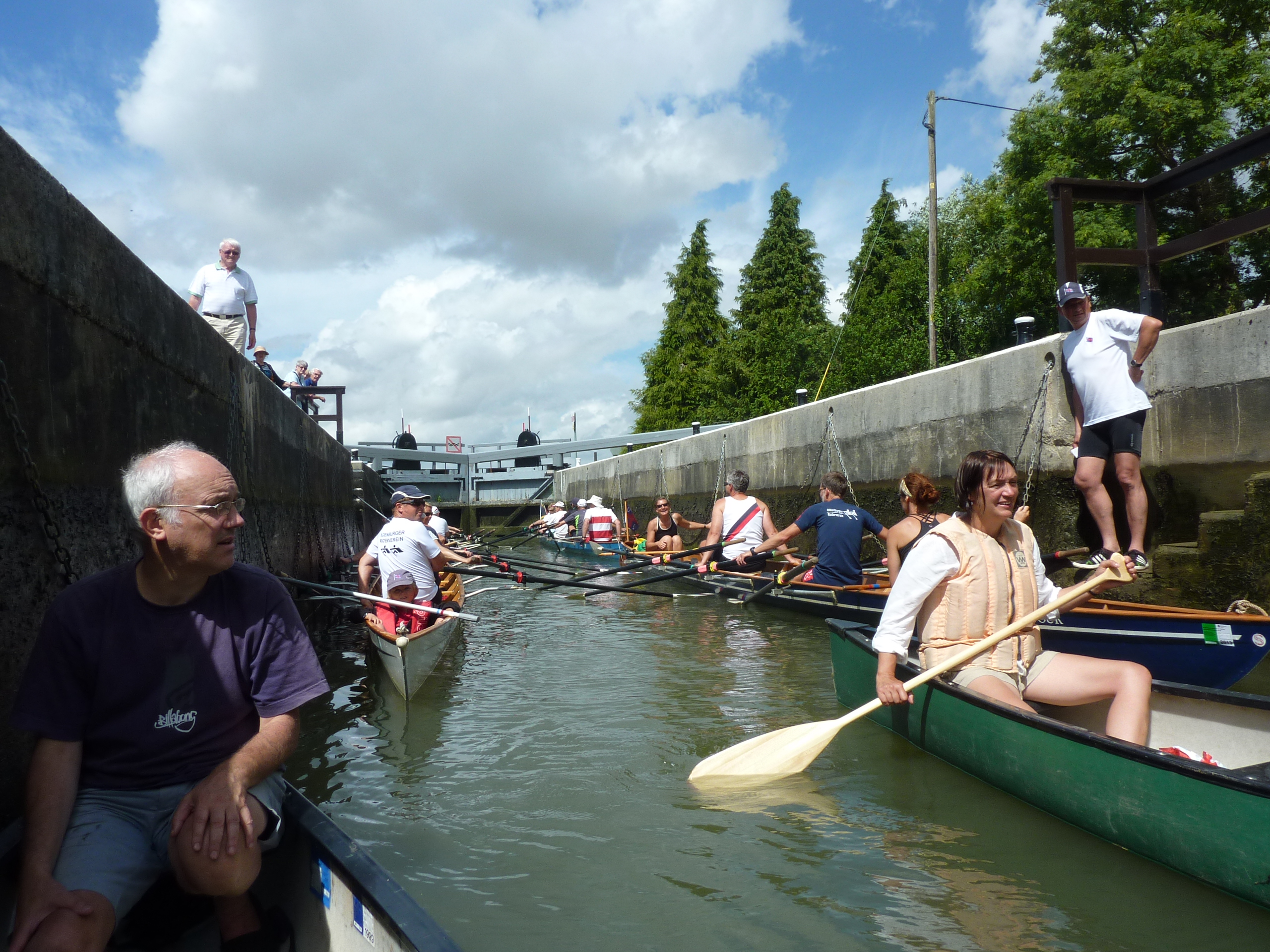
Get your river permit here. No camping on the island.
St John’s bridge (1886)
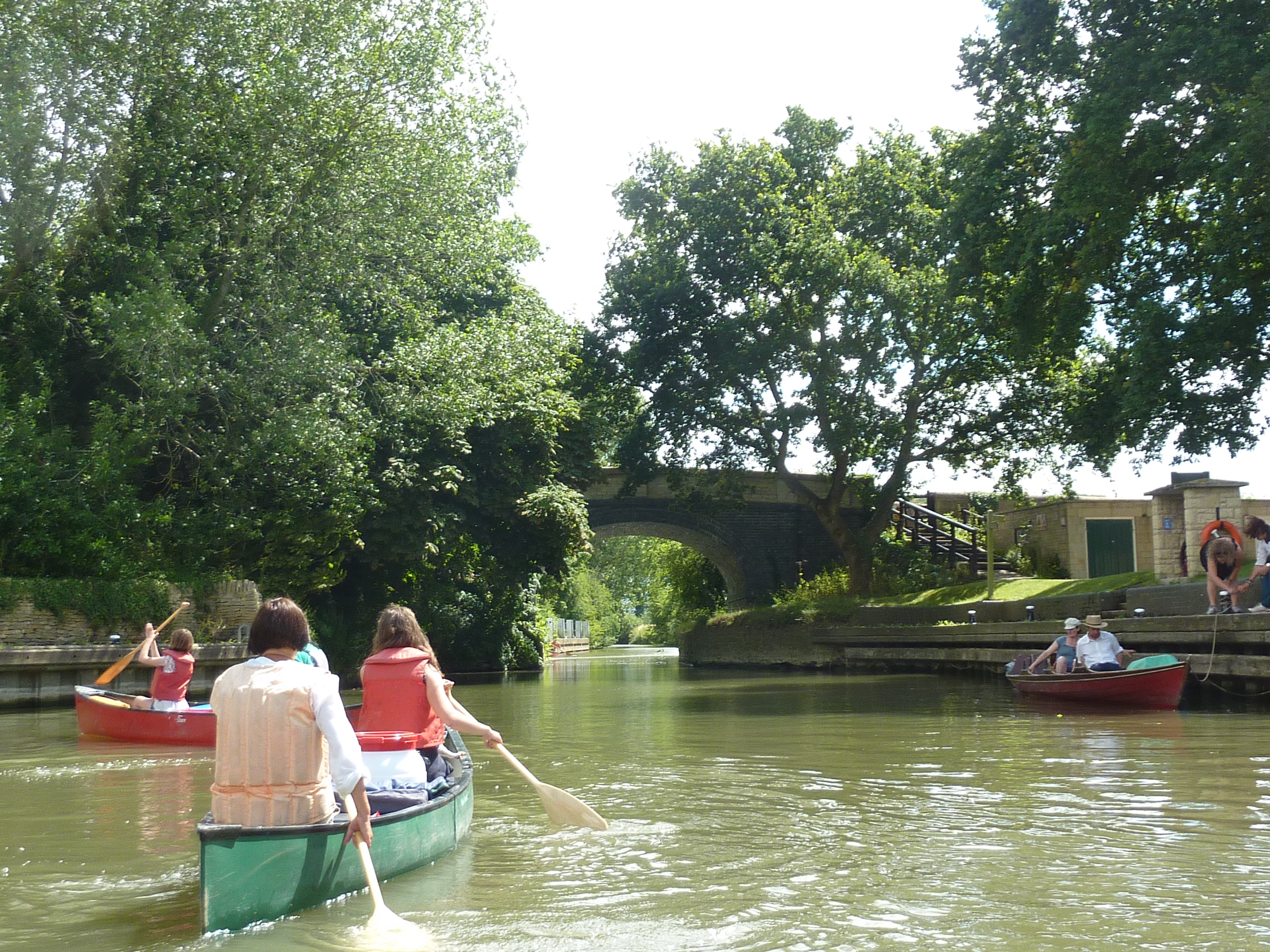
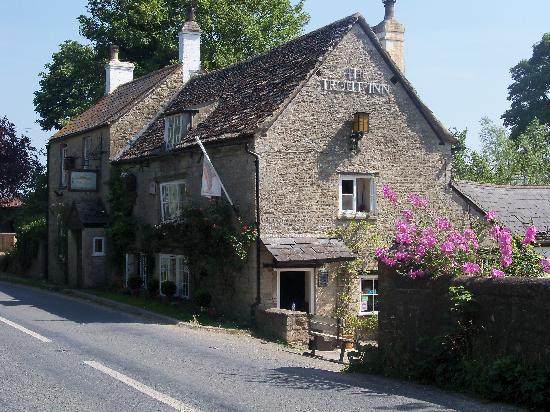
The first of many Trout Inns, left just below the bridge. Jazz and folk venue.
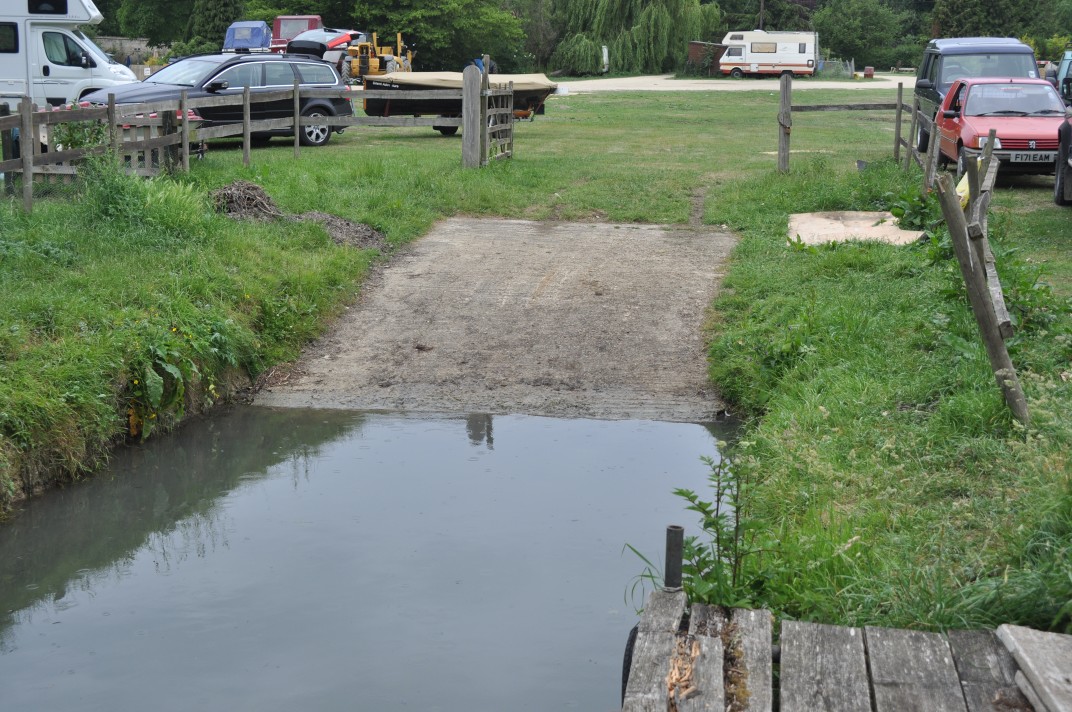
Land back up the weir stream. Slipway in side channel leads into field downstream from the pub. Camping. Ask at the Inn.
Bloomers Hole footbridge (2000).
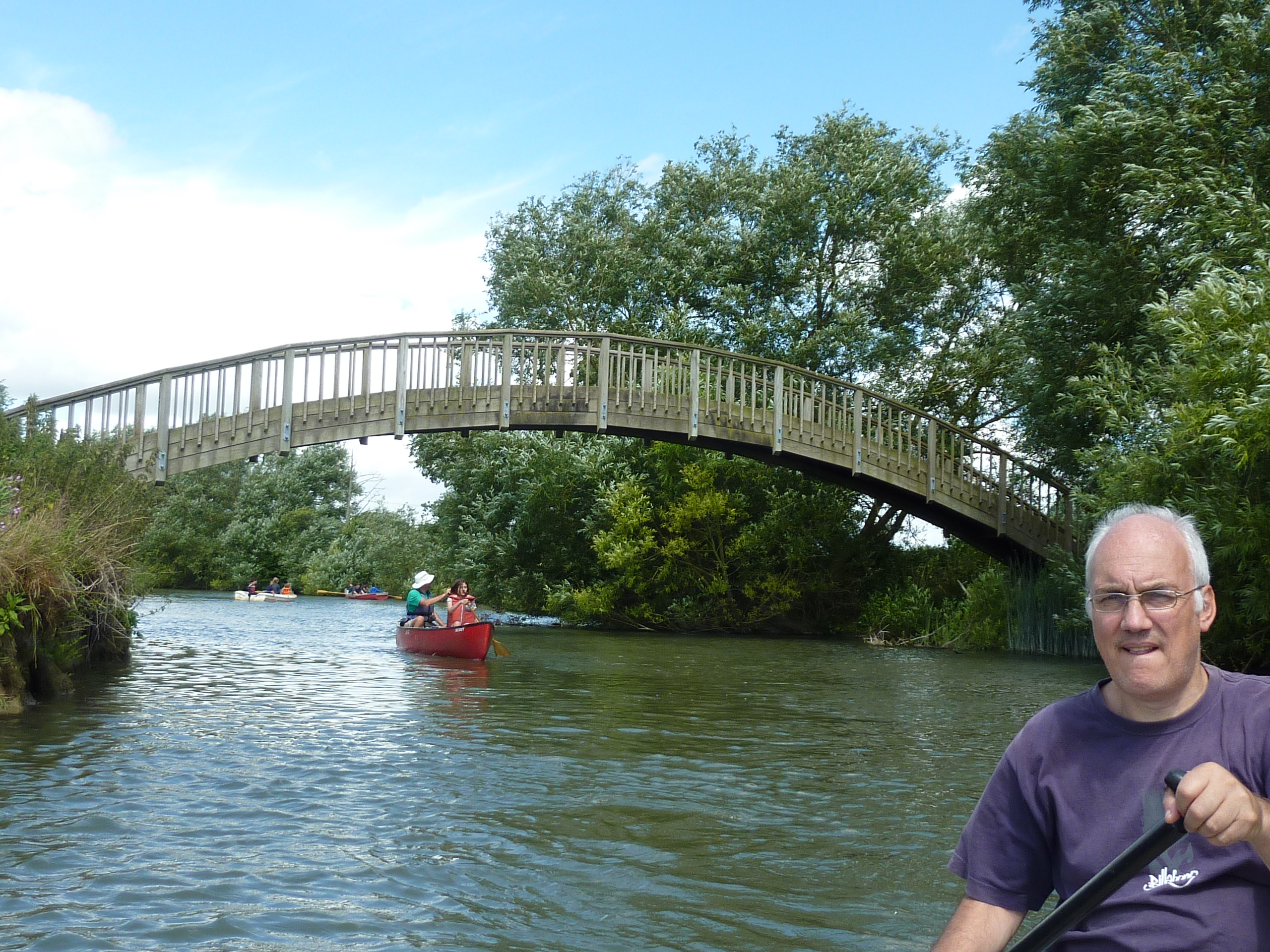
The National Trust car park right bank is a good launch spot.
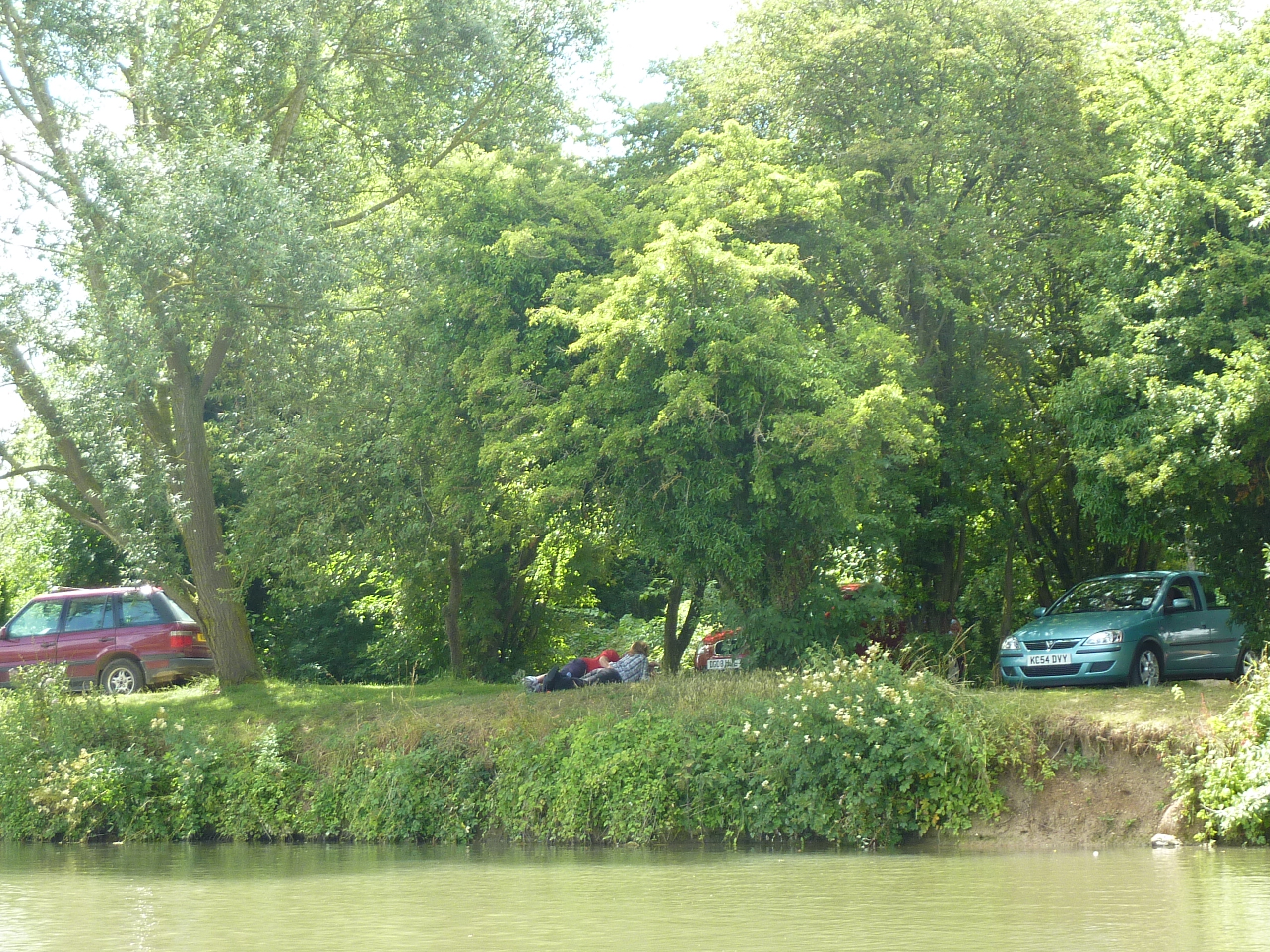
2 miles – Buscot lock
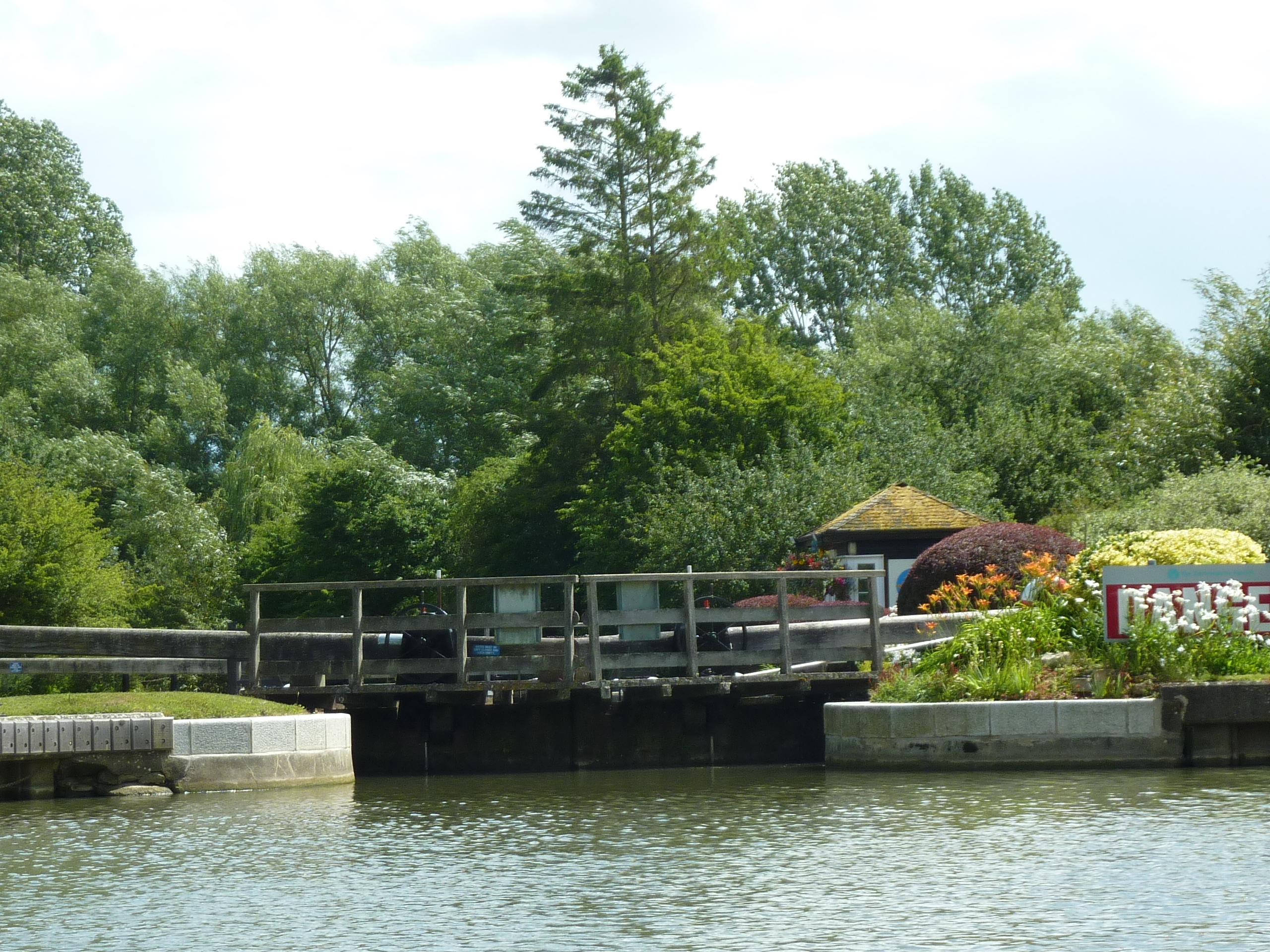
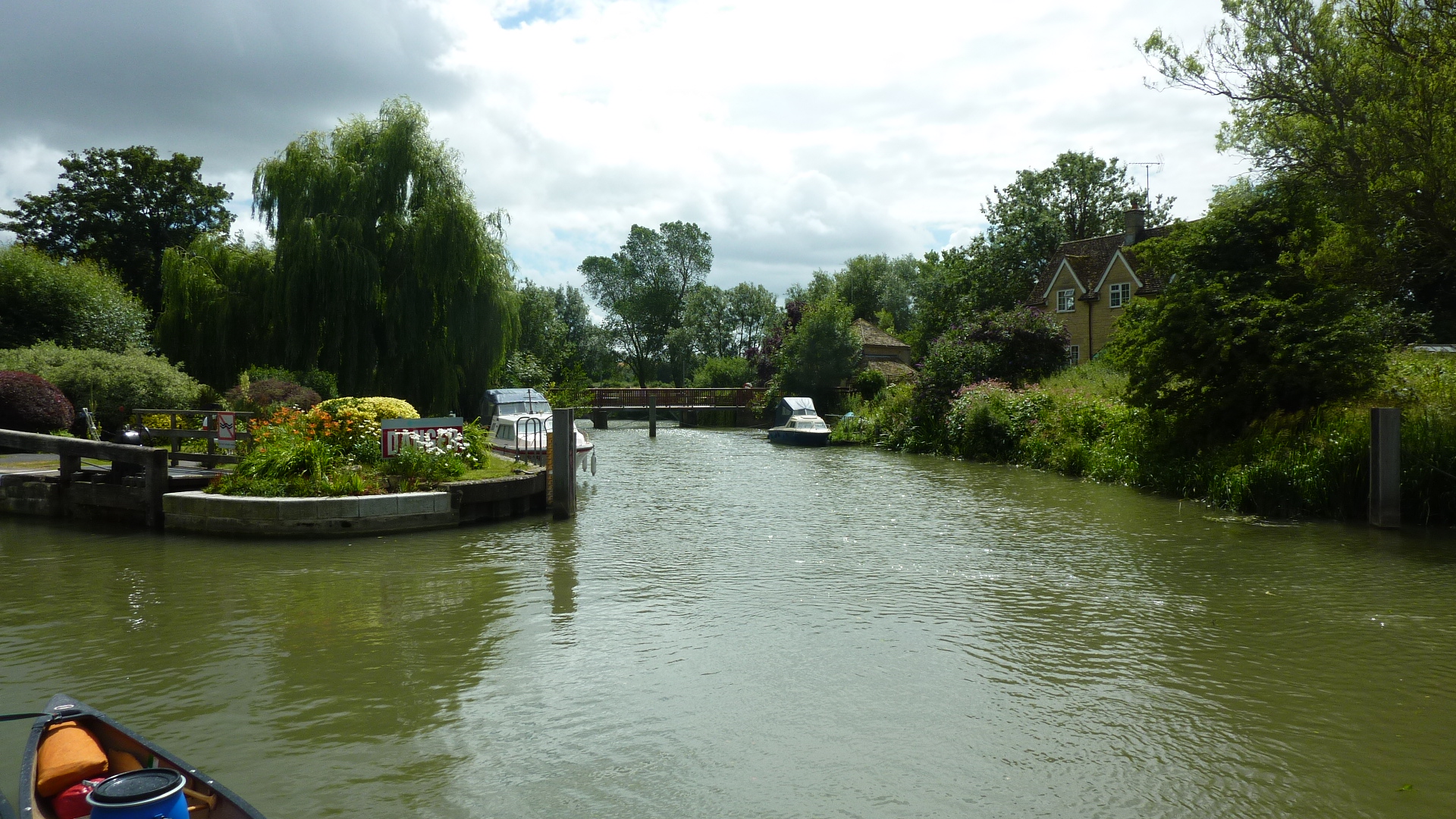
2.25 miles – Eaton footbridge.
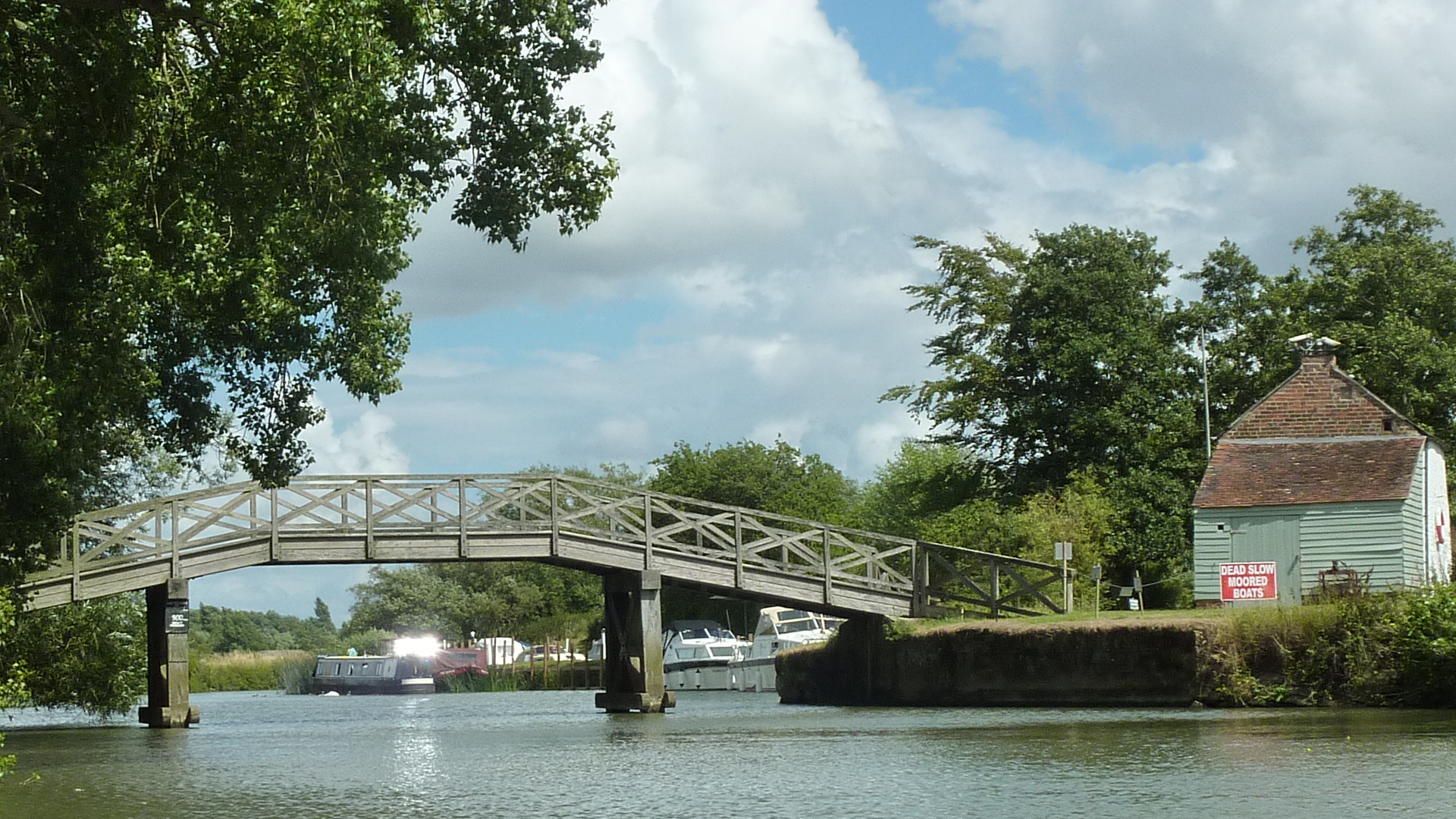
The site of the last Thames flash lock which disappeared in 1938. Houseboats are moored in the backwater.
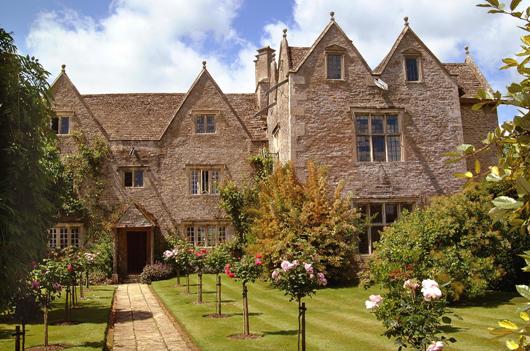
3.75 miles – Kelmscot village, Kelmscott Manor and Plough Inn left.
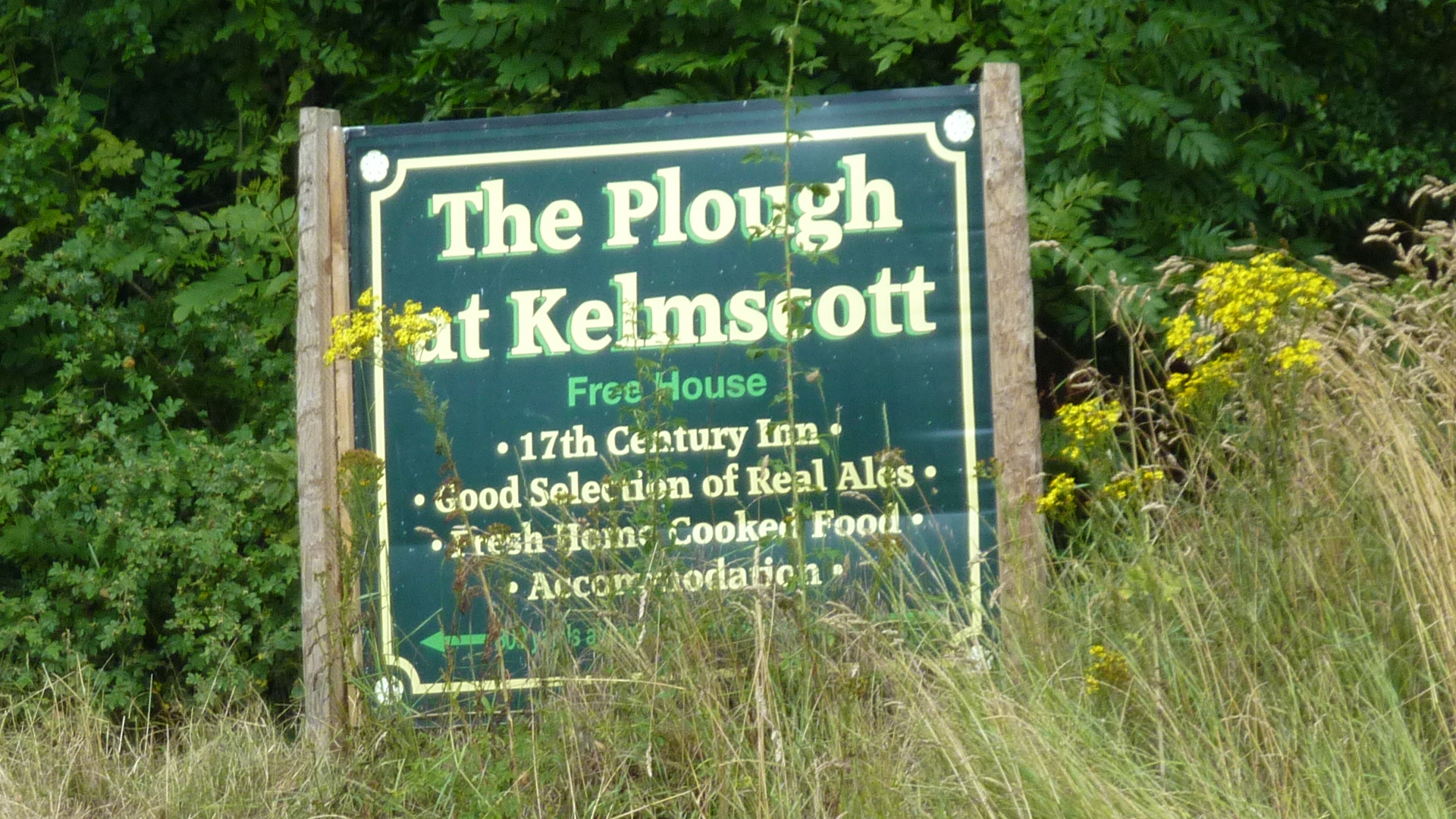
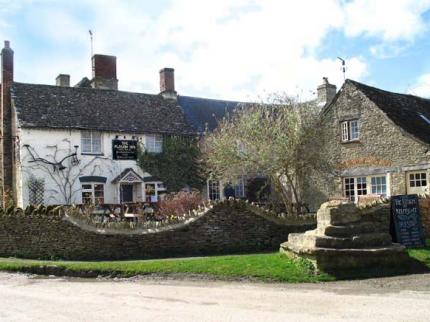
There used to be a Camping and Caravanning Club certificated site, i.e. field and tap for members, just past the pub sign on the left bank. It’s still there, but a sign (July 2013) says it’s closed.
Kelmscott Manor was co-owned by William Morris, the founder of the Arts & Crafts movement, and Dante Gabriel Rossetti, the pre-Raphaelite painter. It is a lovely house.
4.5 miles – Grafton lock
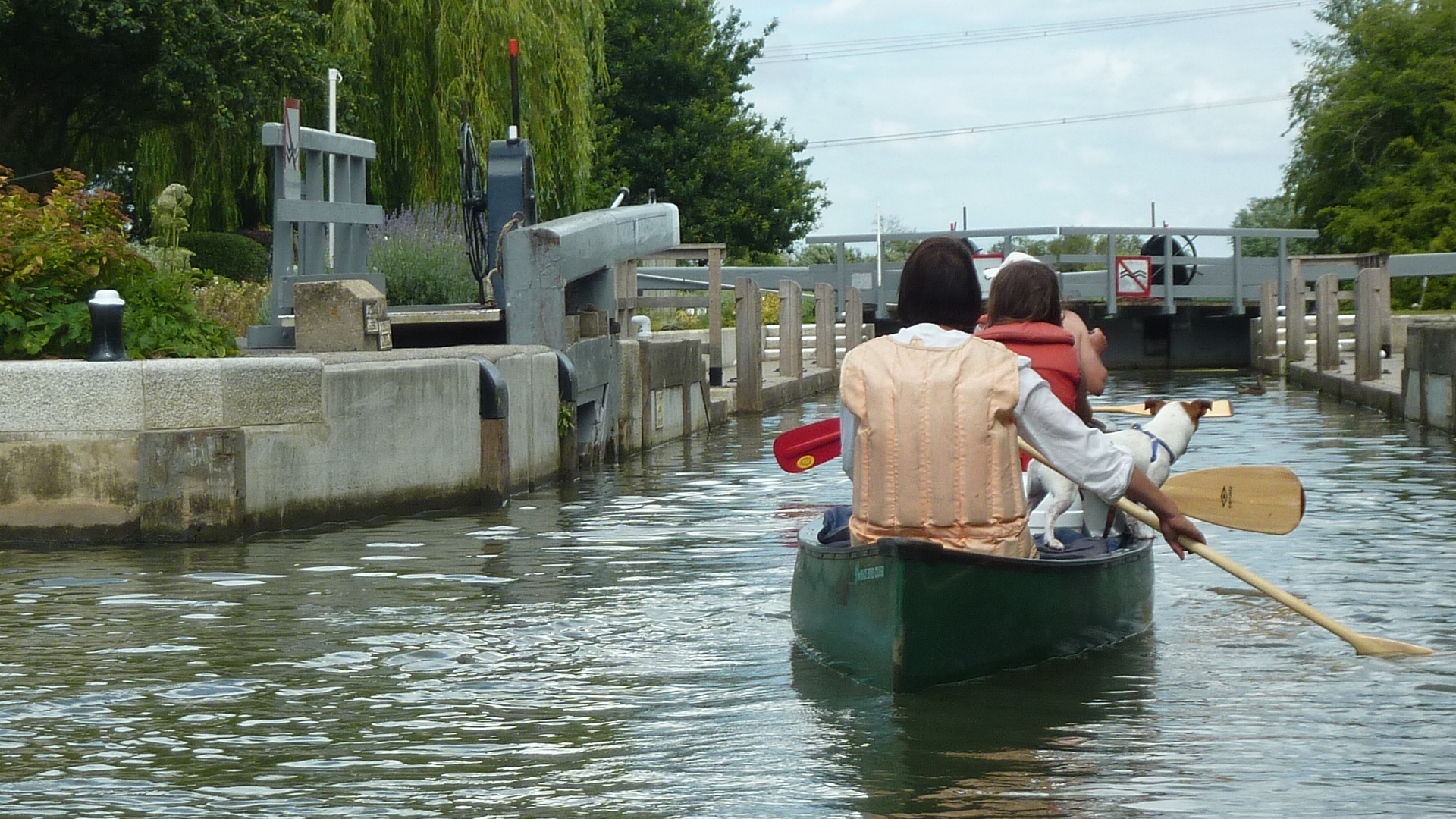
6.5 miles Radcot Bridges (1225 and 1787)
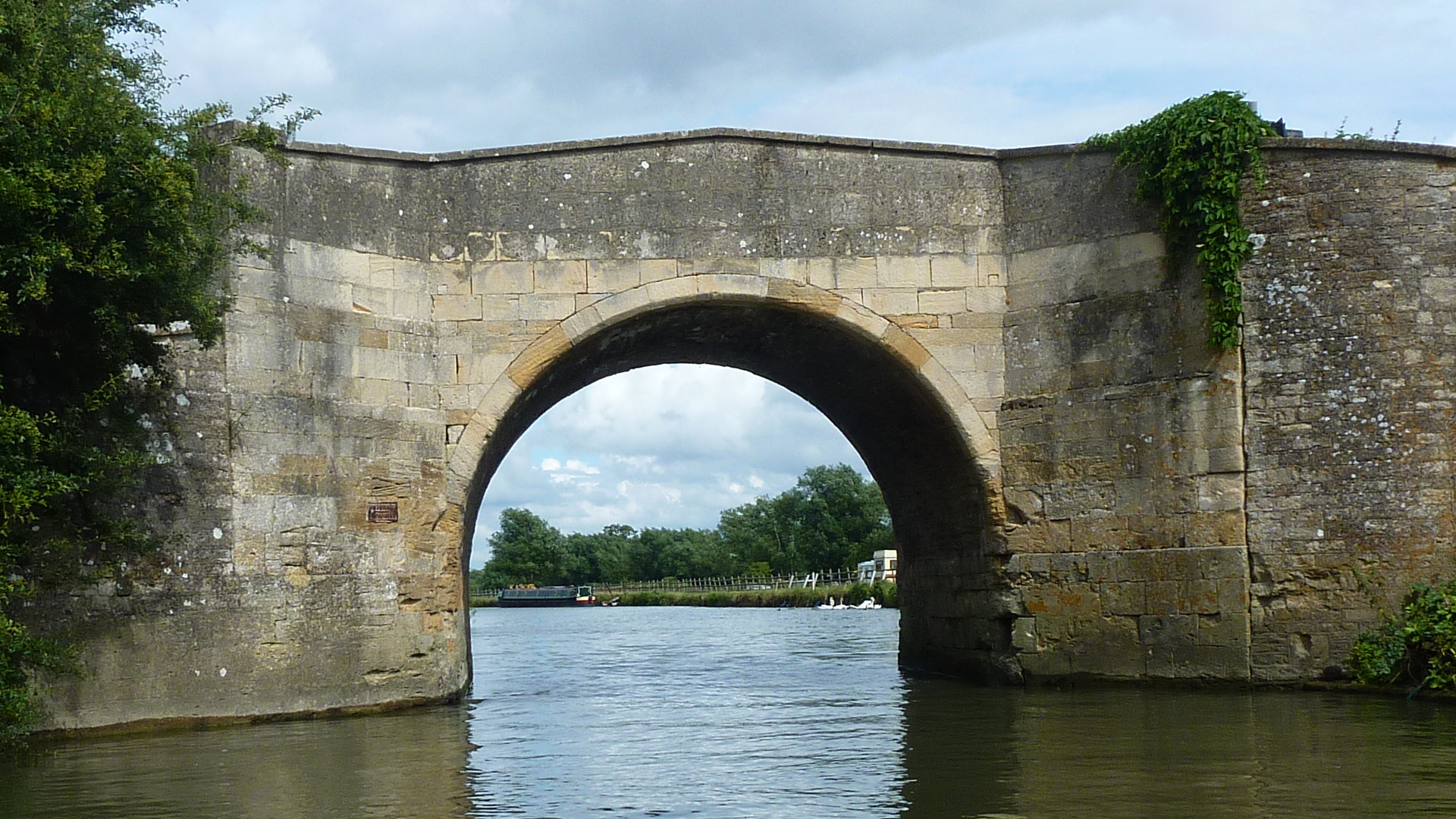
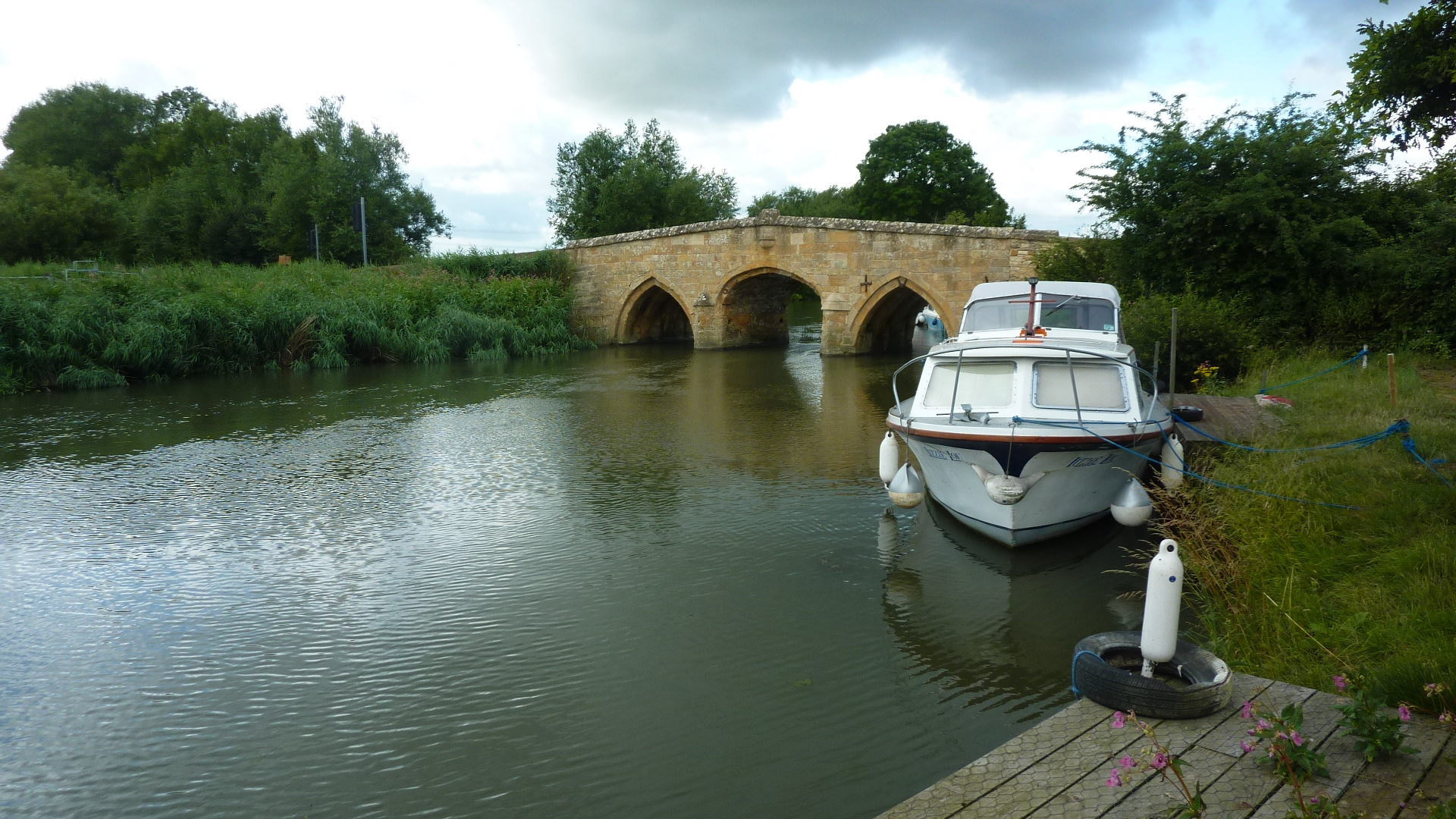
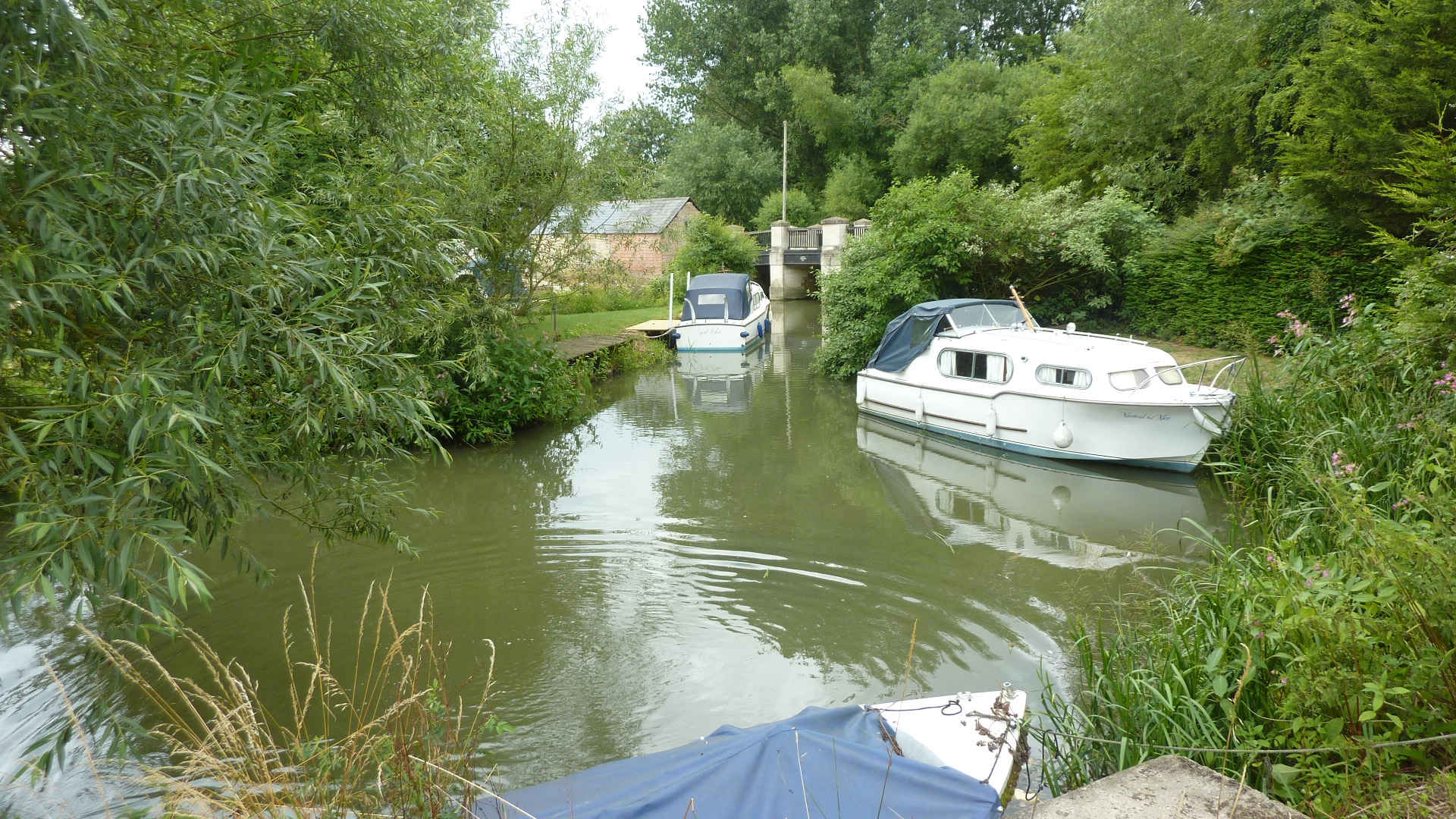
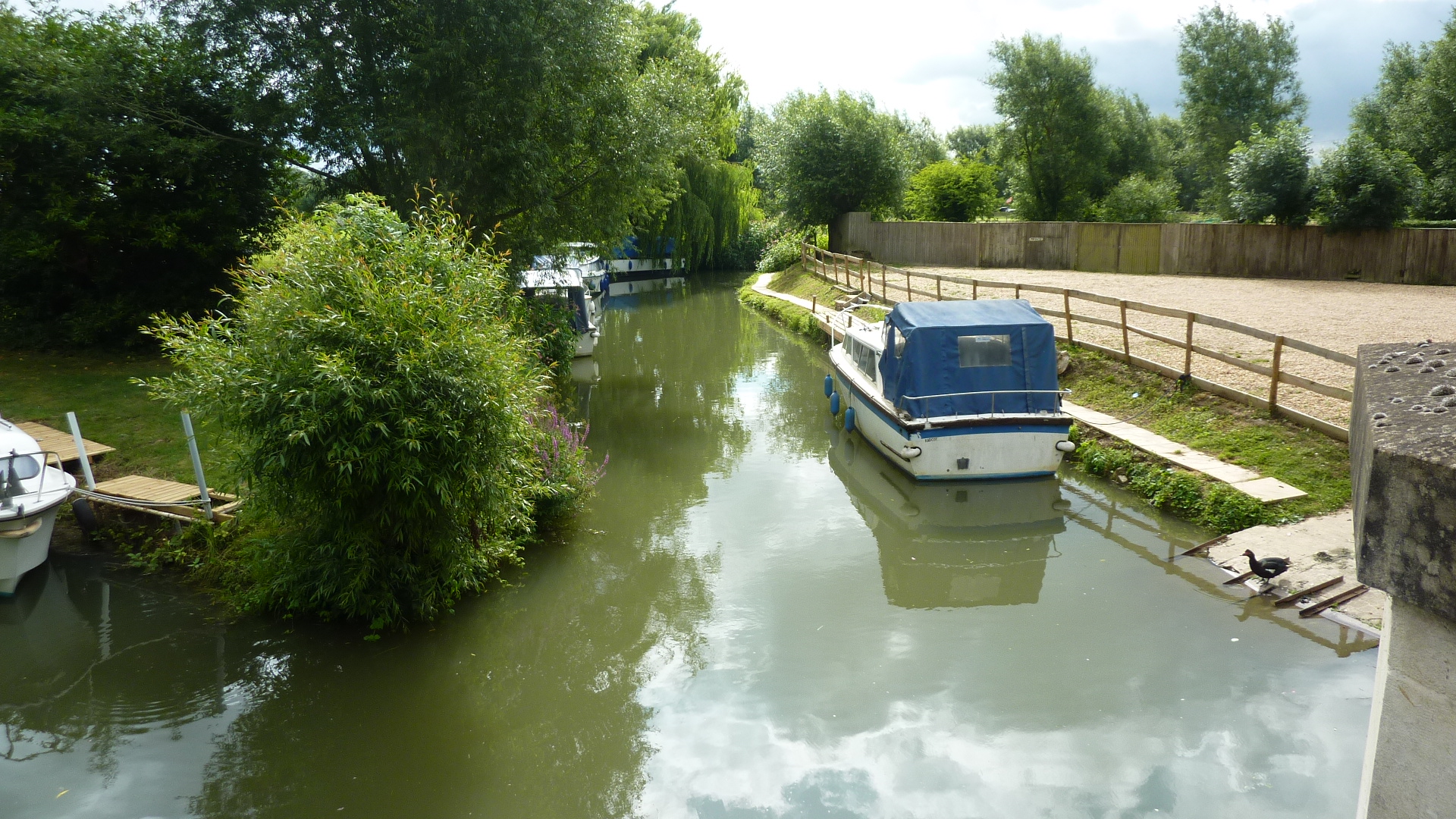
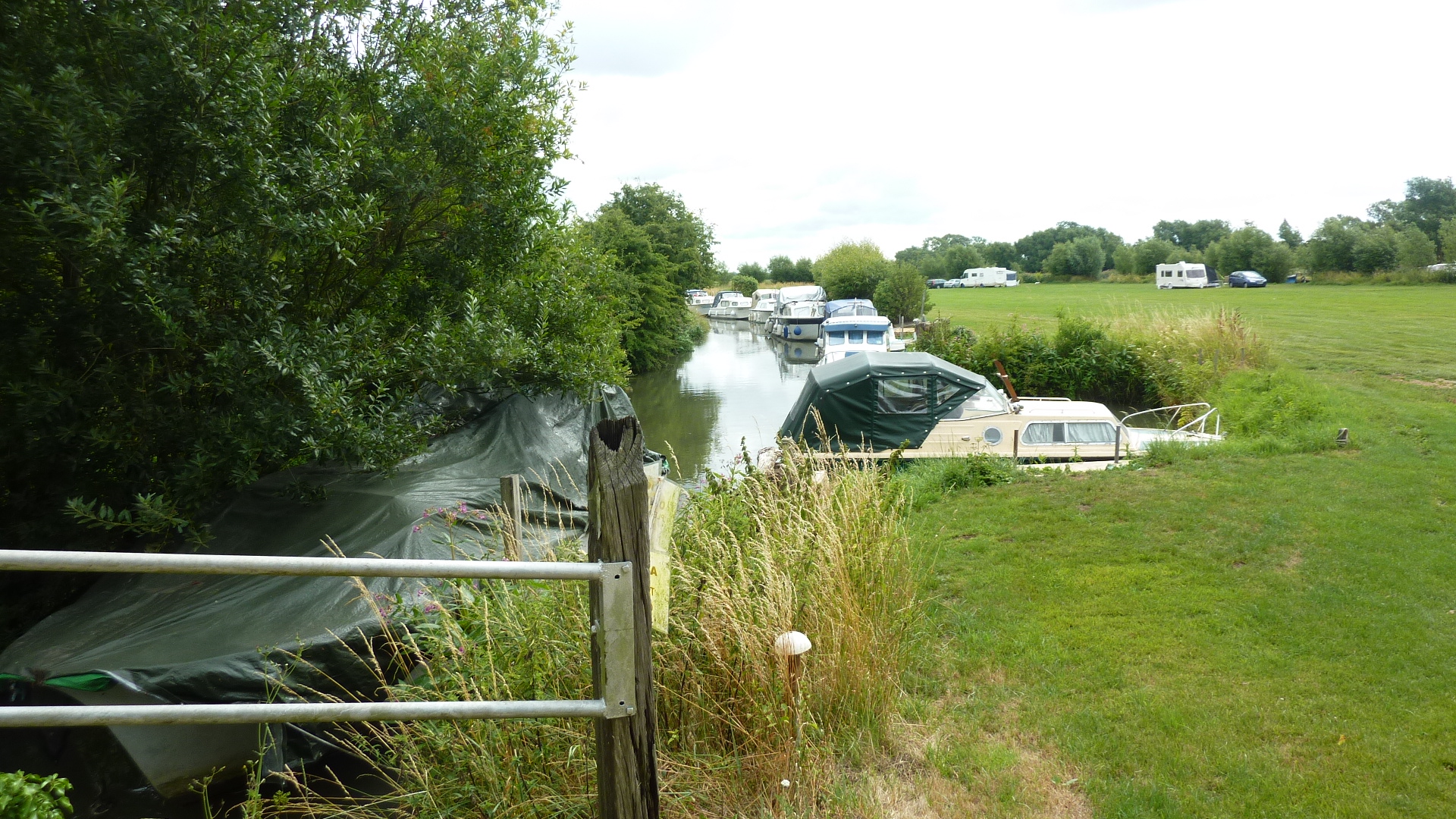
The river divides above the bridge (main channel left), but the right one is easily navigable for canoes. There are now two stone bridges at Radcot; the older (1225) over the side stream, and newer (1787) over the main river. The arch is narrow, the bend blind, and the Swan Hotel lawn is a good place to watch power boats struggle. Camping on the island. Ask at The Swan Hotel (Click here).
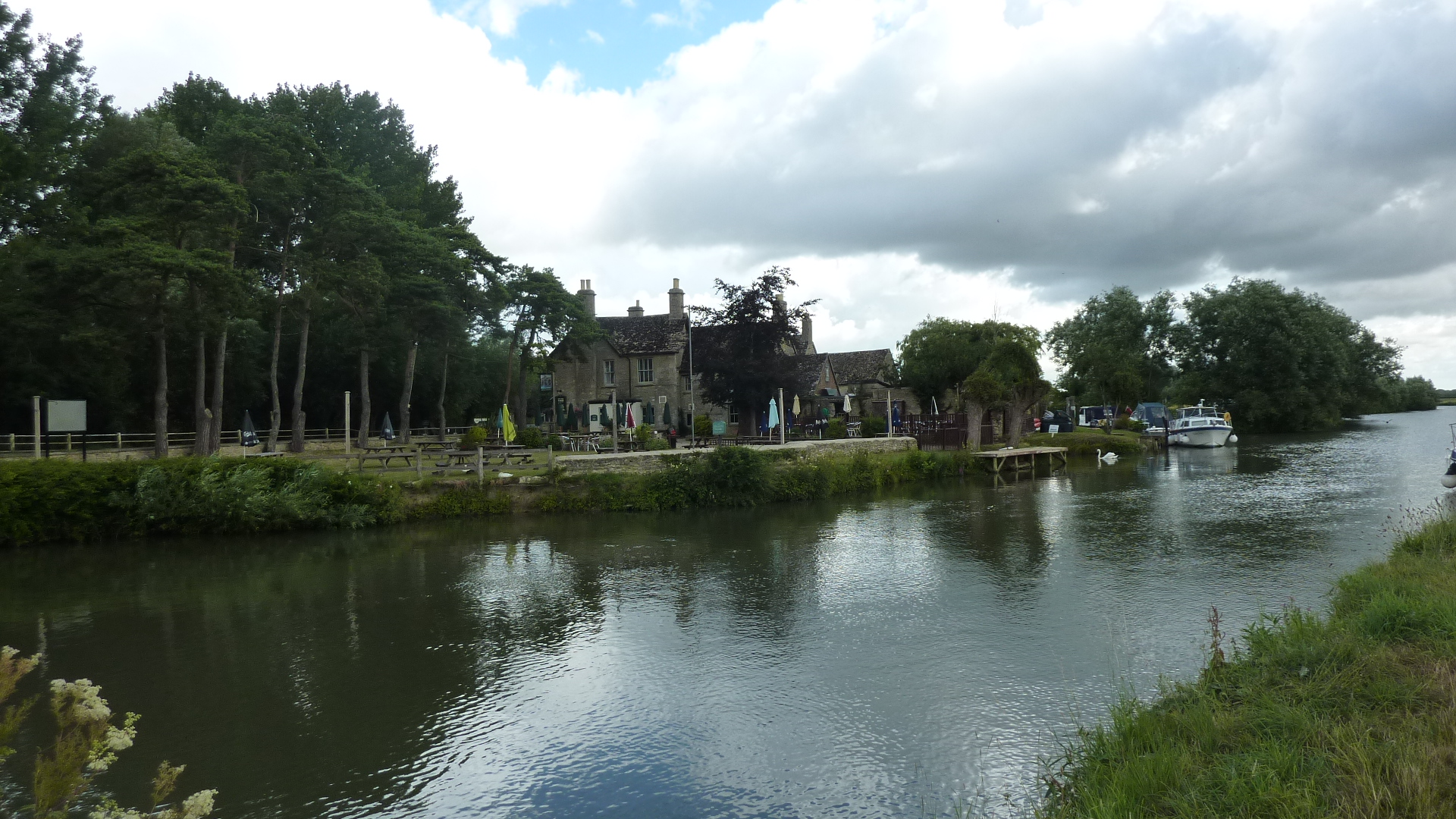
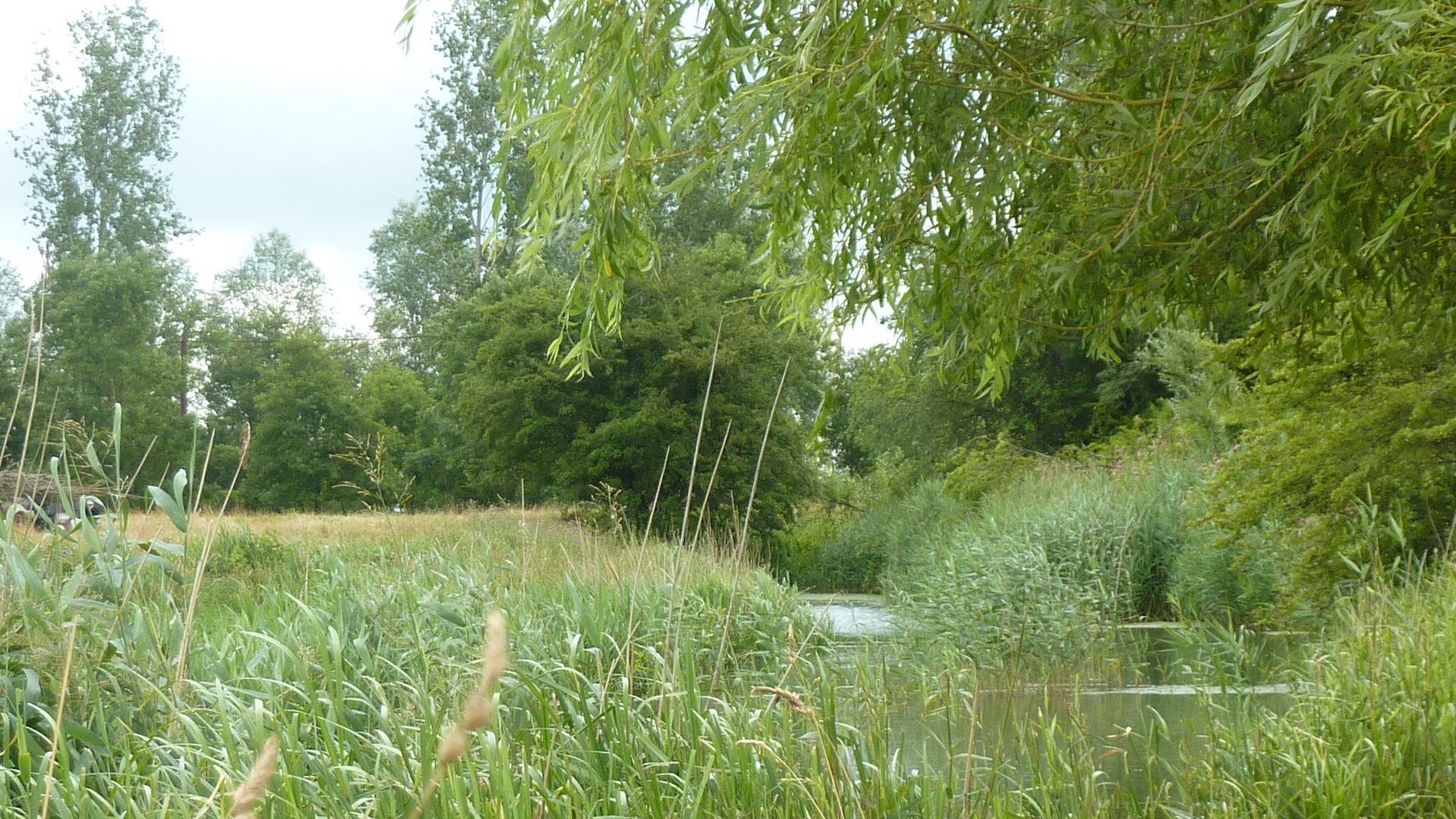
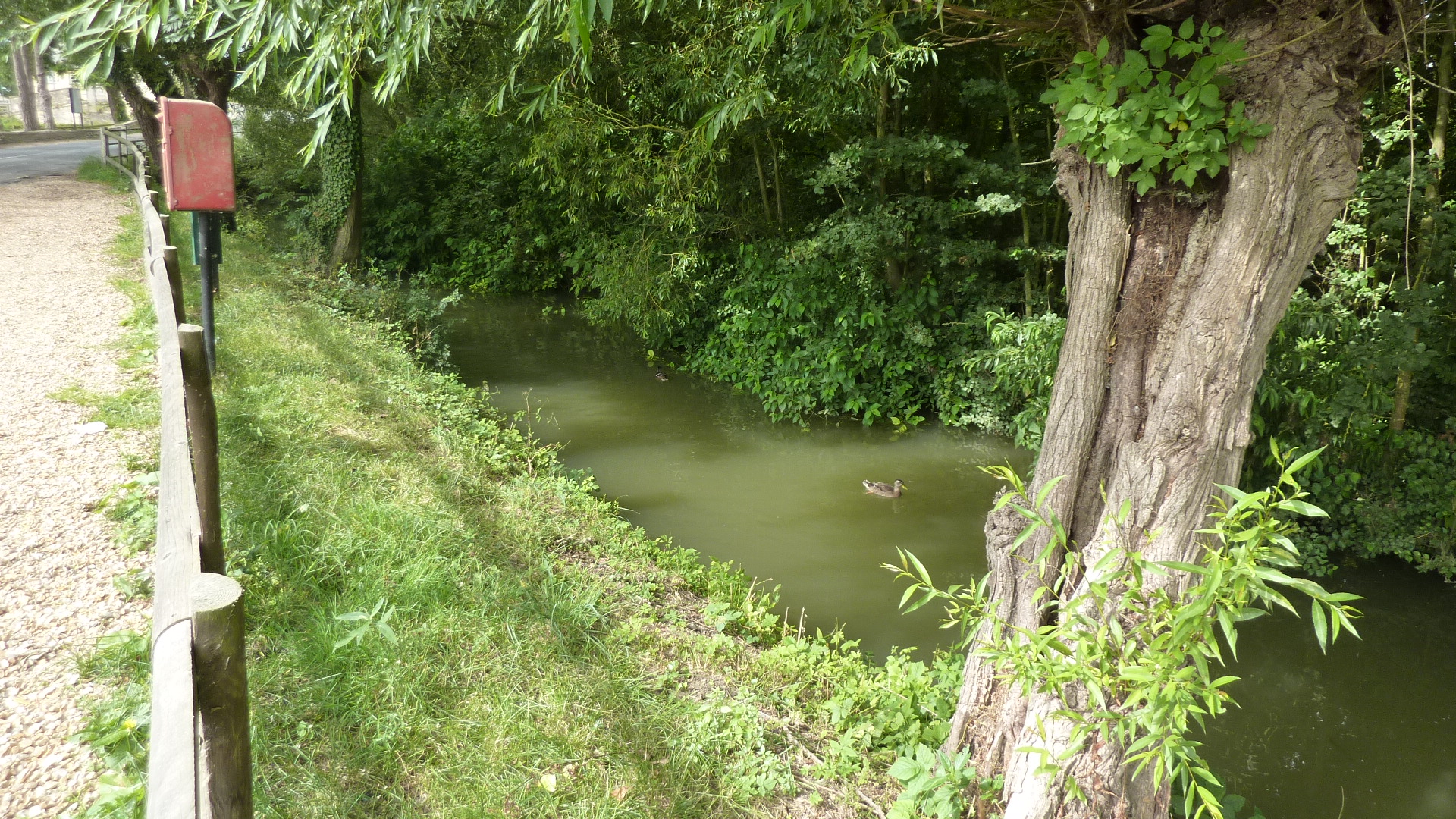
Some lovely back streams behind The Swan
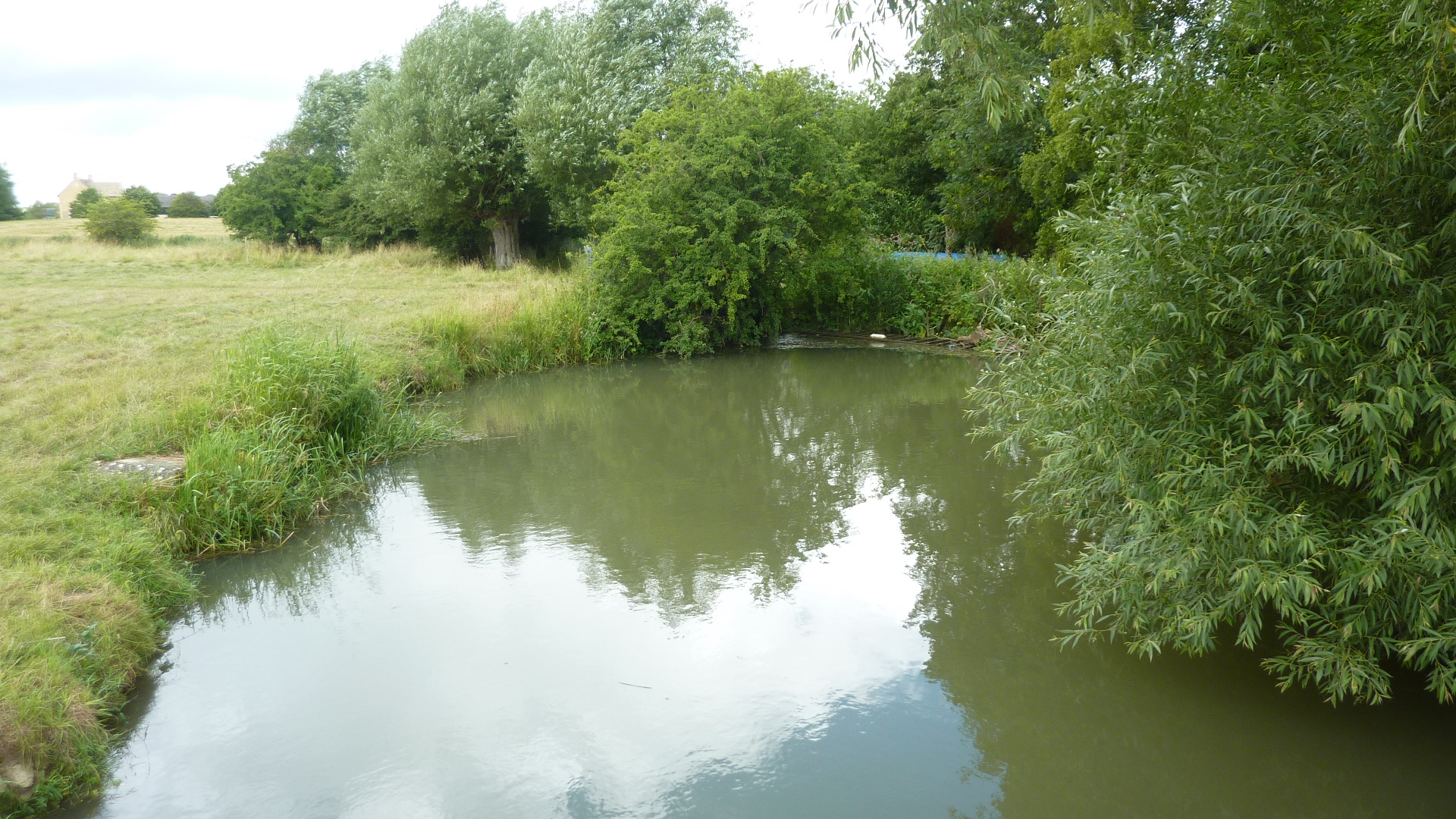
7 miles – Radcot lock
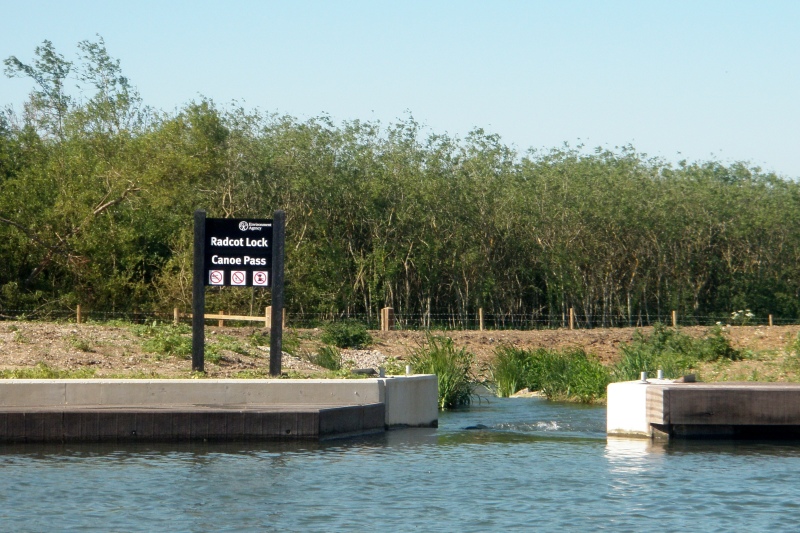
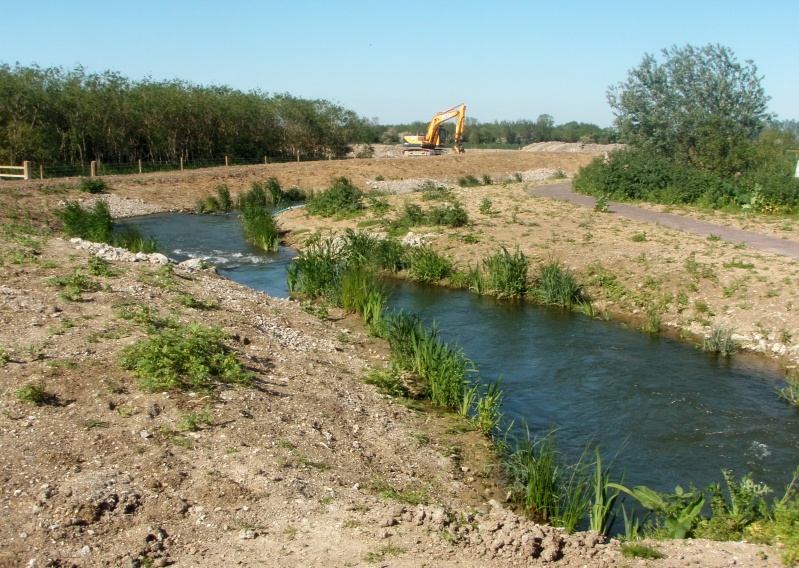
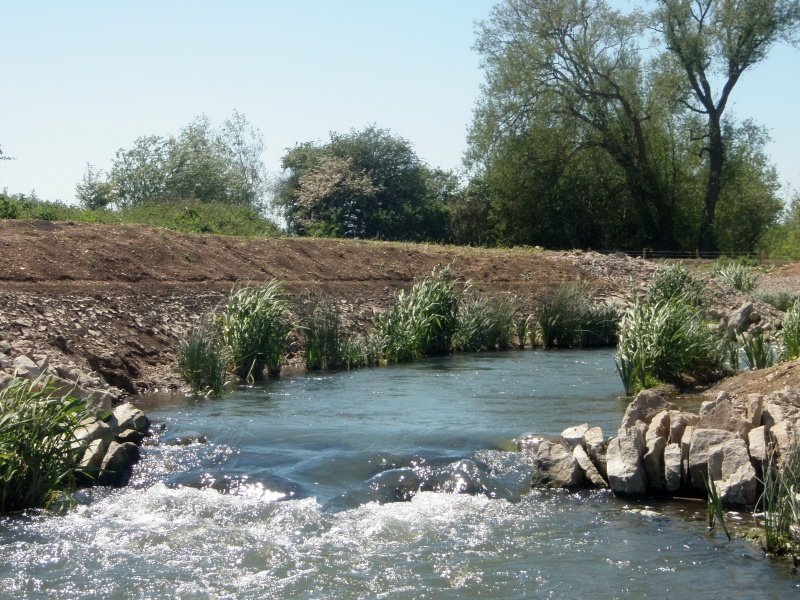
A canoe pass appeared here a couple of years ago. It would be good in a kayak. Our Canadian bumped a bit, but we got down.
7.25 miles – Old Man’s Bridge (1868)
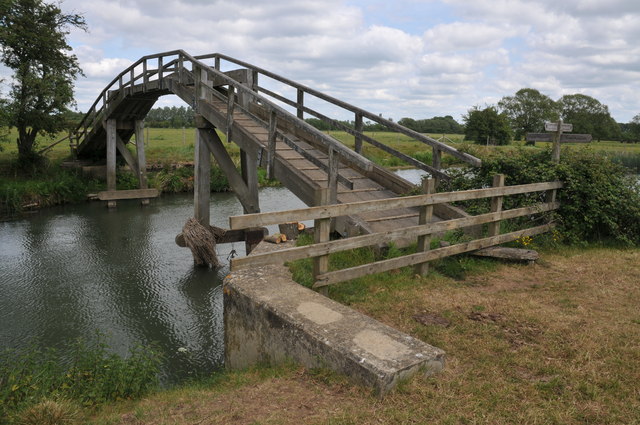
10 miles – Rushey Lock
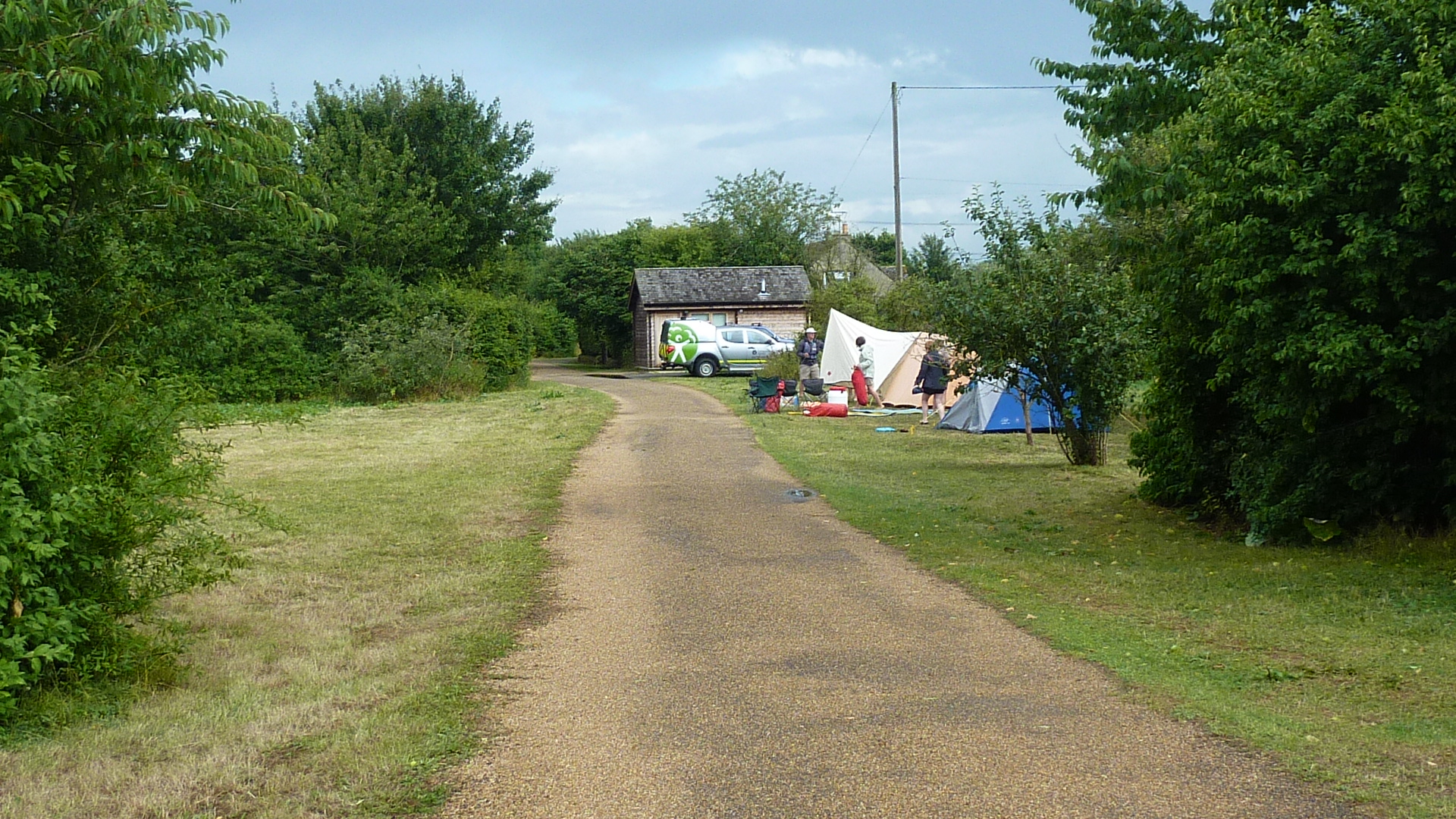
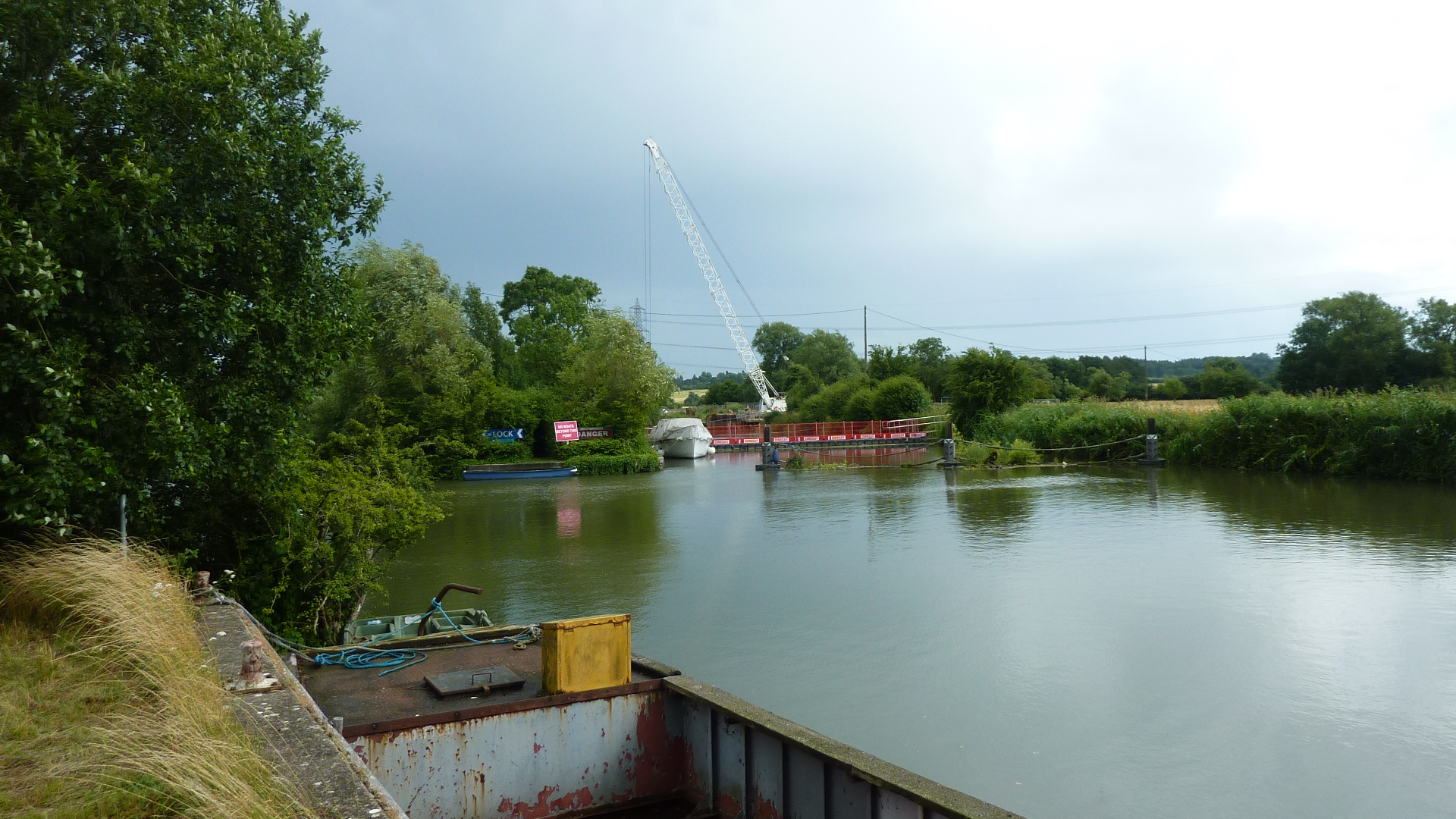
Camping at the lock – toilet, hot water and showers.
10.5 miles – Tadpole bridge. c1789.


The canoe centre that used to be just above the bridge seems to have disappeared. The Trout Inn, right bank below the bridge is now an expensive restaurant catering to motorists of both the boat and car variety. I suspect they’d take a dim view of canoeists pulling up for a beer. Unless you’re very thick skinned, land opposite and scramble up to the Thames path.
The next 100 yards of right bank, which used to be a campsite, are now motor boat moorings. Slip discreetly in, for a bit of wild camping beyond.
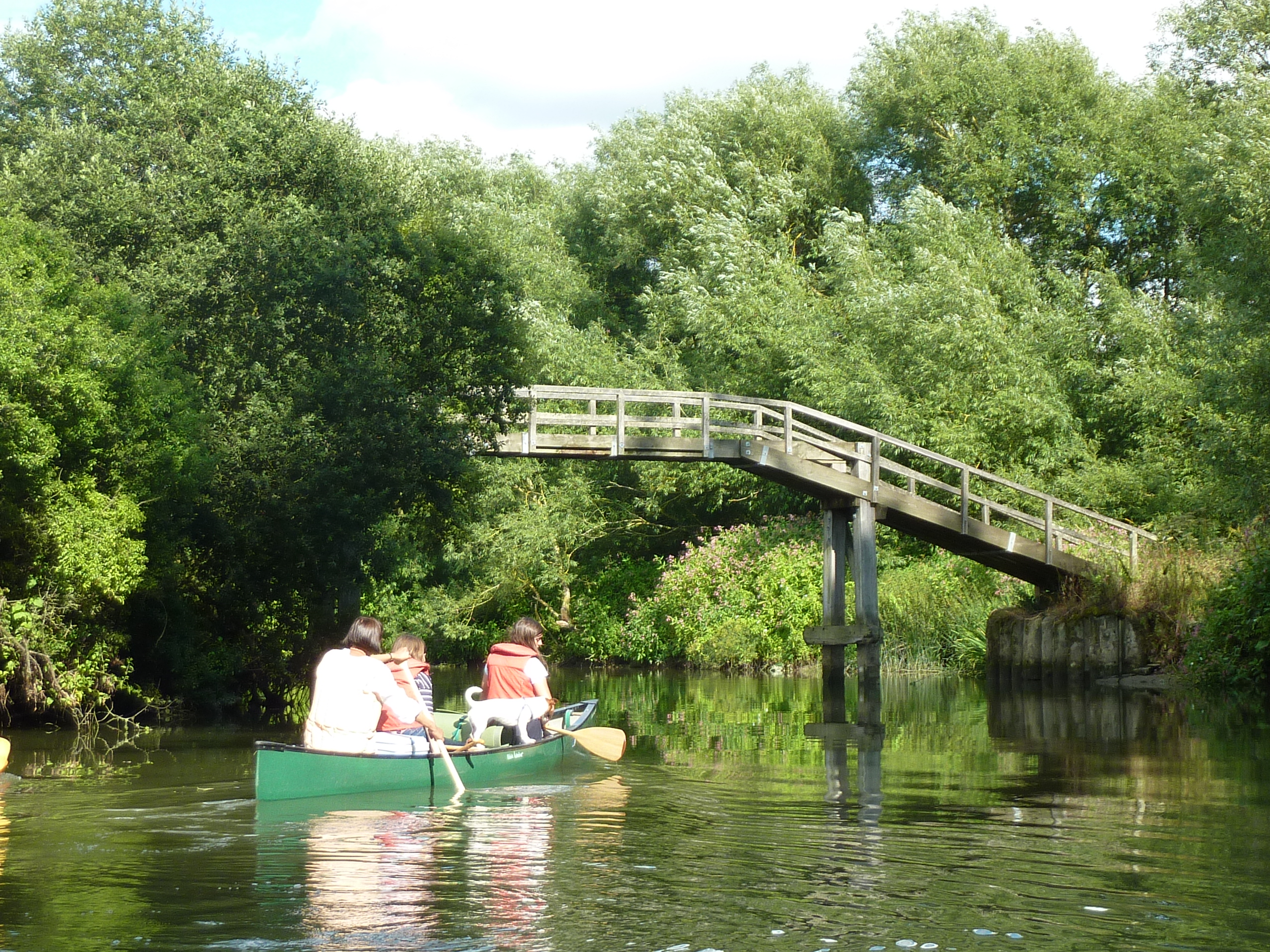
12.25 – Tenfoot bridge
13.5 miles – Shifford lock cut left.
14.25 miles – Footbridge.
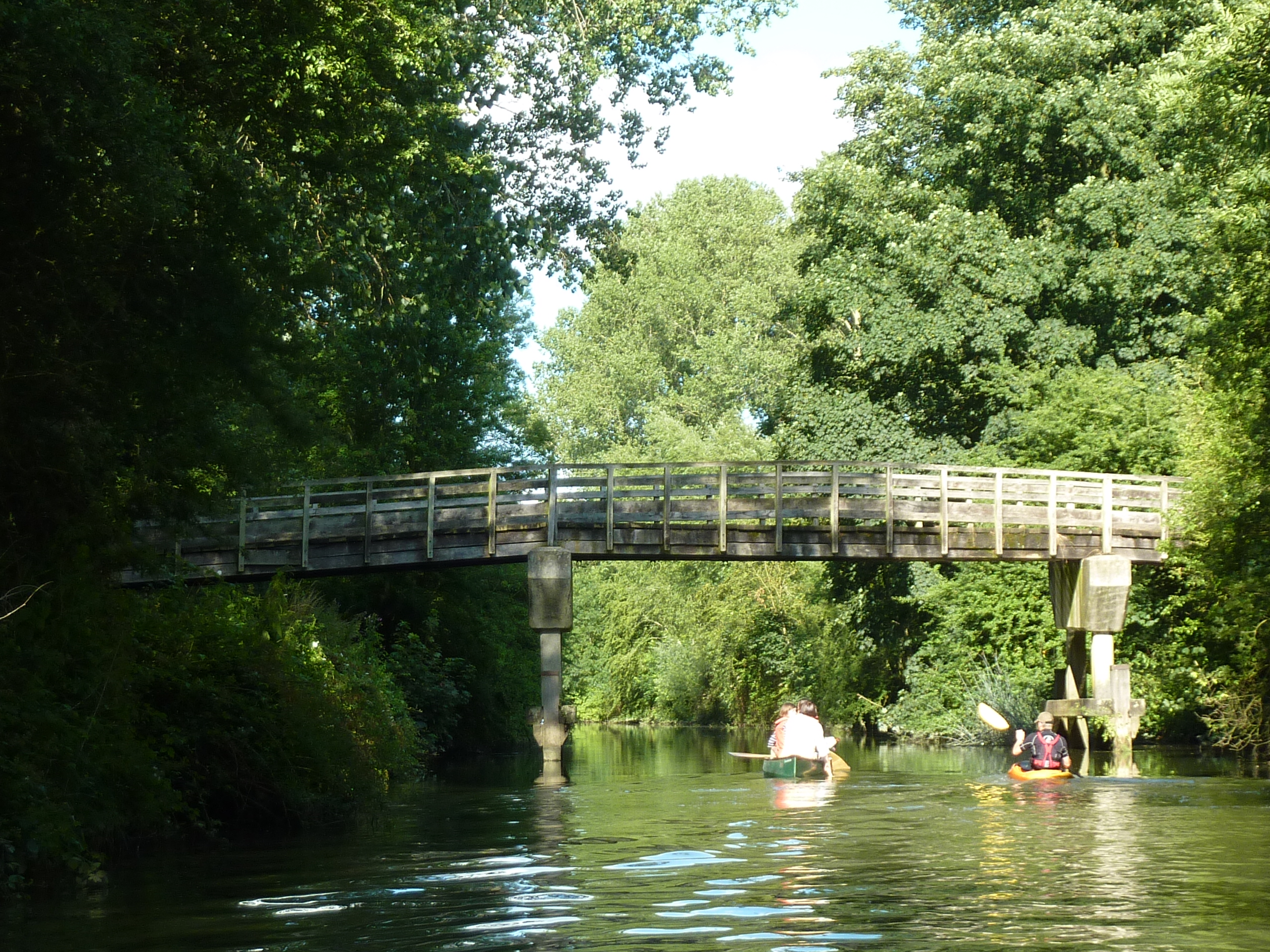
14.5 miles – Shifford Lock
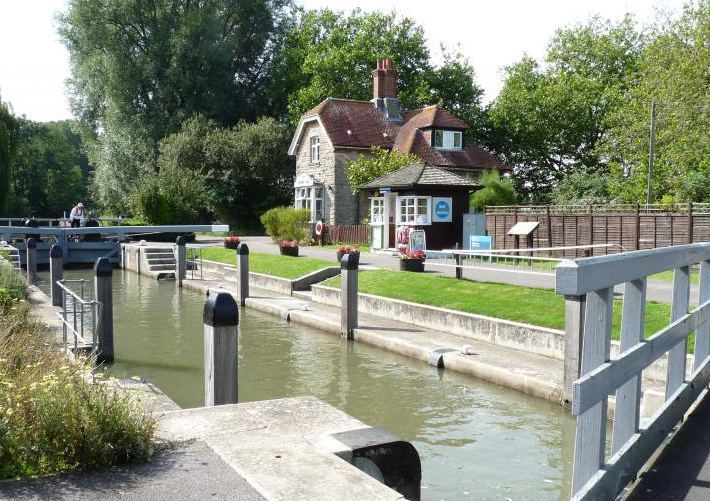
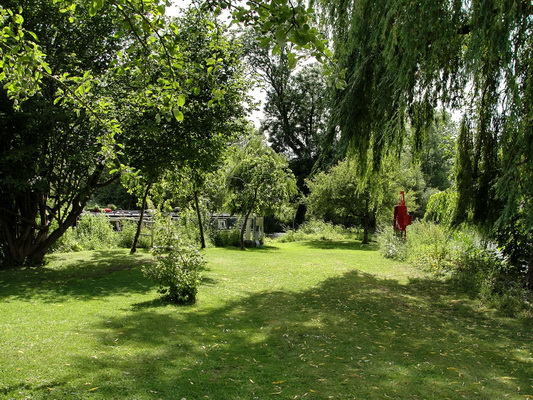
Small campsite on the island – toilet, and shower.
Just below the lock the original course of the river enters right. You can paddle back up this original stream about half a mile to Duxford where there is a ford. A lovely spot for a swim. iGreens.org.uk mentioned a campsite in Duxford but it seems to have disappeared.
17 miles – River Windrush joins left. Newbridge c1250.
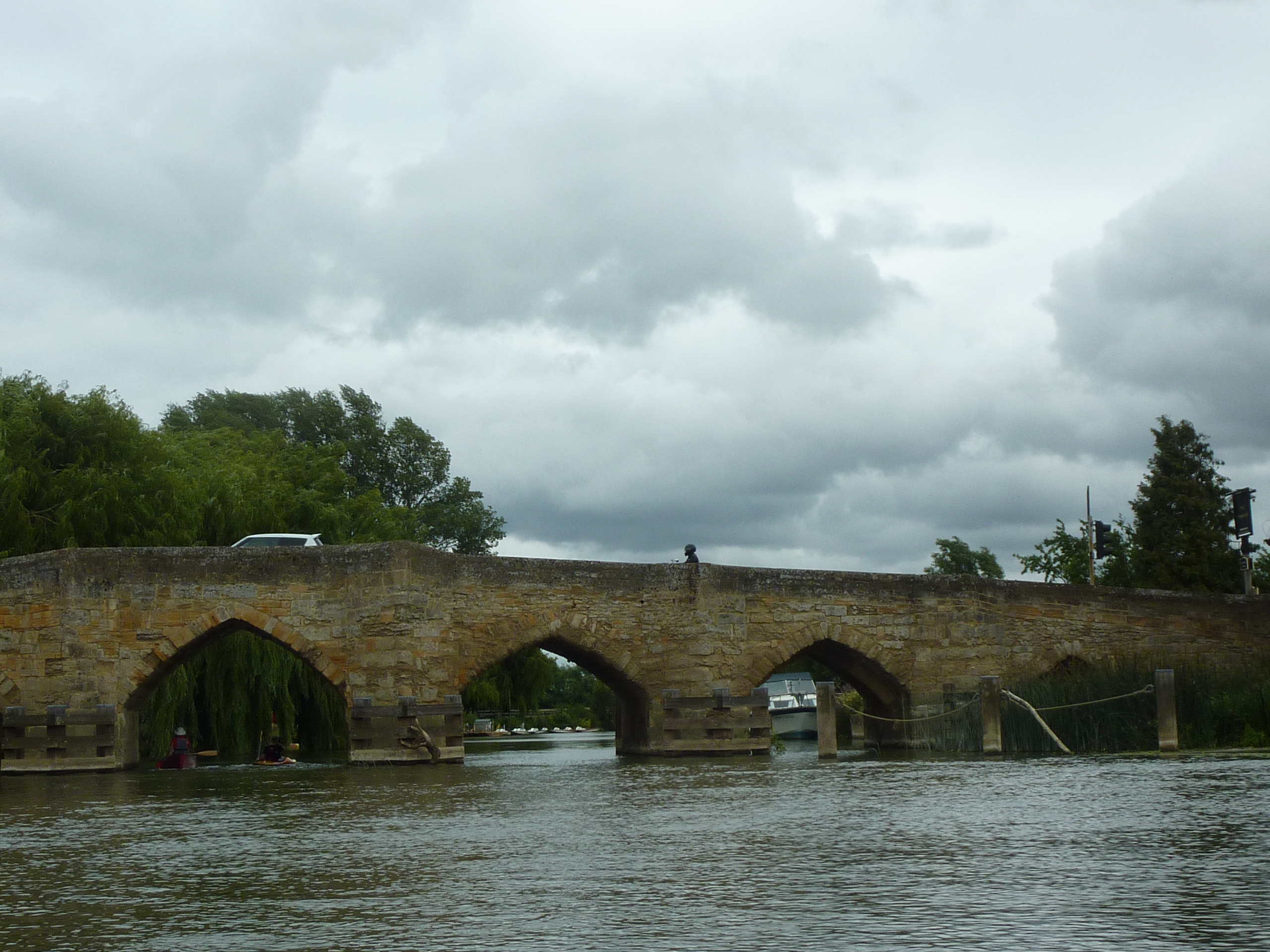
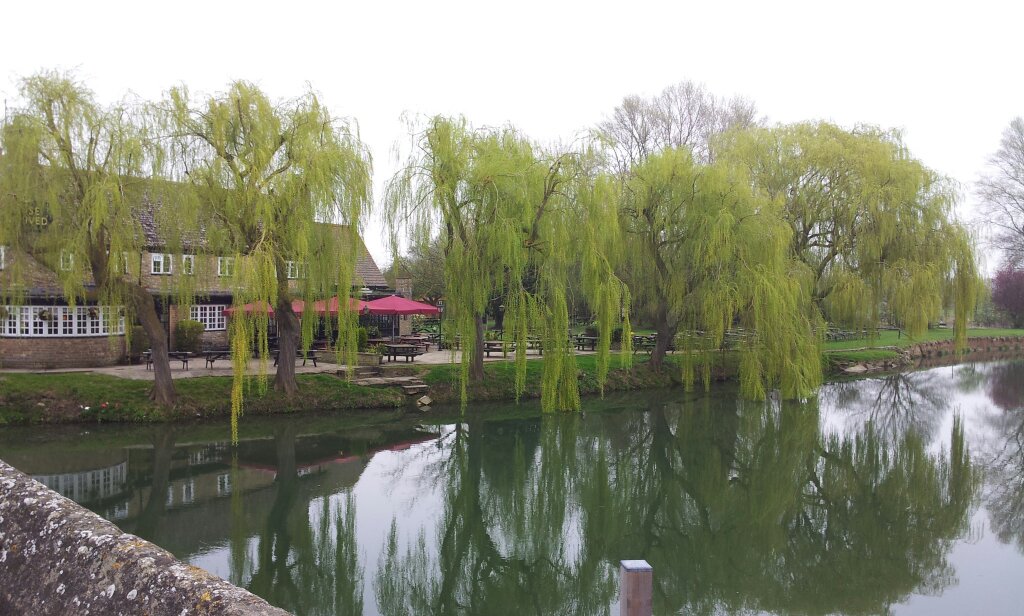
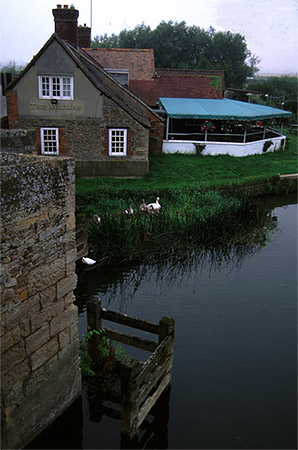
Two famous pubs here. The Rose Revived left. Maybush Inn right.
Land 100 yards downstream on left at Cokethorpe school canoe club landing stage.
17.5 miles – Hart’s weir footbridge
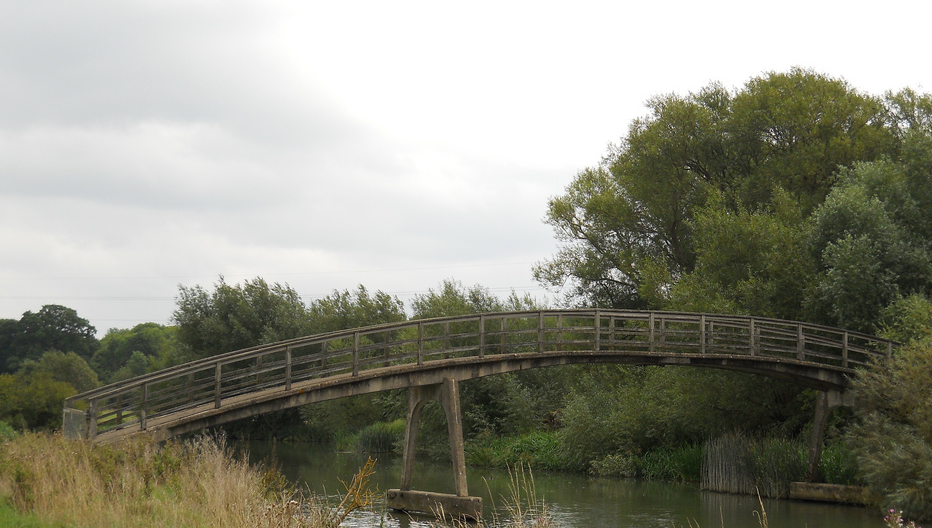
Site of another of the long gone Thames flash locks.
19 miles – Northmoor lock
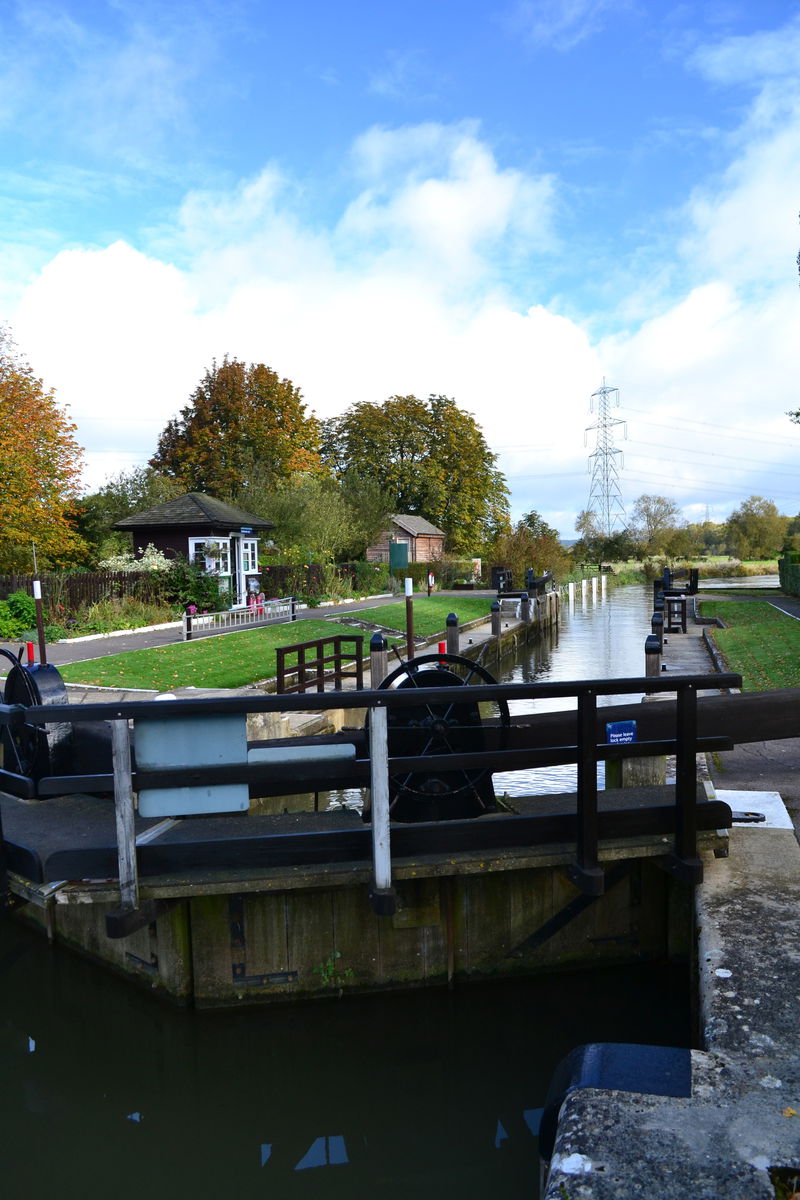
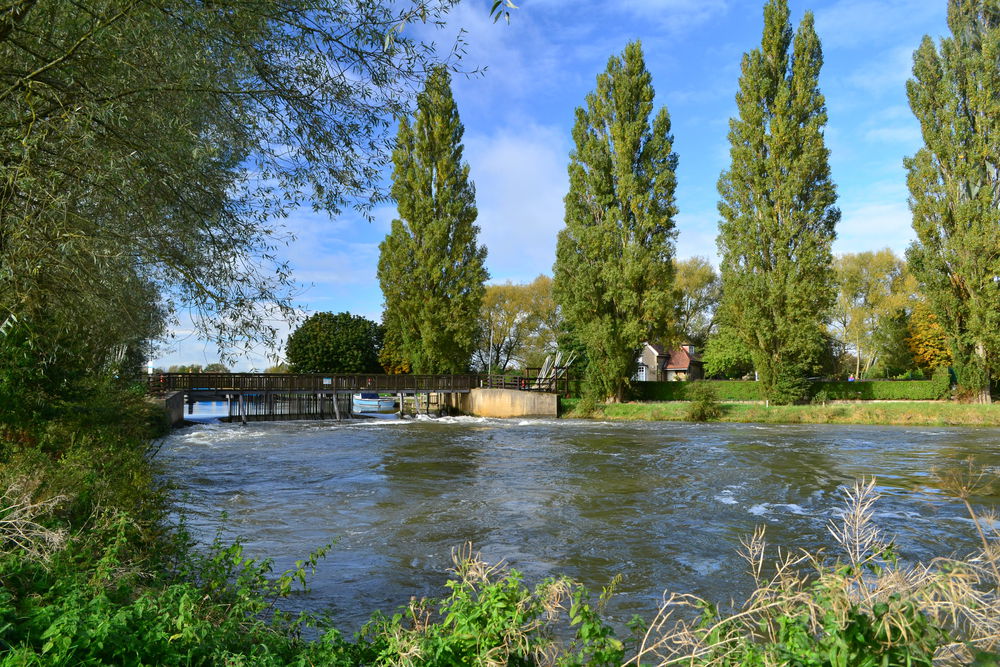
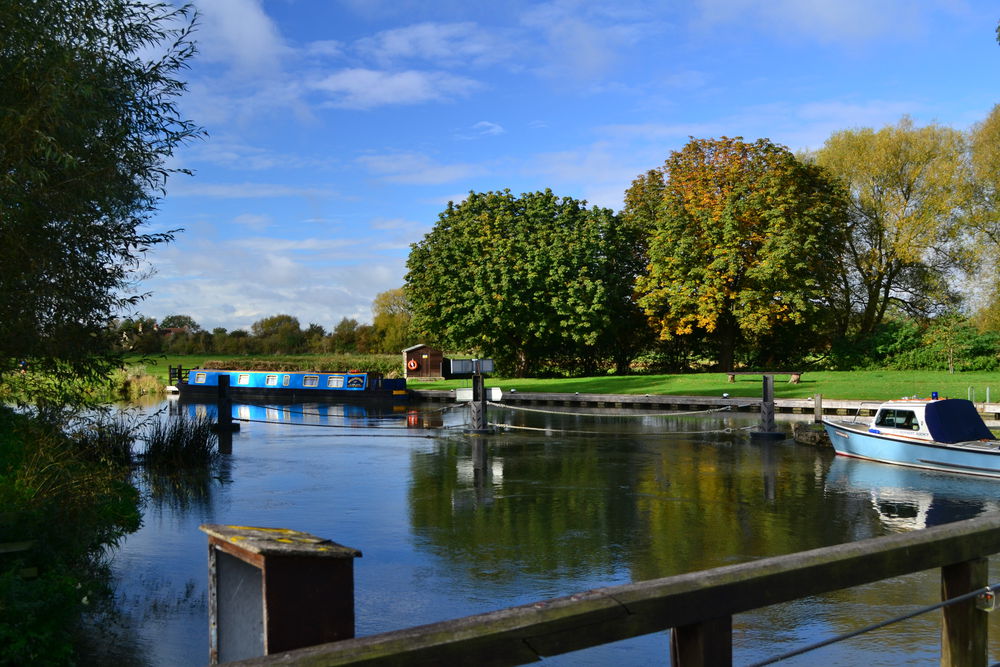
Camping (click here) at Northmoor Lock Paddocks right bank. Access both above and below the weir.
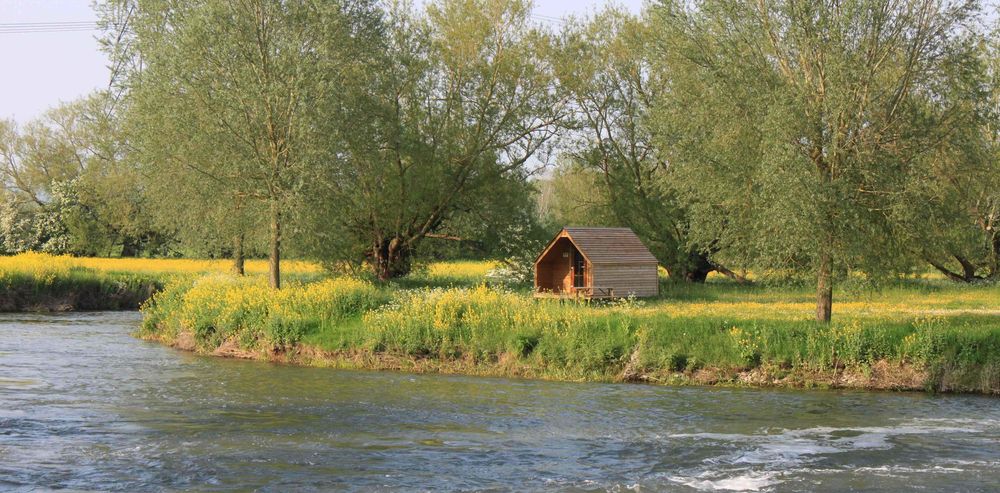
Tap, cold shower and composting toilets. Fires allowed. No electric hookups. A lovely site.
(2019 update. Site closed when we arrived on a weekday. The owner seems to be in dispute with the environment agency who won’t allow camping on the lower flood plain near the river, and with the local council who limit the number of open days per year. Paddle on to Bablock Hythe; the Ferryman Inn allows much cheaper camping.)
Jim Thornton (to be continued)
Acupuncture and overactive bladder
Too good to be true?
It sounds crazy, but this trial of 12 weekly percutaneous tibial nerve stimulations (near the ankle!) to treat overactive bladder (click here, or here Peters et al) looks promising; randomised, double-blind, 110 participants per group, sham needling in controls, and analysed by intention to treat. The result a statistically significant increase in the primary endpoint of “moderately or markedly improved symptoms at 13 weeks” (55% v 21% P<0.001).
The study recruited between Sept 2008 and Jan 2009, and was registered here on October 9, 2008. The primary endpoint is defined identically in October 2008 as in the paper. The planned sample size of 214 (later changed to actual recruitment of 220) was entered on the registration site on 24 June 2009 (i.e. after recruitment was completed). This would be a problem if the results were being inspected as the trial progressed, but hopefully that didn’t happen.
More seriously 23 centres recruited and randomised in a 1:1 ratio using “a random block design stratified by investigation site”, and somehow achieved exactly equal numbers, 110 per group. How likely is that? Did the researchers really randomise as they claimed? Ripe-tomato.org has seen this before (click here).
But wait. The same group of researchers published another trial comparing PTNS with tolterodine, a couple of years earlier (click here, full text here) NCT00448175 registered here. The sample size was prespecificed at 100 (50 per group) on the trial registry in 2007 and recruitment ocurred from June 2006 to September 2008. So far so good.
The registered primary outcome was frequency of voids at 12 weeks. The result 9.8 ± 3.0 for PTNS, 9.9 ± 3.8 for tolteridine, i.e no differece. The reported primary was a subjective assessment of overactive bladder symptoms, which was nominally statistically significantly reduced in the PTSD group (79.5% improved or cured with PTNS v 54.8% with tolterodine. p = 0.01). Altering the primary outcome like this is not convincing. This trial result is negative.
But again 11 centres recruited and randomised in a 1:1 ratio using “a random block design stratified by investigation site” and somehow again they achieved exactly equal numbers, this time 50 per group. This is an even less likely achievement, not only exactly equal numbers per group but ending exactly on the button. They recruited those 100 patients over 27 months so it required very good communication to get all 11 centres to stop as soon as the hundredth participant joined. I’ve been involved as researcher, data monitor or steering committee member in about 20 trials, and I’ve never seen it done. Peters and colleagues did it twice!
Other minor worries. For some reason the researchers did not cite the trial registration in either paper. I wonder why not. In both papers many of their statistics tested differences between before and after treatment, in the same trial group! Readers are misled by many low p values with no applicability to the randomised comparisons.
At best these triallists are naive. At worst they cleaned up their data to get nice even sample sizes, and in the process may have got misleading results.
Jim Thornton
Tamar
Prostitution and incest
Widowed twice, and with her father-in-law refusing to give her to his third son, Tamar wanted a baby. So she gambled everything, and bore twins, both in the lineage of Jesus. It’s all in Genesis 38.
Judah, son of Jacob and half brother to Joseph of the coat of many colours, who he had just sold into slavery in Egypt, had moved away and married a Canaanite woman named Shua. They had three sons Er, Onan and Shelah. Er had a youthful arranged marriage with Tamar, but died without issue leaving Onan in line of inheritance. Judah instructed Onan to wed Tamar. The first-born of such a levirate marriage, would inherit as Er’s son, so Onan, reluctant to lose his inheritance, spilled his seed on the ground, both giving his name to masturbation and displeasing the Lord, who killed him too.
Judah feared losing his third son, so stalled for time; Tamar should live as a widow in her father’s house until Shelah came of age. She waited and waited, and the boy grew up, but he was not given to her.
Eventually Judah’s wife Shua died, and Tamar saw her chance. Choosing a day when Judah was on a trip to Timnah with his friend Hirah the Adullamite, she dressed and covered her face like a prostitute and waited by the roadside. Judah took the bait, failed to recognise her, and offered a young goat for her services. Tamar demanded his seal, cord and staff as pledges to ensure he kept the bargain and, carried away by passion, Judah handed them over. They fornicated and Tamar conceived. Judah later sent Hirah with the goat to get the pledges back, but no prostitute could be found.
Three months later, when Judah learned of Tamar’s pregnancy he ordered that she be burned to death; an easy way to spare Shelah the fate of his brothers. As she was brought out Tamar sent Judah his pledges saying, I am pregnant by the owner of these. Realising he was the father, and that he had unfairly withheld Shelah, Judah forgave her.
Tamar turned out to have twins. The first born, Perez, was in the line that led to David and thence to Jesus. The second twin, Zerah, had put his hand out of the vagina and then retracted it before Perez was born. The midwife had proven this by tying a scarlet thread to his wrist.
Some scholars claim that Perez’s line ended with the Babylonian invasion when King Jeconiah’s sons were all killed in his sight, his eyes were put out and he was led into captivity in Babylon. They suggest that a descendant of Zerah, one of the lost tribes of Israel, reconstituted the lineage and fulfilled the prophesy that Judah’s line would lead unbroken to the Messiah. Others claim that Jeconiah had male offspring after his captivity in Babylon. Whatever, Tamar was the mother of both lines (Matthew 1: 3).
How it is
By Maxine Kumin
Kumin, who died a few days ago, age 88, wrote this in about Anne Sexton in 1974, shortly after her suicide by carbon monoxide poisoning, a few hours after the two poets had shared lunch. Is it crazy to think of them catching up now?
How it is
Shall I say how it is in your clothes?
A month after your death I wear your blue jacket.
The dog at the center of my life recognizes
you’ve come to visit, he’s ecstatic.
In the left pocket, a hole.
In the right, a parking ticket
delivered up last August on Bay State Road.
In my heart, a scatter like milkweed,
a flinging from the pods of the soul.
My skin presses your old outline.
It is hot and dry inside.
I think of the last day of your life,
old friend, how I would unwind it, paste
it together in a different collage,
back from the death car idling in the garage,
back up the stairs, your praying hands unlaced,
reassembling the bits of bread and tuna fish
into a ceremony of sandwich,
running the home movie backward to a space
we could be easy in, a kitchen place
with vodka and ice, our words like living meat.
Dear friend, you have excited crowds
with your example. They swell
like wine bags, straining at your seams.
I will be years gathering up our words,
fishing out letters, snapshots, stains,
leaning my ribs against this durable cloth
to put on the dumb blue blazer of your death.
Maxine Kumin
 Ripe-tomato.org