Think midwifery is tough in UK. Take a look at South Carolina.

Legislation has been proposed in SC that would severely restrict and possibly eliminate the option for out of hospital birth in South Carolina. http://www.supportscmidwives.com The following letter is what I have written in support of the certified midwives.
To Our Legislators:
Re: H3731
I am a family physician practicing in Greer, SC. I have been delivering babies for more than 25 years. When I started my practice in Greer in 2005, I was approached by one of the certified midwives and asked to see their patients as needed and to be available for phone consultation when the need arose. I was initially hesitant because I had heard all of the horror stories and been told how these unqualified ladies were endangering moms and babies with their poor quality care. At that time most of the traditional obstetrical community had frozen them out, but their popularity among patients was…
View original post 1,109 more words
Hugo Chavez
1954-2013
South America is almost the last bastion of semi-respectable communism, and for 14 years Hugo Chavez, the populist president of Venezuela, was its most prominent proponent. A paratrooper, imprisoned after a failed coup in 1992, he went on TV to persuade other rebels to lay down arms, saying he had failed “por ahora”, for now. He was lucky to be still in jail when a second bloodier coup was supressed later that year, and he survived to see President Carlos Perez, who had been embroiled in financial and sexual shenanigans with his secretary, finally forced out peacefully.
After his release Chavez won a reasonably fair election in 1998 and went on winning by rewriting the constitution and buying votes. His policies were hopeless. Arbitrary orders to build schools, reform prisons, or expropriate land and factories, were announced on his TV chat show, Alo Presidente, and enforced by a motley collection of self-styled Chavistas. But the poor loved him, he didn’t steal everything – a few favoured industrialists kept the country running, and took the blame when his policies failed – and the oil kept flowing.
He had a wife, Nancy, the mother of his first three children, and a fiery Marxist mistress, Herma. But when he divorced Nancy, he married a glamorous journalist Marisabel Rodriguez instead, having got her pregnant on their first date – they both boasted about it. Eventually, having fallen out with wives and mistress, his daughter took over as First Lady, leaving him single again and eligible. They say women don’t mind fat guys, so long as they’re powerful, so there were many rumours. But he had learned discretion, so they remained so.
Fidel Castro was his best friend. Chavez sent him cheap oil, allegedly $3 billion’s worth a year, and Castro sent back doctors, the only thing Cuba produces any more. But when Chavez himself got cancer, even Havana’s best couldn’t save him.
When the old politicians got mired in sin
Big Hugo Chavez para-trooped in.
They popped him in jail first time round
So he stood for election and won hands down
Land for brothers, schools for sistas,
Hospitals for the Chavistas.
Pre-empt dissente.
Announce it on Alo Presidente.
He traded oil for doctors,
Who couldn’t cure his cancers,
So now he’s in Nirvana
Via ITU Havana.
Jim Thornton
God Does Not Live in Corners
By Joseph Brodsky
It’s not a religious poem – the beautiful description of primitive thought loses to the final joke. But read it again – the atheist is missing much consolation. And it was written in 1964, just after the 23-year-old Leningrad poet had been sentenced to five years internal exile. Are these the lines scratched out by a starving dissident in Siberia?
Not exactly. Khrushchev was acting tough after the Cuban missile crisis, but Brodsky was small beer. A rival for his girlfriend had denounced him, and his sentence for “freeloading” was mild. He wasn’t sent to the Gulag, but to a farm in the village of Norenskaya, only 300 miles away. He had his own cottage, typewriter and books, and friends were able to visit.
But the trial had brought him notoriety.The poet Anna Akhmatova’s campaign for his release soon attracted the attention of Auden, Shostakovitch and Sartre, and his sentence was commuted after 18 months. He got the girl, got her pregnant, and a few years later got to America, where he eventually won the Nobel prize.
This new translation appeared in the New Yorker, 25 Feb 2013. I like the alternate near rhymes, climaxing in the complex, but perfect, the mist and atheist.
In Villages God Does Not Live in Corners
In villages God does not live in corners
as skeptics think. He’s everywhere.
He blesses the roof, he blesses the dishes,
he holds his half of the double doors.
He’s plentiful. In the iron pot there.
Cooking the lentils on Saturday.
He sleepily jigs and bops in the fire,
he winks at me his witness. He
assembles a fence, he marries some sweetheart
off to the woodsman. Then for a joke
he makes the warden’s every potshot
fall just short of a passing duck.
The chance to watch all this up close,
while Autumn’s whistling in the mist,
is the only blessed gift there is
in villages, for the atheist.
by Joseph Brodsky. Translated by Glyn Maxwell and Catherine Ciepiela
Safer as an adult
Watch these clips – your baby can’t
Even the most enthusiastic proponents of circumcision admit that doing it on newborn babies is ethically problematic. Here’s the WHO infant circumcision manual; An infant cannot consent to the procedure. […] there is a risk that when the child is older he will be unhappy he was circumcised as an infant.
This leaves relative safety as the only plausible medical reason for mass circumcision of newborn boys. But if we are to believe the claims of the inventor of the Prepex device, the adult procedure is likely to be safer.
The new device is essentially an adult version of the Plastibell for infants. Both consist of a circumferentially grooved plastic ring, which is inserted under the foreskin and a ligature tied along the groove to cut off the blood supply to the distal foreskin. In infants the ring is attached to a plastic handle which is snapped off after the ligature is tightened. The adult device has no plastic handle, and the manufacturers also provide a second larger ring with preloaded ligature to make that part of the operation easier. In infants the distal foreskin is usually cut off during the initial procedure, leaving the ring to fall off later. In adults the ischaemic foreskin is left attached, and removed with the ring after a week.
Click here for a video of the Plastibell procedure on a newborn, and here for one of the Prepex device used on an adult.
It seems almost certain that complications will be lower in adults.
1. In infants the foreskin is naturally adherent to the glans so it needs to be forcibly stripped off to allow insertion of the plastibell. Sometimes a longitudinal incision needs to be made in the foreskin. This means anaesthetics with all their attendant risks. In adults anaesthesia is not necessary.
2. In infants the main source of serious complications, which can include loss of the whole glans, urinary retention and even ruptured bladder, (click here if you have a strong stomach) arise from a too tight Plastibell ring trapping the distal penis. If the parents don’t realise what is happening, it can be too late when the child is finally bought in. Adults will notice something wrong, and get the ligature snipped and the ring removed before catastrophic damage results.
3. Anyone watching the two procedures will appreciate that the scope for accidentally cutting the glans, or removing more skin than intended, is much greater in infants. No doubt there will be complications with the Prepex device, which is why various trials are going on in Africa, but they must be fewer than with infants and the Plastibell.
If you believe there are reasons to choose circumcision, there are none that say you should choose it for your son before he can make his own mind up. Let’s hope we’ve heard the last of mass infant circumcision campaigns.
Jim Thornton
Centralisation in Kent
Two more free-standing midwife-led birth units close for deliveries


Canterbury Maternity Centre was created as a free-standing midwife-led unit (MLU) in 2004, when Kent & Canterbury Hospital’s consultant-led obstetric unit (CLU) closed and deliveries moved to William Harvey Hospital at Ashford. Dover Family Birthing Centre at Buckland Hospital was created when the Buckland Hospital CLU closed in the 1990s.
Both MLUs finally closed to births in 2012, allegedly on grounds of safety, because the birth rate was rising and putting pressure on midwives in the large consultant-led maternity hospitals, and because they had too few deliveries to justify the costs. The safety reason was unfortunate since it was only in 2011 that the Birthplace study (click here) showed that MLUs were safe.
The real reason is that such units are set up to fail. Planners find them expensive to run, and they are not popular with most women. After all if there was a real demand to deliver in a free-standing MLU, Dover would have been well placed to take women from France and Belgium where such units are undeveloped. But little or no such cross channel traffic occurred, and even the women of Dover preferred to go down the road to Ashford. It’s one thing to give birth in a co-located MLU, where if you need medical intervention you can just move down a corridor. Quite another to do so in a unit where you need an ambulance ride to get an epidural.
Between 2006 and 2011 the birth numbers in Dover MLU fell from 398 to 158, and in Canterbury from 380 to 235. Over the same period home births in the region fell from 291 to 247, and hospital births in Ashford rose from 3379 to 4142.
Those of us with long memories will remember the battles fought over the closure of the consultant unit in Canterbury in 2004. Campaigners complained that local services were being downgraded, but health planners insisted they were improving services by developing the midwife-led unit.
Centralisation – the one thing you can reply on in the NHS.
Jim Thornton
Related stories here, and here.

Above the Barrage
Canoeing at Stockton-on-Tees
By raising the river to the high tide level, the Tees Barrage (1995) created a slalom course, and let flat water canoeists paddle round the old docks without getting covered in tidal mud. The Tees Barrage Watersports Centre (click here) only charges £3 to launch, but you also get hassled by jobsworths who want to check your safety equipment. Here’s how to avoid all that.

Park on Moat Street by Mecca Bingo. The original terminus of the world’s first railway, the Stockton to Darlington (1825), is just over the A1130.
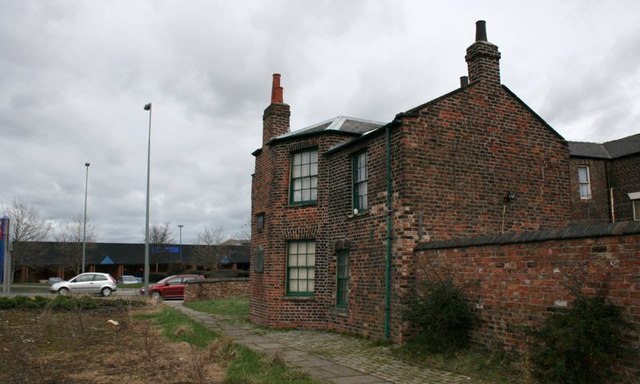
Forty-eight Bridge Road is now a hostel for homeless men. It was never a proper railway station, such things hadn’t been invented – passengers got on and off where they liked – but the line began here. When you’ve paid your respects, launch from the left bank, downstream of Victoria Bridge (1887).


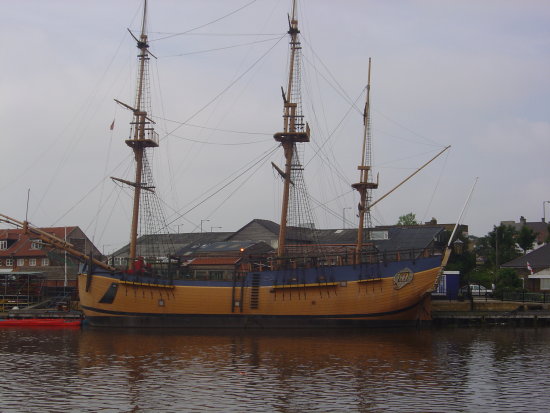
300 yds to the replica of Captain Cook’s Endeavour.
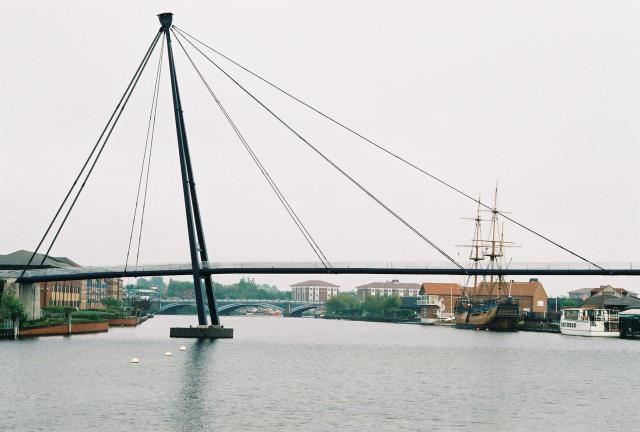
0.5 mile – Millenium footbridge (2000)
in 1993 the mahogany-hulled minesweeper Kellington (M1154) was moored 500 yards downstream as a sea cadet training vessel. But health and safety fussed about asbestos, and it fell into disrepair. In 2009 it sank and had to be dismantled on site.


Public slipway just before the bridge
1 mile – Princess of Wales Bridge (1992)

River Tees Water Sports Centre left. Click here.

Rowing, sailing and dragon boating. Pontoons and slipway. Good access.
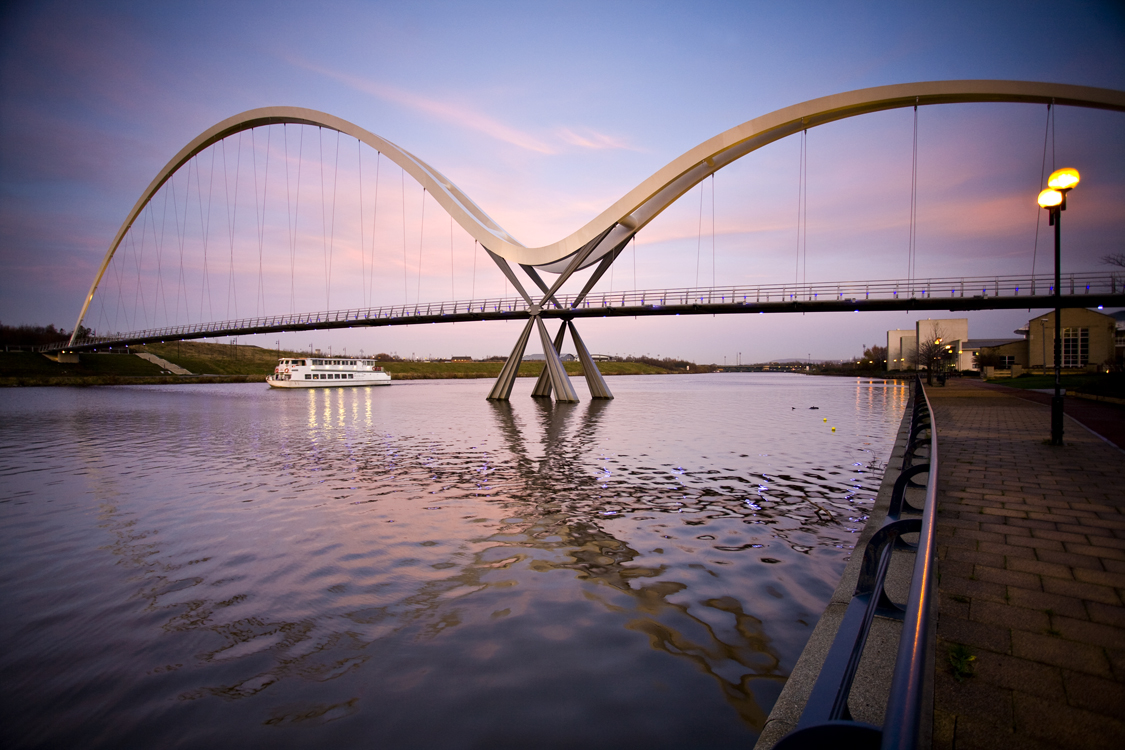
1.5 miles – Infinity footbridge 2008

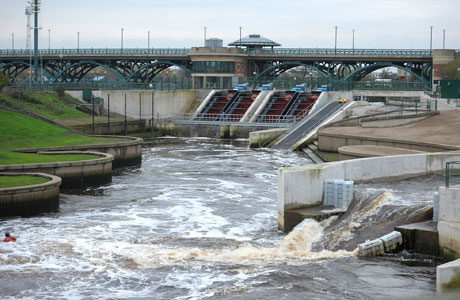
2 miles – Tees Barrage, road and footbridge (1995)
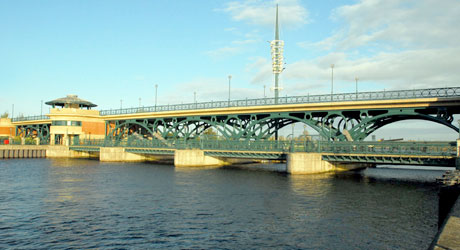


Look out for seals below the barrage. They congregate below the fish pass to catch salmon preparing to go up. Recent efforts to improve the fish pass have hopefully made things better for the salmon.
Lock right. Water-sports Centre left

Turn round and follow the right (now your left) bank, past Durham University Queen’s campus, under the Infinity Bridge for the second time, peep in the unnamed dock left, past Tees Rowing Club, and turn into the canal left. You’re now entering the site of Head Wrightson Teesdale Iron Works (1840-1987). In the 1960’s this heavy engineering company employed 6,000 people here, built anything up to the size of a blast furnace, and sent their work all over the world. There can be few countries where you won’t find a Head Wrightson panel on heavy machinery.
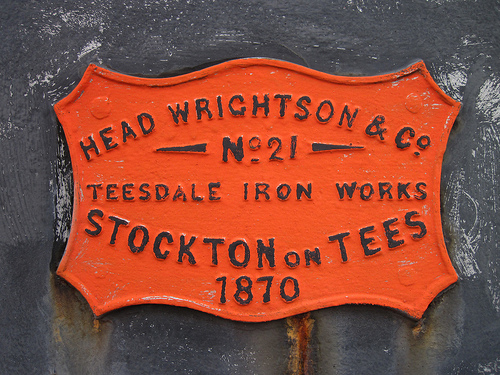

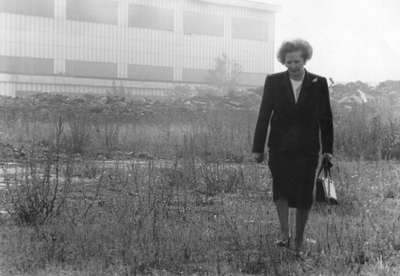
But when the Chinese and Brazilians got the furnaces working, decline set in and the company finally shut down in 1987. Mrs Thatcher’s “walk in the wilderness” here the same year, soon after her third election victory, provided one of the iconic images of her premiership. Cavendish House on your right, once the home of the local regional development QUANGO, is now offices for SERCO the private provider of prisons.

University Boulevard bridge

Suspension footbridge

The canal to the East is a dead end. Turn right/west towards the river.
Yale Crescent Bridge

Columbia and Princeton Drive, Stanford Close, Fudan Way, and Harvard Ave are all nearby – the planners obviously had high hopes for Durham University. If you’re wondering, Fudan University is in Shanghai.
Pontoons under the footbridge obstruct re-entry to the main river but you should be able to wriggle through. Turn left and back to the start.
Jim Thornton
Fred at a Wedding
Saturday’s post about circumcision complications (click here) generated strong reactions. So in the hope that ripe-tomato readers are sympathetic to male problems, here’s another Bob Conquest poem from his latest collection Blokelore & Blokesongs.
Fred at a Wedding
Fred’s been to marriages before
(Though mostly to his own).
He stifles, if perhaps no more
Than other chaps, a groan
At tedium, cramp, a shirt too tight …
But shudders as he spies
The awful air of triumph bright
In all the female eyes.
And his discomfort grows profound
As if he had to view
A lot of lionesses round
A poor sod of a gnu.
Robert Conquest
Click here for another
Grosmont to Whitby
Canoe touring on the lower Esk
Commercial tours chuck in from the left bank about midway between Sleights and Ruswarp, but it’s a better day’s paddle in an open canoe from Grosmont. High water avoid. Medium water grade 1-2. In summer a lot of scraping. According to canoedaysout.com, access is disputed, but that’s mainly higher up. There’s not too much trouble below Grosmont. In May 2013 a fisherman grumbled that “The rivers public but the banks are private” when we got out to inspect the 1/4 mile weir. But below that the land is National Trust at least for a bit.
Through most of its length the Esk has cut through the same Middle Jurassic limestone formations as at the coast. However between Grosmont and Staithes it cuts through the older, but still Jurassic, middle and upper Lias. For a few hundred feet below railway bridge 3 the lower Lias with is characteristic Ammonites capricornus is exposed.
There are freshwater pearl mussels above Grosmont, but they’re allegedly declining.
0 miles – Grosmont ford. Footbridge. If the marker is 1-2 feet it’ll be OK.
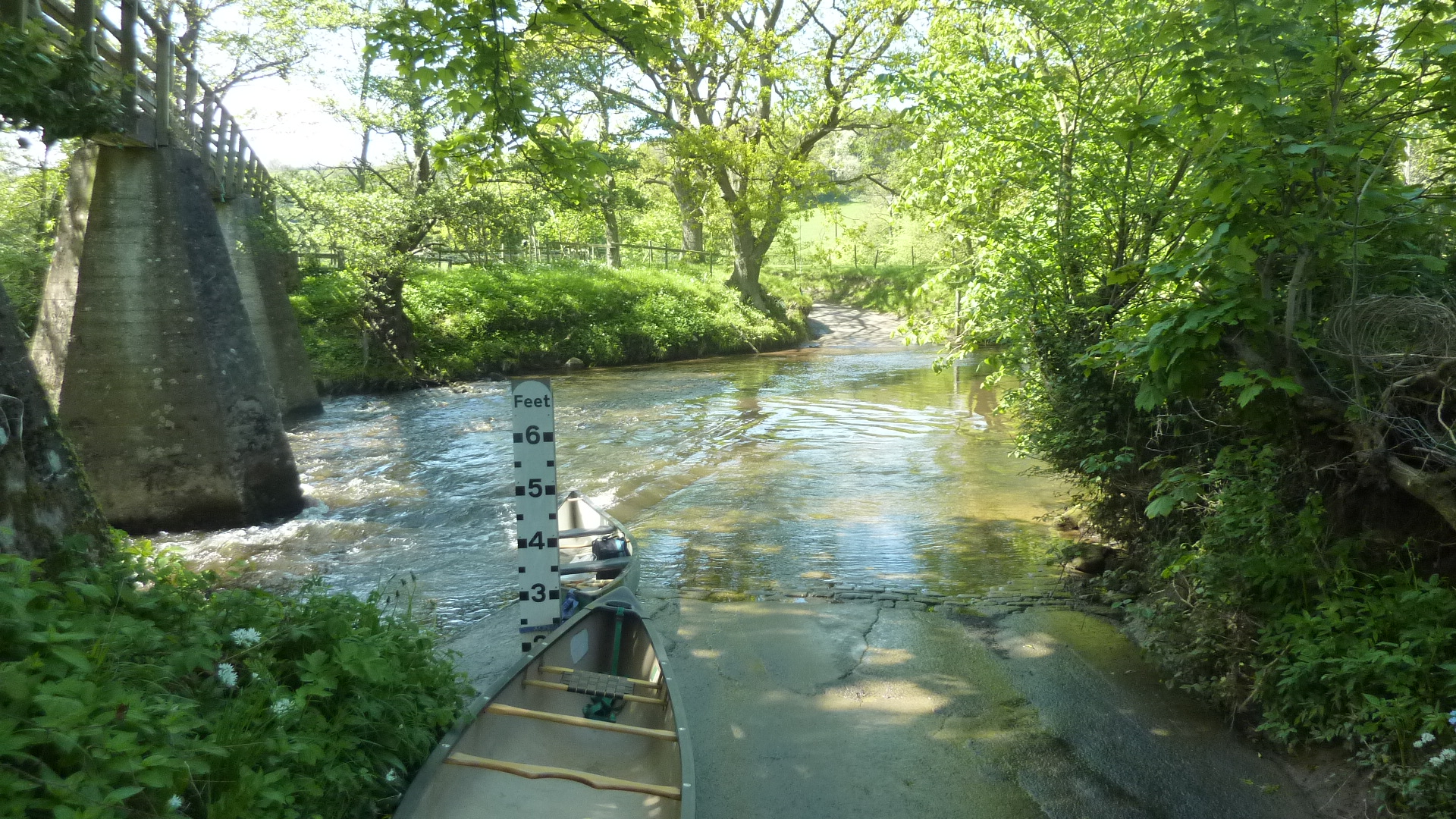

100 yds – Murk Esk joins right

200 yds – road bridge. Small rapid above and step below


1/4 mile – disused farm bridge. Pier of what looks like an old railway bridge just below. Rocky weir. Not shootable at low water. Tricky but possible line down from right bank. Rapid below. Access is possible below the weir via the car park between Grosmont and the road bridge. At low water this might be a better starting point.


The Priory left. The actor Ian Carmichael (Lucky Jim, Bertie Wooster, Lord Peter Wimsey) lived here till his death in 2010
0.5 mile – railway bridge 1. The famous Whitby to Pickering, begun only seven years after the Stockton and Darlington and surveyed by George Stevenson himself, was one of the world’s earliest lines. It opened in 1838, horse drawn, until gradually converting to steam after 1845. The North Yorkshire Moors Railway Charitable Trust now runs steam trains daily between April and October and selected winter weekends. Criss-crossing the river, it is the UK’s busiest heritage railway.
0.75 miles – railway bridge 2.
1 miles – railway bridge 3. More riffles. The cliff exposures here are Lower Lias. Ammonites capricornus have been found, but they are not numerous.
1.5 miles – railway bridge 4.
2 miles – railway bridge 5.
2.5 – railway bridge 6.
2.75 – railway bridge 7.
Sleights weir 50 yds before the road bridge. Portage right. Not shootable. Pictures below at low, medium and high water.

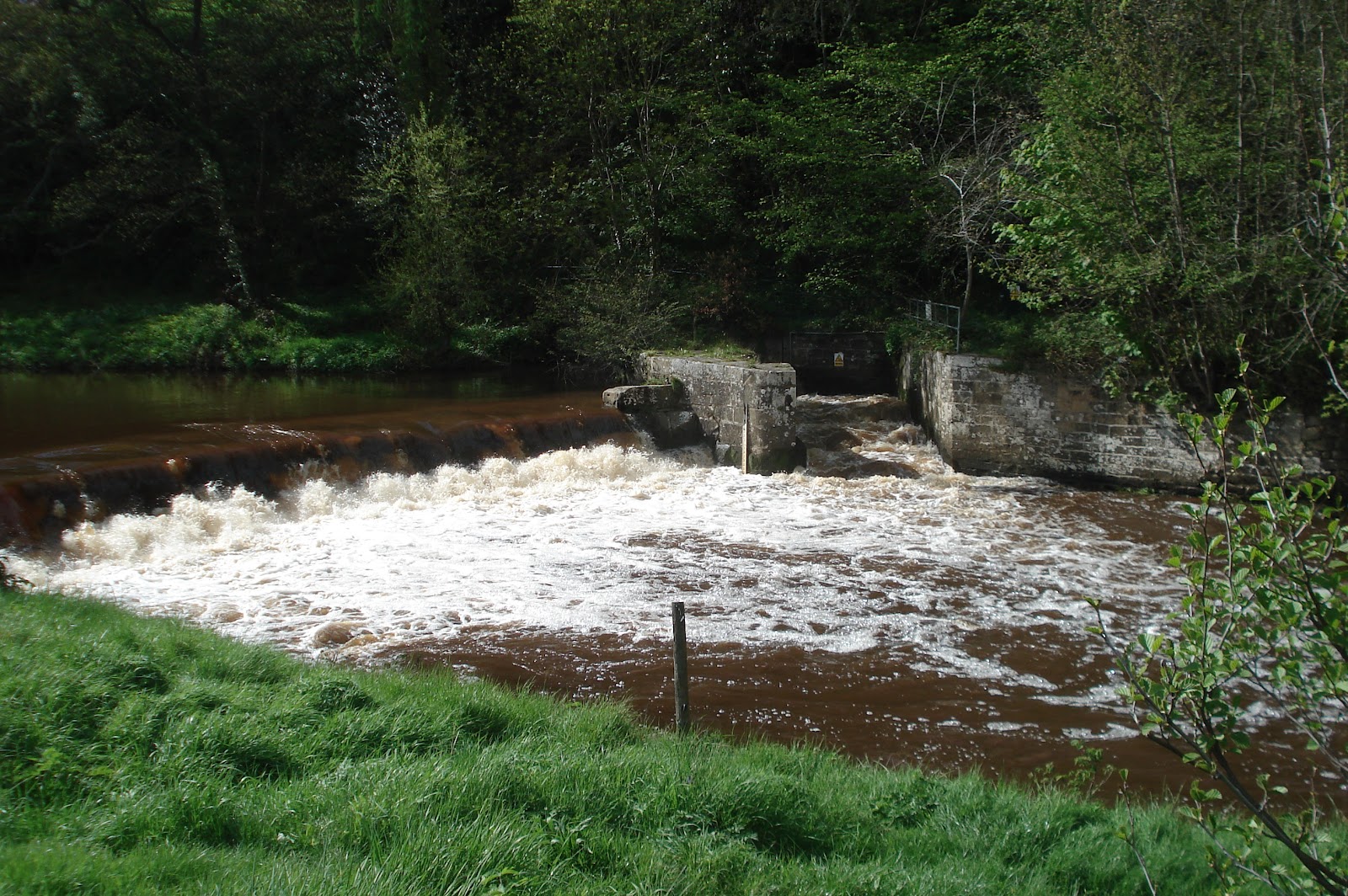
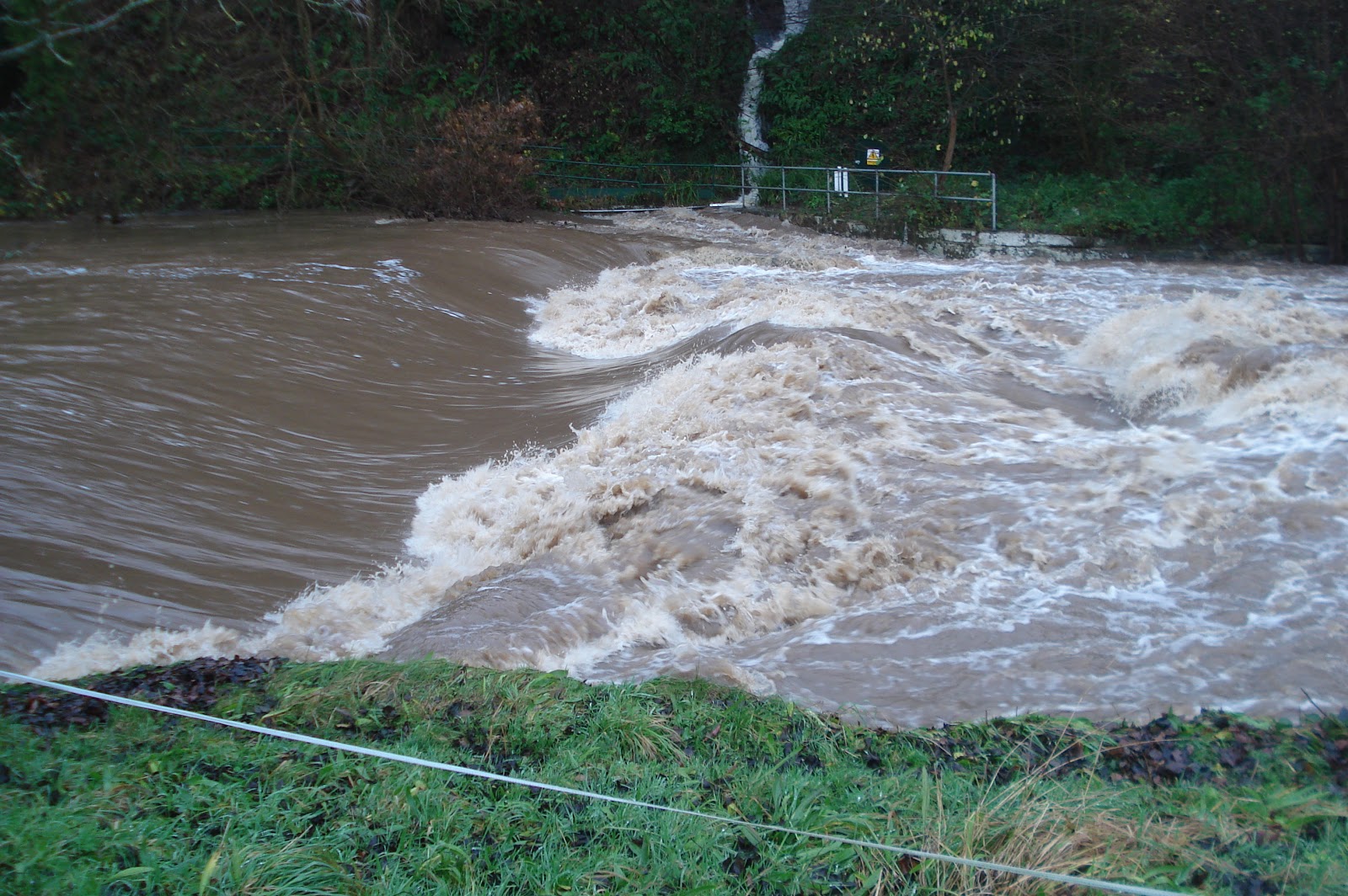
Path to Salmon Leap Pub car park involves crossing the line.
3 miles – A169 bridge
Sleights right. Briggswath left.
3.25 miles – footbridge
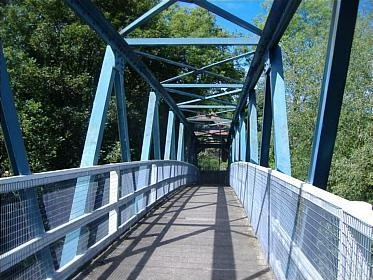
3.5 miles – landing and car park left. Roman settlement
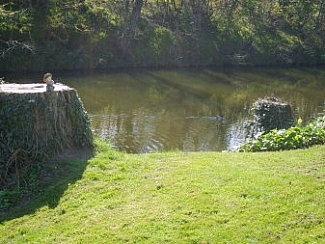
4 miles – access left.
4.5 miles – Ruswarp pleasure boats left. Ruswarp weir right
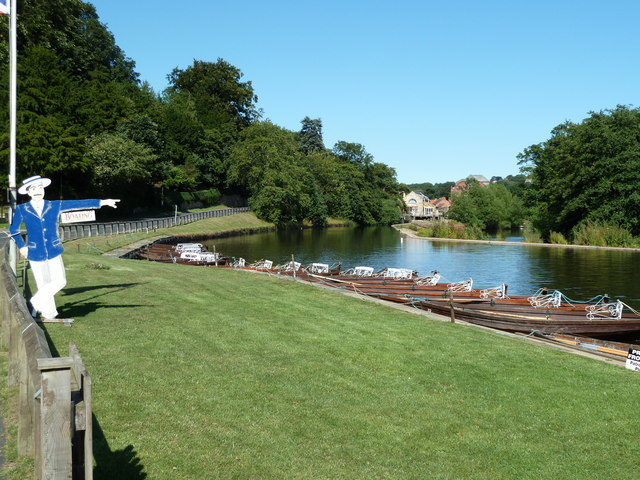


At low water carry over, or shoot the channel in the middle of the weir. There are plans to install a 50KW hydroelectric power station at the right hand end between the fish pass and the bank.
Tidal from here.
4.75 miles – Ruswarp railway bridge
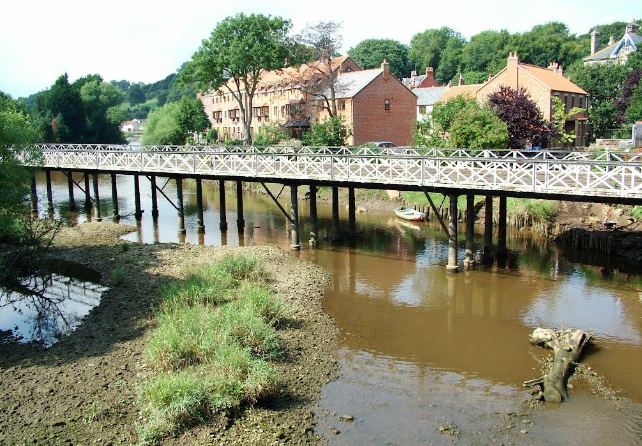
Ruswarp iron bridge (1930) carrying the B1416 immediately after. This iron bridge, allegedly built from the same iron as the Sydney Harbour Bridge. An earlier suspension bridge was destroyed by floods in 1828, and its successor went the same way in 1930.


5 miles – Rigg Mill beck joins right
5.25 miles – Larpool viaduct (1885)
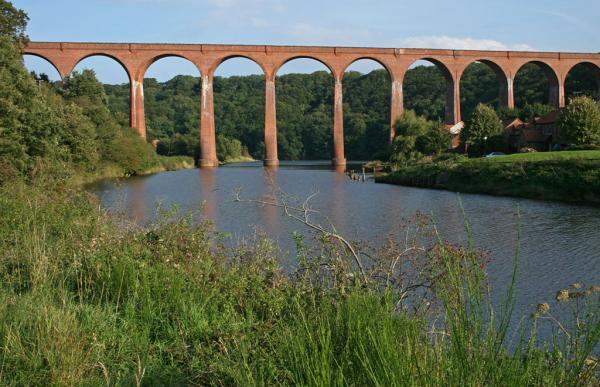
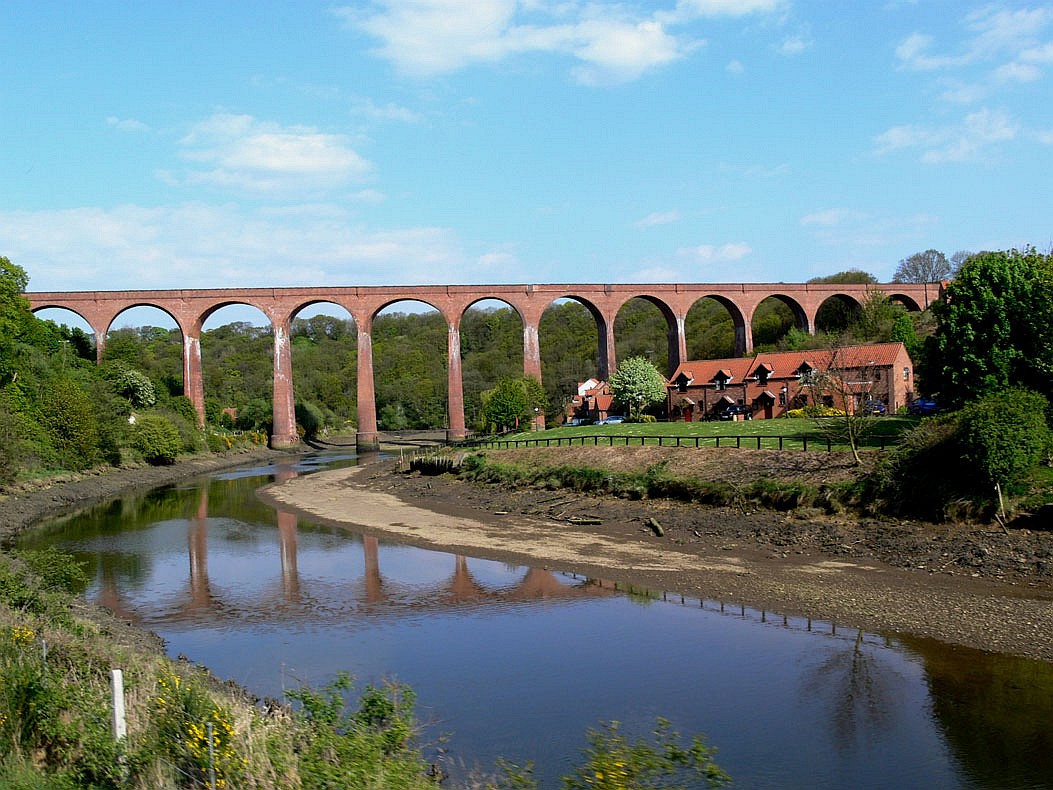
Originally carryied the coast railway from Scarborough into Whitby. The line was never profitable and was closed by Beeching in 1965. Now a cycle track.
5.5 miles – A171 bridge
About 100 yards further on the left is a public slipway and the station car park. Exit.
Jim Thornton
Cock-ups happen
Parental Advisory. Read this first – your baby can’t.
The World Health Organisation Manual for Infant Circumcision’s (WHO MIC) sample information sheet for parents (p110, or click here) is not adequate. Here is the bit on surgical harms:
Complications during male circumcision are rare, being estimated to occur in 1 of every 500 procedures. These complications, which can be severe, include poor cosmetic outcome, bleeding, infection, injury to the penis and the removal of too much or too little skin.
Using “rare” for a 1 in 500 risk, when earlier the benefit of “avoiding the need for circumcision later in life” (about 1 in 2,000) is mentioned without qualification, is biased. The figure also applies to the best series. Less well organised services report rates up to 20%, e.g. Nigeria, click here. Since the manual is for use in developing countries the possibility of higher complication rates should be mentioned. Finally, Complications, which can be severe, include poor cosmetic outcome… is clearly designed to play down severity.
But more importantly, catastrophic complications are omitted altogether. Fully informed consent means telling people everything, however rare, which might alter the decision of a reasonable patient/parent. In gynaecology we mention the 1 in 10,000 risk of temporary colostomy after laparoscopic surgery for example. Unless we have a double standard for Africa, the complications below, which all appear elsewhere in the guide, should be mentioned. Italic text and pictures are all taken from the guide.
HIV, and other blood borne infections.
In male circumcision programmes a major concern is the potential transmission of bloodborne […] HIV and hepatitis B virus, to […] patients. The risk of acquiring HIV from an HIV-infected person through a needle-stick injury is estimated at 0.3% […] . The risk of acquiring hepatitis B virus infection, after being stuck with a needle that has been used on a person with hepatitis B infection, ranges from 6% to 37%, […] Most instances of transmission of infection in health-care facilities can be prevented through the application of standard precautions. If “it is a major concern” and only “most […] can be prevented”, it should be mentioned.
Amputation of the penis.
This extremely rare complication can be minimized by using good surgical technique but is unlikely to be eliminated. Unfortunately, even under ideal circumstances and with experienced surgeons [it] continues to occur.
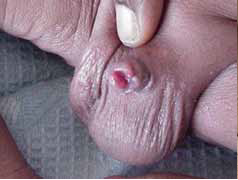
Destruction of the penis by electro cautery.
One should NEVER use an electric current [..] with a metal Gomco clamp. […] The use of electrocautery […] has resulted in total ablation of the penis during male circumcision. To avoid this devastating complication, surgeons must be educated that electrocautery has to be strictly avoided when using a Gomco clamp.
Urinary retention from retained Plastibell rings.
Some of the most serious complications ever seen [retention and bladder rupture] […] have resulted from retained Plastibells. Educating the family to closely monitor the wound and the infant’s urine output is paramount with the use of this device.
Penile necrosis following the Plastibell technique
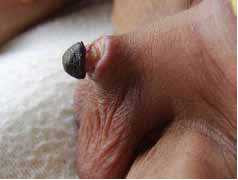
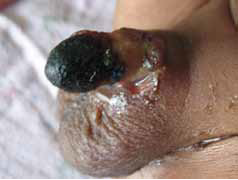
These two poor fellows aren’t going to be great in the sack.
Degloving – removal of the skin of the shaft.
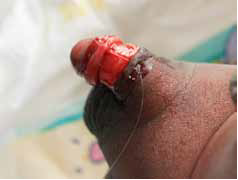
None of these complications are common, but they all occur. If infant circumcision programmes get rolled out widely in developing countries, it is inconceivable that everyone will read all 140 pages of the WHO manual In the real world sterilisation goes wrong, mismatched Yellen clamps get packed together, and diathermy and wrong sized Plastibells get used. Even if they don’t, infants wriggle. Parents should be told.
Jim Thornton
More here, here, here, and here.
Click here for an updated map of circumcision practice globally
Fred Faces Facts
By Robert Conquest
The historian, best known for his early exposure of the evils of Stalinism, was a long time buddy of Philip Larkin and Kingsley Amis; their friendship built on a shared love of booze, jazz and poetry, and scepticism of all things collectivist. And they were boys chasing girls. Although Larkin would never admit it, he and Conquest, who had a shared interest in porn, were both also pretty successful at the real thing. But Amis, a Herculean fornicator, outdid them both.
Conquest, who is still alive age 95, published poetry too. This is from his latest collection, Blokelore and Blokesongs.
Fred Faces Facts
If Blanc de Blancs and Blanc de Noirs
(Fred muses, rather pissed)
Are possible, as most things are,
Can Noir de Blancs exist?
His reason tells him in a tick
This is the merest dream.
But is his intellect so quick
When women are the theme?
Not without effort. For he’ll let
His fantasy grow fond
Of, let us say, a blonde brunette
(A sort of Brune de Blondes),
With eyes of blackly hazel-blue
And skin all ivory-tanned;
Tall, tiny; slim and buxom too;
Huge breasts that fit the hand.
– Such dreams he can return to store
(Albeit with regret),
But others come which lure chaps more
Insidiously yet:
A temperamental and serene
Bohemian home-girl type;
A poule de luxe of modest mien,
Mature and not yet ripe;
Demure, farouche; unspoilt and chic …
Of course the lesson is
He shouldn’t actually seek
For contradictories.
So when he toasts a girl in Brut,
From Ay or Avise slopes,
Fred take the realistic view
– Or so he says he hopes.
————————————————————————————————————————
Footnote
Girls aren’t exempt. Their dreams evoke
(Fred hears it every day)
The strong and independent bloke
Who’ll do just what they say.
 Ripe-tomato.org