Bare arsed on Snowdon
Wild swim
Daniel Start’s Wild Swimming (click here) recommends Llyn Eiddew Bach but we got lost, and ended up at Llyn Caerwych, a quarter mile north west. They both have clear water, a gravel bed and easy entry, but Llyn Caerwych is barely four foot deep. Still a good swim.

Pete and I were the only people there, apart I guess, from the photographer. It’s very isolated. Good for a skinny dip.
Jim Thornton
Megan Stammers trip to Los Angeles
Global warming school trips
I’ve nothing to say about the rights and wrongs of this girl’s alleged elopement with her teacher, but I did raise my eyebrows when I learned that they had begun the relationship on a school trip to Los Angeles in February. Los Angeles?
I thought the education budget was tight. I guess the parents paid for the pupils, and I hope the teachers also paid their own way. But why Los Angeles? Have the pupils already done all of Europe? Have they done Rome, Paris, and Berlin? All three would enable the pupils to practice a foreign language. Indeed why not Stratford on Avon, Edinburgh or Belfast. Do school trips have to be intercontinental now?
It’s not just the money. It undermines other educational messages. If Bishop Bell is anything like other state schools, it will have an extensive programme of education into the dangers of global warming and how to reduce our carbon footprint.
Jim Thornton
Circumcision and HIV
Two out of three key trials registered late
Does circumcision of adult men reduce HIV transmission? Initial scepticism, surely the foreskin reduces friction between penis and vagina, and prevents abrasions and blood transfer, and conflicting observational data, were eventually overcome by three randomised trials, one each from South Africa (click here), Kenya (click here) and Uganda (click here). In each trial men were randomly allocated to immediate circumcision or to wait for two years. All three trials showed about half the number of new HIV infections in the immediate circumcision group. The relevant Cochrane review (click here) summarises them as follows:
“The resultant incidence risk ratio (IRR) was 0.50 at 12 months with a 95% confidence interval (CI) of 0.34 to 0.72; and 0.46 at 21 or 24 months (95% CI: 0.34 to 0.62). These IRRs can be interpreted as a relative risk reduction of acquiring HIV of 50% at 12 months and 54% at 21 or 24 months following circumcision.”
The Cochrane reviewers judged “the potential for significant biases affecting the trial results [as] low to moderate”. Referring to selective reporting they wrote “All three trials clearly stated in their protocols that the primary outcome was HIV incidence. The risk of bias due to incomplete outcome reporting is therefore low in all three trials.”
The trial protocols have not been published so we have to trust that the Cochrane reviewers interpreted them correctly. But if they relied on trial registration documents (click here, for South Africa, here for Kenya and here for Uganda) they would have been misled. They they all indicate more of less the same primary outcomes and planned sample sizes as in the respective papers. But according to the date of first entry, only the Kenyan trial was prospectively registered. The South African trial was registered a year and a half after recruitment ended and seven days before the results were published! The Ugandan one a month after recruitment ended,and a month before publication.
| Recruitment period | Date of 1st publication of results | 1st trial registration date | Registry planned sample size | Primary outcome in registry | Primary outcome in paper | |
| South Africa | July 2002 – Feb 2004 | 26 July 2005 | July 19 2005 | 3274 planned.
3274 in paper |
HIV infection at 3, 12 and 21 months | All HIV infections at 3, 12 and 21 months |
| Kenya | Feb 2002 – Dec 12 2006 | 24 Feb 2007 | April 23 2003 | Initially 3,000. Altered to 2887 in registry.
2784 in paper |
HIV incidence at 2 years
Complications of circumcision |
HIV incidence after three interim analyses |
| Uganda | August 2002 – Dec 2006 | 24 Feb 2007 | Jan 23 2007 | 5,000 planned
4996 in paper. |
HIV acquisition no time point specified | HIV incidence |
It looks like PLOS One and The Lancet wanted to publish sexy high impact trials, found they weren’t registered, so got the authors to do it retrospectively, and hoped no-one would notice! All three trials were funded by the public sector.
Jim Thornton
Trial stopped 1/7th of the way through
No explanation given
The Pesario Cervical para Evitar Prematuridad (PECEP) trial
On 12 May The Lancet published an apparently ground breaking trial (click here). 385 pregnant women with a short cervix at 20-23 weeks were randomly allocated to use a vaginal pessary which held the cervix closed (n=192), or to a “no treatment” observation group (n=193).
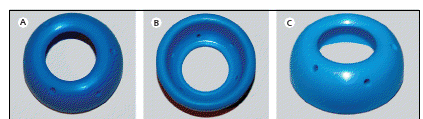
Spontaneous delivery before 34 weeks occurred in 12 (6%) of the pessary group v. 51 (27%) in the expectant management group, odds ratio 0·18, 95% CI 0·08—0·37. This is a huge treatment effect and highly statistically significant. If true it would be important since pre-term birth remains the single biggest cause of newborn death in the developed world. A breathless editorial gave it a big puff (click here).
The trial was registered here. The primary endpoint was the same as the published paper but the planned sample size was 2780, i.e.1390 per group! That’s about seven times more than they actually recruited. There’s no explanation for the discrepancy in the paper, in which the predetermined sample size is stated to be 380. I asked the authors for a copy of the protocol which, although they promised to send it, never appeared. But my letter to the Lancet (here), generated this response (here). They had indeed planned to recruit 2780 but “after the first interim analysis, and in accordance with the advice of our Data Monitoring Committee, the protocol was amended to reach the new and final sample size”.
Does that mean the Data Monitoring Committee did a planned interim analysis and instructed them to stop because the treatment was so clearly effective that it would have been unethical to continue? That would have been scientifically correct, but was not the case. In the paper they say “Interim analysis was done every 6 months. However, no conditions for stopping the trial were noted by the external data monitoring group.”
It’s a puzzle. Were they peeking at the data, got a significant result, and stopped? I hope not.
The trial was funded by The Instituto Carlos III, Spain’s main public research organisation, i.e. the taxpayer.
I wonder if The Lancet would publish a trial by big pharma where the planned sample size was reduced 7-fold without explanation.
Jim Thornton
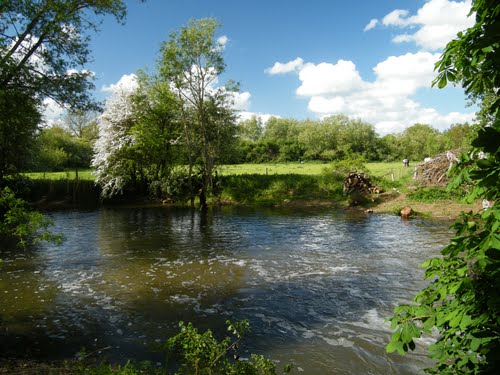
Weir pool on the Churwell near Kirtlington
Wild swim
From Kirtlington village take Mill Lane past the disused quarry, a Site of Special Scientific Interest (SSSI) on account of the Jurassic fossils found there.

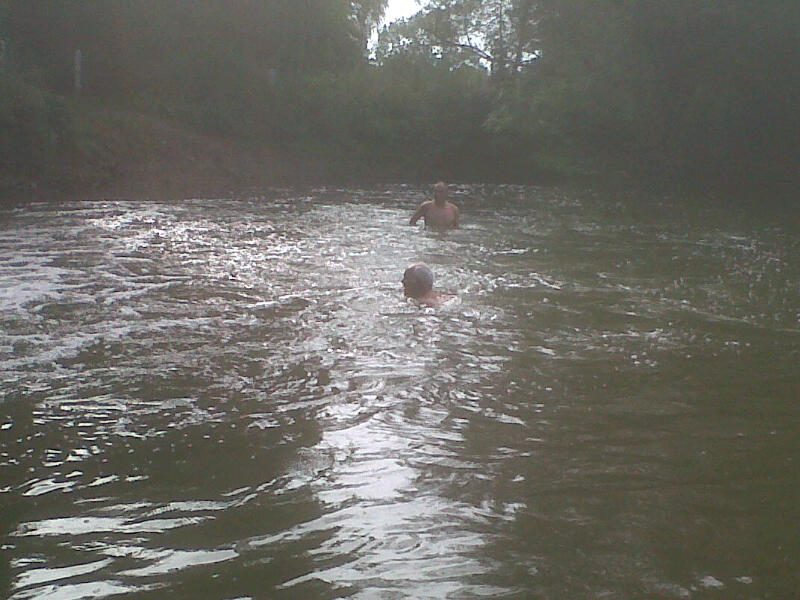
Cross the Oxford canal at Pigeon lock and follow the path to the river. We swam immediately after the second bridge over the middle channel. The river bed is stony, but just about deep enough. Back flow into the weir wasn’t a problem at summer water levels, although I guess it might be in flood.

Jim Thornton
Little Dom Mintoff 1916-2012
From AO Deadpool (click here and scroll down)
Dom Mintoff’s moment came in the early seventies. Labour prime minister, for the second time, of the diminutive island of Malta, he closed Britain’s naval bases, and nationalised airlines, shipping and banks. Outrageous! The British colony had fought so valiantly for the Allies in the Second World War that the island had been collectively awarded the George Cross for courage. The diminutive Mintoff (5 foot 5 inches) became a bogeyman to rival Castro.
It had not always been so. In the 1950s, during his first term as prime minister, Mintoff had tried the opposite tack, to fully incorporate Malta within the UK. Britain was happy to give them the vote, and their own MPs in London, but less keen on giving them the same social services. A compromise might have been found if Mintoff had not been such an uppity foreigner. Instead he discovered the considerable electoral benefits of squabbling with the colonial power.
Prime minister from 1955-1958 and 1971-1984, he was the biggest cheese on the tiny island for forty-odd years — most spent riling Britain. It was a family trait. In 1978 his daughter Yana hurled a bag of horse manure into the chamber of the House of Commons in protest against Britain’s policy in Northern Ireland, but generally Dom Mintoff did the trouble-making himself. He supported the Arabs in the Yom Kippur war, made friends with Gaddafi, and let the Russians build an embassy. But of course socialism soon led to poverty, and eventually he was forced to accept the wily Brits’ offer to pay to keep their ships in his harbour. His final election win in 1981 was widely regarded as fraudulent.
Brave little Malta
Italians they sent off.
Resisting starvation
Told Germans to fuck off.
Despite the George Cross,
To see them off
Soon the Maltesans
Elected Dom Mintoff
He wanted the vote
And thought he could play off
One Brit against other,
Till they told him to sod off.
“Don’t oppose me
When I’m trying to pull off
My plan to join Britain.”
Said angry Dom Mintoff.
So he kicked up a fuss
And pushed their ships off.
He befriended the Russians,
Did commie Dom Mintoff
But the Brits played for time,
And finally paid off,
That troublesome lefty,
Little Dom Mintoff.
— Jim Thornton
Robin Gibb 1949-2012
Reprinted from AO Deadpool (click here for May updates and scroll down)
Now which Bee Gee was Robin? Toothy, big hair and falsetto? No, that was Barry, and he’s still with us. Married Lulu and wore a hat to hide his baldness? No, Maurice died in 2003. Robin was the other bald one — terrible wigs and tinted specs. In their first period of success he was the voice of the Bee Gees. The one who sang the lead on “Massachusetts” and a dozen other late-sixties hits. He had hair, girls loved him, and a million guys got lucky.
But the hits got smaller, his hair fell out, and Barry took a bigger role. Robin felt sidelined, and in the early seventies he tried to break up the band. Until Saturday Night Fever — sales never dried up after that. Rock stars came and went, but the Bee Gees went on and on. It was a long time in the public eye, and the brothers quarrelled endlessly with each other and with their managers — mainly over money. They had a lot of it. According to Wikipaedia only Elvis, the Beatles and Michael Jackson outsold them. Robin also dabbled in New Labour to the point where both Tony Blair and Gordon Brown claimed him as a friend. Quite an achievement!
He married twice. His second wife Dwina, a painter, made him a vegan. Perhaps she thought it would prevent him getting the family disease of bowel cancer — red meat and all that — but he succumbed like his brother and three uncles, so maybe it was in the genes. Dwina was allegedly a bisexual druid priestess, and happy with an open marriage, which must have helped when towards the end of his life it emerged that he’d been having an affair with his housekeeper for a decade or so. Claire Yang was 26 years younger, and three years before his death had a daughter by him. That’ll complicate the reading of the will.
While Robin and Maurice
Couldn’t stop themselves balding
Barry had the big hair
And couldn’t stop smiling
They made a lot of money
From a film with John Travolta
But that made Robin quarrel
With one or other brother
Robin befriended Blair and Brown
And wed a druid priestess
The marriage was an open one
So he kept a Chinese mistress
Perhaps she fed him red meat
Or vegans still get cancer
But now he’s dead as well as bald,
From Saturday Night Fever.
— Jim Thornton
August 2012
Salami publication
A florid example from BJOG
Salami publication is a pernicious type of scientific misconduct where authors publish slightly different aspects of one research study in different papers. For example, publishing baby outcomes in one article and mother outcomes in another. Editors frown on it because it is wasteful, and makes the literature difficult to interpret. Authors do it to pad out their CVs and, by self-citing, increase their citation count. The Committee on Publication Ethics (COPE) (click here) says:
- Related questions, or very closely related, […] should be published as a single paper.
- Salami publication is where papers cover the same population, methods, and question.
- Splitting up papers by outcomes is not legitimate.
Five papers about the effects of alcohol consumption early in pregnancy on fetal development, spread over 56 pages of BJOG this month, are the worst examples I’ve ever seen (Table).
Each paper reported on the same subjects, and same exposure variables. All but one adjusted for the same covariates. The outcomes differed in papers 2, 3 and 4, but paper 1 examined all three, and paper 5 examined the same ones as paper 2 but adjusted for different covariates. Each paper cited between two and four of the co-papers. The textual overlaps amount to about 1/3 of each paper.
| 1 Kesmodel (a) | 2 Falgreen-Erisksen | 3 Skogerbo | 4 Underbjerg | 5 Kesmodel (b) | |
| Subjects | 1628 women sampled from Danish National Birth Cohort | 1628 women sampled from Danish National Birth Cohort | 1628 women sampled from Danish National Birth Cohort | 1628 women sampled from Danish National Birth Cohort | 1628 women sampled from Danish National Birth Cohort |
| Exposure | Average and binge drinking before, and at four time points before 9 weeks in pregnancy | Average and binge drinking before, and at four time points before 9 weeks in pregnancy | Average and binge drinking before, and at four time points before 9 weeks in pregnancy | Average and binge drinking before, and at four time points before 9 weeks in pregnancy | Average and binge drinking before, and at four time points before 9 weeks in pregnancy |
| Co-variates | Parity, smoking, pre-pregnancy BMI, parental education, marital status, child health, drug use, family environment index, maternal depression, parental alcohol at 5 years. | Parity, smoking, pre-pregnancy BMI, parental education, marital status, child health, drug use, family environment index, maternal depression, parental alcohol at 5 years. | Parity, smoking, pre-pregnancy BMI, parental education, marital status, child health, drug use, family environment index, maternal depression, parental alcohol at 5 years. | Parity, smoking, pre-pregnancy BMI, parental education, marital status, child health, drug use, family environment index, maternal depression, parental alcohol at 5 years. | parental education, smoking, child’s gender, age at testing. |
| Outcome variables, all measured at age five years. | IQ by WPPSI-R subdivided into VIQ and PIQ, Attention by TEACH-5, parent measure of child executive function by BRIEF. | IQ by WPPSI-R subdivided into VIQ and PIQ. | Parent and teacher measure of child executive function by BRIEF. | Attention by TEACH-5. | IQ by WPPSI-R subdivided into VIQ and PIQ. |
| Co-papers cited | 2, 3, 4, 5 | 1, 5 | 1, 2, 5 | 1, 2, 5 | 1,2 |
| Conclusions | “The present study suggests that small volumes consumed occasionally may not present serious concern | Maternal consumption of low to moderate quantities of alcohol during pregnancy was not associated with the mean IQ score of preschool children | This study did not observe significant effects of low to moderate alcohol consumption during pregnancy on executive functioning at the age of 5 years | The study detected no effects of lower levels of maternal consumption | We found no systematic association between binge drinking during early pregnancy and child intelligence. However, binge drinking reduced the risk of low, full-scale IQ in gestational weeks 1–2. |
In an earlier report of the study methods (Kesmodel 2010) the authors indicated that they planned to measure another eight baby outcomes at age five.
- Learning/motor skills measured by the Animal house (WPPSI-R),
- Reaction time and speed of information processing measured by the Sternberg task – KVC (Kilburn’s version for children),
- Social skills and behaviour measured by the strengths and difficulties questionnaire (parent and teacher part) – modified version,
- General developmental status measured by Draw a person,
- Behaviour during test session measured by the Behaviour Checklist (clinical rating),
- Vision measured by the Østerberg vision board,
- Hearing measured by Audiometry,
- Motor development (fine and gross) measured by the Movement ABC,
Are we to expect another eight papers reporting these outcomes?
It is particularly disappointing to see this in BJOG, since in the past the journal has taken a robust attitude to this sort of scientific misconduct. The editors not only condoned the redundant publication but wrote an “Editor’s choice” and a commentary about them – salami editorialising!
The message from all this verbiage?
They failed to show any harm from low levels of alcohol consumption but since it is impossible to prove a negative they wisely conclude that to play safe pregnant women should not drink at all. Of course the press took the opposite message. Click here and here for examples. And now the health community is frantically backpedalling.
What a waste of millions of pounds to pad out a few epidemiologists’ CVs and confuse the public!
Jim Thornton
The Climax by Christopher Reid
It’s a lovely idea, that a man could recognise the rhythm of an individual woman’s orgasms, but hardly testable. Claims of expertise would open up all sorts of other difficulties. Let’s leave it to the poet. This one was published in The Spectator, 19 May 2012.
The Climax
Not until the last bars of the symphony
did the critic get the point. It was the point
of a knife. For twenty minute he had been preparing
the usual put-downs, ironies, and mockeries.
(The composer knew them well.)
Then something began to swell
in the orchestra. Little touches at first:
muted trombones, increasingly urgent,
throaty clarinets, harmonic frissons from the upper strings
The composer, at the rostrum, coaxed the musicians on
with gestures like caresses, the sound inexorably building.
By the time the tympani started to pound
against brass gasps and woodwind yelps –
a miracle of orchestration – the critic was in no doubt:
The bastard had been screwing his wife!
By Christopher Reid
The Cob at Portmadog
Now just another coast road
This tidal barrier was built by William Maddocks in 1811 primarily to create fertile farmland in the Glaslyn estuary by preventing inundation with salt water at high tides, but it also carried a road and the Ffestiniog light railway across the estuary. There are fine views of Snowden.



Quite reasonably Maddocks charged a toll. The queues disappeared with the opening of a modern bypass higher up the estuary, but the Welsh Assembly saw votes in removing the tolls, and in 2003 persuaded the European Union to contribute to buying out the Rebecca Trust, which had bought them from Maddock’s descendants. Elsewhere in Wales they pay for traffic calming to slow down traffic. I suppose we should be grateful they are not doing that on the Cob – yet.
Here is the old toll house, and the original price list for various types of crossing.
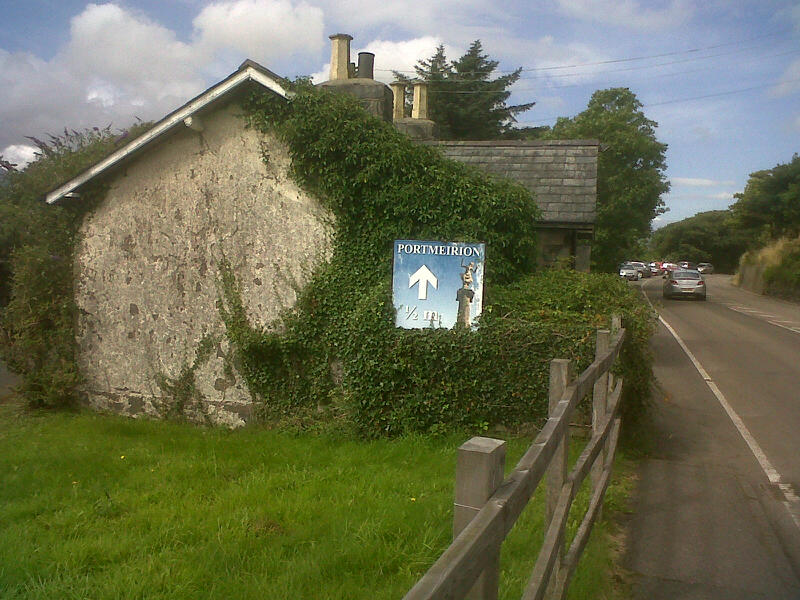
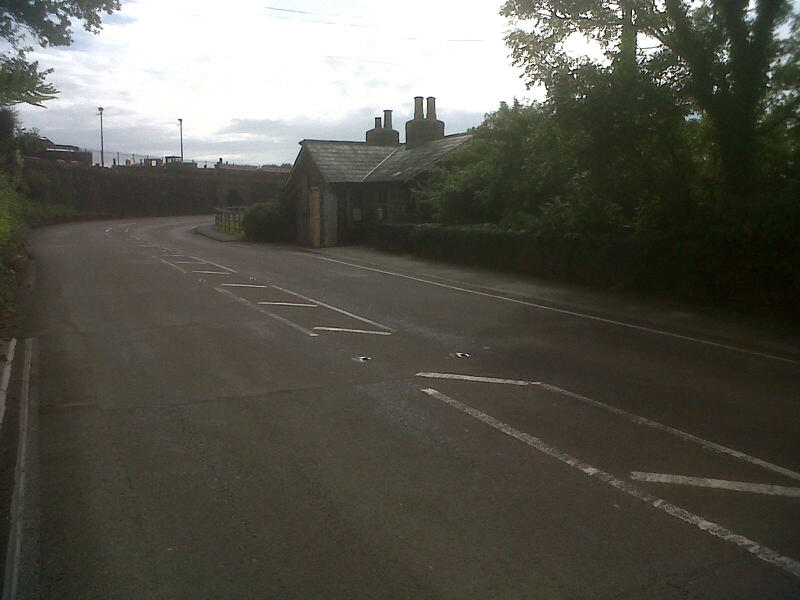

Read more about the toll removal here.
Jim Thornton
 Ripe-tomato.org