Pont Briwet toll bridge
Soon to be “free”, and soon to be demolished
Built in 1867 this Grade 2 listed bridge carries a single track road and the Cambrian coast railway line over the beautiful Dwyryd estuary in Snowdonia. The 50p toll for unlimited crossings in a day is good value considering the alternative is an 8 mile drive.


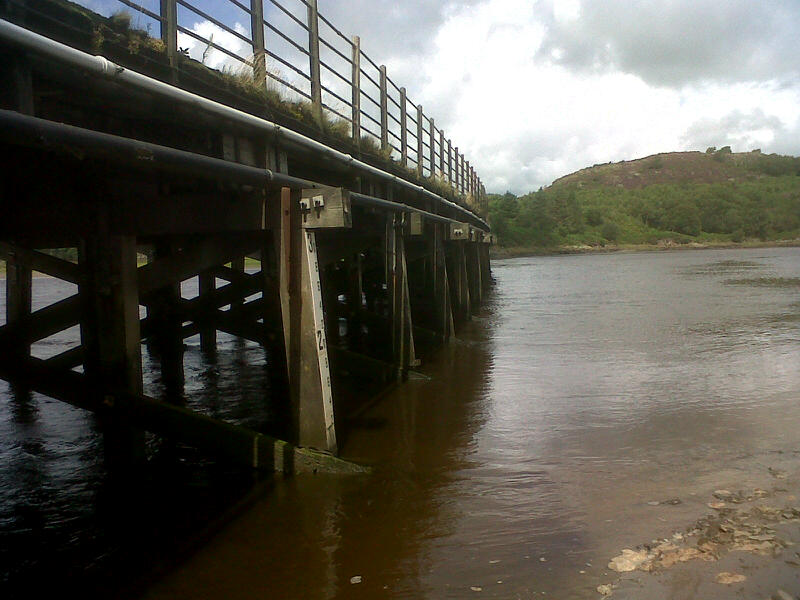

The bridge is currently (2012) owned by Network Rail, Gwynedd Council and a private individual, who has the right to charge tolls. Next year the Welsh Assembly plans a new bridge with a better railway track, a dual carriage road and a cycle lane. They will demolish the old one and remove the tolls. The European Union will pay, because this part of Wales counts as an underdeveloped region. I guess there’s votes in removing tolls, and in faster trains and cars, so long as someone else pays. Am I the only person who thinks it is a tragedy?
Jim Thornton
Penmaenpool toll bridge
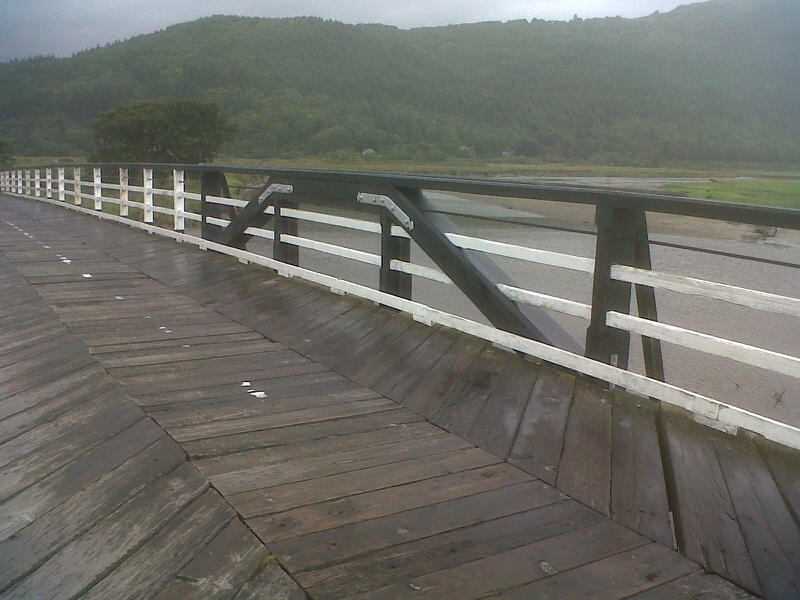
This beautiful wooden bridge over the Mawddach estuary was built in 1879 to replace a ferry. 60p each way, and well worth it to cut 6km off the alternative.


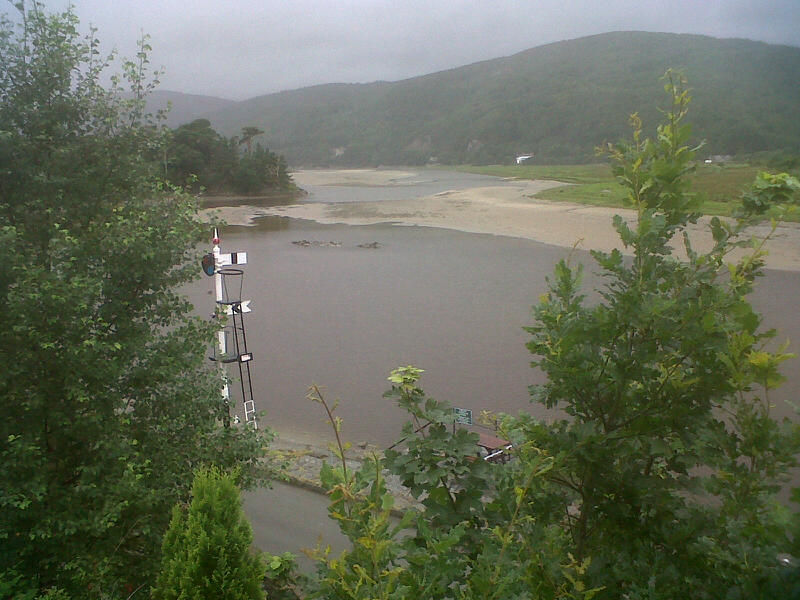

Fears that it might impede boats getting up the river to Dolgellau persuaded the designer to make it possible to insert a lifting section in the middle. But the fears proved unfounded and it was never needed.
The George III hotel is just downstream.

The bridge was originally built by the Penmaenpool Bridge Company. iGreens (click here) have a picture of the bridge rebuilding about ten or so years ago. I presume it is still privately owned, but I’d love to know more. A company by the name Penmaenpool Toll Bridge Company Ltd was registered in 1997 as having a head office in Cheshire, but never filed accounts, and was dissolved in 2008. According to Wikipaedia the bridge is a Cadw registered building. Cadw (click here) is the Welsh Government’s historic environment service, but a search of their website reveals no information on the bridge.
Jim Thornton
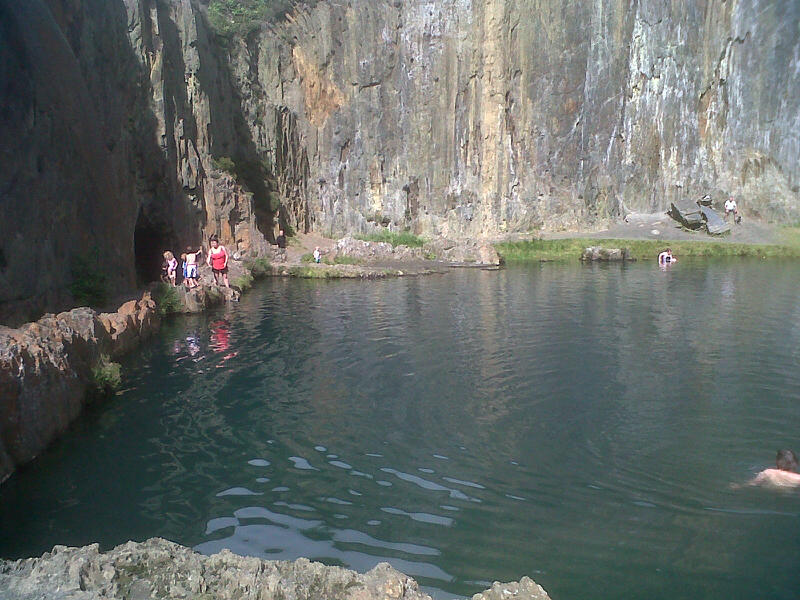
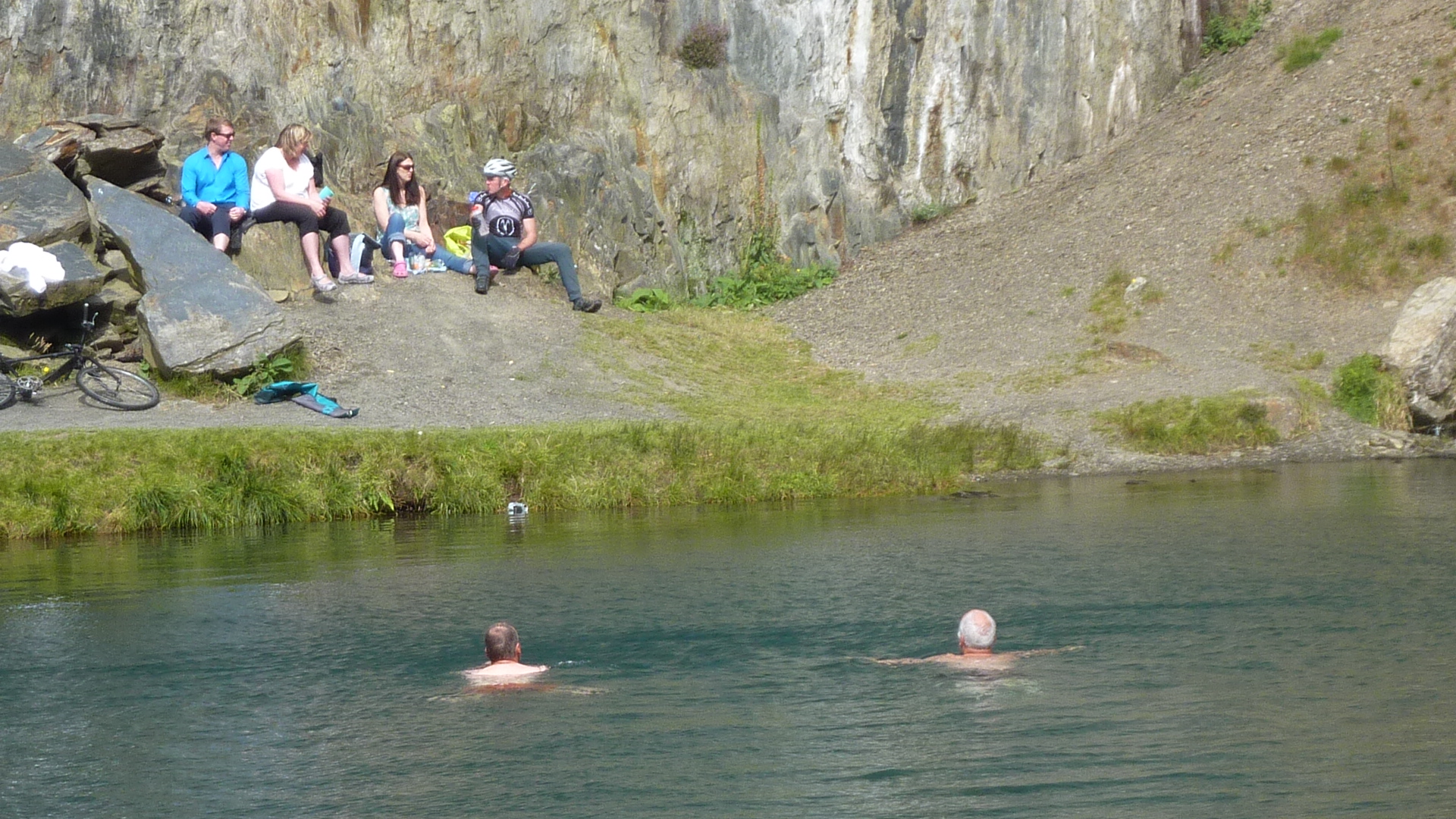
Wild swimming in Golwen quarry
Across the Mawddach estuary from Barmouth is an old slate quarry- one of the best wild swimming sites in Wales.
Take the A493 south out of Fairbourne till you see a left turn opposite a phone box.
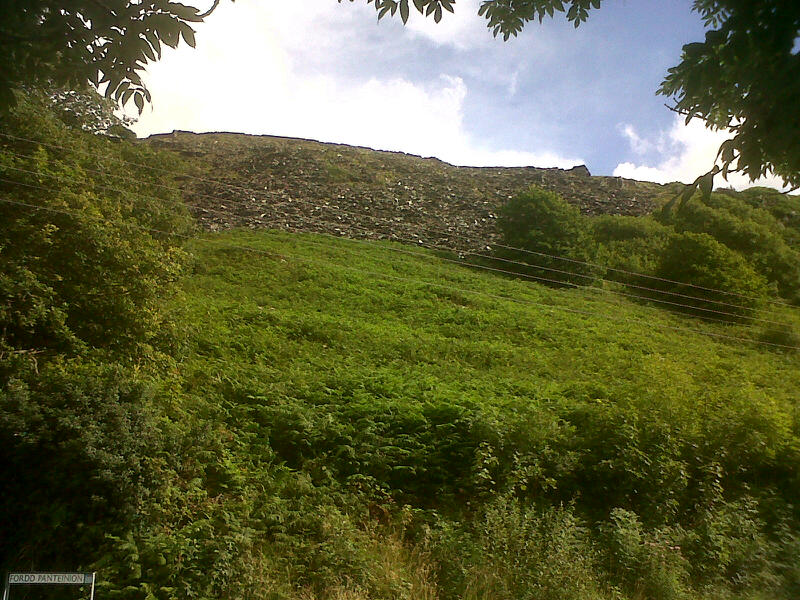

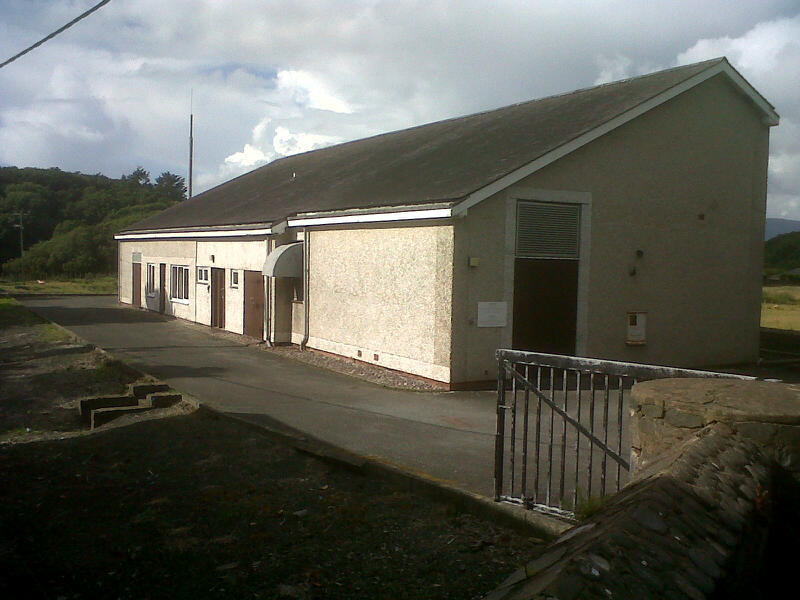
Park up in the old telephone exchange and walk up the side road, past a few shepherds cottages, now tarted up and full of New Agers.


After half a mile go through the stile right and take the path up the hill. Where the path forks, go right and pass under a few slate bridges till you reach a plateau with an excellent view back to Barmouth.


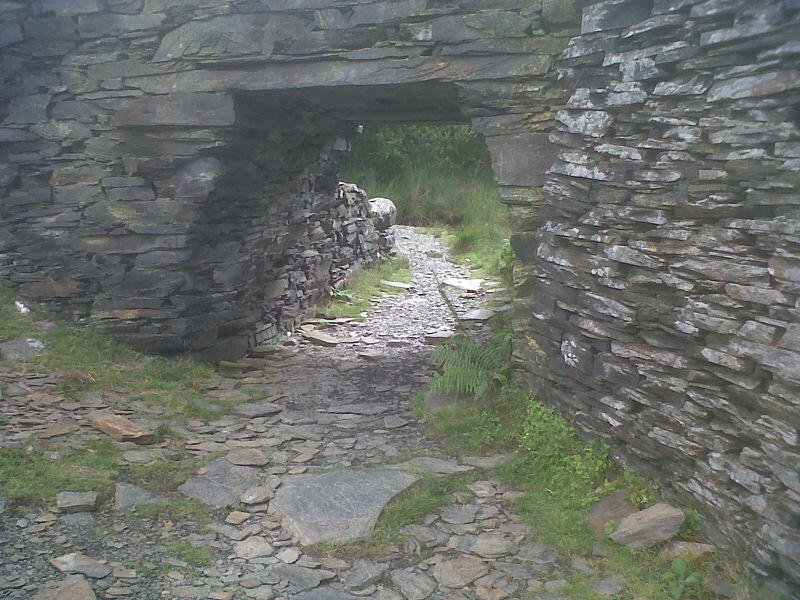


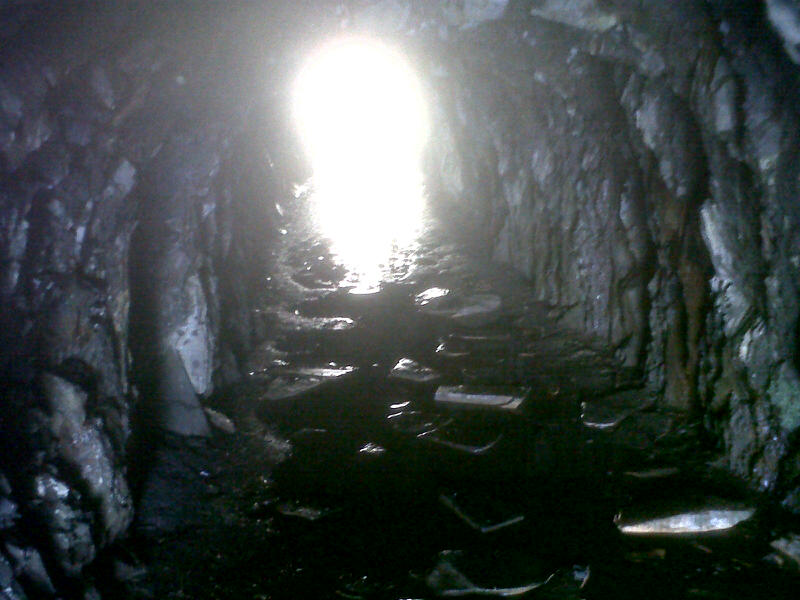
Enter a 20 yard tunnel and, if the sun is shining, emerge into the most magical place.


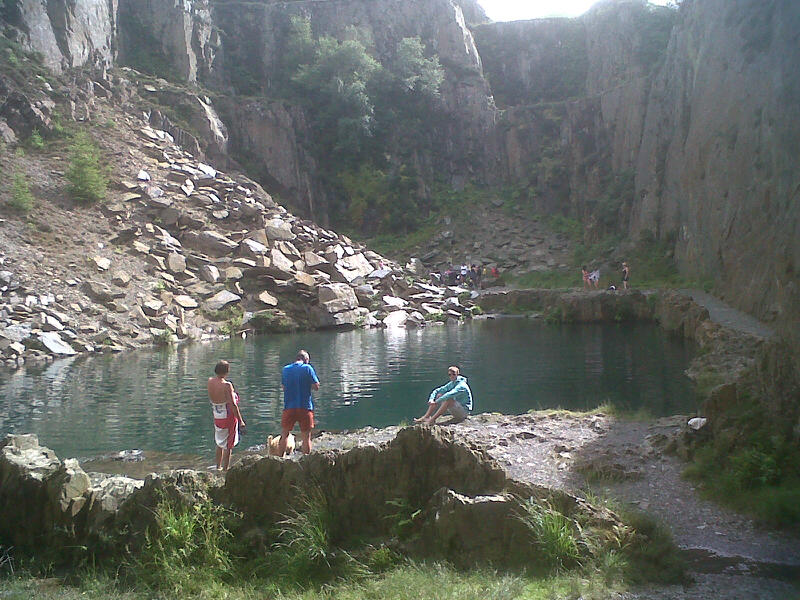
The quarry if said to be 40 metres deep. The copper leached from the slate keeps the water clear. It’s cold, but a beautiful swim.



Jim Thornton
Julian Assange rape allegations
The facts as presented to the UK Appeal Court
The following are extracts from the full ruling available here.
“Introduction
In August 2010 the appellant, Mr Julian Assange, a journalist well known through his operation of Wikileaks, visited Sweden to give a lecture. Between 13 August 2010 and 18 August 2010, Mr Assange had sexual relations with two women there, AA and SW. On 20 August 2010 SW, accompanied by AA, went to the police. The police treated their visits as the filing of complaints. On 30 August 2010 Mr Assange, who had voluntarily remained in Sweden to co-operate with the investigation, was interviewed. Mr Assange subsequently left Sweden on or about 27 September 2010 in ignorance of the fact that an arrest warrant had been issued. Attempts had been made by the Swedish prosecutor to interview him.
After proceedings in the courts of Sweden, […] a European Arrest Warrant (EAW) was issued on 26 November 2010 by the Swedish Prosecution Authority […]. The warrant […] set out four offences:
1. Unlawful coercion
On 13-14 August 2010, in the home of the injured party [AA] in Stockholm. Assange, by using violence, forced the injured party to endure his restricting her freedom of movement. The violence consisted in a firm hold of the injured party’s arms and a forceful spreading of her legs whilst lying on top of her and with his body weight preventing her from moving or shifting.
2. Sexual molestation
On 13-14 August 2010, in the home of the injured party [AA] in Stockholm, Assange deliberately molested the injured party by acting in a manner designed to violate her sexual integrity. Assange, who was aware that it was the expressed wish of the injured party and a prerequisite of sexual intercourse that a condom be used, consummated unprotected sexual intercourse with her without her knowledge.
3. Sexual molestation
On 18 August 2010 or on any of the days before or after that date, in the home of the injured party [AA] in Stockholm, Assange deliberately molested the injured party by acting in a manner designed to violate her sexual integrity i.e. lying next to her and pressing his naked, erect penis to her body.
4. Rape
On 17 August 2010, in the home of the injured party [SW] in Enkoping, Assange deliberately consummated sexual intercourse with her by improperly exploiting that she, due to sleep. was in a helpless state.
It is an aggravating circumstance that Assange. who was aware that it was the expressed wish of the injured party and a prerequisite of sexual intercourse that a condom be used. still consummated unprotected sexual intercourse with her. The sexual act was designed to violate the injured party’s sexual integrity.”
Assange’s defence was partly based on points of law, that the arrest warrant wasn’t issued by a competent aurthority, etc. And partly that if the judges had read all the evidence in the prosecutor’s file, i.e. the full statements of the accusers, not just the summary in the arrest warrant, they would find that the even on the alleged facts there was no case to extradite. The appeal judges decided that they should not consider such material. However they presented it as follows:
“Para 74. As regards offence 1, AA said in her statement that she had offered the use of her apartment to Mr Assange from 11-14 August 2010 when she was away. She had returned on 13 August 2010 earlier than planned and then met him for the first time. They went out to dinner and returned to her apartment. As they drank tea, he started to fondle her leg which she welcomed. Everything happened fast. Mr Assange ripped off her clothes and at the same time broke her necklace. She tried to put her clothes on again, but Mr Assange had immediately removed them again. She had thought that she did not really want to continue, but it was too late to tell Mr Assange to stop as she had consented so far. Accordingly she let Mr Assange take off all her clothes. Thereafter they laid down on the bed naked with AA on her back and Mr Assange on top. Mr Assange wanted to insert his penis into her vagina, but she did not want him to do that as he was not using a condom. She therefore squeezed her legs together in order to avoid him penetrating her. She tried to reach several times for a condom which Mr Assange had stopped her from doing by holding her arms and bending her legs open and trying to penetrate her with his penis without a condom. Mr Assange must have known it was a condom AA was reaching for and he had held her arms to stop her. After a while Mr Assange had asked AA what she was doing and why she was squeezing her legs together; AA told him she wanted him to put on a condom before he entered her. Mr Assange let go of AA’s arms and put on a condom which AA found for him. AA felt a strong sense of unexpressed resistance on Mr Assange’ s part against using a condom.
Para 93 AA’s statement went on to describe what happened immediately after what we have set out in relation to offence 1. She made it quite clear, as we have set out at paragraph 74, that she wished him to put a condom on before he entered her. Indeed she was concerned he had not put a condom on. She felt his penis with her hand to check he had really put it on. She felt that the edge of the condom was in the right place on the root of his penis. They therefore continued to have sex, as she said that she thought that she just wanted to get it over with. After a while AA noticed that Mr Assange had pulled his penis out of her and started to arrange the condom. Judging by the sound AA thought he was removing the condom. He then penetrated her again and continued sexual intercourse. She felt again with her hand that the edge of the condom was, as previously, around the root of the penis. She therefore let him continue. AA stated that a while later he ejaculated inside her and then pulled out. When he removed the condom from his penis, AA saw it was empty of semen. When she started to move her body she noticed something was seeping out of her vagina and understood it must be his semen. AA told the police she was convinced that Mr Assange, when he pulled out of her, broke the condom by the glans and then continued the intercourse until he ejaculated.
The evidence in the file showed that the condom was examined by the Swedish National Laboratory of Forensic Science. The conclusion of the expert was that there was nothing to indicate that a tool had been used, but that the damage to the condom was created by the wear and tear of the condom.”
[…]
“Para 99. In her statement describing offence 3, which is alleged to have occurred some days later on 18 August 2010 or (in the revised translation) on or about 18 August 2010, AA stated that after 12/13 August 2010 they did not have sexual intercourse again. AA said that Mr Assange tried to make sexual advances towards her every day thereafter. For example he had touched her breasts. She rejected him on all occasions. He accepted these rejections.
Para 100. During this time, however, she continued to sleep in the same bed as Mr Assange. When they were in the same bed on 18 August 2010, he suddenly took all his clothes off from the lower part of his body and rubbed that part of his body and his erect penis against AA. She had felt this was very strange behaviour and awkward. After this, she no longer slept in the same bed as Mr Assange, but moved to a mattress on the floor.
Para 101. The essential complaint made about the fairness and accuracy of the description of offence 3 is that it did not state that Mr Assange was sleeping in the same single bed as AA and that, understandably and without criminal intent, he might have had an erection in those circumstances.”
[…]
“Para 121. [referring to offence 4, the alleged rape] In her statement SW said that she had been captivated by Mr Assange when she had seen him in a TV interview. She had attended a lunch with him and others on 14 August 2010. He had flirted with her over lunch and they had gone out together ending up in cinema where they kissed and fondled. She contacted him on 16 August 2010 and invited him to her house. In the bedroom he took her clothes off; they were naked together on the bed and engaged in sexual foreplay on the bed. He rubbed his penis against her. She closed her legs because she did not want to have intercourse with him unless he used a condom. After a period of some hours, he went to sleep. For a long time she had lain awake, but then she also fell asleep. They then had sexual intercourse with him using a condom. They fell asleep and woke and had sex again. They had breakfast. They had sex again with a condom only on the glans of his penis.
Para 122. Her statement then describes in some detail the conduct that forms the basis of Offence 4. She fell asleep, but was woken up by his penetration of her. She immediately asked if he was wearing anything. He answered to the effect that he was not. She felt it was too late and, as he was already inside her, she let him continue. She had never had unprotected sex. He then ejaculated inside her.”
That’s it. There are millions of words of hearsay, but the prosecutors and judges quite rightly ignored all that, and went on the witness evidence above.
Eva Finne, the chief prosecutor for the Stockholm region initially dismissed the rape allegations. Then a male lawyer called Claes Borgstrom, a former gender equality ombudsman and politician, got the case reopened and the arrest warrant issued. Mr Justice Riddle ordered Mr Assange’s extradition. Sir John Thomas and Mr Justice Ousely rejected Assange’s appeal. Who has more common sense? One woman or four men? You decide.
Jim Thornton
Surgery for screen-detected prostate cancer
Doesn’t work, you wet yourself, and can’t get it up!
Lovely trial in this month’s New Engl J Med (click here). The authors compared radical surgery with observation, for men unlucky enough to have prostate cancer detected on screening. A sensible trial because most screen-detected cancers never cause trouble, and surgery has side effects.
The planned sample size (trial registration here, although the original sample size is not very clear) was 2,000 (1,000 per group) but due to slow recruitment they stopped at 731. This is made clear in the paper. The pre-determined primary endpoint was all cause mortality at a median follow-up of 10 years. There was no difference. Surgery 171/364 (47.0%) observation 183/ 367 (49.9%) (hazard ratio, 0.88; 95% confidence interval, 0.71 to 1.08; P = 0.22; absolute risk reduction, 2.9%).
Here are the mortality curves

In case you think that the 2.9% difference, which may well have ocurred by chance, is worth having, remember what it amounts to – about 6 months, of which about two will be spent getting over the surgery! One fifth of operations had a major complication, although only one poor guy died!
More importantly how does surgery affect the 12 years you would have lived anyway? It almost doubles your rate of impotence from 124/281 (44%) to 231/285 (81%) and almost triples your rate of urinary incontinence from 18/284 (6.3%) to 49/287 (17%).
And this is just for those who actually have a cancer detected. For each one of them, hundreds have a blood test, and maybe half a dozen have a needle biopsy of the prostate where nothing is found.
Full marks to the NHS for resisting calls for screening.
Jim Thornton.
Diederik Sakkers
Dutch Libertarian

My friend Diederik Sakkers is standing for the Dutch parliament on 12 September. I’m so excited. He’s standing for the Libertarian Party. Here’s their website. Their leader is Toine Manders.
Diederik is lowish on the list (it’s proportional representation) but ripe-tomato.org support should get him in! We supported Marleen Temmerman a few years ago, and she briefly became the most famous politician on the planet when she told the wives of her fellow Belgian MPs to withhold their sexual favours until the MPs had agreed a government! So no pressure!
Seriously, it’s important to support him. The Libertarian Party has all the right small government policies, without the racist overtones of Geert Wilder’s populist Freedom Party. The Netherlands needs some Libertarian MPs.
Jim Thornton
Speech therapy after stroke
Chat to your friends instead and save money.
The NHS spends many millions a year on speech therapy for patients with speech problems after a stroke. Most improve, but would they do just as well chatting to their family?
A nice trial (the statistician was my old friend Andy Vail) in this week’s BMJ says they would. The protocol was registered here, there was independent randomisation, an agreed primary endpoint, and analysis was by intention to treat. Recruitment was slower than anticipated but the decision to stop at 170 participants (85 per group) instead of the planned 600, was made without knowledge of the results.
The intervention group got an average of 22 sessions with a trained speech therapist while controls got the same number with an untrained visitor who just chatted in a general way. Care was taken to ensure the speech therapy was the best possible. The primary outcome was a measure of patient communication at six months. To avoid bias participants were videoed having a semi-structured conversation with a research assistant. An independent person then scored the video without knowing if they were in the treatment or control group. A high score was good.
After six months average scores were the same in both groups, 3.0 control and 3.3 treatment. The difference is not statistically significant, and when adjusted for chance differences at baseline, disappears altogether.
The trial was shockingly expensive, £1.5M, but if it stops the NHS wasting money on useless speech therapy for stroke patients it will have been money well spent.
Or maybe not. Way back in 1982 a similar trial (click here) compared speech therapy with chatting to a volunteer and showed the same result – no difference. Speech therapists ignored it.
It’s tough persuading people with a vested interest that they’re doing no good!
Jim Thornton
Does legal representation help you win?
Not according to this trial
Two researchers, James Greiner and Cassandra Pattanayak from Harvard Law School wondered whether having legal representation in court helps you win. A good question!*
They studied 207 people who were appealing a ruling that they were not entitled to unemployment benefit on the grounds of unfair dismissal.
Each plaintiff was randomised to be offered representation by a student from the Harvard Legal Aid Bureau (HLAB), or not. HLAB is a scheme where 2nd year law students, under the supervision of a professor, offer free legal advice.
Representation did not alter the rate of a sucessful verdict, i.e. one favouring the legally assisted person. It was 76% with the offer of representation v. 71% without (difference 5%, adjusted 95% CI -6 to 9%), but it did delay the verdict by 53 v 37 days, a statistically significant difference. Since most claimants eventually won, representation overall harmed them by delaying the benefit to which they were entitled. Wow!
If this was medical research ripe-tomato.org would be picking holes in the methodology – there are a few. HLAB capacity varied over the academic year, so plaintiffs were randomised in a variable ratio that led to all the places being taken up (78 offer, 129 no offer). The uneven ratio is not a problem in principle, but this one caused a non-random seasonal difference between the groups, which might have introduced bias. Also the trial was not registered, so we cannot be sure that the sample size, primary endpoint or analysis plan were pre-specified.
But much else was good. Despite a few plaintiffs failing to take up the offer and about a third of controls eventually obtaining representation from other sources, the authors analysed results by whether or not they got the offer, i.e. by “intention to treat”. And it’s one of the first ever randomised trials of any legal intervention, so who’s quibbling? Not me.
Apparently the authors plan more such trials. I’m looking forward.
Jim Thornton
Here is a direct link to the paper in Yale Law Journal (2012) page 2118, and here Greiner & Pattanayak a copy for those with paywall problems.
* The following may inspire those lawyers whose names are not Greiner or Pattanayak. Medicine used to be where law is now.
One day when I was a junior medical student, a very important Boston surgeon visited the school and delivered a great treatise on a large number of patients who had undergone successful operations for vascular reconstruction. At the end of the lecture, a young student at the back of the room timidly asked, “Do you have any controls?” Well, the great surgeon drew himself up to his full height, hit the desk, and said, “Do you mean did I not operate on half the patients?” The hall grew very quiet then. The voice at the back of the room very hesitantly replied, “Yes, that’s what I had in mind.” Then the visitor’s fist really came down as he thundered, “Of course not. That would have doomed half of them to their death.” God, it was quiet then, and one could scarcely hear the small voice ask, “Which half?
—Dr. E. E. Peacock, Jr., University of Arizona College of Medicine; quoted inMedical World News (September 1, 1972), p. 45, as quoted by Tufte
An Abduction

The beginning and end of this week’s New Yorker fiction by Tessa Hadley (click here), do much to redeem the psycho-babble in the middle.
“Jane Allsop was abducted when she was fifteen, and nobody noticed. This happened a long time ago, in Surrey, in the nineteen-sixties, when parents were more careless.”
Brilliant, but the abduction disappoints. The older boys kept her only one night and although she lost her virginity to Daniel, who promptly returned to his girlfriend’s bed, Jane was a willing, albeit disappointed, accomplice and no harm came of it – no pregnancy, no abortion, not even an infection. She turned into a conventional housewife like her mother and kept the secret forever.
The suggestion that these events could be somehow implicated in her undefined mental problems when she gets divorced in her fifties appears laughable until we finally learn that Daniel, over an equally conventional lifetime, has completely forgotten the episode. It mattered, and he has lost something.
Jim Thornton
Another Life by Paul La Farge
New Yorker fiction.

Casual sex may, or may not, be great for the participants, but it’s tricky for the short story writer to make both interesting and plausible? Readers won’t empathise with characters who put out too easily, so get them high and drunk first. Keep it casual by not naming them – just the husband, the wife, pretty bartender and total sleazeball. Let learning April P’s name, albeit from her till receipt, be an early clue to her centrality. Add depth by telling us that the husband is not trying to pick anyone up as he goes down to the hotel bar alone. And allow the bartender to speculate erroneously that he and his wife are swingers.
Female motivation is also tricky. The sort of married middle-aged paediatrician, daughter of a Boston neuroscientist, who is so conventional that she frets about family burial plots, rarely goes off with a lonely barfly on first meeting. But that’s subplot. So leave it unexplained.
You need to do better with the main pair. Make them readers, he of Rousseau and she Emily Dickinson – well-read older man gets off with lonely poetry reading girl. Rousseau is hopeless as a chat up book, but that’s another feint. The man can show his erudition and the woman her ignorance, until the twist, when the cocaine too much for his heart, she leaves him, possibly for dead, and settles down to write – a short story?
Here it is – July 2nd 2012
Jim Thornton
 Ripe-tomato.org