Support the Pirate Party.
BMJ bias
Criticising the BBC’s clumsy efforts to achieve balance in its science coverage, a British Medical Journal editorial, claims that when there is only one reasonable scientific view, presenting the opposing case gives a false impression of uncertainty. Two good examples, astronomy v. astrology and round v. flat earth, could easily have been followed by evolution v. creationism, but instead we got is global warming man-made or not. That’s just point scoring by pretending your opponents are as mad as flat-earthers.
Sure there is a near scientific consensus that global warming is anthropogenic, but it is not as settled as disbelief in astrology, a flat earth or creationism. And the real controversy, what to do about it, is very far from settled. The BMJ think we should impoverish ourselves, or the poor Chinese, in the hope of preventing further warming, but many other sensible people believe we should speed development so we can better adapt. The BBC should stay “balanced” on this a little longer.
A nearby editorial in the same issue provides a fine example of BMJ balance on socialised medicine. Swedish Pirate Party supporter Waldemar Ingdahl tells us how the Party began with the policy of removing copyright protection for music. It was apparently such an easy sell to file-sharing teenagers that they now have two Euro MPs; no-one feels sorry for Bono. Next they want to nationalise pharmaceutical research and manufacture. Here’s what he has to say.
“Thanks to universal health insurance, government subsidies account for most of the income of drug companies in Europe. Only 15% of this income actually goes into research, with most of the remainder being spent on marketing. Instead, governments should allocate 20% of today’s drugs bill directly to the universities for research. More funds should produce more research findings. Without the need for drug companies to undertake the research themselves, there would be no need for medical patents to protect their investment. The price of drugs would drop if they were manufactured in a competitive market, rather than by patent protected monopolies. People in developing countries would also benefit because their governments wouldn’t be forced to buy expensive patent drugs.”
Why stop there? Let’s nationalise the food industry. No more waste on advertising, and tasty luxuries. The government could ration out just the right amount of healthy stuff, and sort out obesity and malnutrition at a stroke. The same with cars, houses and holidays. Private companies, producing only what free people are prepared to pay for, are so wasteful. Central planning could allocate things so much better.
I bet dear Waldemar thinks the outpouring of grief for Kim Jong Il was genuine.
Jim Thornton
Bad doctors
Who gets struck off?
Country of qualification and risk of removal from the UK medical register for misconduct, incompetence or crime?
Richard Wakeford gives the numbers in this weeks BMJ. I expected countries where medical training and practice differs most from the UK to take top spots. But six of the top ten are European, and the winner is France. Here’s the table. Click to enlarge.
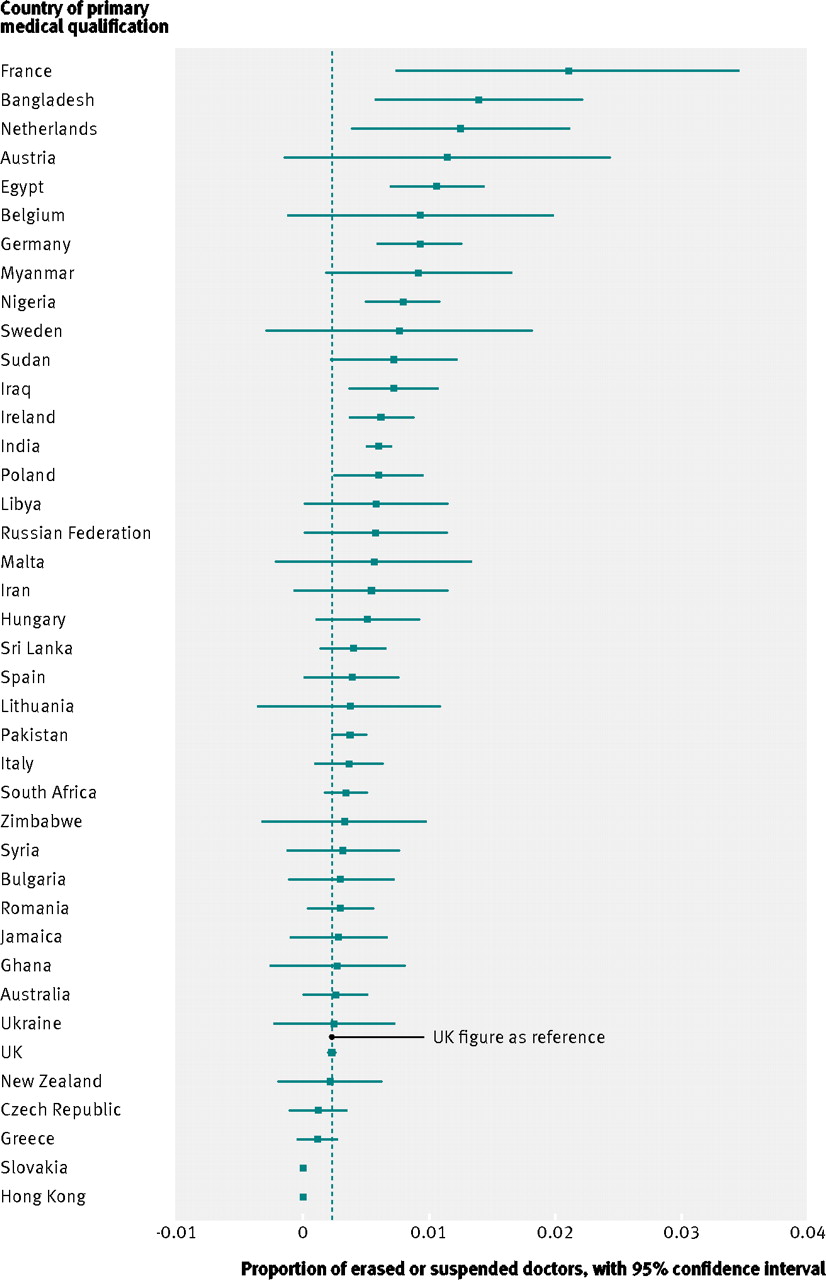
It’s tempting to say: “Typical French – lazy, wine drinkers, bonking their patients” but that national stereotype hardly fits Holland, Germany or Sweden. Perhaps a trip over the water is an easy option if things get hot at home. Read the full article here.
Jim Thornton
Anne Sexton again
Read this lonely, angry poem before you read the title
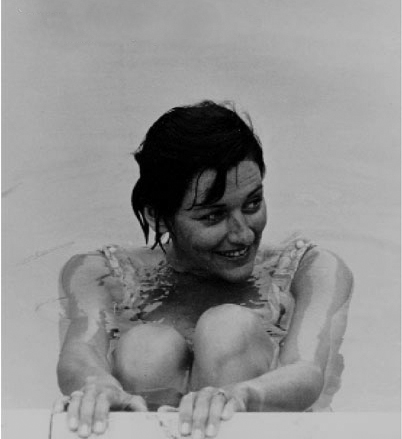

Anne Sexton wrote this after breaking up with an even better poet, James Wright. A passionate correspondence, initially poetic, later erotic, had led to a short intense affair. Sexton wrote Letter Written on a Ferry While Crossing Long Island Sound about it; Wright A Blessing during it. The latter is one of my favourite poems.
Sexton was angry and frustrated when the relationship ended and wanted to shock her readers with an intentionally crude and explicit title. She put some otherwise sympathetic readers off. So here it is without the title; you’ll soon get what it’s about.
The end of the affair is always death.
She’s my workshop. Slippery eye,
out of the tribe of myself my breath
finds you gone. I horrify
those who stand by. I am fed.
At night, alone, I marry the bed.
Finger to finger, now she’s mine.
She’s not too far. She’s my encounter.
I beat her like a bell. I recline
in the bower where you used to mount her.
You borrowed me on the flowered spread.
At night, alone, I marry the bed.
Take for instance this night, my love,
that every single couple puts together
with a joint overturning, beneath, above,
the abundant two on sponge and feather,
kneeling and pushing, head to head.
At night alone, I marry the bed.
I break out of my body this way,
an annoying miracle. Could I
put the dream market on display?
I am spread out. I crucify.
My little plum is what you said.
At night, alone, I marry the bed.
Then my black-eyed rival came.
The lady of water, rising on the beach,
a piano at her fingertips, shame
on her lips and a flute’s speech.
And I was the knock-kneed broom instead.
At night, alone, I marry the bed.
She took you the way a woman takes
a bargain dress off the rack
and I broke the way a stone breaks.
I give back your books and fishing tack.
Today’s paper says that you are wed.
At night, alone, I marry the bed.
The boys and girls are one tonight.
They unbutton blouses. They unzip flies.
They take off shoes. They turn off the light.
The glimmering creatures are full of lies.
They are eating each other. They are overfed.
At night, alone, I marry the bed.
Confessional poetry – Sexton was an incredibly sexual woman, who gave everything to each man she loved, and was unafraid to bare her emotions, even the desperation when someone else had taken him away.
And the title? The Ballad of the Lonely Masturbator. Not so shocking. Maybe I needn’t have kept it from you.
Jim Thornton
Colloquy by Weldon Kees
The poet takes his torments to his sleepy cat.
Get on with life and give me my dinner, says the cat. He’s as wise as you, whoever you are.
And what is “owl weather”? It’s not in my dictionary. I guess a clear night, cobwebs visible in the moonlight.
And why does the yellow New Yorker Book of Poems (p134) omit the em dashes [—]? They highlight the poet’s long question. I like them. Anyway, here’s the poem.
In the broken light, in owl weather,
Webs on the lawn where the leaves end,
I took the thin moon and the sky for cover
To pick the cat’s brains and descend
A weedy hill. I found him groveling
Inside the summerhouse, a shadowed bulge,
Furred and somnolent.—”I bring,”
I said, “besides this dish of liver, and an edge
Of cheese, the customary torments,
And the usual wonder why we live
At all, and why the world thins out and perishes
As it has done for me, sieved
As I am toward silences. Where
Are we now? Do we know anything?”
—Now, on another night, his look endures.
“Give me the dish,” he said.
I had his answer, wise as yours.
Weldon Kees
An expensive cocktail
In the Beautiful Burj Kalifa


I had been up Taipei 101three years ago, then the world’s tallest skyscraper, albeit competing with Shanghai’s World Financial Centre. So I really had to go up the Burj Khalifa in Dubai last week.
The Burj is indisputably now the world’s tallest skyscraper. But the observation deck on the 124th floor is small and expensive – pre-booked about £25, un-booked, like me, nearly £100.
The At.mosphere cocktail bar a floor below has a minimum spend, for men only, of £50. How sexist is that? Mixed sex parties, with the balls to leave no tip, could get away paying no more than a booked ticket to the observation deck, and have an expensive cocktail thrown in.
But one cocktail, at night, with the piano man playing, and the view from nearly half a mile up? Who’s going to stop at that? Not me.
It was worth it. I’m in love.
Jim Thornton
A Good Climate Agreement
From Kyoto Protocol to Durban Platform
Most greens seem disappointed by last week’s Durban agreement by all countries to work towards a legally binding limit on greenhouse gas emissions by 2015, to be implemented by 2020. They object that the limits are unspecified, and to the time scale; 2020 is conveniently far away for today’s politicians.
But iGreens are pleased. Both China and the US have agreed to the principle of a legally binding agreement, and “a long way off and likely to be weak”, is exactly what a legally binding agreement should be. We don’t want to lock ourselves into a tough agreement that slows economic development. We need that to combat poverty and to adapt to climate change when it occurs.
The Durban Platform keeps the issue on the agenda, and by minimising government subsidy gives people an incentive to develop only genuinely efficient green power sources.
It also allows rich Europeans and Californians to do more. To spend their wealth on expensive conventional green power to slow warming directly, or provide seed corn funding to develop improved sources of green energy. They are much less likely to be satisfied with “more research is needed” than governments would.
We’re content. The developing world’s poor should be too.
Jim Thornton
Sarkozy’s love life
French president Nicolas Sarkozy is doing rather well. The Euro crisis is hardly his fault and he’s repaired the alliance with America and made a start on cutting the bloated French public sector, not to mention being the first French leader since Napoleon to have won a war (Libya) and sired a child in office. He even managed to miss the birth. The French should be proud of him but he’s languishing in the polls. Perhaps his love life is too complicated even for them.
It’s in his genes; his feckless Hungarian father Pal Sarkozy had four wives, countless affairs and has just written a book describing himself as an insatiable sex addict. Nicolas has been more circumspect so far, but not much. He married his first wife, by whom he has two sons, in 1982 just before his first big break, getting elected mayor of Neuilly. One of the mayor’s duties was to officiate at important marriages, but Sarkozy went a step further – he also got off with the bride. In 1983 he paired off a 51 year old TV chat show host with a heavily pregnant 26-year-old former model, Cecilia. Five years later he left his wife and shacked up with her. Although it took another eight years before he got around to marrying Cecilia, he later claimed to have fallen for her at the earlier wedding.
She bore him a third child but soon gave trouble. She didn’t like politics and in 2005 ran off with an events organiser Richard Attias. Sarkozy persuaded her back to play the loyal wife for his presidential campaign, but she wasn’t happy. After his victory, he got into trouble for trying to placate her with expensive holidays and glamorous non-jobs. When he sent her off to “negotiate” the release of the Belgian nurses imprisoned in Libya on trumped up charges of infecting children with HIV, she almost scuppered the whole delicate process, before upsetting everyone by claiming credit. Soon she’d run back to Attias.
Perhaps she was upset by Sarkozy’s new squeeze; he certainly took no time at all to hit on the glamorous and randy Carla Bruni. Bruni, the daughter of an Italian tyre magnate is hardly a typical presidential wife. She claims monogamy bores her, and has had reported affairs with Mick Jagger, Eric Clapton and a previous French Prime minister Laurent Fabius although, as far as we know, none overlapping with Sarkozy.
She also considerably complicated his relationship with a key ally, the glamorous philosopher Bernard-Henri Levy. Levy also came from Neuilly, and his somewhat surprising support had usefully broadened Sarkozy’s appeal in many political battles – sophisticated leftish musings contrasting well with Sarkozy’s rough striving. Unfortunately, some time back, Bruni had taken a break from popstars and had an affair with Levy’s friend, a millionaire called Jean-Paul Endthoven. No problem with that, so far as we know. But when she moved on to Endthoven’s son Raphael, who was married to Levy’s daughter Justine at the time, that wasn’t so good. Justine, had a nervous breakdown, took to drugs and wrote a best-seller, Nothing Serious, about the whole business.
Unsurprisingly Levy withdrew support for a time, and their relationship remains sticky. Earlier this year Levy was a key figure persuading Sarkozy to side with the Libyan rebels, but you can’t help wondering if he really intended to entangle him in a tricky foreign war. Who cares? It’s turned out OK so far.
Sarkozy is due to stand for re-election in 2012. He’s miles behind in the polls, but let’s hope he pulls it off. Not just for his policies, but for his interesting love life.
Jim Thornton
NICE nonsense on clot prevention
Bad enough for medical patients. Worse in pregnancy
NICE (the National Institute for Clinical Excellence) recommends that all hospital inpatients be assessed for risk of venous thrombo-embolism (VTE) and, if at high risk, prescribed preventative measures, mostly heparin injections to thin the blood. Hospitals are fined if they fail to risk assess at least 90% of patients.
In this weeks BMJ (click here) consultant Mark Welfare questions whether the figures for VTE mortality are accurate, and if the treatment really works. He suspects the whole thing is driven by companies flogging heparin and that the targets are diverting doctors from better things. He’s probably right on all counts.
But he ignores pregnant women, so let me fill in the gap. The same guidelines insist that they also be risk assessed, and heparin considered above a certain (modest) risk score, even in the antenatal period and as outpatients. Heparin is not risk free; it causes bleeding, occasional immune reactions and brittle bones. For some patients the benefits outweigh the harms, but it’s a close calculation for which good evidence is needed.
The evidence? None! Nil! Zilch! The number of antenatal patients ever randomised to heparin or placebo for VTE prevention is precisely zero!
I guess it’s just about acceptable to extrapolate from trials in non-pregnant adults to women who have just delivered. At least then the heparin is unlikely to harm the baby. Ditto for women giving birth by Caesarean. But giving heparin to large numbers of pregnant women in the absence of any evidence from randomised trials that it does more good than harm. Have we learned nothing from the di-ethylstiboestrol, thalidomide and hormone replacement therapy scandals?
Don’t misunderstand me. Some women have terrible histories and risky treatments have to be given in the absence of clear evidence. But we have super specialists to look after them. NICE VTE risk scoring is not about that.
It’s about the many thousands of more or less normal women who have two or three risk factors. Things like being overweight, aged over 35, having raised blood pressure, varicose veins, carrying twins, or having a relative with VTE. It’s a long list.
The guidelines are careful to limit their recommendation to “consider” heparin thrombo-prophylaxis; the authors know perfectly well that there is no hard evidence. But all over the country these guidelines are being turned into risk assessment scores with a target completion rate of 90%. The qualifying statements are missing or unread, and many busy obstetricians just write the prescription. Heparin is given to many more patients than it ever used to be.
The cost? It’s not just the money. Another check sheet lies in the notes impeding access to the stuff that really matters, a few more seconds are spent ticking boxes or tapping on the computer instead of engaging with the patient, and much more heparin with all its attendant risks is prescribed. Whatever happened to primum non nocere?
Jim Thornton
Kingsley Amis and Nick Cave
Men on the prowl
Amis’s poem A Song of Experience, from his collection A Case of Samples and Nick Cave’s second novel The Death of Bunny Munro mine similar psychopathology – predatory males. Bad Seeds‘ frontman, Cave, expands on the pleasures of male lust at greater length than Amis. He expands on the pains and embarrassments at greater length too; novels are longer than poems.
Here is the poem.
A quiet start: the tavern, our small party,
A dark-eyed traveller drinking on his own;
We asked him over when the talk turned hearty,
And let him tell of women he had known.
He tried all colours, white and black and coffee;
Though quite a few were chary, more were bold;
Some took it like the Host, some like a toffee;
The two or three who wept were soon consoled.
For seven long years his fancies were tormented
By one he often wheedled, but in vain;
At last, oh Christ in heaven, she consented,
And the next day he journeyed on again.
The inaccessible he laid a hand on,
The heated he refreshed, the cold he warmed.
What Blake presaged, what Lawrence took a stand on,
What Yeats locked up in fable, he performed.
And so he knew, where we can only fumble,
Wildly in daydreams, vulgarly in art;
Miles past the point where all delusions crumble
He found the female and the human heart.
Then love was velvet on a hand of iron
That wrenched the panting lover from his aim
Lion rose up as lamb and lamb as lion,
Nausicaa and Circe were the same.
What counter images, what cold abstraction
Could start to quench that living element,
The flash of prophesy, the glare of action?
—He drained his liquor, paid his score and went.
I saw him, brisk in May, in Juliet’s weather,
Hitch up the trousers of his long-tailed suit,
Polish his windscreen with a chamois-leather,
And stow his case of samples in the boot.
And Cave’s novel? Another sex-crazed salesman descends into hell after his wife’s death – debauchery, set off by poignant scenes with his son along the way. Here’s a quote: “Spin Me Around, Kylie Minogue’s orgiastic paen to buggery”. Listen to Cave read from the novel here.
Jim Thornton
Giving NHS data to drug companies
Cameron’s plan upsets the BMA
“We are especially worried by recommendations that would grant researchers, possibly from large commercial companies rather than the patient’s healthcare team, access to patient records” says the BMA’s Vivienne Nathanson.
It’s a bit late for that. From the moment the NHS was created, we’ve been giving our personal details to a much less reliable data custodian than any private company. Take a look round any NHS records department, Dr Nathanson. And this proposal is only for anonymised aggegated data anyway.
At least private companies have an incentive to make good use of our data. They only make a profit if one of their discoveries actually works. NHS researchers can make a tidy living just writing “more research is needed”.
Jim Thornton
 Ripe-tomato.org