The financier and the fake Pollock
May’s Vanity Fair has the story
In 1995, the financier Pierre Lagrange set up his hedge fund, GLG Partners, in London – you can’t make serious money in France, land of 30-hour weeks, jobs for life, pensions at 50. Soon he’d made a fortune, grown his hair long, and thought he ruled the universe.
The con-artist made her move – Ann Freedman, a dealer from New York’s Knoedler art gallery, sold him a Jackson Pollack drip painting, Untitled 1950, for $17M.

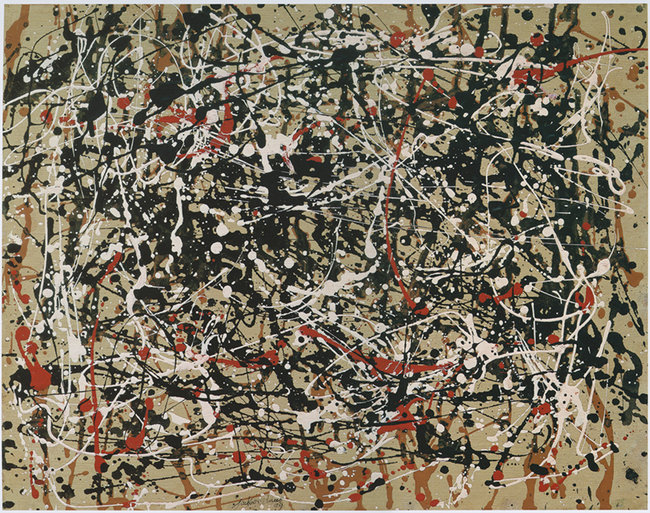
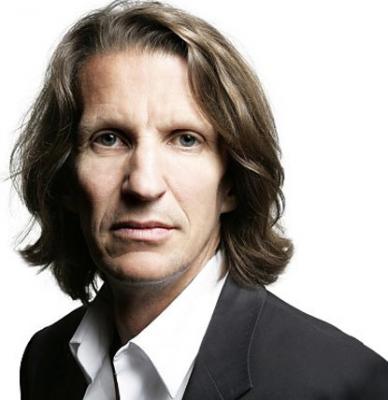
I know. We can see it’s a fake! But she was good. When he asked why it wasn’t in the catalogue of genuine Bollocks, sorry Pollocks, she said it would be in the next edition, and he believed her! Oh where were the Nigerians?
Normally Lagrange would have gone to his grave happily admiring his forgery. But then a funny thing happened, he discovered his gay side. His boyfriend is the fashion designer Roubi L’Roubi.

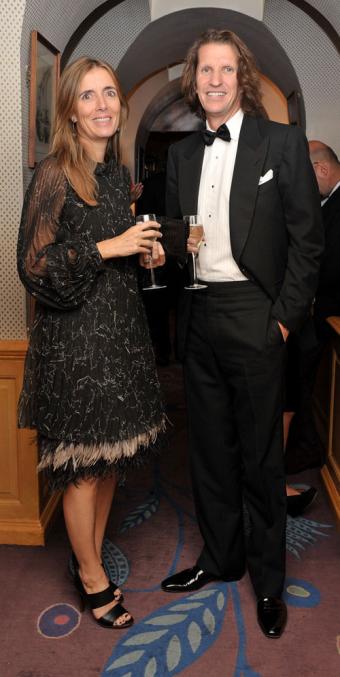
Some wives tolerate a bit of “bi curious” – less threatening than a mistress – but not Lagrange’s Catherine Anspach. She wanted divorce, a big one – reportedly half his $350M estimated wealth.
To raise cash he sold his London House to Roman Abramovitch, and tried to sell the Pollock. But when the next buyer found it wasn’t authenticated they did tests. It turned out the paint was of a type first sold in 1970 – bad news since Pollock died in a car crash in 1956.
Lagrange went after Freedman, who said she would love to return his money, but there was a tiny problem, she had only owned half when she sold it. She’d earlier sold the other half to a Canadian collector David Mirvish. Now Mirvish knows a bit about Pollocks, so he’d paid a lot less than half of $17M for his share. Presumably he’d had an inkling something was wrong. When Lagrange paid top dollar for the whole painting Mirvish had also cleaned up, and he refused to return his share of the profit. So Freedman did what con-artists do when things get too hot – she closed the shop.
Knoedler isn’t just any fly-by-night lock-up. It’s the oldest art gallery in New York. Rockefellers, Mellons, Carnegies and Astors all bought from it. Many other millionaires will be quietly checking the paint on their proud aquisitions.
We await the lawyers.
Jim Thornton
Stevenson’s Spin
Further to Naming and shaming.
Dr John Stevenson, from the National Heart & Lung Institute, recently wrote an article commenting on post menopausal hormone therapy (HT*) and breast cancer (Stevenson JC et al. HRT and breast cancer risk: a realistic perspective. Climacteric. 2011; 14:633-6). Here are some quotes from the abstract:
“We have concerns over the validity of their [the Women’s Health Initiative researchers] statistical analyses […] We suspect that the apparent increase in mortality is the result of surveillance and detection bias rather than a true cause and effect. Even if such an effect were true, mortality from breast cancer would still be a very rare event. We also question the clinical relevance and applicability of their findings. […] Even if combined estrogen–progestogen HRT did cause an increase in breast cancer risk, and this is not proven, the magnitude of that risk is small, and less than that risk seen with many lifestyle factors. HRT is a benefit, not a risk, for those women requiring it.”
A month or so later he co-wrote an article about the place of HT in the primary prevention of cardiovascular disease. Maclaran K; Stevenson JC. (2012). Primary prevention of cardiovascular disease with HRT. Womens Health (Lond Engl). 8:63-74. Again the abstract gives the tone:
[…] Menopause is associated with the development of cardiovascular risk factors and there are many plausible biological mechanisms through which estrogen may confer cardiovascular protection. […] It is now becoming clearer that the beneficial cardiovascular effects of estrogen are greatest in younger women and those closest to menopause. This has led to the development of the timing hypothesis. Use of age-appropriate estrogen doses is crucial to maximize cardiovascular benefits while minimizing risk of adverse effects such as venous thromboembolism and stroke.
These are the latest of dozens of review articles and opinion pieces casting doubt on the results of the WHI trials. Here is a partial list. Stevenson since WHIb
According to Stevenson the WHI results are biologically implausible, their statistical methods wrong, and they studied the wrong hormone, in the wrong dose, on the wrong patients. When he refers to the risks of HT his language, “small risks”, “low risks”, “rare effect” minimises the danger, but he never applies such language to the benefits of HT. Every comment he makes is in the direction of questioning the harms and playing up the benefits of HT. Search as I might I cannot find him ever finding a scientific flaw, which underestimates a benefit or overestimates a harm.
Why does he do it? I don’t know Dr Stevenson personally, but he is a respected expert on mineral metabolism and the effect of sex steroids on cardiovascular risk factors. It’s perfectly reasonable for such an expert to remind clinicians that there are plausible mechanisms whereby estrogen might benefit the heart. He did just that in a BMJ editorial (Stevenson and Whitehead 2002) just that after WHI was published. His title “Hormone replacement therapy: findings of women’s health initiative trial need not alarm users”, reveals his opinion, which has clearly not changed.
But why does he go on saying the same thngs in obscure rarely cited journals? Maturitas has an impact factor of only 2.1 – the average article is cited twice. Climacteric 2.1, J Fam Plan & Reprod Health Care 1.2, Calc Tiss Intern 2.7, Best Pract Res Clin Obstet Gynaecol 1.8, and Gynecol Endocrinol 1.5. Five journals he writes in, Womens Health, Menopause Intl, Pract Cardiovasc Risk Man, J Br Med Soc, and Curr Osteoporosis Reports don’t to even have an impact factor. It surely isn’t for the enhancement of his scientific reputation.
Could it be that Schering Plough, Wyeth/Pfizer, Bayer, Meda and Merck/Theramex, who fund Dr Stevenson’s research, and pay him lecture and consultancy fees, don’t care about scientific impact. They just want otherwise reputable researchers to claim that there is controversy over the risks and benefits of HT.
Professor Kim Fox, the head of the National Heart and Lung Institute, should grumble if Stevenson writes this guff during his paid working time. He might even wonder if he is completely confident that he is employing a disinterested scientific seeker after truth.
Jim Thornton
*Hormone replacement therapy (HRT) changed to hormone therapy (HT) Jan 2016
Kronos Early Estrogen Prevention Study (KEEPS)
A protocol to watch
Enthusiasts for post-menopausal hormone replacement therapy (HRT) make much of the fact that starting it immediately after the menopause might be cardio-protective, even though most trials show that it is harmful started later in life, or after cardiac disease is established.
No pharmaceutical company will fund trials to test such a speculative hypothesis, but a Phoenix-based charity, the Aurora Foundation, has paid for an outfit called the Kronos Longevity Research Institute to do just that, the KEEPS trial.
Auroroa is a philanthropic vehicle for the billionaire John Spurling to spend money on research into ageing. Nothing wrong with that, except that charity-funded trials tend not to be regulated as tightly as commercial ones, so there is sometimes room for a bit of data dredging. I hope not, but it’s worth being alert. If KEEPS shows any positive results we can anticipate some “told you so” from pharma-funded researchers. One of the investigators Rogerio Lobo is on my name and shame list. The trial is registered here and the trial website here.
The study population is women age 42 to 58, and within three years of the menopause.
According to clinicaltrials.gov the sample size is 728, divided into four arms, 1. oral estrogen and progesterone, 2. placebo, 3. transdermal estrogen and progesterone, 4. placebo. It is unclear whether it will be analysed as two parallel trials, or as one trial with the oral and transdermal routes as planned subgroups. Worryingly the study website states there are three arms, namely the two active treatments and one shared placebo group. If so, it is odd that the sample size is not divisible by three.
The primary endpoint is the rate of change of carotid intimal medial thickness by ultrasound, measured at screening, 12, 24, 36, and 48 months. This is ambiguous and implies at least four primary endpoints. The rate of change between screening and 48 months would be reasonable, so long it is measured without breaking of the blinding.
The trouble is that up to four primary endpoints, and ambiguity over whether we have two parallel trials, a single trial with a planned subgroup analysis, or even a three armed trial leaves multiple chances to get a “significant” result.
There are also no less than seven secondary outcome measures:
- Change in coronary calcium score by X-ray tomography
- Plasma lipid profiles
- Blood clotting factors
- Serum inflammatory factors
- Hormone levels
- Cognitive and affective scores on standard psychometric tests
- Quality of life
All, apart possibly from the first, can be measured in many different ways. Each is also being measured four times – at baseline, 12 or 18, 36 and 48 months.
The trial aimed to complete in 2010. It is behind schedule but the latest clinicaltrials.gov information states that the primary endpoint data will be collected by May 2012.
It would be reassuring to see an analysis plan – if anyone knows of one please let me know. It’s not too late yet, but it will be when the codes are broken.
Jim Thornton
Sinead O’Connor
Smoking, child abuse and religion
Composed by Prince, and made famous by Sinead O’Connor on the “tight shot of her shaven head” video. Most people think Nothing Compares 2U is about a lost lover. When she shed that tear, O’Connor claimed to be thinking about her mother, who had recently died. But the other day someone told me it was about missing a smoke. I guess they meant: “Since you been gone I can do whatever I want/I can see whomever I choose/I can eat my dinner in a fancy restaurant.” O’Connor is an ex-smoker, and I believe a supporter of smokers rights, but the song was written in 1980, long before any government smoking bans. Tobacco is indeed a wonderful pleasure, but it hardly justifies this wonderful song.
Remember her 1992 Saturday Night Live a capella performance of Bob Marley’s War, in which she adapted the original words, which Marley had taken from a speech by Haile Selassie, into an attack on Pope John Paul for his failure to deal with child abuse in his church. Click here. It almost derailed her career, but time has proved her right.
Let’s end with I Don’t Know How to Love Him. Smoking may be bad for your health, but it can be good for your voice. Wow!
Time to name and shame
Biased opinions about HT*
Thanks to Ellen Grant for alerting me to this in PLOS Medicine. The background is that there is good evidence that post menopausal hormone therapy (HT) causes breast cancer, and does not protect against cardiovascular disease – it may even increase that as well. Overall it does more harm than good. Correct advice to women should be:
Avoid if possible. If you must take it for relief of hot flushes, take the lowest dose for the shortest time possible.
The manufacturers don’t like that, so they pay influential doctors in the hope that they will write biased articles downplaying the risks. It seems to be working. Articles promoting HT were 2.4 times (95% confidence interval 1.5-4.9) more likely to have authors with conflicts of interest than those without.
The dodgy authors were named and shamed. Here they are:
Leon Speroff. Oregon Health Sciences University
Thomas B. Clarkson. Wake Forest University School of Medicine, North Carolina
Peter Kenemans. Vrije Universiteit, Amsterdam
Rogerio A. Lobo. Columbia University Medical Center. New York.
David M. Herrington. Wake Forest Medical Center, North Carolina.
Marius J. van der Mooren.Vrije Universiteit, Amsterdam
Rowan T. Chlebowski. University of California, Los Angeles
Susan R. Davis. Monash University.
Big names all, and I doubt they’re the only ones. We’ll return to this subject.
Jim Thornton
*Hormone replacement therapy (HRT) changed to hormone therapy (HT) Jan 2016
Politically censored materal healthcare
Primary Mother Care
I’ve just discovered this old censored edition. No Chapter Two!

I can’t imagine why anyone would prefer it to the full version, but you can buy it from Spiegl Press. Email sales@spiegl.co.uk
Meanwhile the full version keeps moving. Tell your friends with contacts in the developing world. Details here.
For a free copy of the unexpurgated version email Jimgthornton@hotmail.co.uk
P.E. by Victor Lodato
New Yorker fiction (April 2nd 2012)
P.E. is Parallel Energetics, a bit of fictional New Age nonsense – losers imagine alternative past lives which they hope will turn into better future ones.
Freddie the narrator, is a disciple, and he needs to be. Aged seven his parent’s relationship, already complicated by his mother’s depression, his father’s womanising and their mutual drug addiction, ends with her suicide by hanging. His father takes to sleeping with the rope, and his horrified aunt Helen takes Freddie away.
Twenty years later Freddie lives in Arizona and has turned into an enormously fat janitor, and his father has continued drinking and living off his girlfriends. The story covers the start of his father’s first visit in some time.
The airport meeting is beautifully done. His father not recognising and “barrelling past” the enormous Freddie, the “Holy crap you’ve changed but I’m not going to mention it” conversation, getting a smile off five women before they’ve even left the airport. The older man is still a player. Soon his father is flirting with the waitress, feeding Freddie a deep fried chimichanga, a regional dish, accusing Freddie of being gay, and when they get to the apartment rolling a huge joint. As they get high and misremember their past – meetings which never happened, when did that tooth get knocked out – the story and P.E. start to merge. They fight, make up and threaten to skinny dip together. The tale ends with them in tears over Freddie’s mother, and an idea from Salvatore, the off stage P.E. guru: “Every change of consciousness is accompanied by a loss of fluid”.
Jim Thornton
The Days of the P38 by Tullio Pericoli


This painting was used as cover illustration (1986 left) for the introductory textbook Ethics by Piers Benn (Fundamentals of Philosophy. Series editor: John Shand. Routledge 1998) but appears nowhere else. Assuming the title refers to the Walther P38 (right), I wonder why it was selected. There’s a passing mention of the problem of deciding whether to ban handguns on p 191, but nothing else pertaining to guns hinges on the reference.
Pericoli, a Milanese watercolourist, has a cartoonist’s penchant for distortion. Perhaps the shadow indicating the scale of the gun in relation to the people and buildings is a comment on its power.
Jim Thornton
Chapter Two by Antonya Nelson
New Yorker fiction
An AA attendee, telling tales in lieu of confession, is the effective narrator of this week’s story (March 26th 2012, here). Hil tells of the evening her eccentric neighbour banged on her door stark naked and drunk. Bergeron Love was a lonely busybody living in faded gentility, who’s previous escapades had embarassed her son Allistair and caused her to fall out with her neighbours over allegations of, probably non-existent, child sex crimes. Her nudity and crudity embarrass Hil’s son Jeremy as well, until eventually she persuades Bergeron’s partner Boyd to take her home.
Five days later Bergeron died, but Hil carefully omitted this detail, which she felt would spoil the story, from the version she told her group. She saves that for her gay friend Joe, and maybe one day, for Chapter Two for the ex drinkers.
Nor does Hil reveal how she became a divorced alcoholic living with Jeremy and their morbidly obese friend Janine. We can presume that she too has caused her share of embarrassment, and imagine poor Jeremy growing up in their dysfunctional household. Joe’s boyfriend is a porn addict. Janine eats in secret and plays violent video games with Jeremy. Joe and Hil chose their AA group for its proximity to a hospital bar in the hope of meeting doctors during Hil’s, apparently modest, post meeting drinking sessions! Is she really an alcoholic?
Reading my summary, you’ll imagine the forced nonsense of a BBC docudrama, but Nelson is way better than that. Here’s life in all its complexity, believable, sympathetic and funny.
Jim Thornton
 Ripe-tomato.org