It’s no joke

A colleague recently forwarded this photo to me, expecting to make me laugh – and a few years ago I would have. Imagine being foolish enough to offer your penis up for circumcision by the fellow who put up those signs! You’d deserve all you got!
But it’s not so funny now that Western governments and aid charities are encouraging African men to get circumcised in the hope that it will make them less likely to catch HIV. Some even encourage African women to get their newborn sons circumcised for the same reason.
When a gullible man, or naive mother goes into a place like this, and a botched circumcision results in complications, perhaps even HIV from dirty instruments, if you’re a Western taxpayer, you bear some responsibility.
I told you it wasn’t a joke.
Jim Thornton
Pleasure, pain and rhyme
A Match
By Algernon Charles Swinburne
In his novel The Anthologist (2009) Nicholson Baker has his protagonist, Paul Chowder, go off on a long riff about how Swinburne, “the nineteenth century’s King of Pain, the greatest rhymer in the history of human literature has been lost to casual view”. Here’s what he has to say about the final verse of this poem.
If you were queen of pleasure
 And I were king of pain
“Doesn’t that give you a strange shudder? If you were queen of pleasure (rest), And I were king of pain (rest),”
We'd hunt down love together,
 Pluck out his flying-feather,
 And teach his feet a measure,
 And find his mouth a rein;
 If you were queen of pleasure,
 And I were king of pain.
“Pretty good eh? What is it? It’s a four beat line – three beats and a rest. Good with an inevitable step-slide of goodness to it.”
Swinburne knew what he was writing about – masochism was his thing. The poem first appeared in his 1866 collection Poems & Ballads, along with poems about lesbianism and bisexuality, and upset the Victorians so much that the book had to be withdrawn from sale – they knew about S&M too.
Here it is in full. Mostly conventional love guff about opposites attracting, unsurprisingly lost to casual view. But Baker/Chowder are right about the final verse.
A Match
If love were what the rose is,
And I were like the leaf,
Our lives would grow together
In sad or singing weather,
Blown fields or flowerful closes
Green pleasure or grey grief;
If love were what the rose is,
And I were like the leaf.
If I were what the words are,
And love were like the tune,
With double sound and single
Delight our lips would mingle,
With kisses glad as birds are
That get sweet rain at noon;
If I were what the words are,
And love were like the tune.
If you were life, my darling,
And I your love were death,
We’d shine and snow together
Ere March made sweet the weather
With daffodil and starling
And hours of fruitful breath;
If you were life, my darling,
And I your love were death.
If you were thrall to sorrow,
And I were page to joy,
We’d play for lives and seasons
With loving looks and treasons
And tears of night and morrow
And laughs of maid and boy;
If you were thrall to sorrow,
And I were page to joy.
If you were April’s lady,
And I were lord in May,
We’d throw with leaves for hours
And draw for days with flowers,
Till day like night were shady
And night were bright like day;
If you were April’s lady,
And I were lord in May.
If you were queen of pleasure,
And I were king of pain,
We’d hunt down love together,
Pluck out his flying-feather,
And teach his feet a measure,
And find his mouth a rein;
If you were queen of pleasure,
And I were king of pain.
Mosel canoeing
Traben Trarbach to the Rhine
This is great canoe touring, safe and scenic with excellent camp sites, a few wild ones, and plenty of famous wines and beers to drink. Tour boats and industrial barges add interest, and the railway follows the river, so getting back to the top is easy. But we met only one other canoeist over a whole week in June. Sure, the dams occasionally need portaging, and it can be hard work in a headwind, but that hardly explains the neglect.
Although the best wine comes from the middle Mosel, this lower section also runs through fine vineyards, culminating at Winningen in a steep south-facing terrace that produces the real top stuff. If you’re nervous of venturing onto the Rhine this is a good place to finish.
For Trier to Traben Trarbach click here. Bank markers give the distance in km from the Rhine, but those below are approximate km from Trier.
88 km – Camping Rissbach left (click here). In 2013 ground was being broken for the B50 motorway crossing.
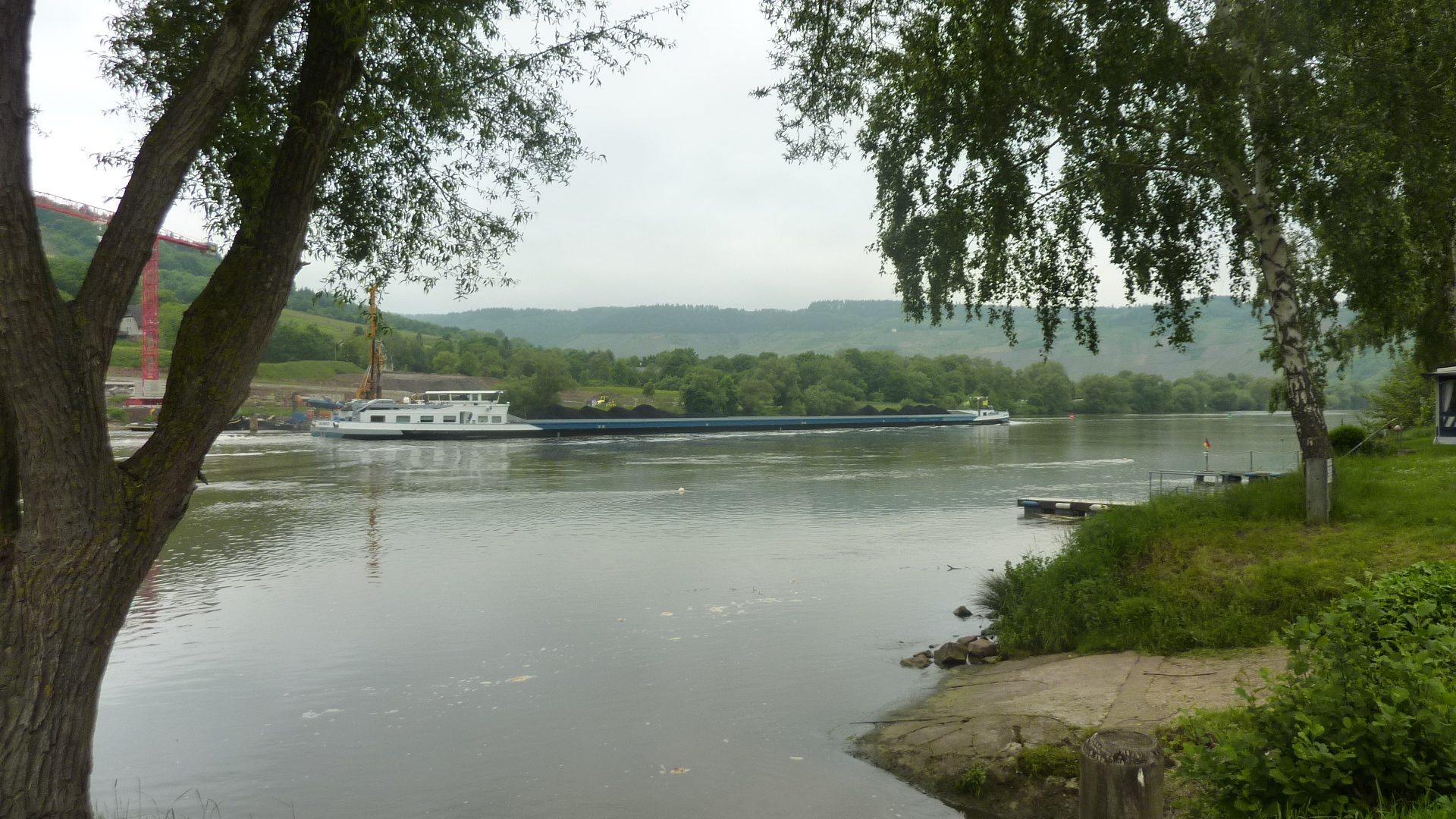

90 km – Traben Trabach.

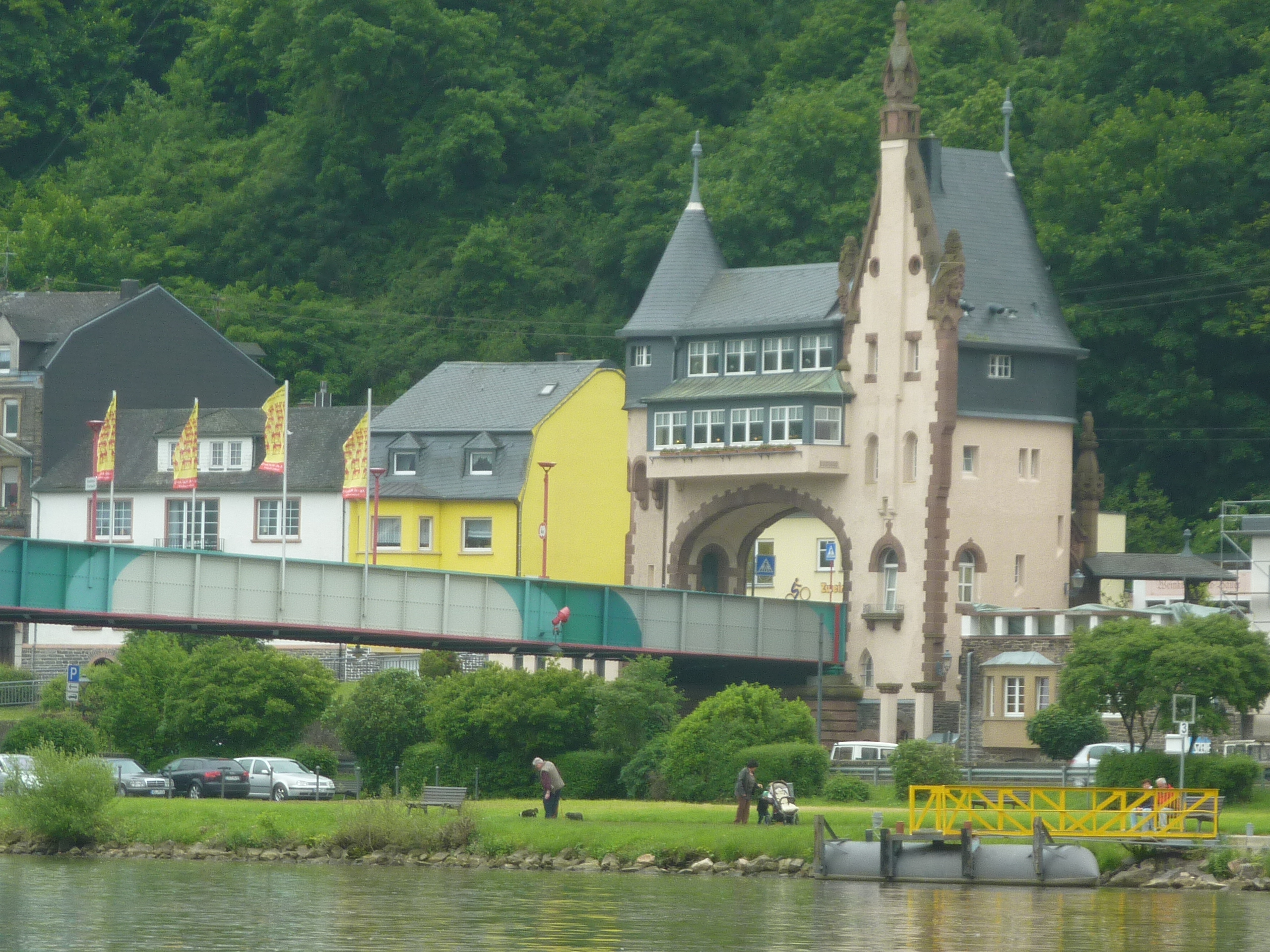

91.5 km – small boat harbour left
93 km – Enkirk right. Locks and dam.
Big lock left, small lock and canoe portage, dam and power station right. Built in 1966, with a 7.5M drop and 18.4MW capacity

When the river is high canoes are encouraged to use the big locks. There’s no worry about wasting water, and it keeps us away from the weirs.
94 km – Enkirch right. Enkirch großbach joins right.

The campsite right, just after the stream, caters mainly for motor homes, but there is a shower and toilet block, and you can camp. Someone comes round every evening to collect the money.
98 km – Reil road bridge. Reil left.

Three campsites between Reil and Punderich – left after the bridge for motorhomes, on the right bank 0.5 km on, and another at the apex of the bend opposite the viaduct. I’ve no details of any.
100 km – Punderich railway viaduct left


102 km – Punderich ferry. Marienburg castle left. Punderich right. Marienburg campsite (click here) is a lovely site. Bikers, tattoos, misbehaviour – how camping should be. Punderich means “place with a ferry”.


The river enters a 5 km loop that returns to a few hundred metres from where it started. A few hundred thousand years and it’ll breaks through, leaving Zell in a dry valley. I guess Platten and Bengel were river villages once, albeit long before they were villages.
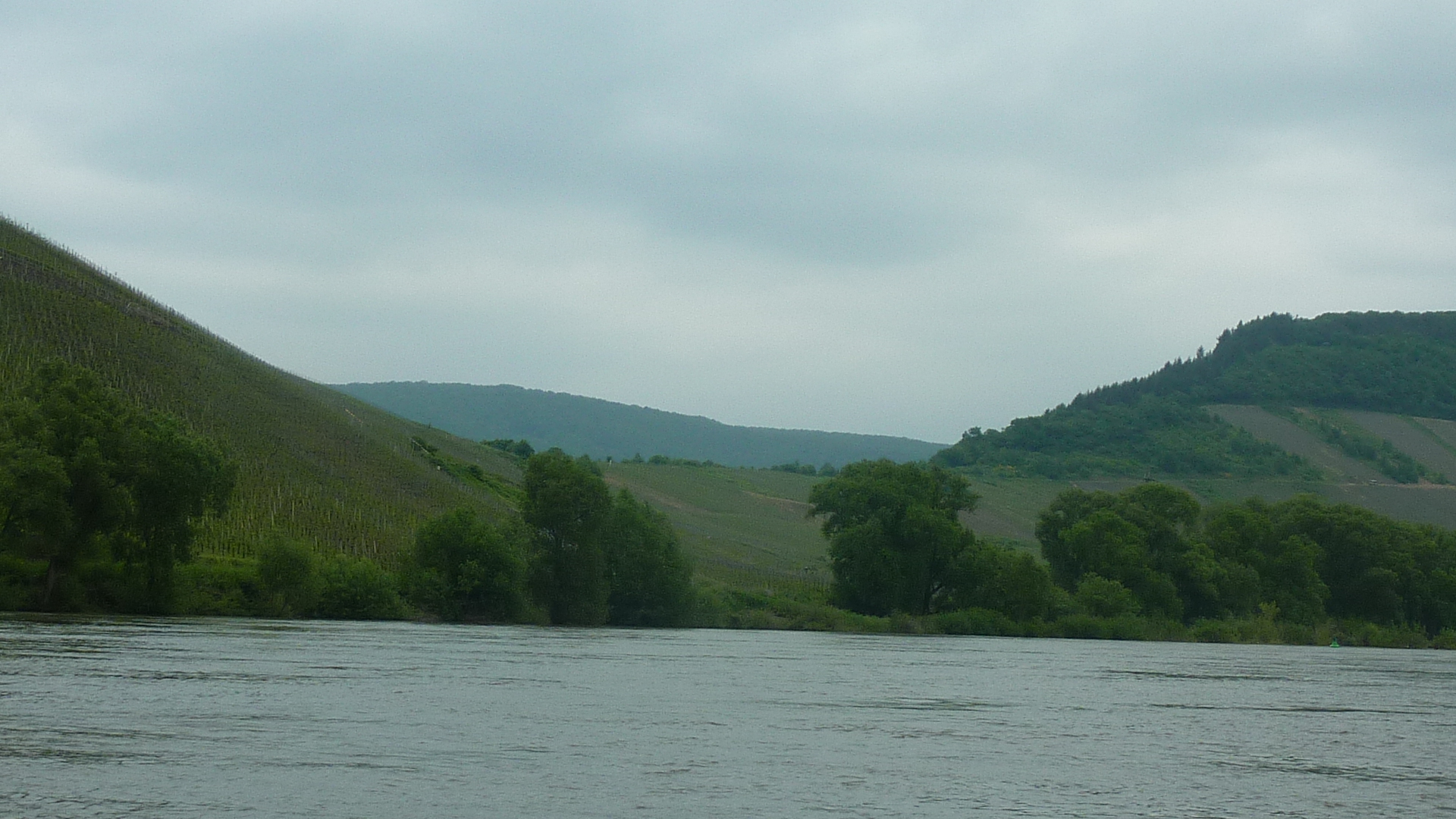
105 km – Briedel right
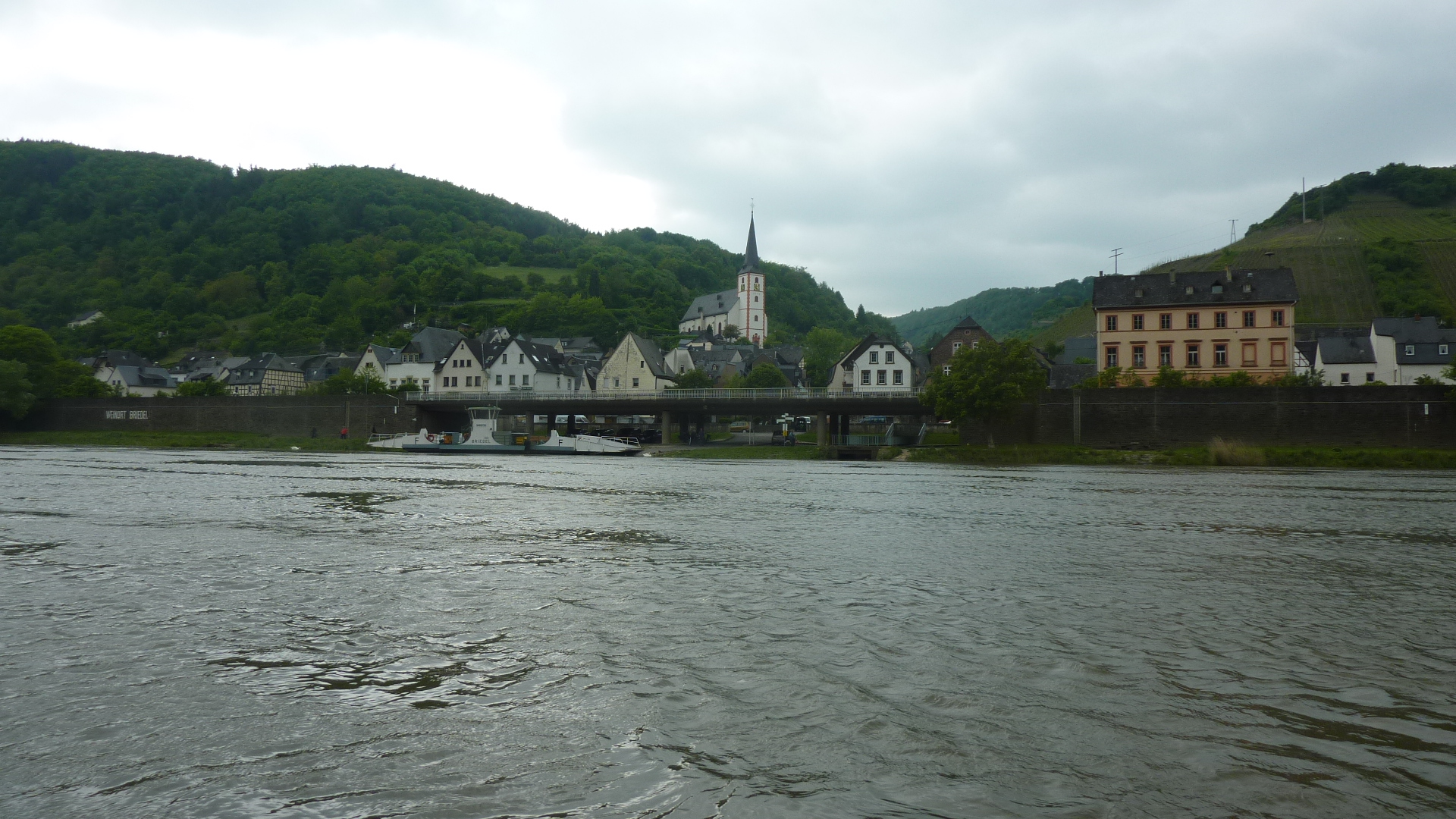
107km – L194 bridge

108 Km – Zell footbridge. Black Cat vineyard right.
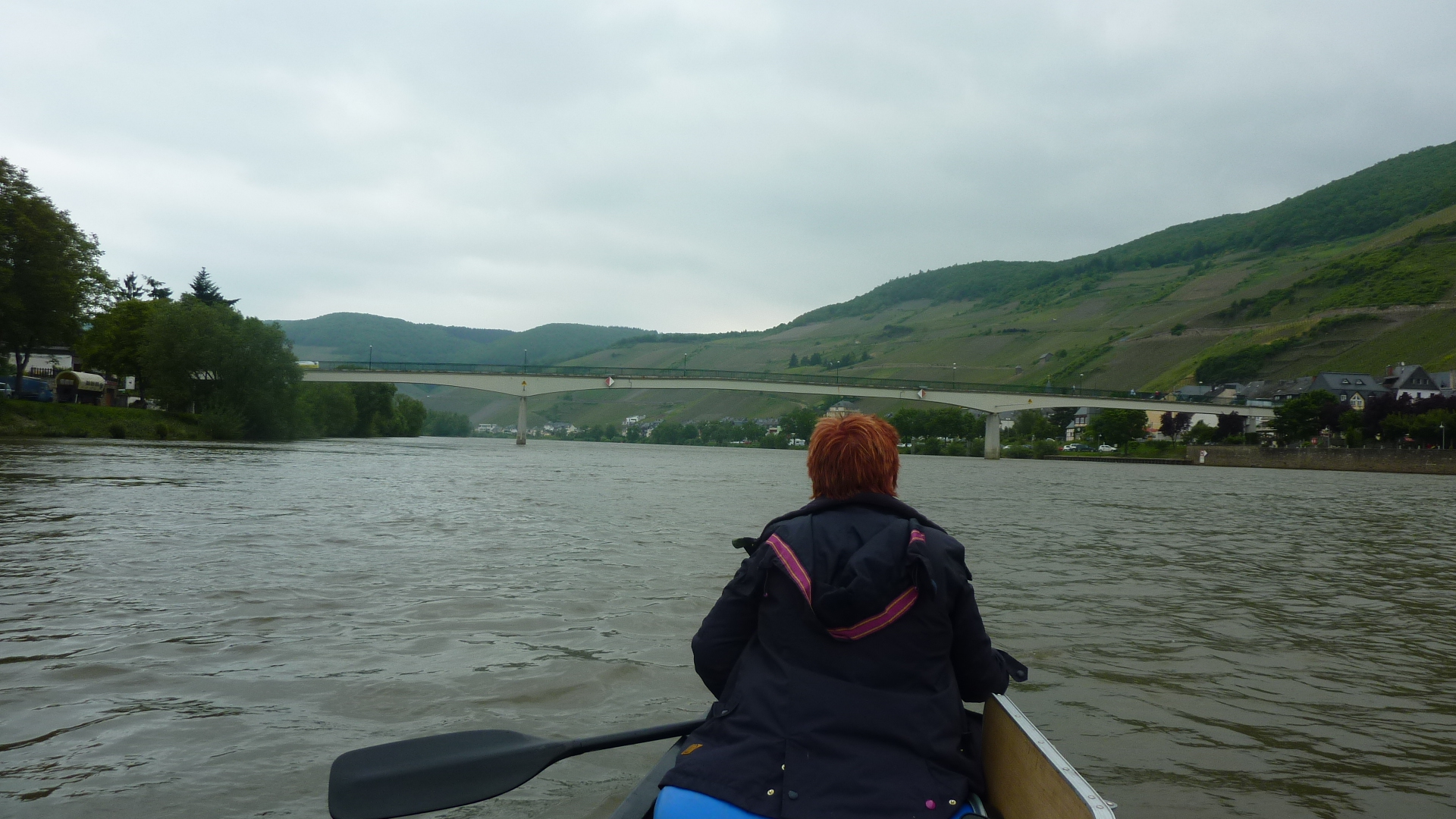


Old ferry toll house left


109 km – Island. Take left channel for camping left bank
Here’s the narrow neck of the Zell loop from the other side.

114.5 Km – Bullay road and rail bridge
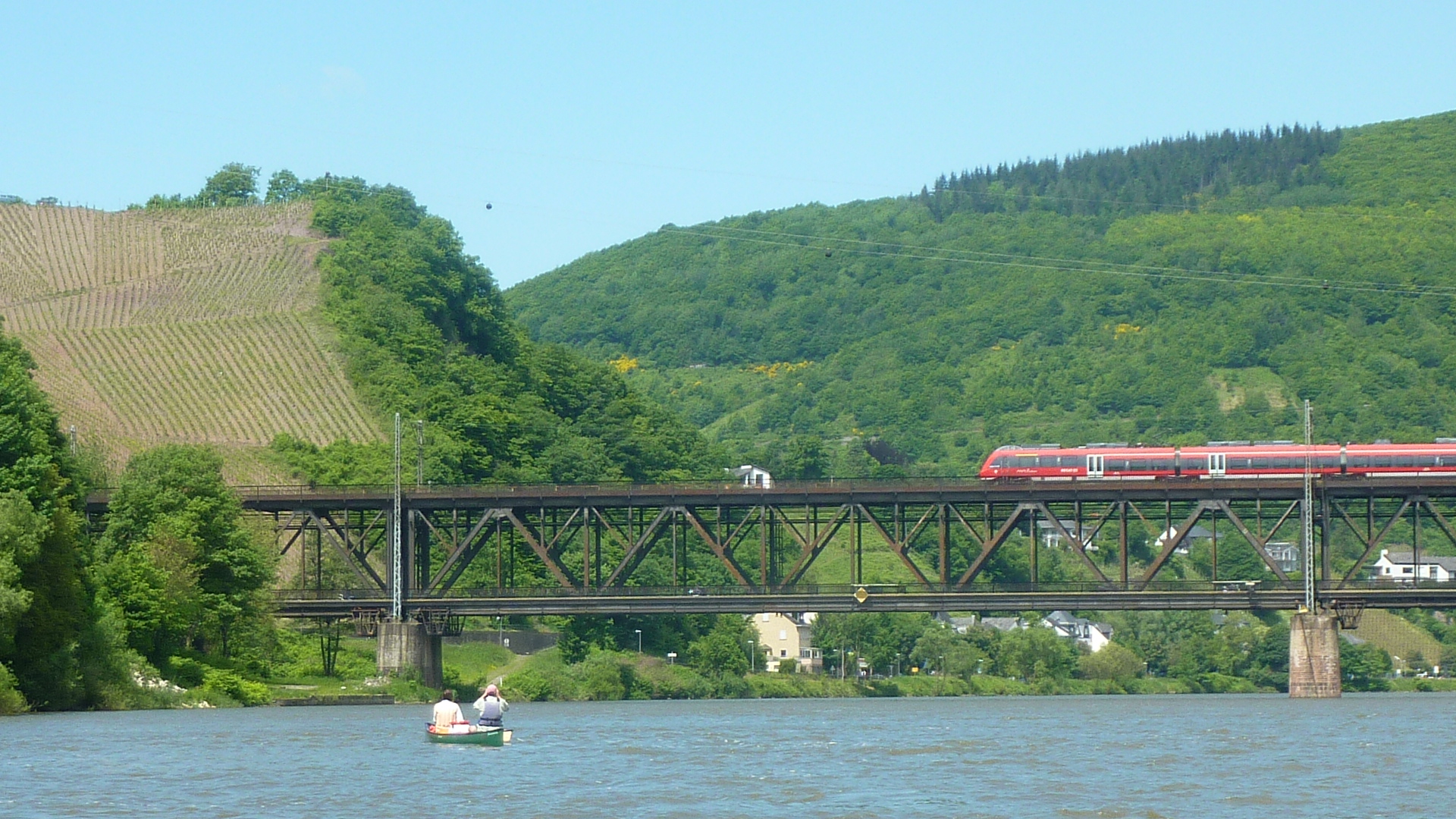
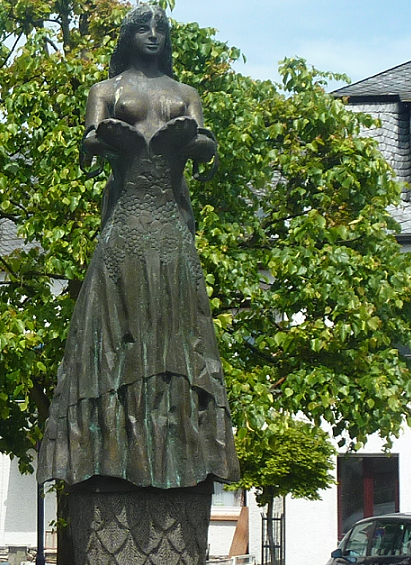
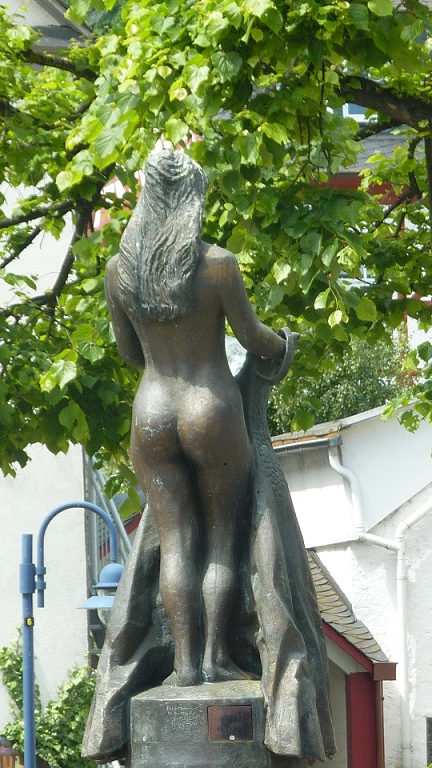
115 km – Bullay right. Alf Left. Rather a fine statue rotates above Bullay fountain. Don’t miss her rear view.

Another old ferry toll house (I think) left

119 km – Neef. Large lock left, small lock, weir, power station right. Built in 1966, with a 7M drop and 16.4MW capacity
119.5 Km – K41 road bridge

120 km – Bremm left.

The Calmont Vineyard on the left bank is allegedly the steepest on the river.

The ruined church right was built in 1685 on the site of a 12th century Augustinian monastery. A good spot for a picnic but not easy to access from the river.


121 km – Railway bridge
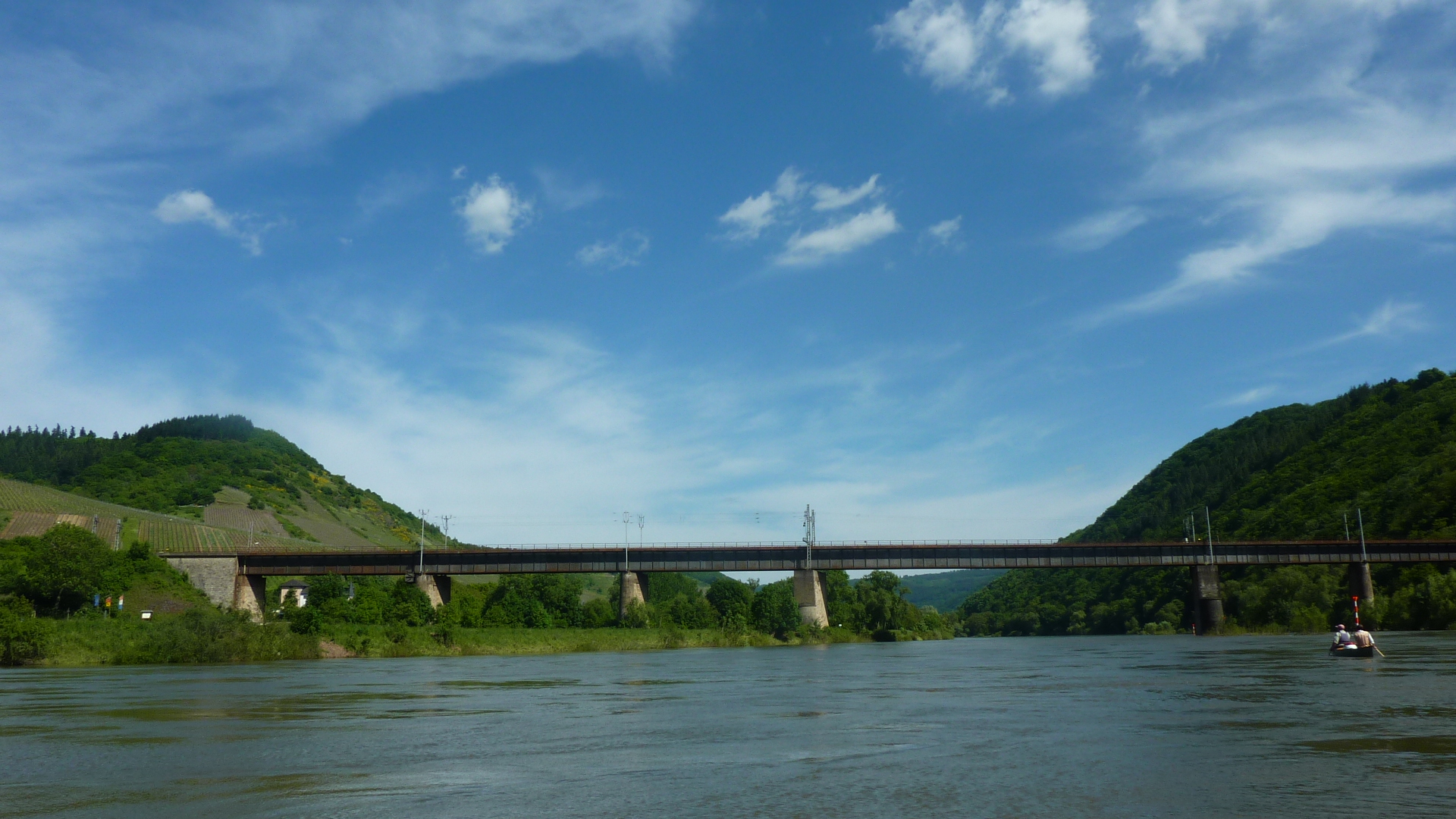
122 km – Ediger left. Ferry tower

123 km – Eller. Another ferry tower

124 km – Camping Zum Feuerberg left
126 km – Nehren. Campsite left
128 km L98 bridge. Senhals left. Senheim right – camping and pleasure boat harbour.
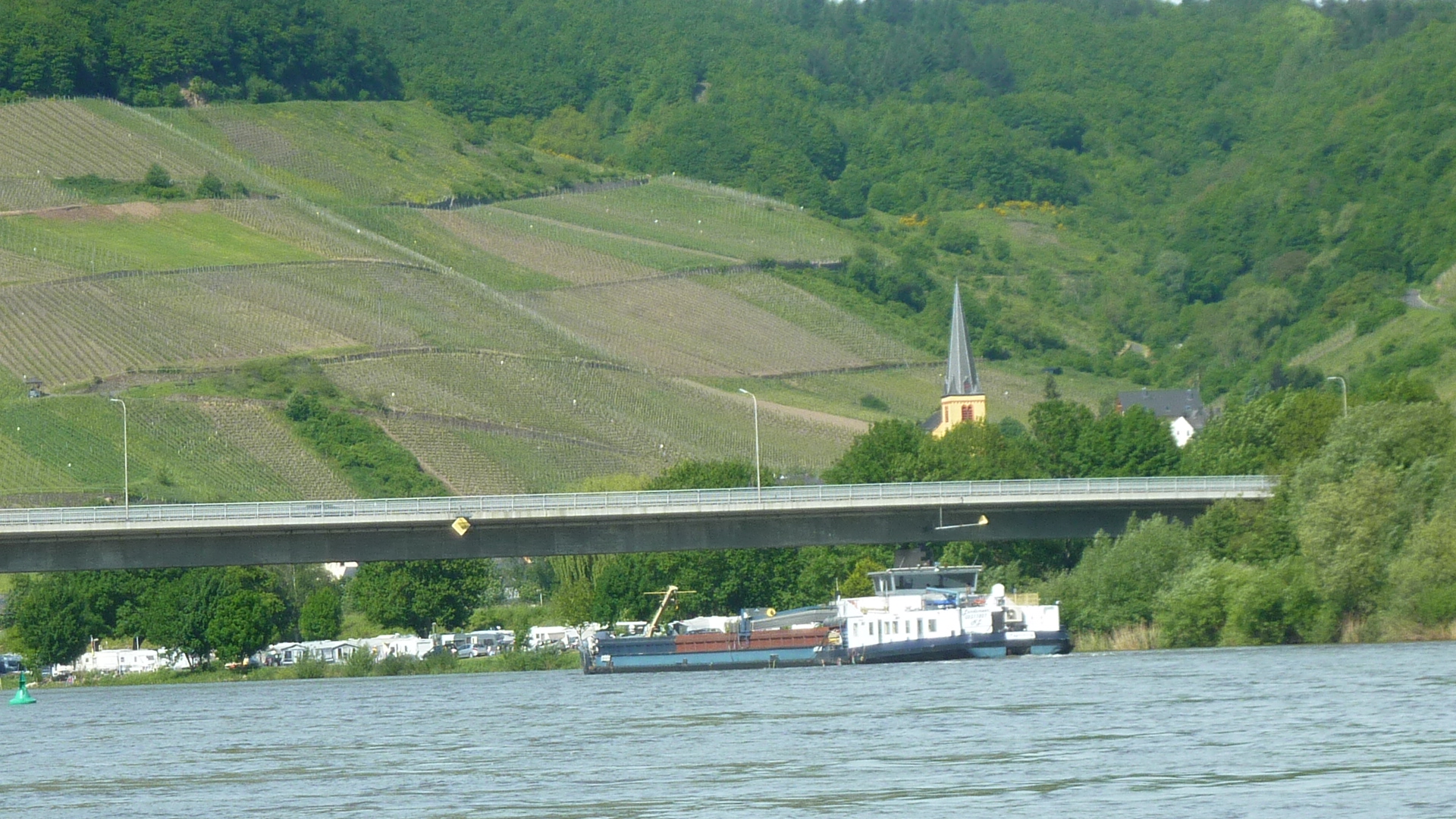
Just by the bridge on the left is a brothel, Tanja’s Club (click here). Prostitution in legal in Germany, but it still give a frisson to come across such a place out in the country like this.
130 km – Mesenich right. Camping, but no obvious landing site.
132 km – Briedern right
134 km – Poltersdorf left. Ferry tower. I think wild camping is permitted on the grass around the tower.

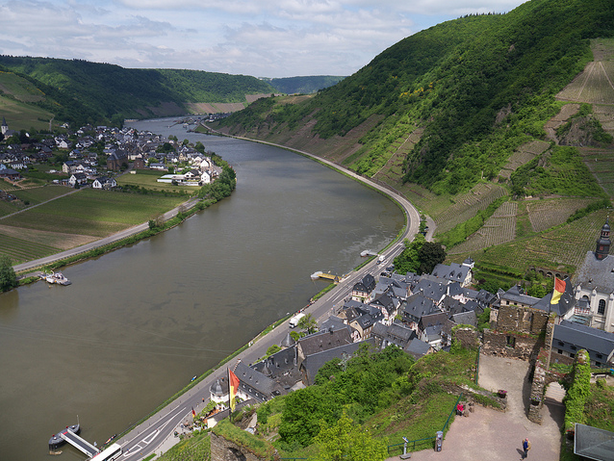
135 km – Ferry. Camping left opposite Beilstein and castle Metternich. This campsite appears to have no public landing, but it’s a lovely site. Recommend. If you can’t land, stop at the ferry slip and walk back.


137 km – Fankel. Hydroelectric power station left, dam, small lock, large lock right. Built in 1963, with a 7M drop and 16.4MW capacity

138 km – Camping Buttig-Fankel right
139 km – K35 bridge

140 km – Ernst left.
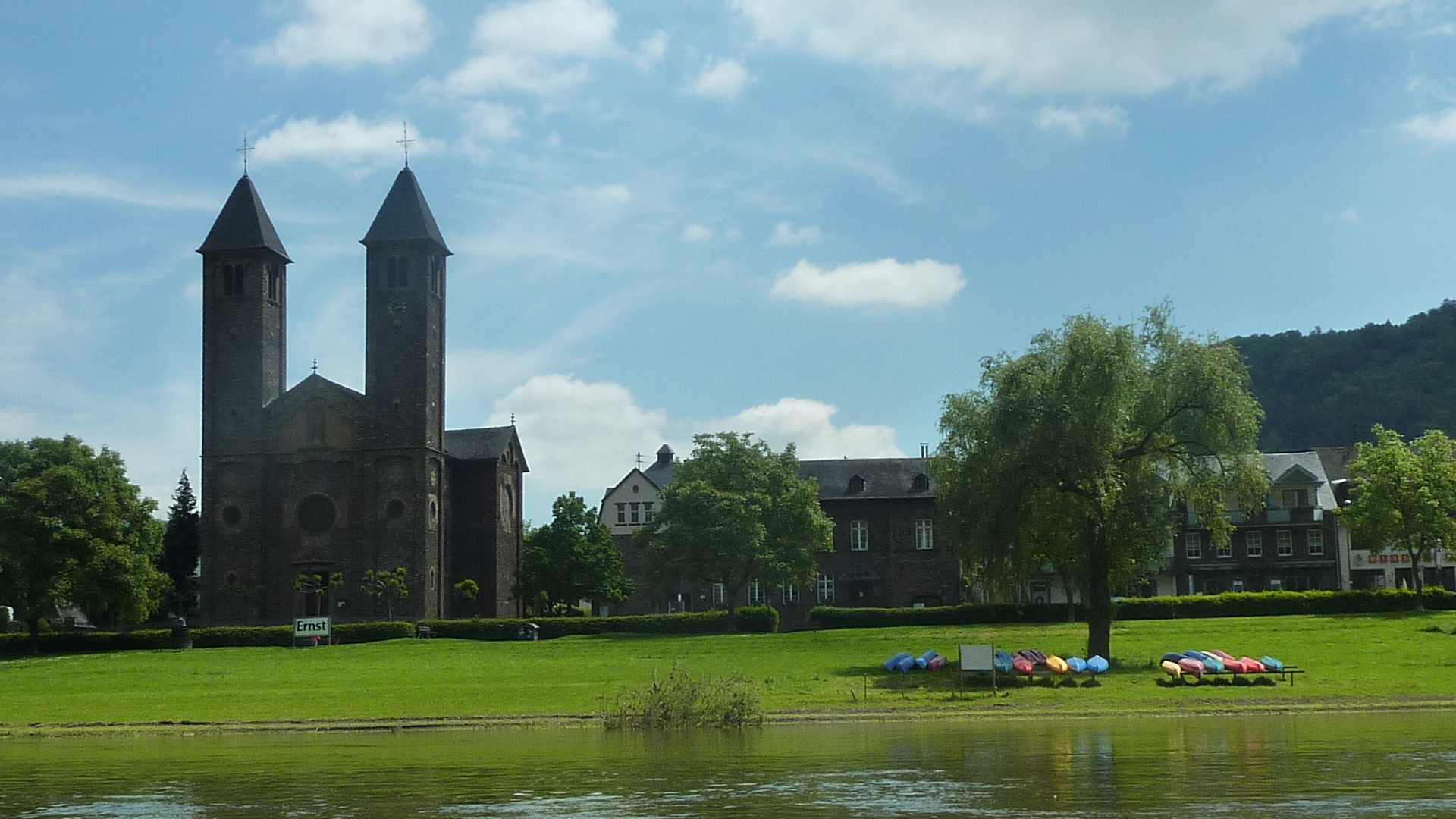

141 km – Valwig right
Cochem castle, the finest on the river, albeit a 19th cetury replica, comes into view as you round the final bend into the town. Canoeists have the most dramatic view.

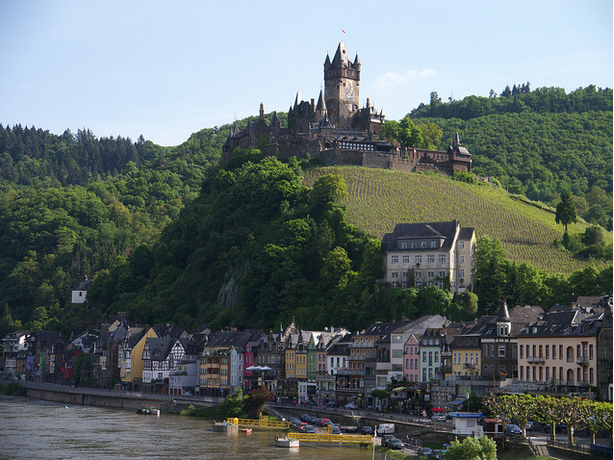
143 km – Ferry toll tower left, Ferry hotel right


144 km – Cochem bridge

144.5 km – North bridge (K60)
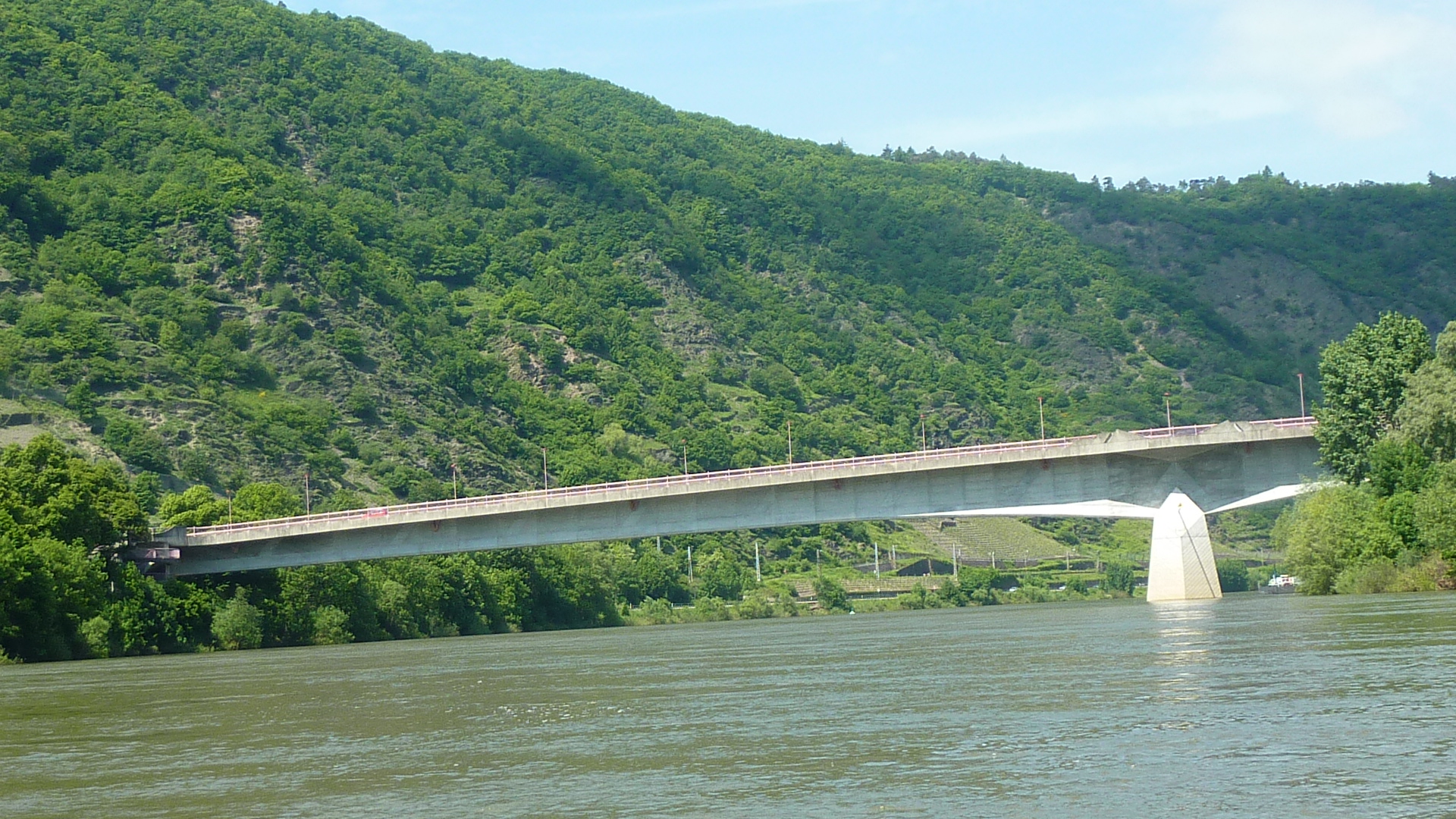
145 km – Camping Moselbad right. (Click here). Excellent site, good landing stage.
148 km – Klotten left. Ferry.

153 km – Camping Pommern left. (Click here)
154.5 km – island. Camping on island. (Click here)
155 km – Treis Karden right
155.5 km – B49 bridge
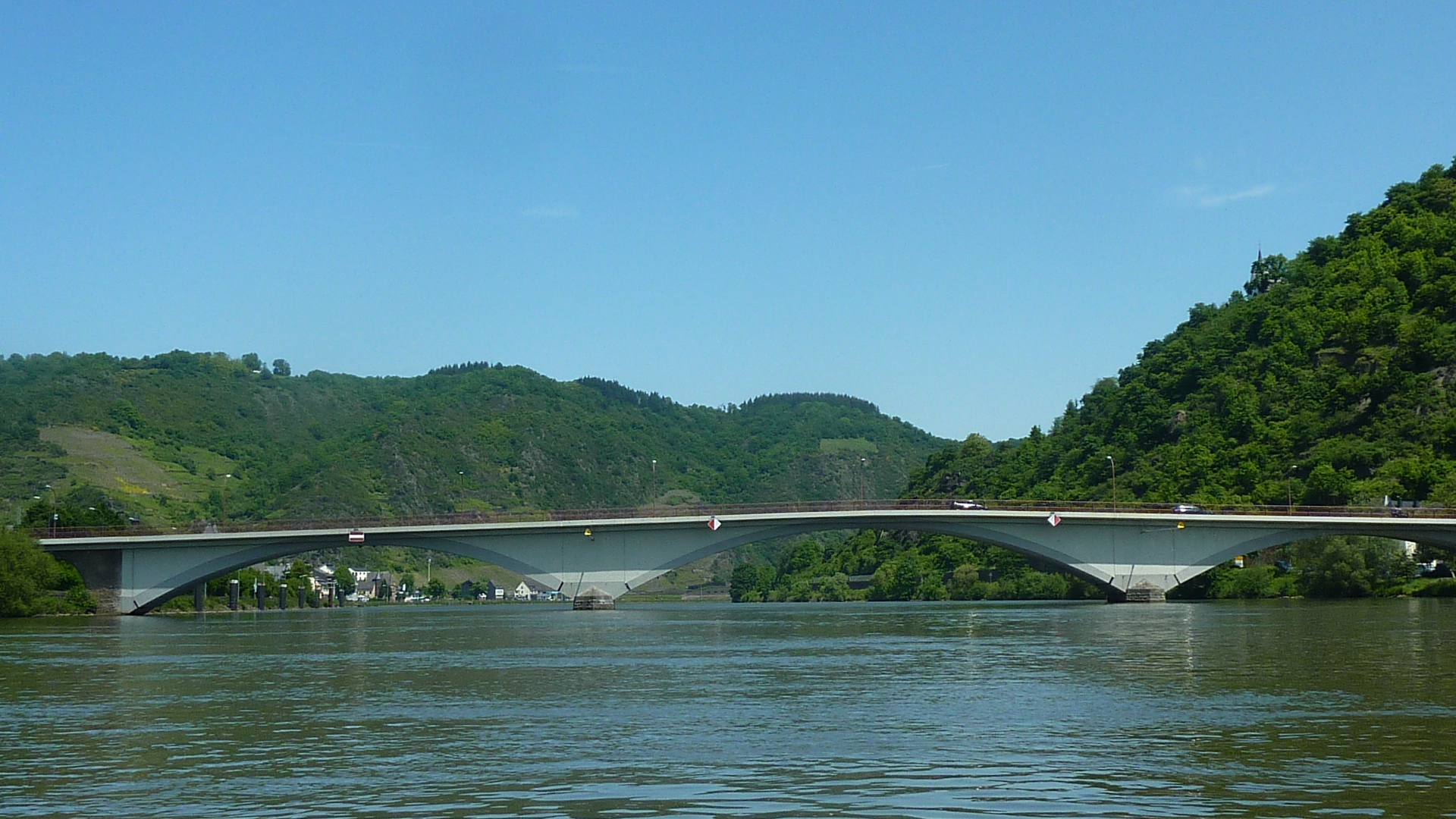
156 km – Karden left
158 km – Muden. Hydro-electic station left, dam, small lock and portage, big lock right. Built in 1965, with a 6.5M drop and 16.4MW capacity

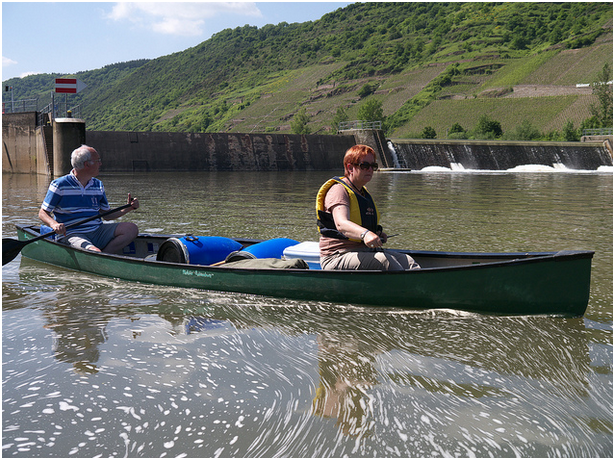
The portage is along the old canoe shoot. Sad that these have all been closed. Health and Safety presumably.
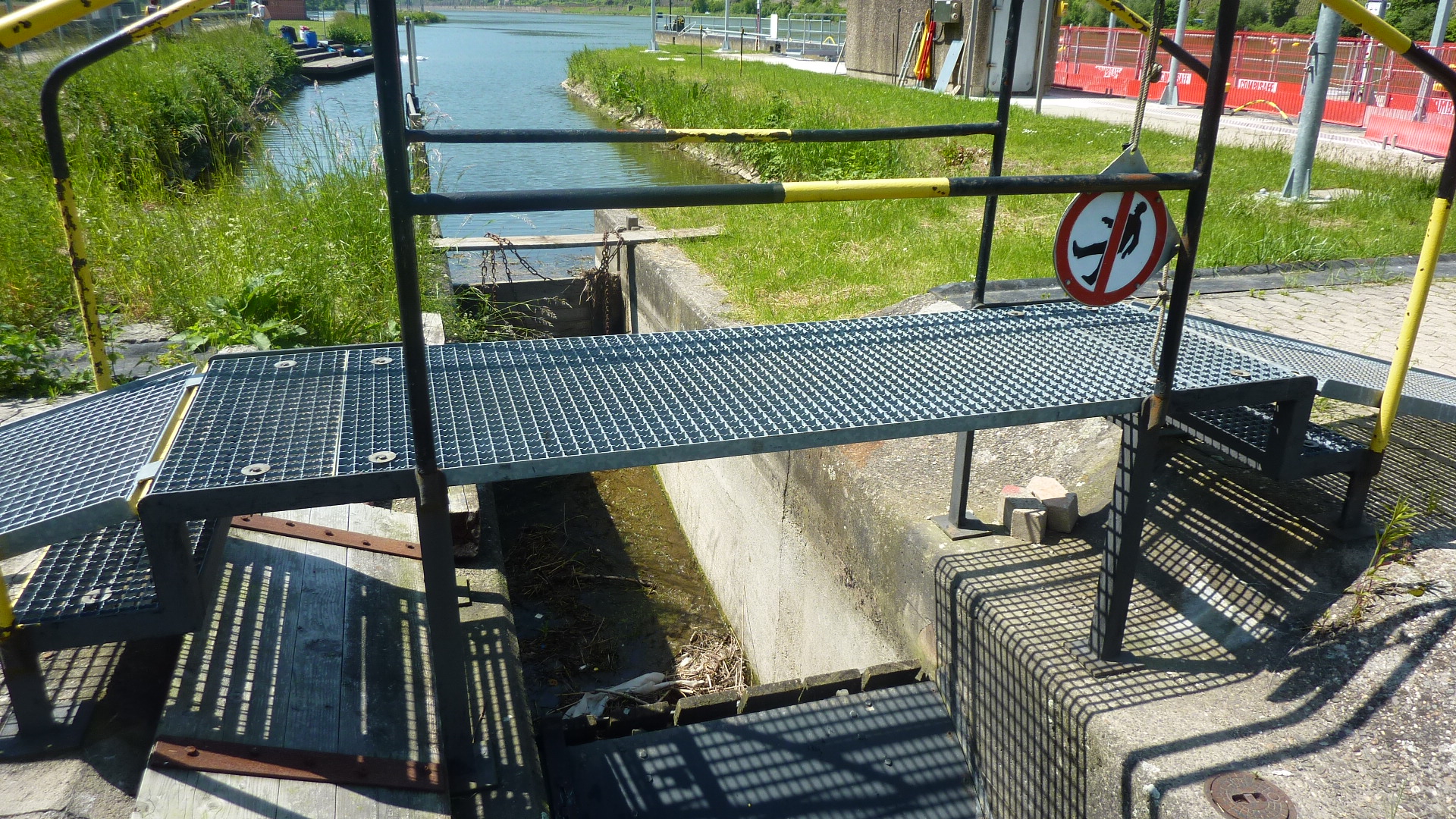
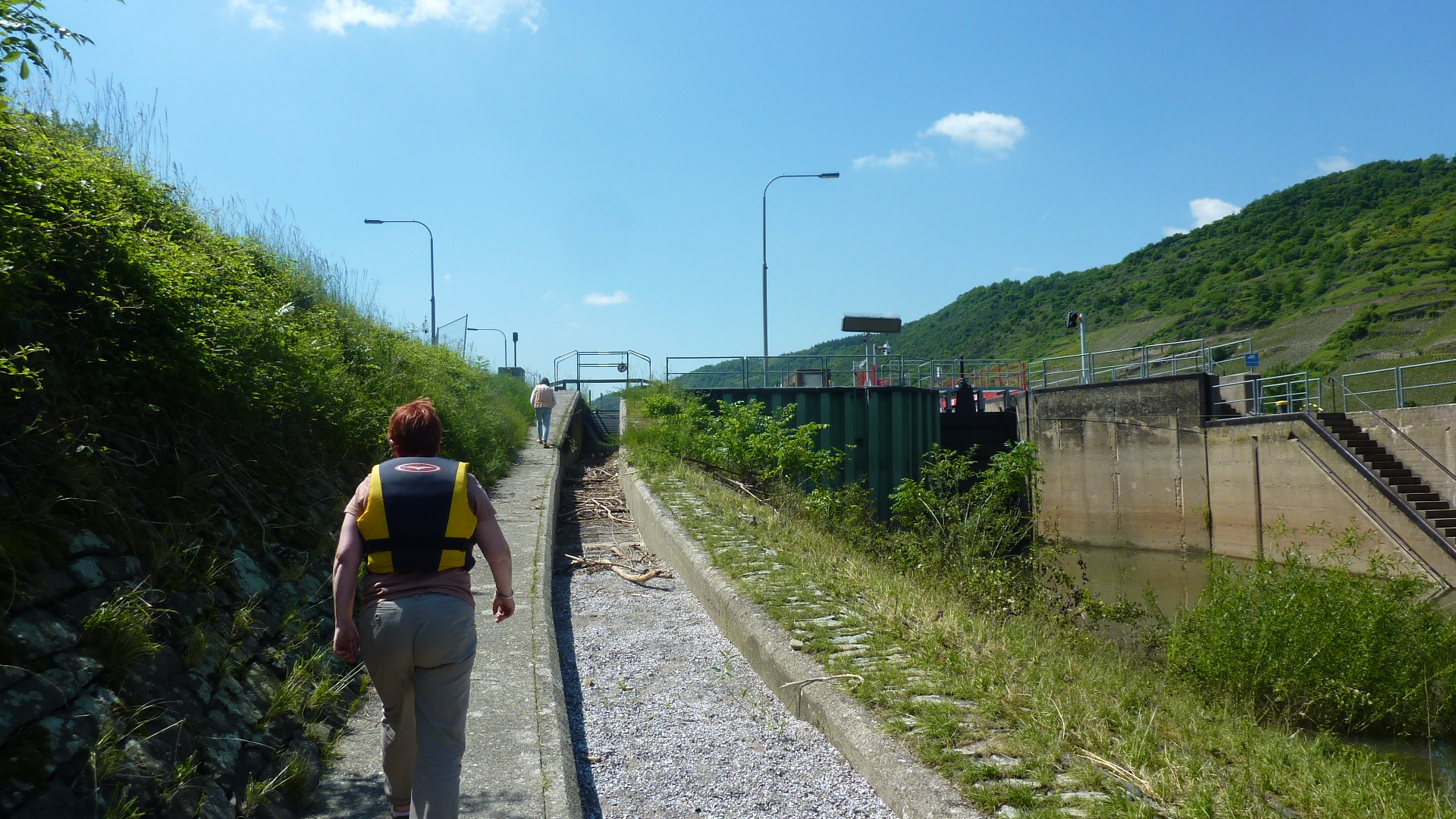
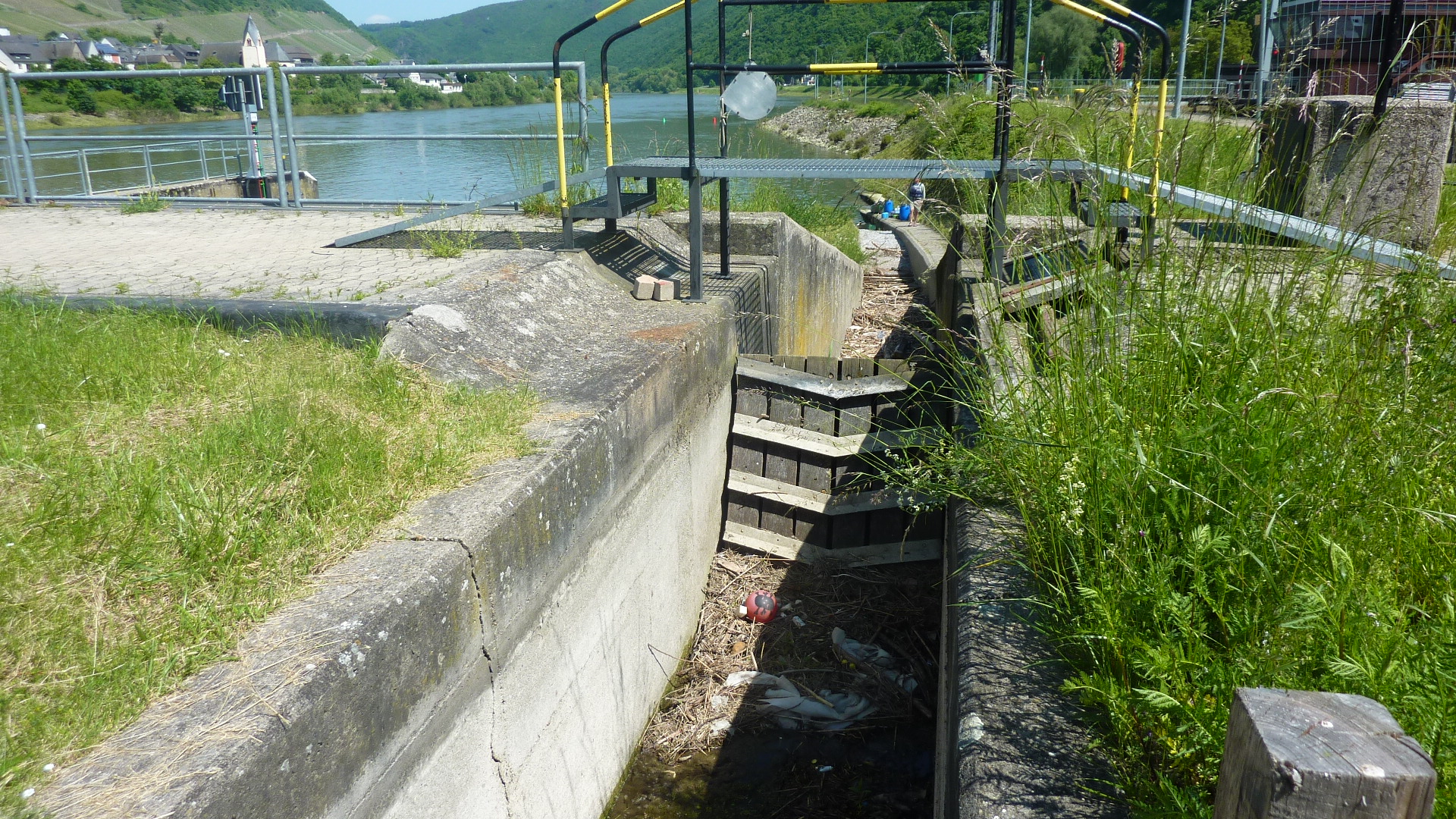
160 km – Moselkern left. Camping Burg Elz, left before the village. (click here) The Elzbach enters left. A couple of miles upstream, Burg Elz the most touristy fairytale castle in the region is not visible from the river.
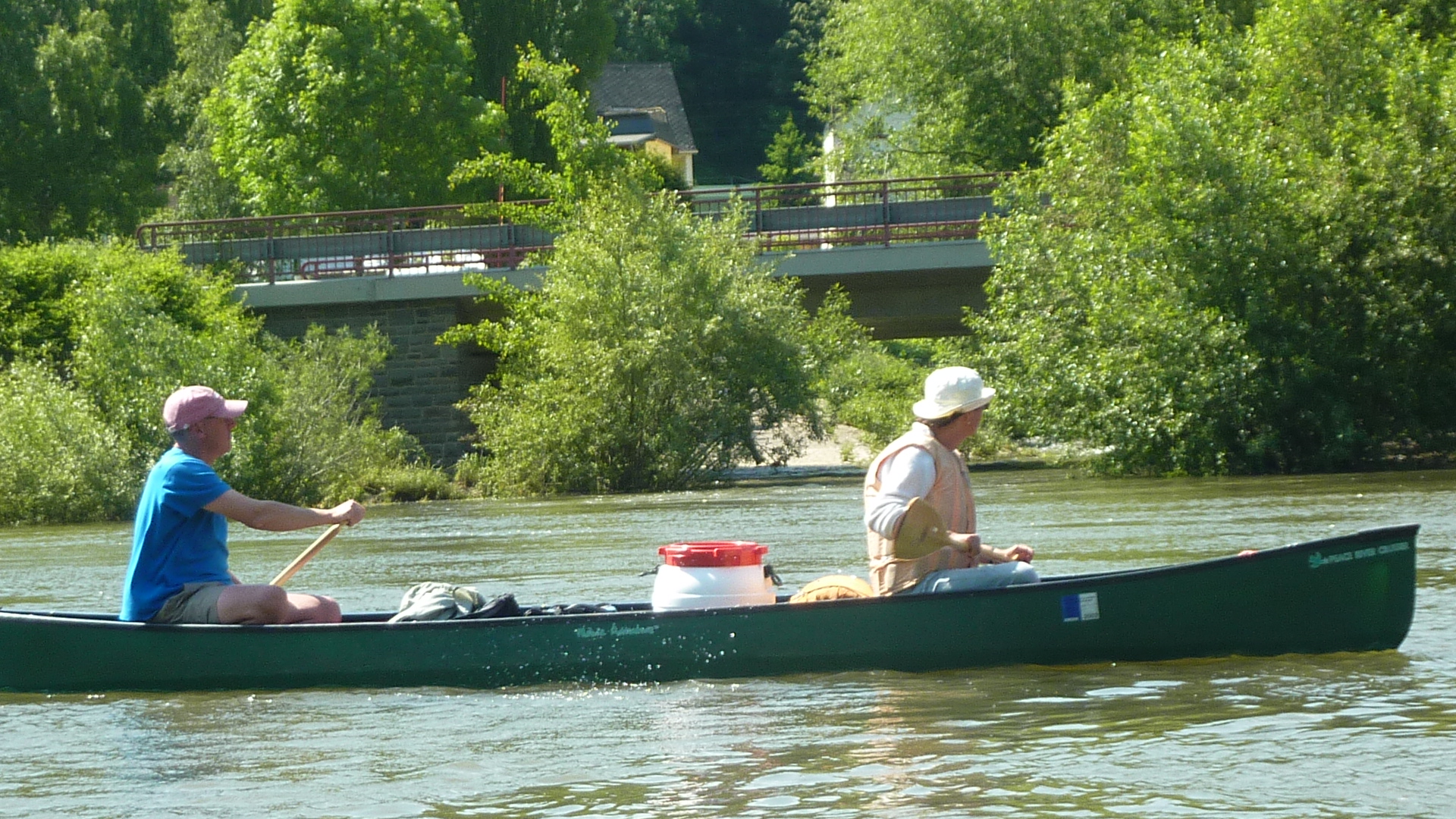

162 km – The first Burgen campsite (click here) Good landing stage, good facilities and unheated pool. Recommended.
163 km Burgen right, castle left.

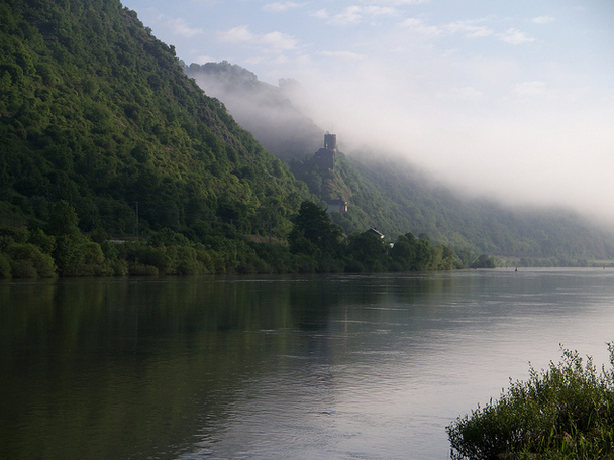
164 km – the 2nd Burgen campsite. (click here)
165 km Hatzenport camping left on the island. (click here)
166 km – Hatzenport left. Tall ferry tower. Wild camping allowed between road and river, about 100 metres upstream from the ferry tower. Snuck in behind the trees.

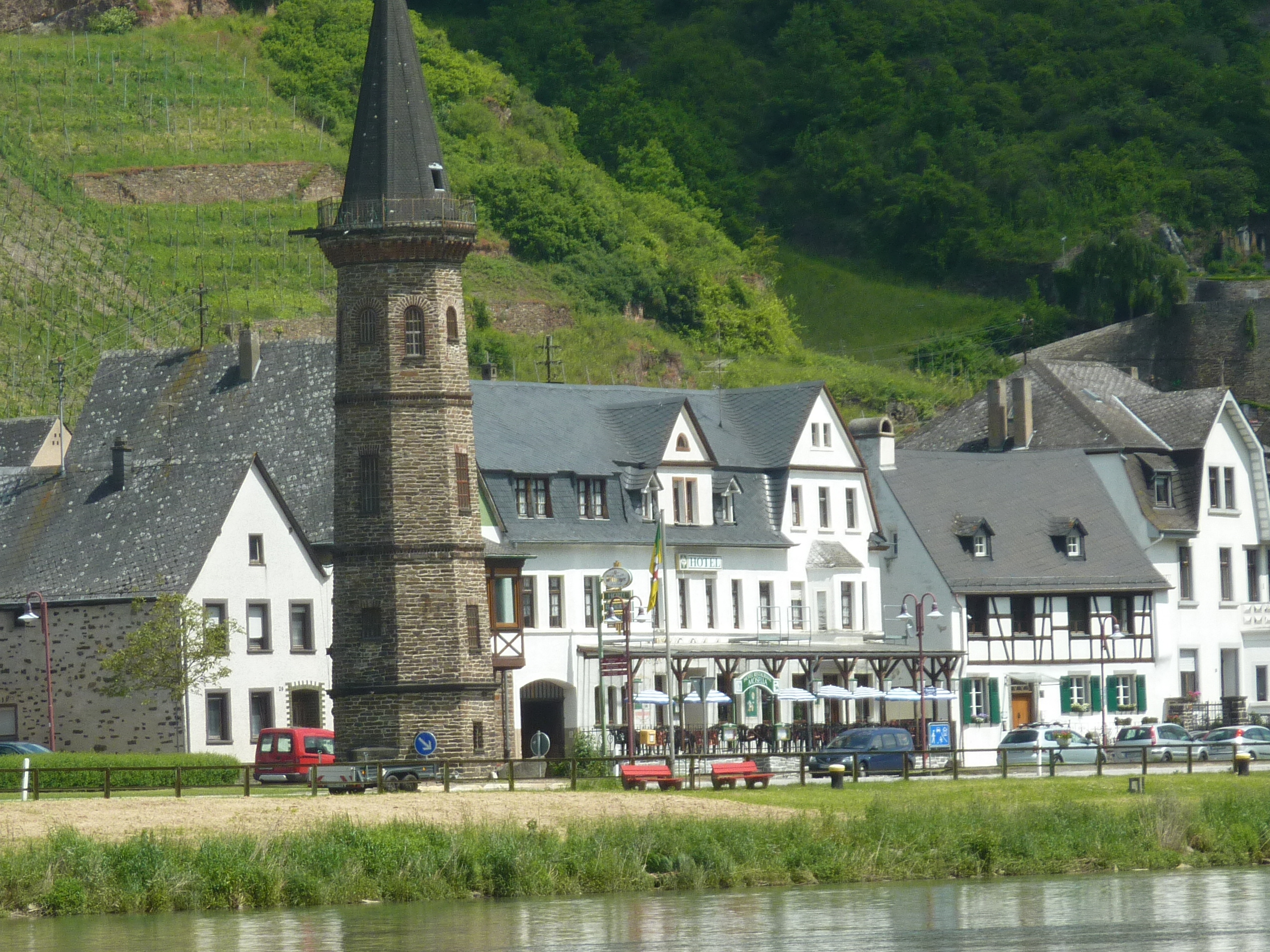
168 km – Brodenbach right
168.5 km – bridge K41
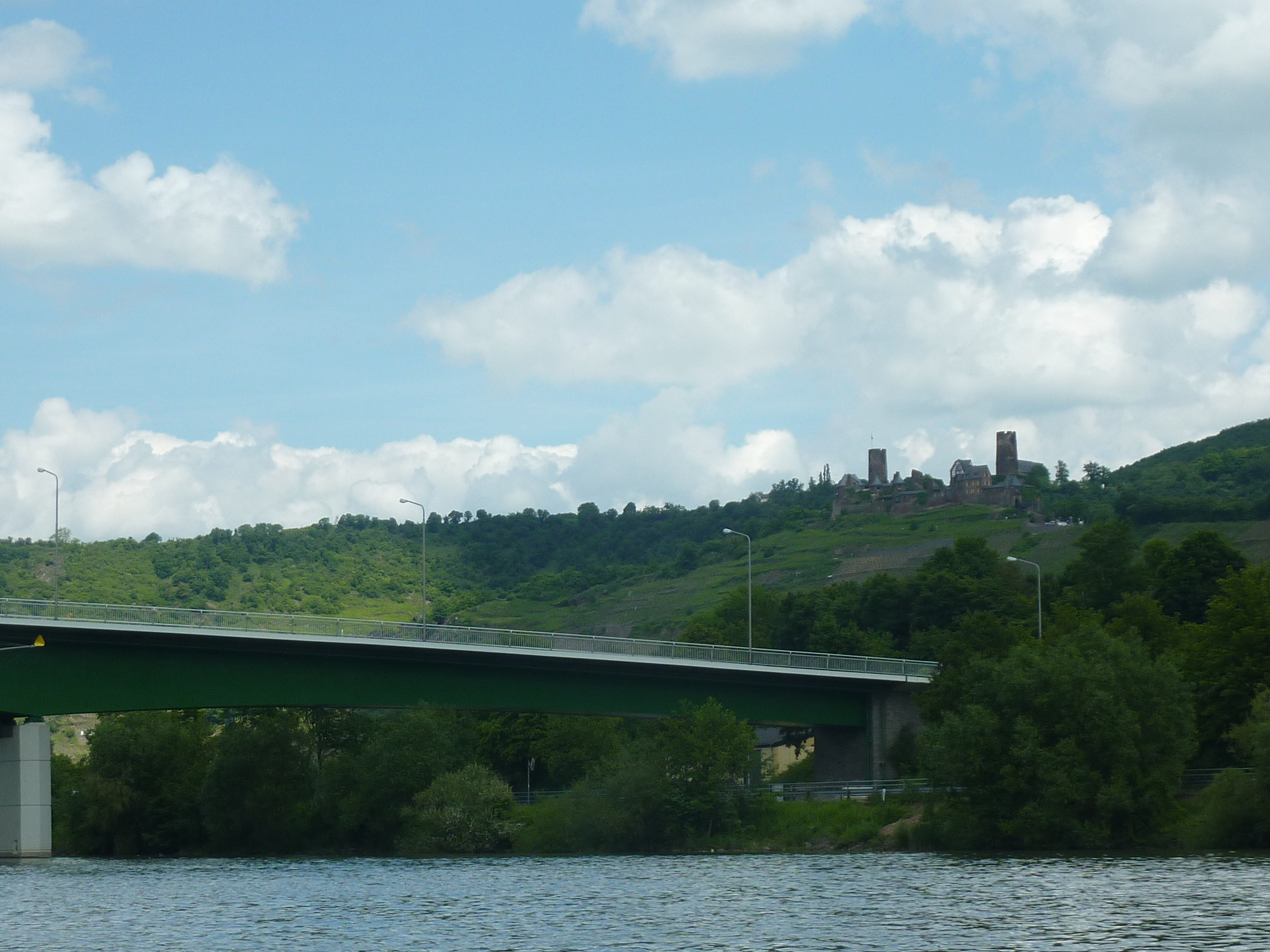
169 km – Alken right. Ferry tower. Castle Alken behind the town
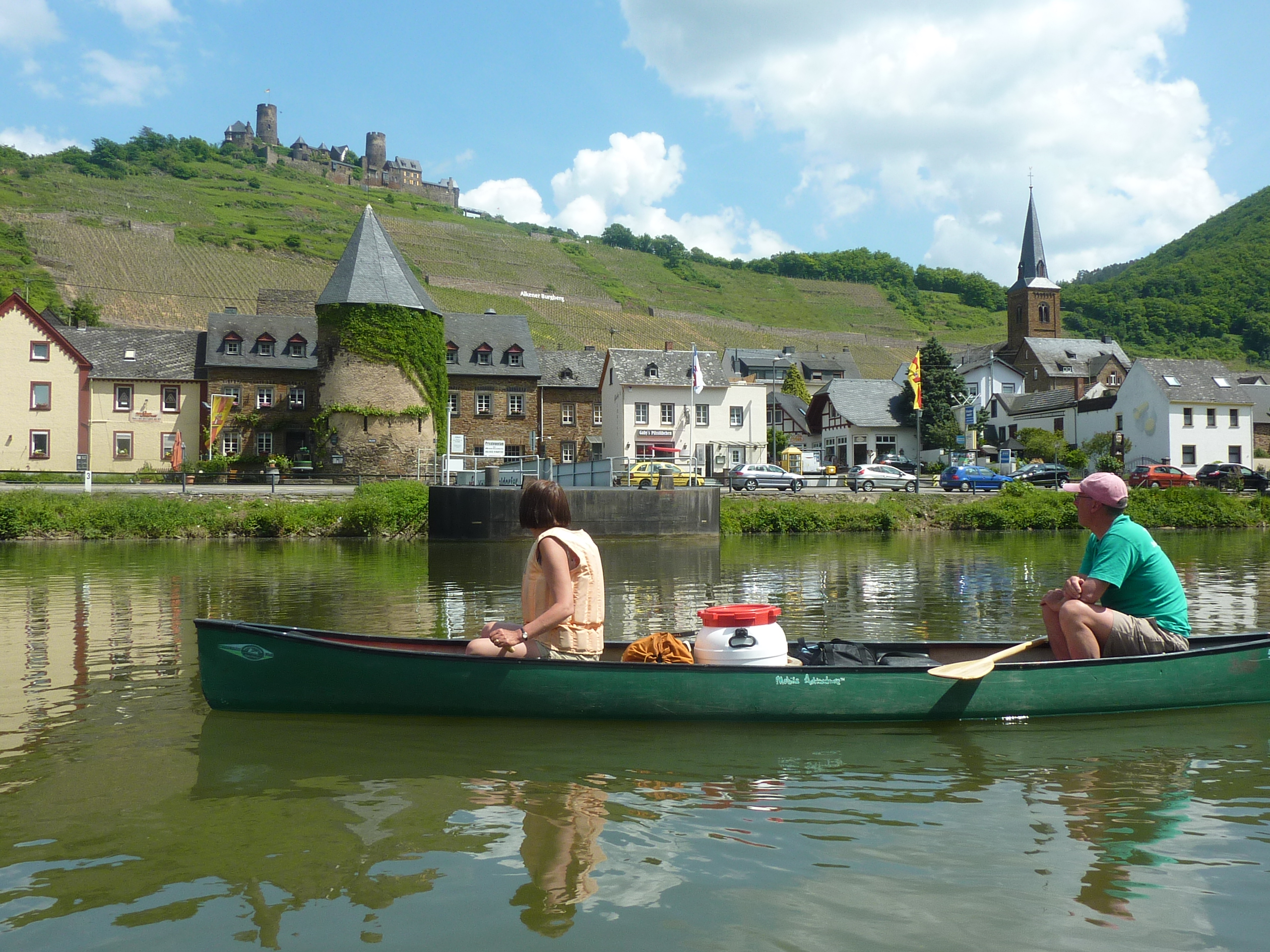
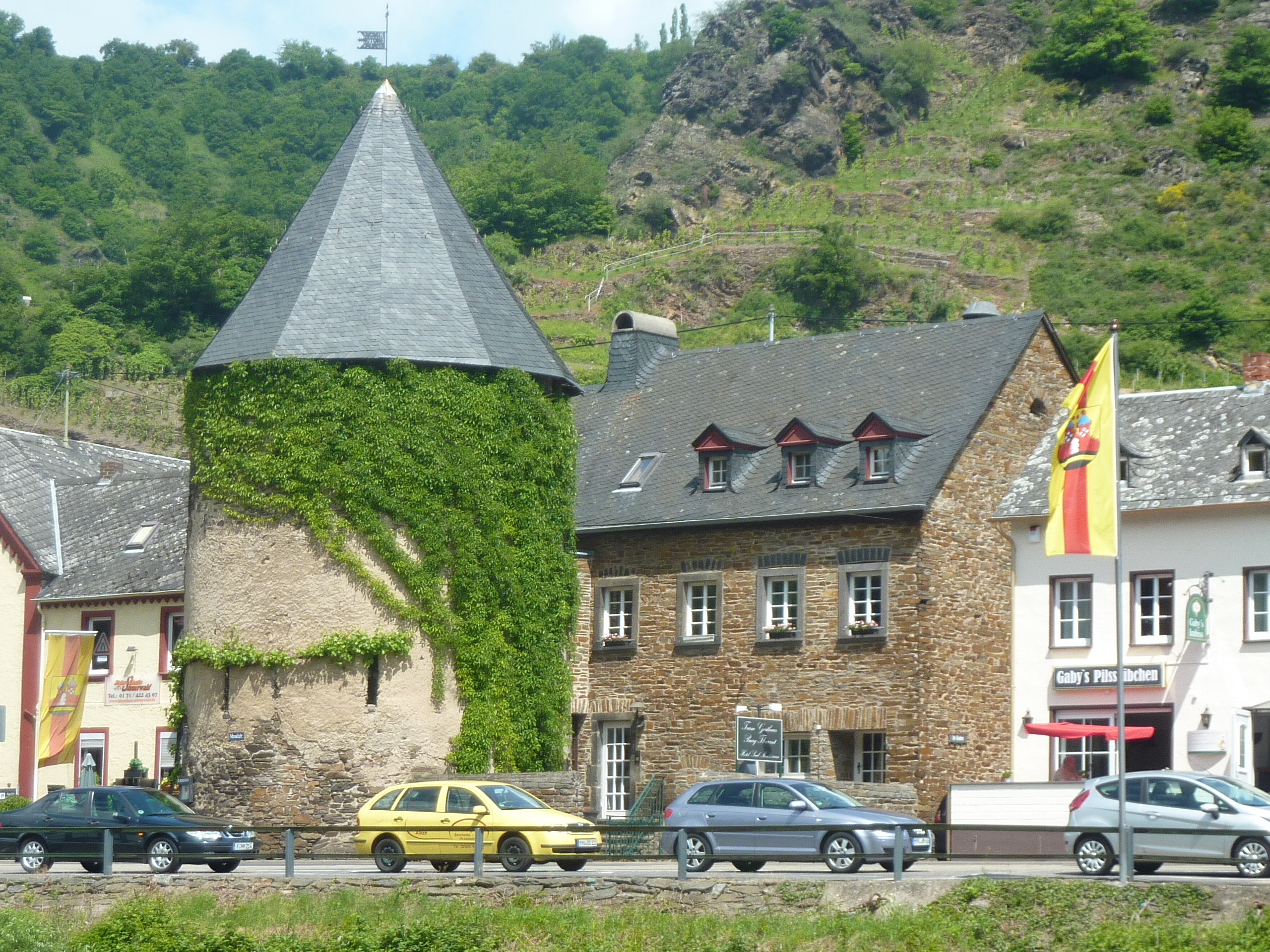
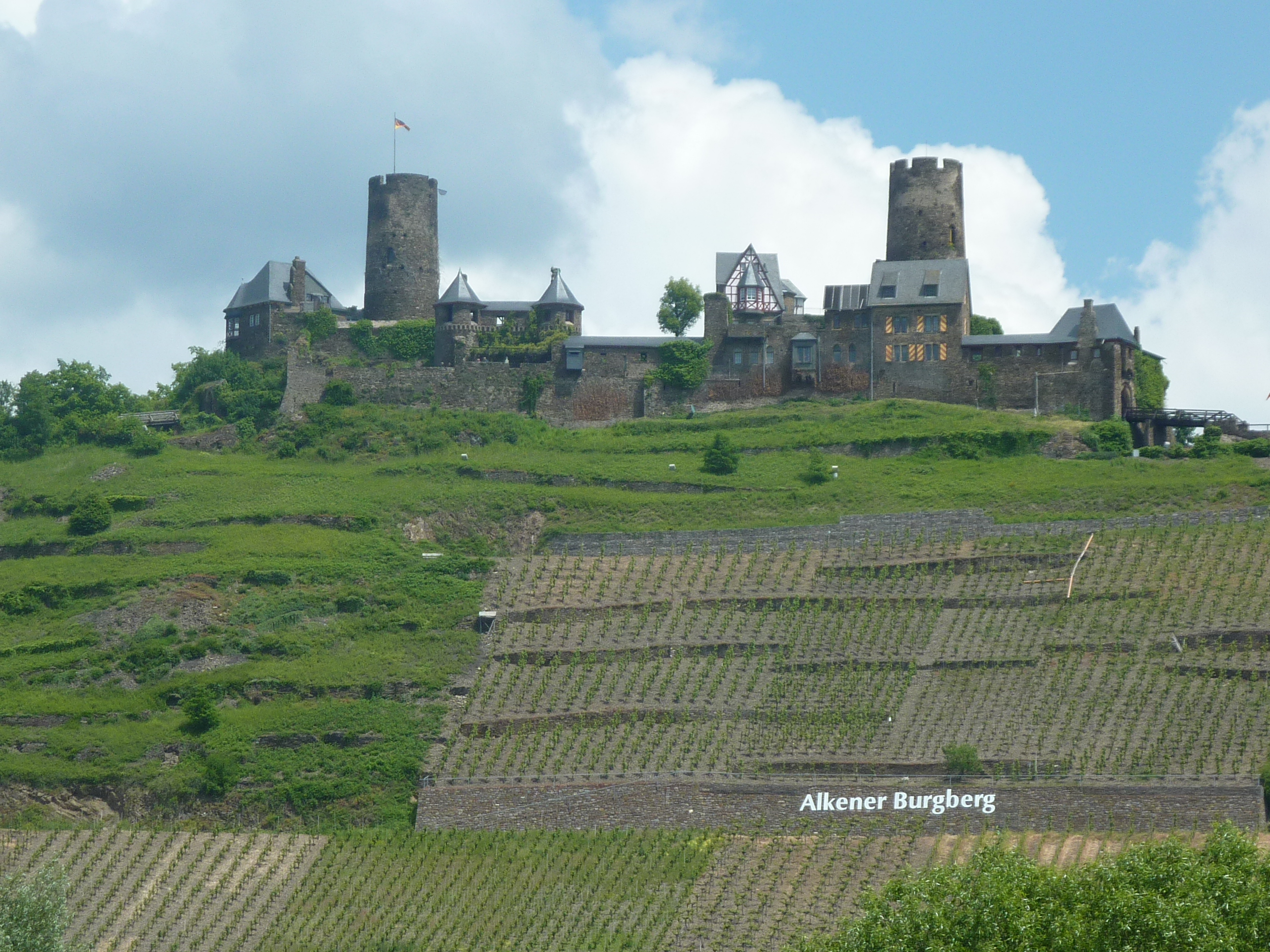
172 km – Kattenes left
174 km – Oberfell right
Island. Pass left. This is a nature reserve.
175 km – Lehmen big lock left, small lock and portage, dam, hydro-electric station right. Built in 1962, with a 7.5M drop and a 20MW capacity
176 km – Schloss Gondorf left. The road goes through it.
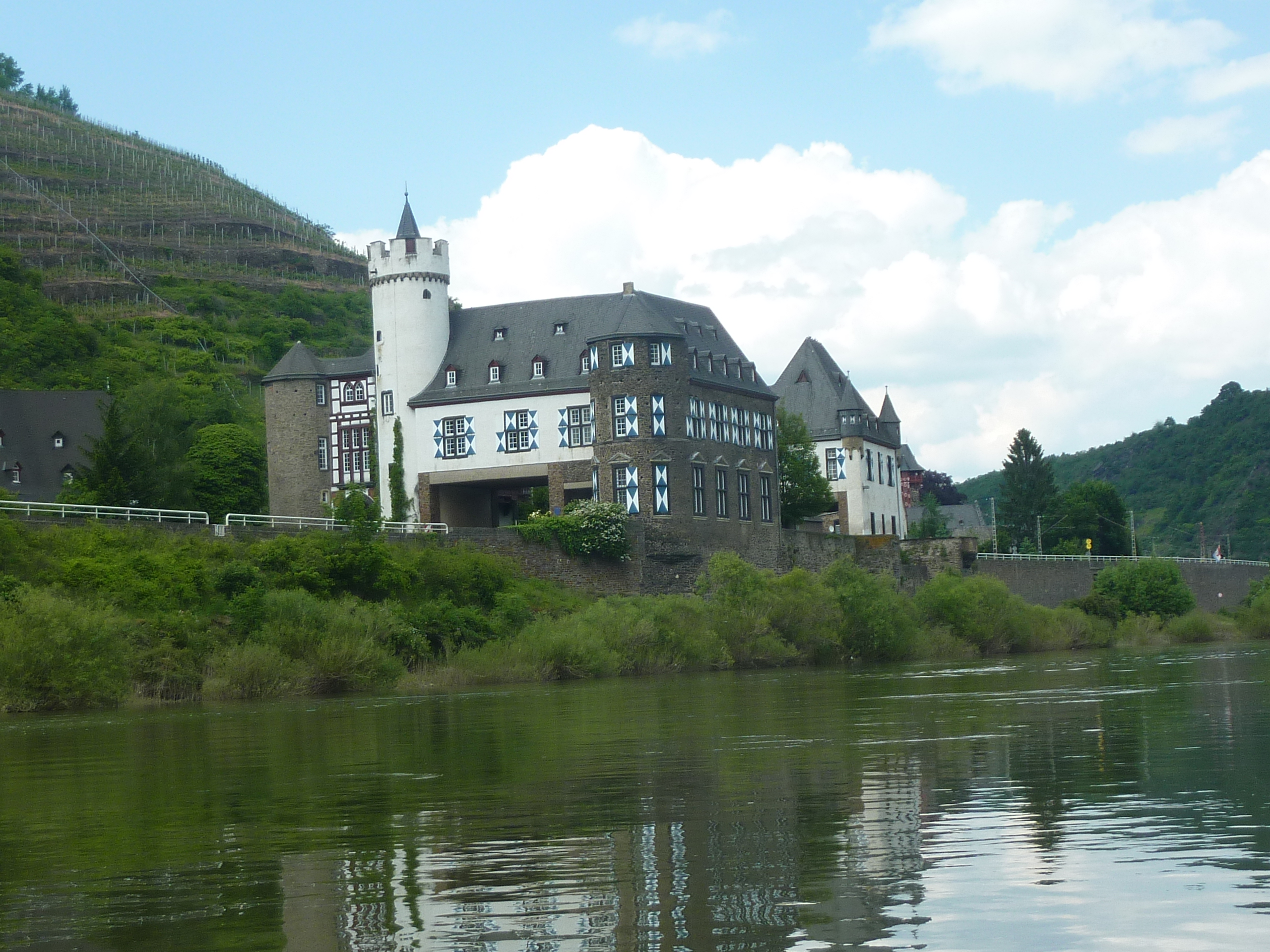
177 km – bridge K77. Kobern-Gondorf left.
180 km – Dieblich right. Some maps mark a campsite here. But it was closed in 2013.
182 km – Winningen Ulen vineyard left. This incredibly steep southwest facing wall is the finest since Ürziger Würzgarten. The best by far on the lower Mosel.

182.5 km – E31 bridge
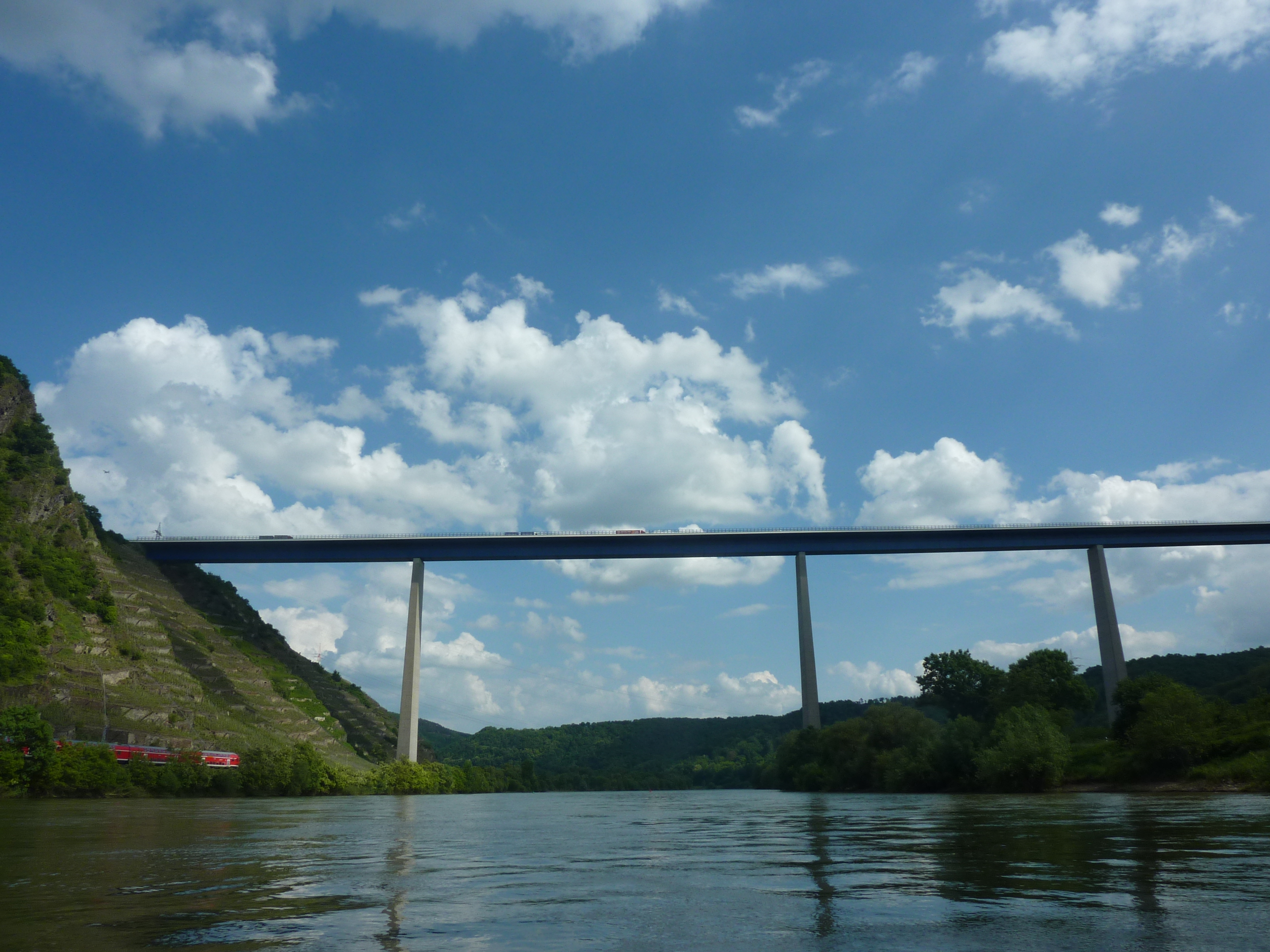
183 km – The camping island of Winningen left. (click here). Not the cheapest site on the river but one of the best in amongst the trees. Paddle past the restaurant and back up into the harbour for the slipway.
184 km – Winningen left.
Winningen makes the best wine on the lower Mosel. When you’ve retrieved your car drive into the town and fill up. Some sellers in the town centre are rather pricey. Better wander into the back streets and buy direct from one of the growers. We got great stuff from Weingut Hess-Haut (click here), who gave us a free tasting without booking. Recommended.
186 km – Lay right.
188 km – Railway bridge
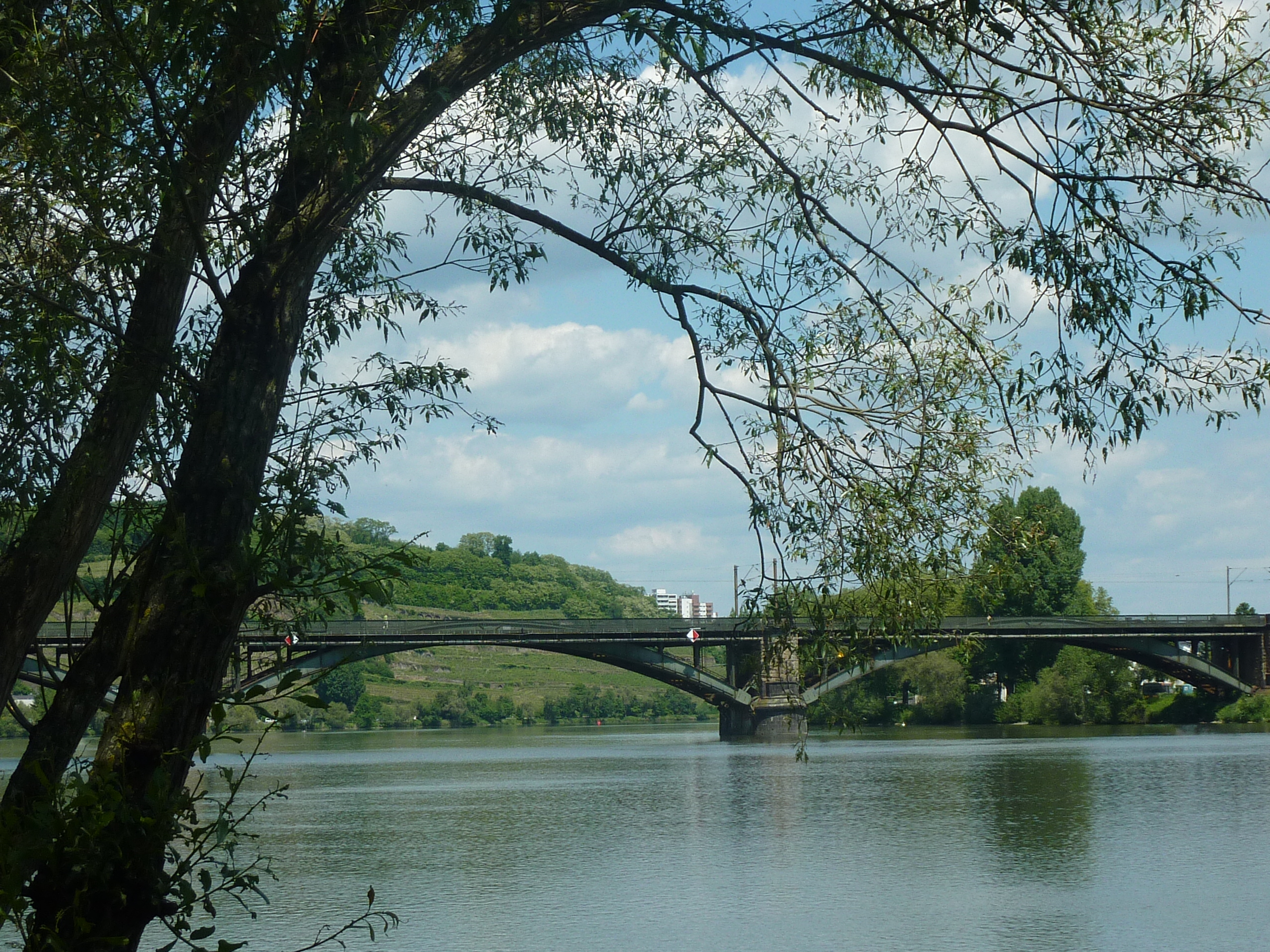

190 km – K6 bridge

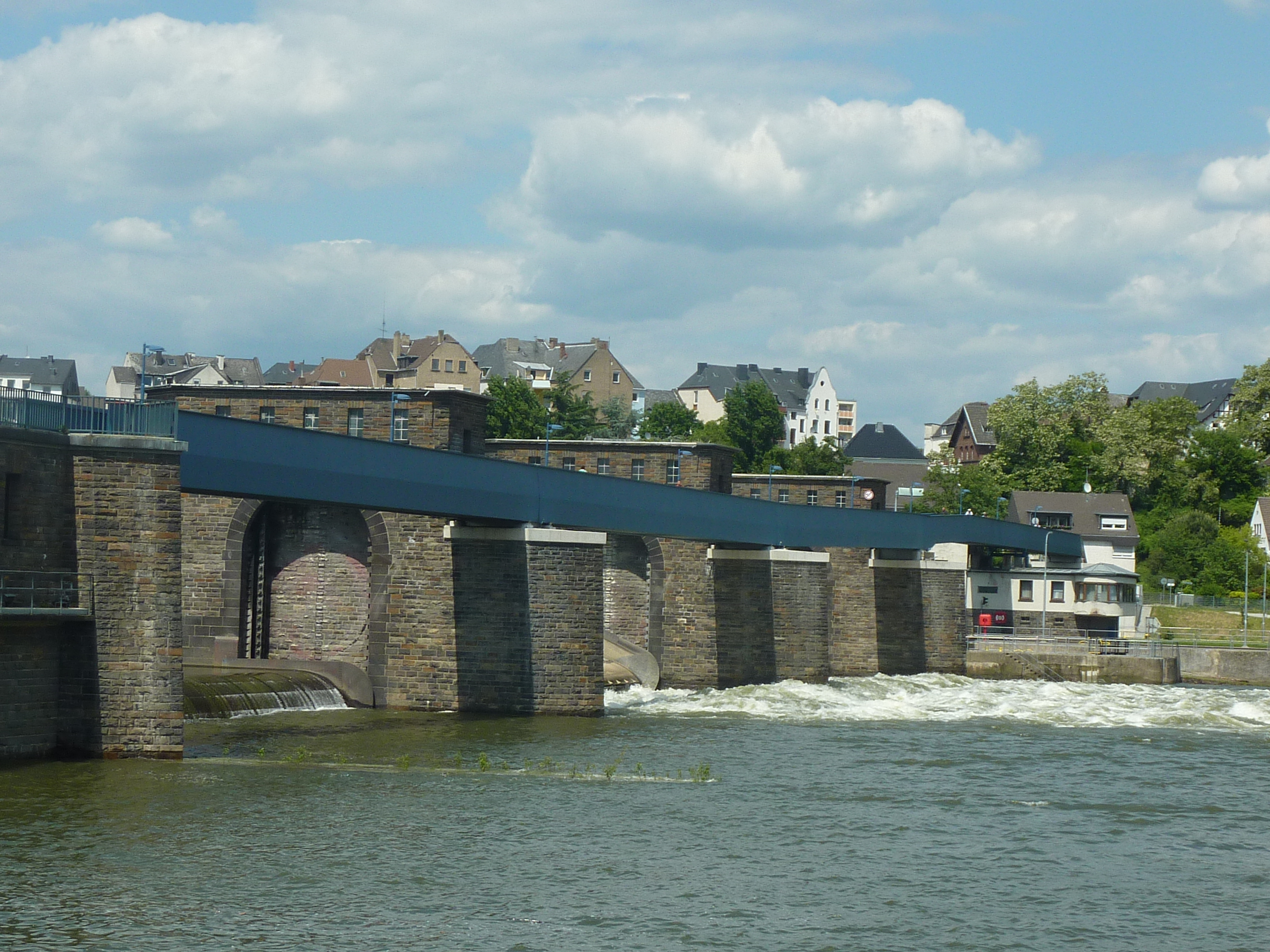
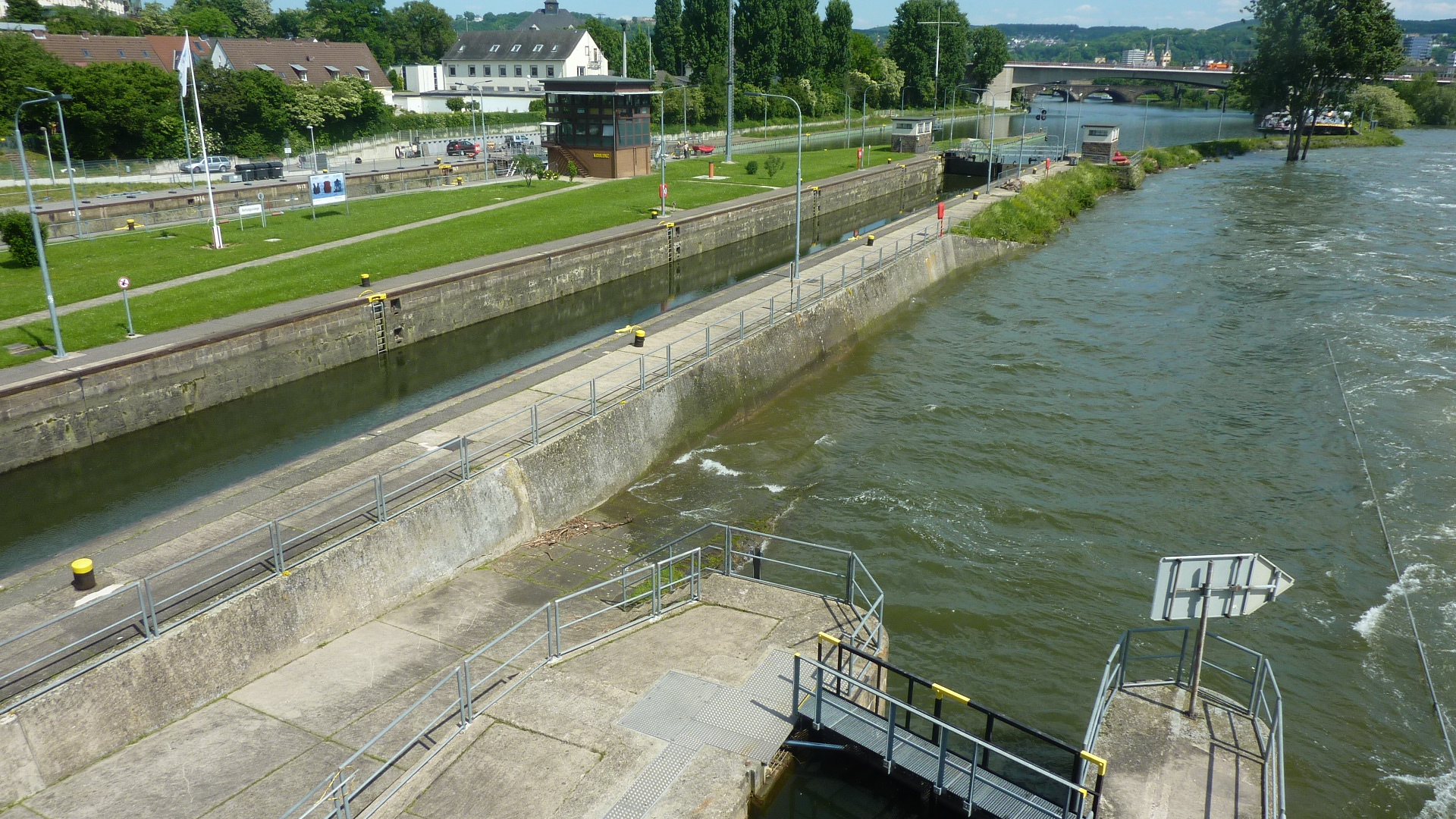
192 km – Koblenz weir. Two big locks left, small lock, weir, fish pass, hydroelectic station and visitor centre right. Built in 1951, with a 5.3M drop and 16MW capacity, this was the first hydroelectric station on the Mosel.



192.25 km – Europa bridge

192.5 km – Railway bridge

192.75 km – Balduin bridge. Originally built in 1343. Repaired and rebuilt innumerable times since.

In the 3rd century the Romans built a wooden bridge about 50 yards downstream of the the Balduin bridge. The larger cruise ships moor up on the right bank between here and the Rhine.
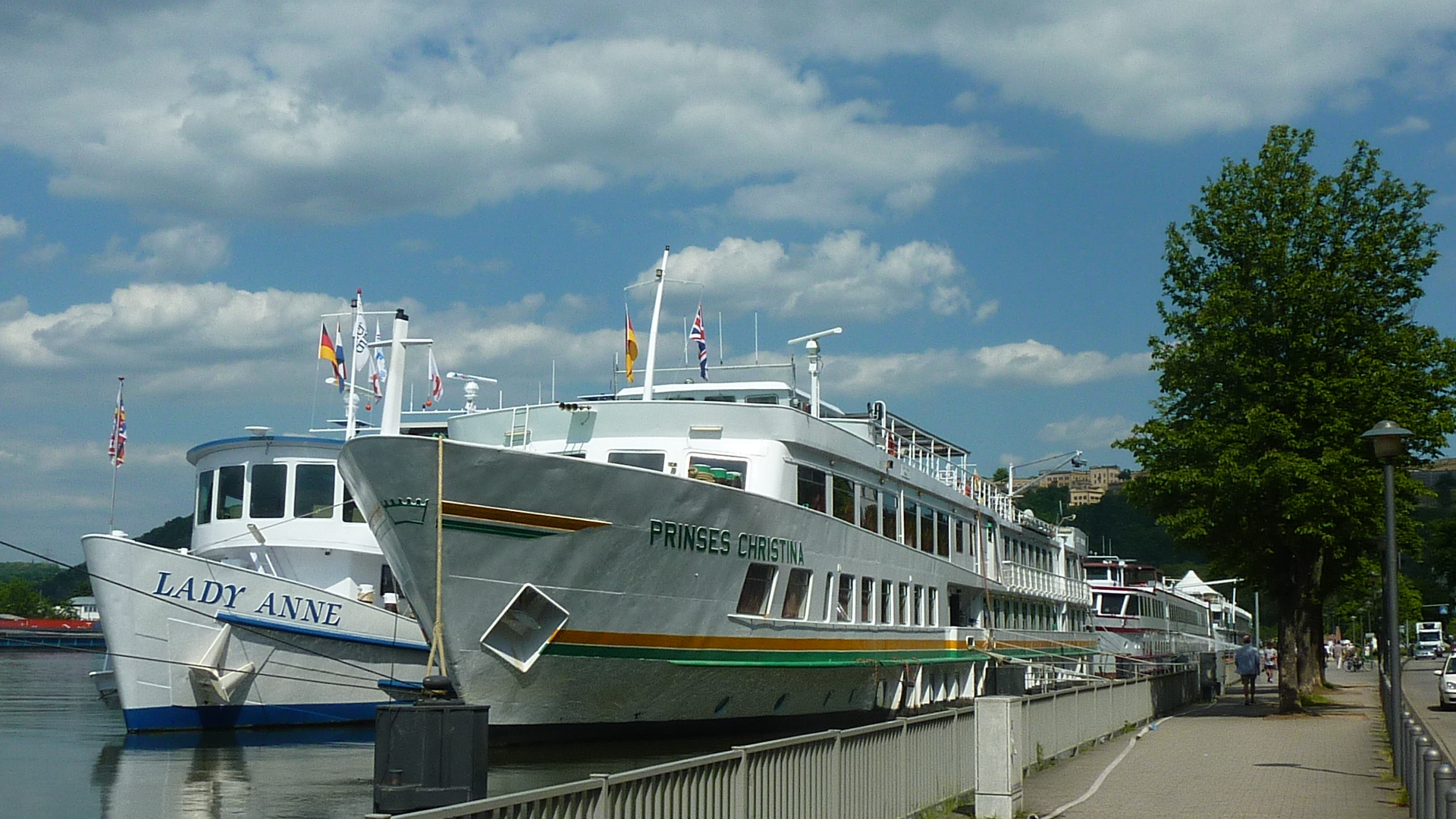
193 km – mouth of the Mosel. Camping left bank at the junction. (Click here)

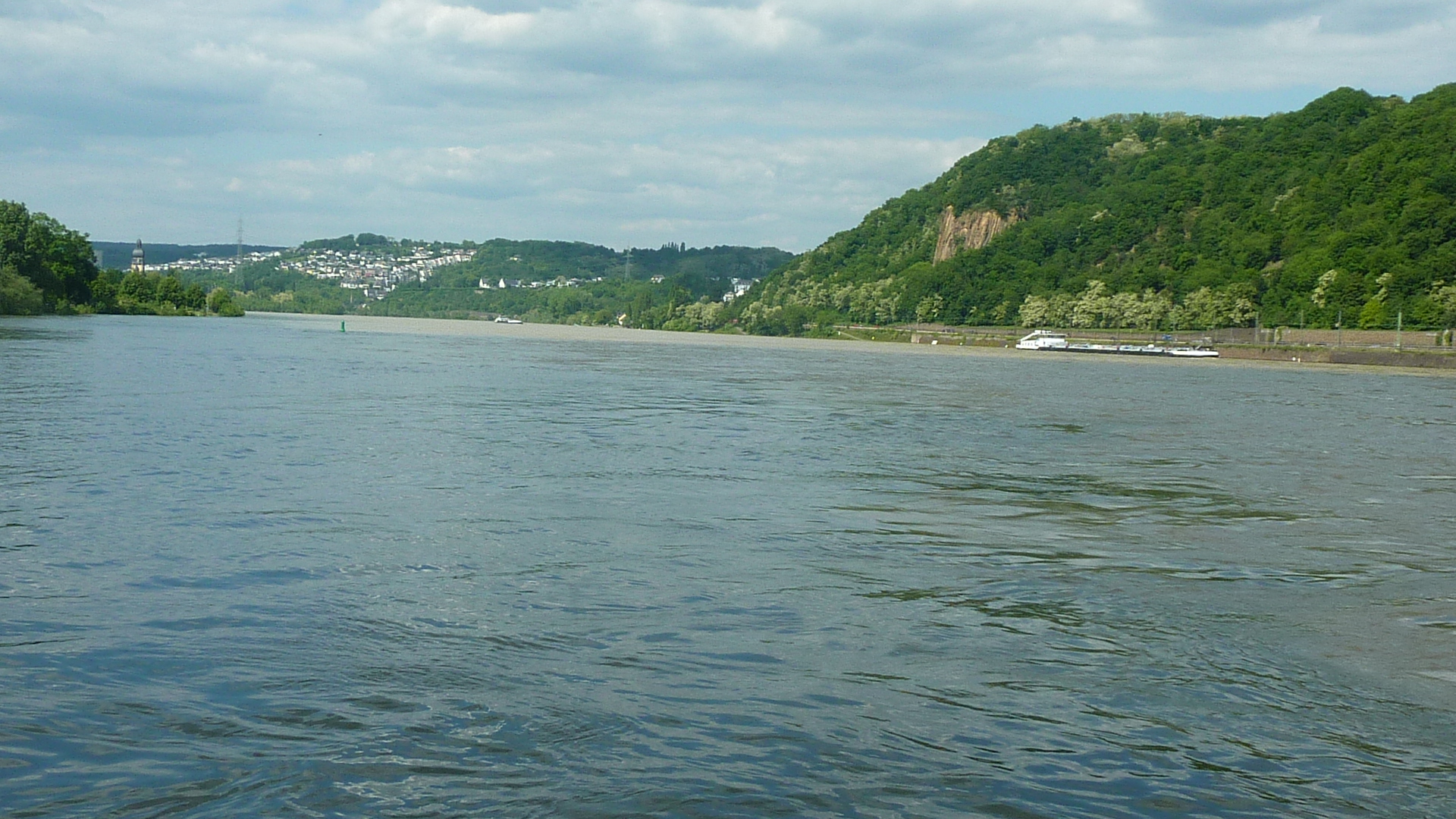

Jim Thornton. Thanks to Pete for some of the pictures.
Chelsea Hotel No 2
By Leonard Cohen
Whether it’s about Janis Joplin, another lover or even a prostitute, is unimportant. The final line is what matters – he thinks about her all the time. Click here for Cohen, here for Rufus Wainwright’s cover, and here for Lana Del Ray’s.
I remember you well in the Chelsea Hotel,
you were talking so brave and so sweet,
giving me head on the unmade bed,
while the limousines wait in the street.
Those were the reasons and that was New York,
we were running for the money and the flesh.
And that was called love for the workers in song
probably still is for those of them left.
Ah but you got away, didn’t you babe,
you just turned your back on the crowd,
you got away, I never once heard you say,
I need you, I don’t need you,
I need you, I don’t need you
and all of that jiving around.
I remember you well in the Chelsea Hotel
you were famous, your heart was a legend.
You told me again you preferred handsome men
but for me you would make an exception.
And clenching your fist for the ones like us
who are oppressed by the figures of beauty,
you fixed yourself, you said, “Well never mind,
we are ugly but we have the music.”
And then you got away, didn’t you babe…
I don’t mean to suggest that I loved you the best,
I can’t keep track of each fallen robin.
I remember you well in the Chelsea Hotel,
that’s all, I don’t even think of you that often.
Royal Rubbish
Drive an old car – your baby deserves it
The Royal Colleges are struggling for a role in the modern world, but last week’s, widely ridiculed, advice from the Obstetricians and Gynaecologists, about chemical risks during pregnancy (click here) won’t help them find one.
The “precautionary principle” led them to recommend pregnant women to:
- reduce “use of foods/beverages in cans/plastic containers, including their use for food storage”,
- minimise “use of personal care products such as moisturisers, cosmetics, shower gels and fragrances”
- avoid “purchase of newly produced household furniture, fabrics, non–stick frying pans and cars”
Although, as the authors admit:
- “it is unlikely that any of these exposures are truly harmful”.
How can pregnant women be sure that the extra detergent they use to clean their old sticky pan won’t harm the baby, or that cutting down on personal hygiene won’t provoke their partner to leave – after all single parenthood is a well-known risk to children.
We expect this sort of nonsense from Greenpeace, and George Monbiot. But in the real world the principle is meaningless. It would mean no new vaccines, because “we can never rule out unexpected risks”. Every action, including inaction, has risks. We can never avoid them all. Instead we weigh them up, one against the other, and against the pleasures of driving a new car or smelling nice.
If the RCOG can give pregnant women some estimate of the risks from plastics, and from food going off in alternative storage, they would be doing a service. If they can’t, shut up. Or better still take a day off from “college committees”, and sort out the labour ward. Plenty of risks to reduce there.
Jim Thornton
#Publooshocker
Produced by Susan Bewley’s sister. Powerful stuff. Watch and forward.
http://www.youtube.com/watch?v=YJDsH64sqNY&feature=youtu.be
And don’t drink and drive.
Bye Bye Black Sheep
by Roger McGough
The comic “… ended up marrying a Protestant” and the gently ironic final line – typical McGough. This is from his 1986 collection Melting into the Foreground.
Volunteering at seventeen, Uncle Joe
Went to Dunkirk as a Royal Marine
And lived, not to tell the tale.
Demobbed, he brought back a broken 303,
A quiver of bayonets, and a kitbag
Of badges, bullets and swastikas
Which he doled out among warstruck nephews.
With gas-flame blue eyes and dark unruly hair
He could have been God’s gift. Gone anywhere.
But a lifetime’s excitement had been used up
On his one and only trip abroad. Instead,
Did the pools and horses. “Lash me, I’m bored,”
He’d moan, and use language when Gran
Was out of the room. He was our hero.
But not for long. Apparently he was
No good. Couldn’t hold down a job.
Gave the old buck to his Elders and Betters.
Lazy as sin, he turned to drink
And ended up marrying a Protestant.
A regular black sheep was Uncle Joe.
Funny how wrong kids can be.
Xi’an city moat – 2
Probably not canoeable
A few weeks ago (click here) I speculated about canoeing or swimming this. Xi’an is the largest completely walled city in China and for a few pounds it is possible to walk around the top. The moat outside the wall looks inviting, and I saw one boat. But my courage failed me.


Signs forbid access, parts are presently dry and it seems to be blind ended where it passes under major roads. Oh well.

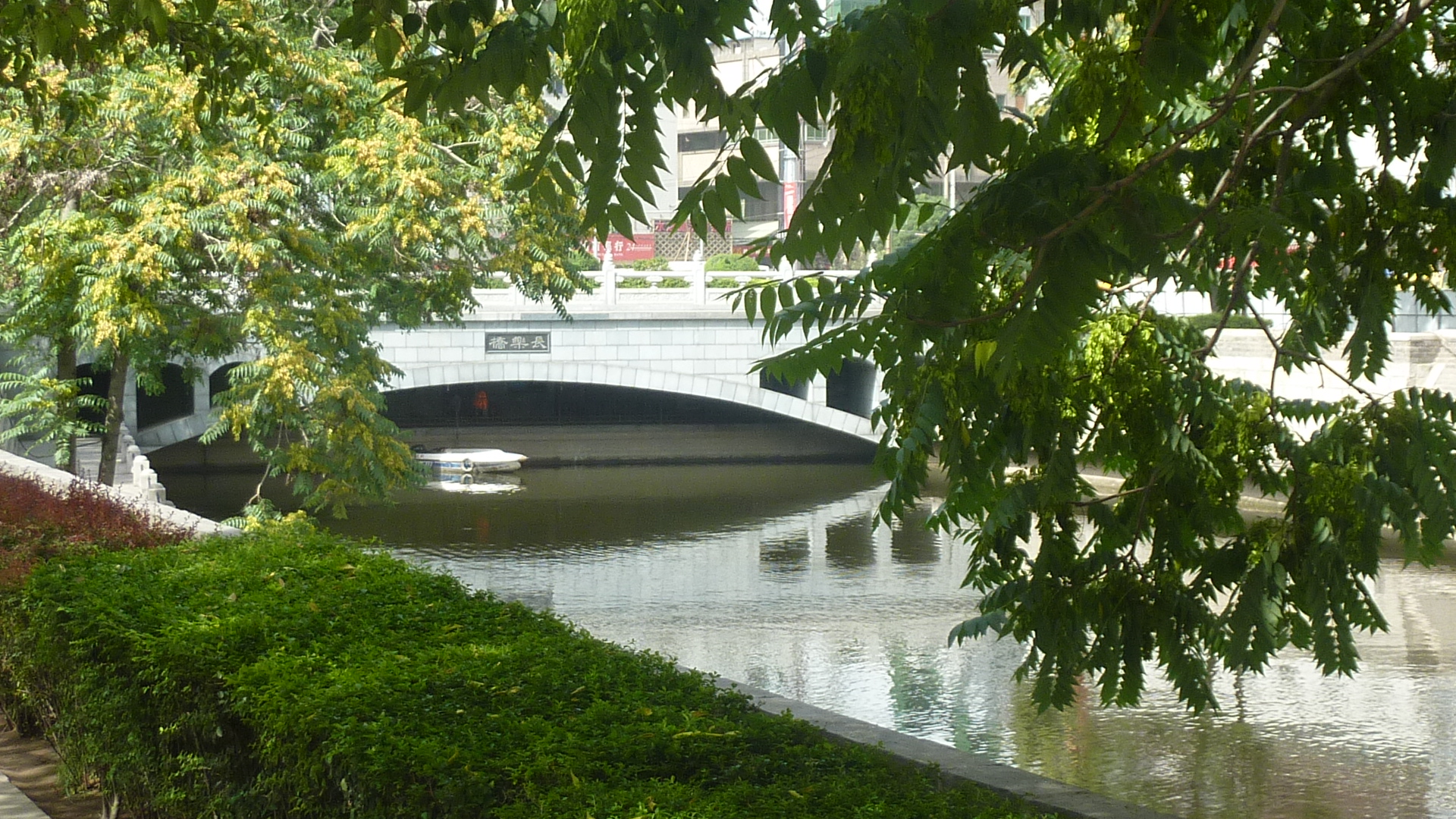
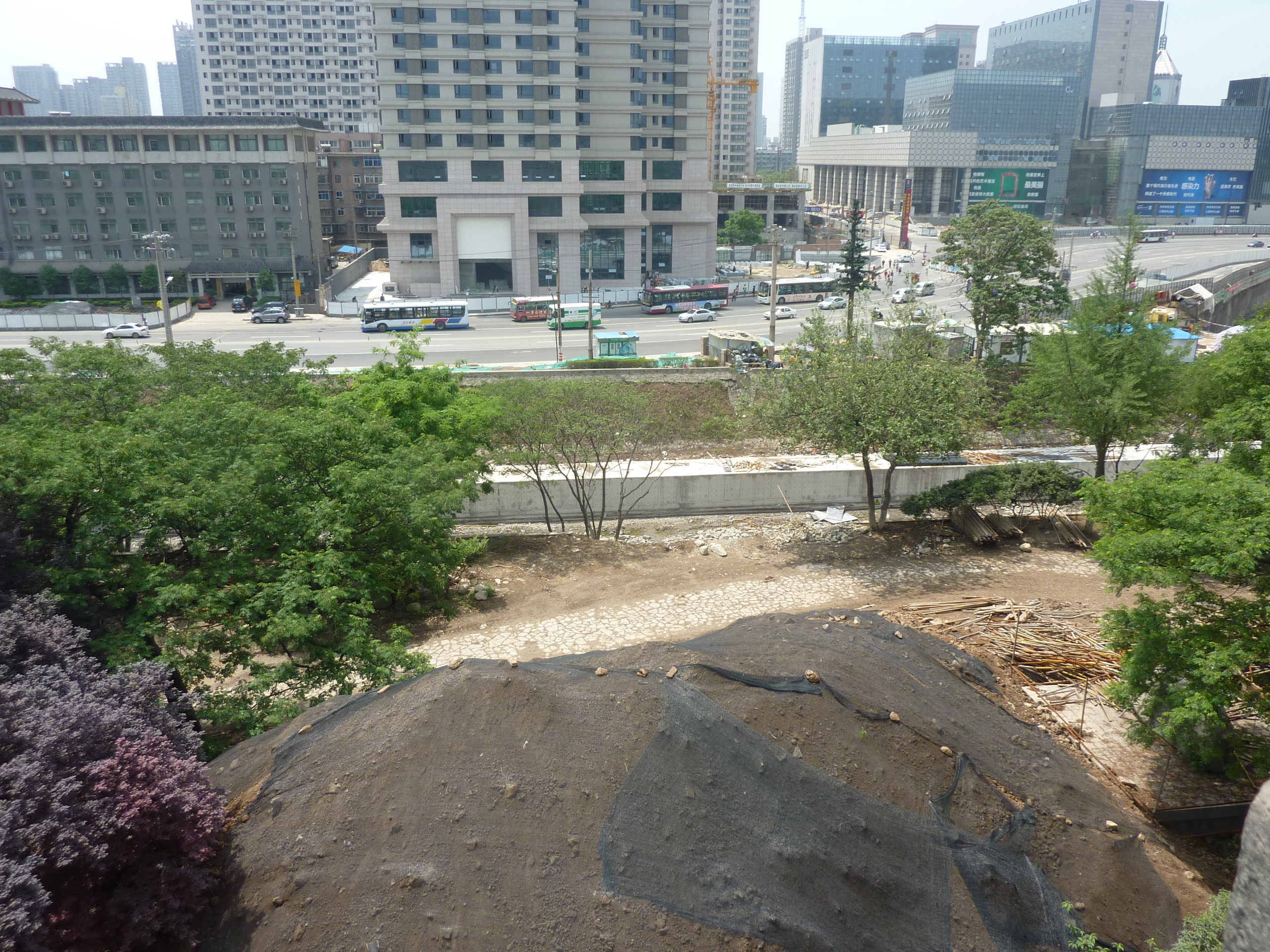
But still worth a wild swim for braver souls than me.
Jim Thornton
Office affair?
Edward Hopper’s Office at Night
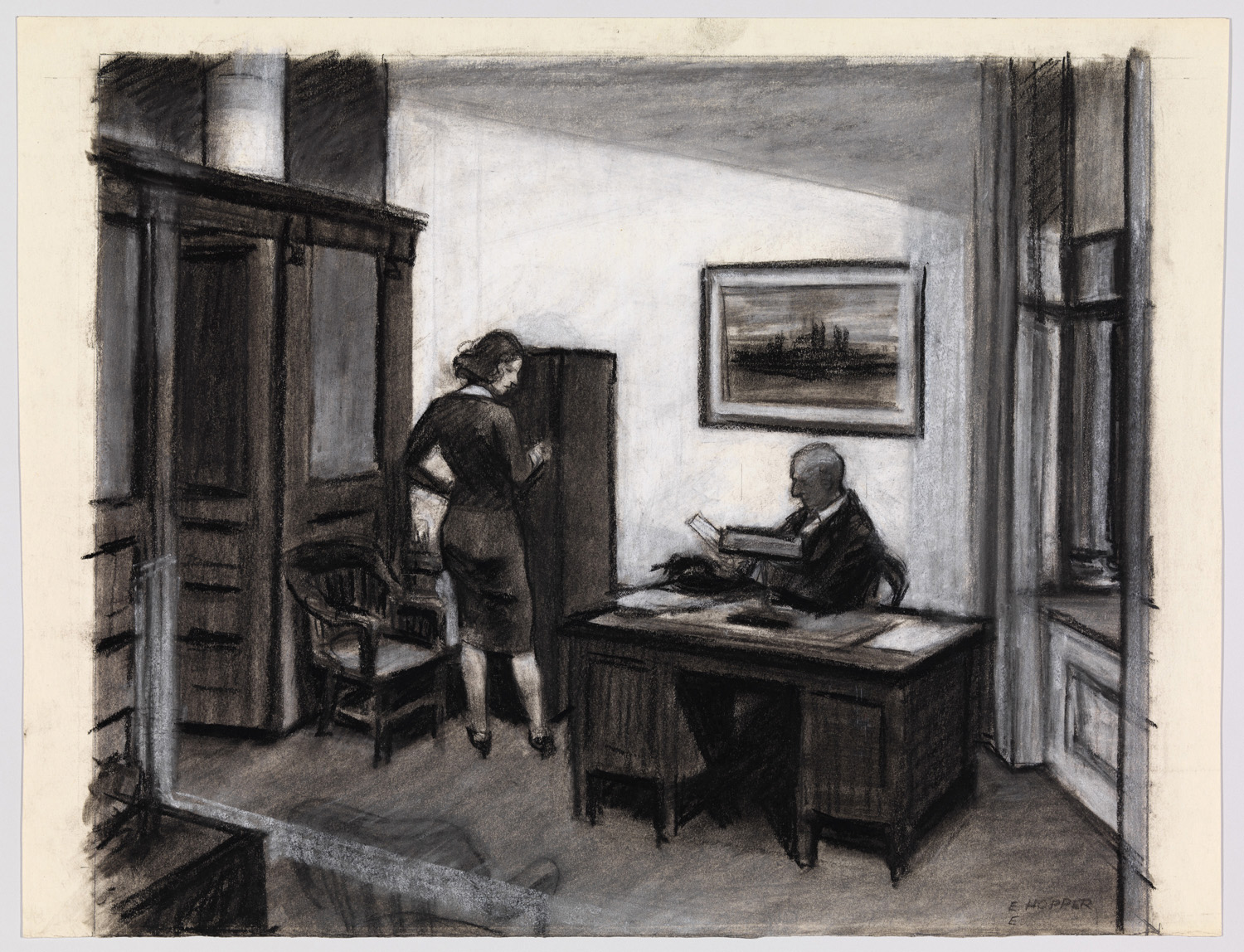

On this week’s New Yorker blog (click here), Carter Foster, the curator of drawing for the Whitney Museum is quoted:
“If you interpret [Hopper’s] paintings as lonely or melancholy, that’s about you. The paintings are screens onto which the viewer can project their own feelings and ideas.”
Oh well. I still think this is an office affair – probably about to start. It looks like she’s making the running.
Jim Thornton
More on “Days” by Larkin
From Letters to Monica
Last month comparison with Amis (click here), yesterday two French versions (click here), today Larkin’s own self-deprecating comments. Days deserves them all.
5 August 1953
[…] I’ve written a tiny little poem since returning, hardly a poem at all:
What are days for?
Days are where we live.
They come, they wake us
Time and time over.
They are to be happy in:
Where can we live but days?
And to seek where they join*
Brings the priest and the doctor
In their long coats
Running over the fields.
(*Line later revised to: Ah, solving that question)
Don’t take it seriously, but it’s a change from the old style.
Wednesday I shouldn’t think there’s much danger of yr taking it seriously having just re-read it, but I can’t rub it out. […]
21 November 1971
Did I tell you about my discovery in Larkin studies? I was rereading The Wind in the Willows, & found within a few pages of each other ‘long coats’ and ‘running’ and ‘over the fields’. Isn’t that odd? It’s where Toad crashes the car and is chased. I’m sure I got the words from there – hiding places thirty years deep, at least. But perhaps I’ve told you before – perhaps I’ve realised it before. Brain going. Pox got. […]
He’s referring to chapter 10 of TWITW by Kenneth Grahame, The Further Adventure of Toad. Monica had given him an expensive illustrated edition for Christmas 1950, but he had loved the book as a child, as his letter to her (28 December 1950) makes clear.
 Ripe-tomato.org