Alex Comfort’s love life
And why Joy was his best work

Publishing a raunchy illustrated sex manual like The Joy of Sex was risky in 1972. Only a few years earlier Dr Eustace Chesser had been unsucessfually prosecuted for his milder, and unillustrated Love Without Fear. But Alex Comfort, also a doctor, loved risk. Married to Ruth Harris, and having an affair with her best friend Jane Henderson, he gave Polaroids of himself and Jane to the Joy of Sex illustrators. His only concession to his wife’s feelings, to persuade the artists to ensure that the final results bore no resemblance to the originals.
Comfort and Henderson’s exhibitionism did not end there. Soon after the book came out and Comfort had divorced Harris, they emigrated to California and joined the Sandstone Retreat, a swinging community frequented by Sammy Davis Jr, Timothy Leary, and the porn star Marilyn Chambers – Gay Talese wrote Thy Neighbour’s Wife about it. It must have given them both a thrill to see their book eventually become the best selling sex manual of all time.
Comfort was an anarchist and pacifist who believed that our healthy sexual urges were illicitly restrained by social conventions and power structures. But he didn’t always write as well as he did in The Joy of Sex. Here’s a representative extract from his 1948 pamphlet Barbarism and Sexual Freedom: Lectures on the sociology of sex from the standpoint of anarchism. The title should be a warning.
“It is because the whole emphasis of anarchist thought is upon the removal of power and the refusal to employ power-institutions as a vehicle for reformist measures that it seems to me to embody the most comprehensive and scientifically legitimate approach to sexual ethics. I think I have made it clear that the closeness of the relation between this branch of human conduct and social institutions in general makes it impossible to modify either except by way of the other. A general outbreak of public resistance to militarism would contribute more to the removal of sexual imbalance than any action through the channels which we have come to regard as political. The problem is that of human freedom, and human freedom has little to do with institutions or the reform of institutions. Yet there is a stronger case for reformist action as a stop-gap treatment in this field than in any other. While we cannot excise the problem radically until megalopolitanism destroys itself or is superseded through the direct action of peoples, that does not mean that we can afford to withhold first-aid measures.”
What is he trying to say?
Late in life Comfort regretted the way The Joy of Sex overshadowed his other writings.
I’m jolly glad it did.
Jim Thornton
A model investment
Obama picks a loser
In 2009 the new Obama government invested $500M in Solyndra, a company making solar panels in California. Obama himself visited the plant and praised it as a model for government investment in green technology.
iGreens were sceptical. Environmentalist hype is a terrible reason for investing, and if making solar panels in California was really such a great idea, why could the private sector not stump up. It’s no surprise to learn that last month Solyndra went bust, beaten by lower cost Chinese competitors.
Of course the private sector gets it wrong sometime too. Two other solar-panel start-ups, SpectraWatt and Evergreen Solar, also went bust recently. But Intel, and Goldman Sachs are on the hook for them, not the poor taxpayer.
Obama could hardly have guessed how good a model of state investment Solyndra would turn out to be.
Jim Thornton
Nottingham’s own Rogue Trader
Last week Kweku Adoboli, 2003 graduate in E-commerce and digital business, from Nottingham University, was arrested for a suspected £2 Billion fraud at Swiss bankers UBS. It’ll take time to sort out, but in the ranks of financial bad guys he appears to be near the top. Well behind Bernie Madoff”s $65 billion scam, and Jerome Kervial’s Euro 4 billion fraud at Société Générale, but ahead of Nick Leeson who bought down Barings Bank by losing a mere $800 Million.
But there’s no mention of him on my university’s website, although there’s surely no need to be shy. We can hardly be held responsible for the sins of our students eight years after they graduate. Perhaps it’s a character flaw in me, but I’m secretly rather proud of him.
When I lecture abroad and am asked where I’m from, my reply, “Nottingham, home of Robin Hood” always provokes a light of recognition. Last week I got someone else to mention.
Jim Thornton
Top OBGYN trial recruitment centre
Queens Medical Centre and City Hospital Nottingham
The Twin Birth Study, one of the most important current research trials in pregnancy, recently completed recruitment of 2,800 participants worldwide. The trial will test whether it is safer for twins to be born by Caesarean section, or in the normal way.
Women carrying twins were invited to allow the route of delivery, Caesarean or normal, to be determined by chance. Not surprisingly many had a strong preference one way or the other and declined to join. Nothing wrong with that, it’s their choice, but it made recruiting so many participants a slow process. It took hundreds of hospitals around the world nearly seven years. In Nottingham we invited hundreds of women to achieve the 34 we eventually recruited.
Thirty four participants may not sound much, but Nottingham was the second most successful recruiting centre in the UK. More than any centre in Australia, USA, Belgium or Germany. We were equal to the top centre in Holland, and would have been number two in Canada. The only other centres that recruited more were very large city hospitals in South America and Asia.
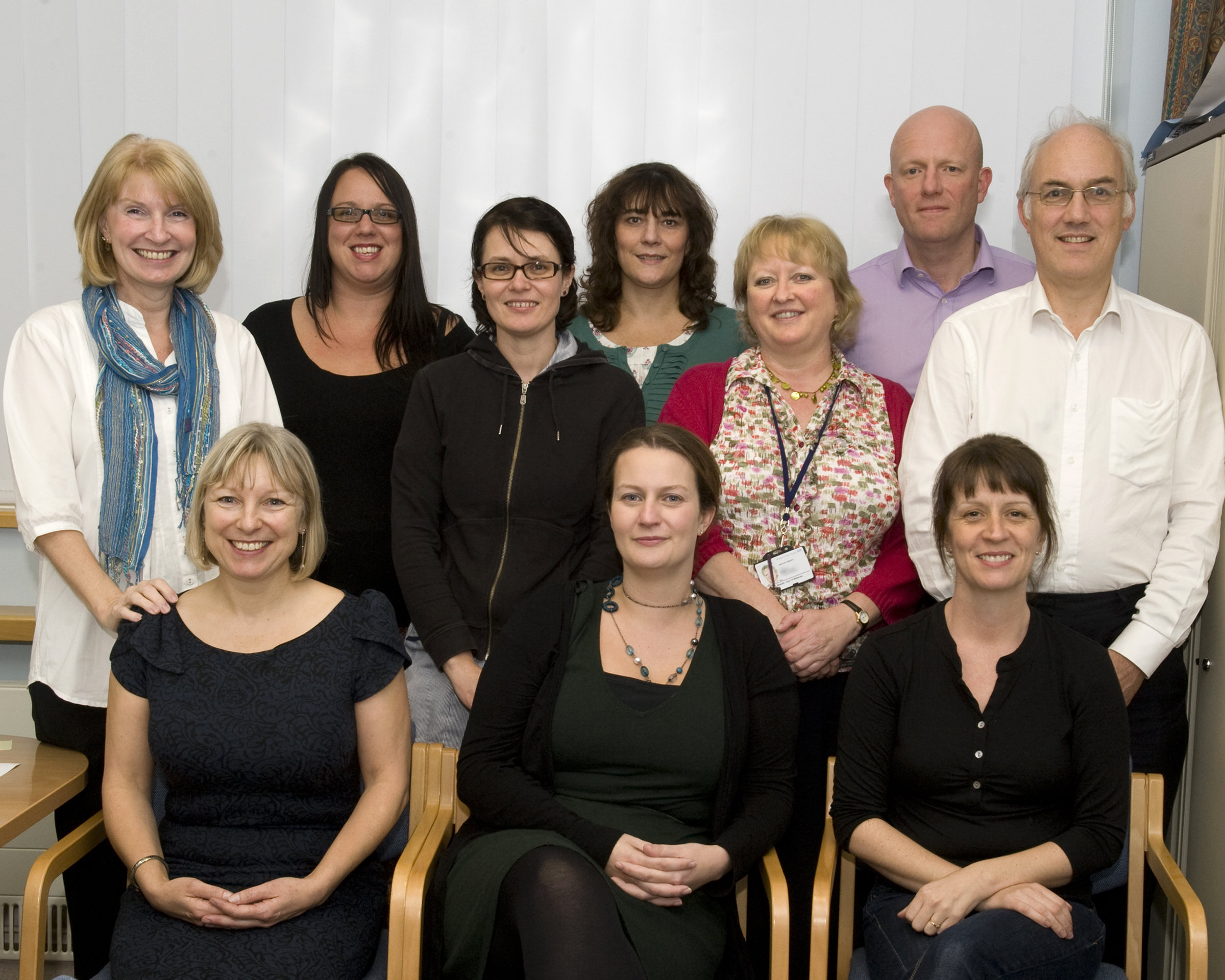
Not only that but we’ve just heard the news that all the outcome data from our 34 recruits has been certified 100% complete and accurate. Not one single data item missing! I’m so proud of the team. Here’s a picture of us all.
 .
.
The main trial results will be available in April 2012, but we won’t stop there. We will be following the babies up for a long time yet.
Jim Thornton
Don’t you just love leftists!
“Voluntary” work experience
My friend Colin Marsh has just had an interesting article in the Guardian. I recommend it. Link here.
He argues that insisting that the able-bodied unemployed be forced to do unpaid work experience, as a condition of getting their dole, is exploitative.
I’m less sure – there are few things more soul destroying than sitting at home collecting dole, and anything which prevents that must be good. But I’m not going to push the point. Colin knows what he’s talking about. He’s temporarily unemployed himself, and not sitting around at home.
What interested me was Colin’s comment when he sent the link. Apparently the Guardian was happy to take his article, publish it, and earn money from sales and advertising, but they didn’t see fit to pay him!
Clearly they see nothing wrong in unpaid work experience!
Jim Thornton
Adultery in Korea
An Anonymous Island by Yi Mun-Yol
This week’s New Yorker short story, An Anonymous Island by the Korean writer Yi Mun-Yol, translated by Heinz Insu Fenkl, tells of a young woman teacher sent to work in a remote village school.
How do people in such a place manage a bit of casual sex without upsetting the social order? It’s fairly easy in the big city. But in an isolated Korean village, hemmed in by mountains, where everyone knows everyone?
The women in this worldly-wise and tender story have found a solution that works for them, and which their husbands tolerate – so long as they keep the unwritten rules.
Read it here, in the Sept 12th 2011 issue.
Jim Thornton
Ten years on
I posted this on www.igreens.org.uk on 14 September 2001. It had taken me three days to collect my thoughts. Today I see no reason to alter a word.
America did not deserve this
It seems almost presumptuous for we British, especially those like me not personally touched by the tragedy, to speak about the awful crimes at the World Trade Centre and Pentagon. Like everyone, I’ve felt numb and helpless as the full horror and evil has sunk in.
Nevertheless we can not only send our prayers and thoughts to the bereaved, and assure Americans of our wholehearted support in their time of trial. We must also distance ourselves from anti-American sentiment.
On Thursday’s “Question time”, the BBC’s flagship discussion programme, some audience members claimed that “Americans had it coming”. Phil Lader the former US ambassador was shouted down as, near to tears, he spoke of his sadness at the audience’s apparent lack of human kindness. A man who spoke in support of America was booed. Such sentiments are not isolated. In letters to iGreens, people have said “Americans have been doing the same things themselves”, “They got what they deserved”, “This will teach them a lesson.”
Of course some anti-American feeling is understandable from those Arabs who object to America’s steadfast support for its ally Israel. However, that hardly explains the attitude of the native English who would certainly protest if America failed to defend the only democracy in the Middle East.
Such people are hostile because of an almost willful failure to understand the morality, workings and effects of capitalism. In England the politicised education system, and steady anti-capitalist BBC propaganda constantly confuses people. Let’s put a few things straight.
American capitalism is not worsening world hunger
Conditions for the poor are improving. Not only has the proportion of hungry people fallen, absolute numbers have fallen too. The latest figures are available from the UN Food and Agriculture organisation. The rate of malnutrition has fallen by about 98 million annually since 1980. It was about 930 million in 1970 and 792 million in 1998, a period when world population approximately doubled. The cause is governments moving from feudalism and central planning, to respecting private property and permitting a free market. America has consistently led and encouraged this process. Without exception the countries that remain poor are those that have not had this sort of good government for any prolonged period, or who have isolated themselves from world trade.
Americans did not become rich by taking resources from the poor.
Americans are rich because they work hard, respect property and engage in free trade. The market is not a zero sum game. Both sides of a free trade benefit. That’s why they engage in it. The rich impoverish the poor in feudal and communist societies because elite’s enrich themselves from taxation, but America is not like that. Nor does America tax poor countries. It gives them foreign aid and cheap loans. It not only pays for the oil and other resources it uses, but also pays royalties for permission to extract it. Some rich people enjoy protesting against capitalism, because for them an economic slowdown just means a few less consumer durables or slightly more expensive organic food. For the rest of the world it means hunger, disease and real suffering. Ask the people of oil rich Iraq what it’s like when the evil capitalists stop trading with you.
McDonalds and Starbucks don’t force their products on anyone
McDonalds never forced anyone to buy a single hamburger. They grew big because people like their hamburgers. Governments force people to buy things via taxation, and to not do so by prohibition. Private companies do neither.
If anyone in the West is harming the poor it is environmentalists and the anti-globalisation movement
A forced acceleration of the shift from carbon to hydrogen-based fuel might reduce global warming, but would also slow economic growth. Some rich people in developed countries think this is a price worth paying. They can afford an economic slow down. However, compared with poverty, Aids and bad government, global warming is not a problem for the poor of Africa, South America or Asia. They need all the growth they can get.
Genetically modified crops produce higher yields and cheaper food. That’s no big deal for the rich who spend proportionally little on food, and are often overfed already. They can afford to worry about monarch butterflies, and bio-diversity. It is a matter of life and death for many poor people. Millions will soon owe their very lives to Monsanto and the other US corporations that led these developments.
A world without America
For at least the last hundred years America has led the world in maintaining democracy, and strengthening capitalism. Its scientists have invented, and its businessmen made improved goods. They’ve traded with the rest of us. If America had never existed we would all, from wealthy Europeans like me, to the poorest African peasants, be worse off. Only totally isolated countries like North Korea really owe Americans nothing, and it shows.
Thank you America for keeping freedom and capitalism alive. You did not deserve this. We British are ashamed of some of our countrymen, but you have nothing to be ashamed of. When you respond in a just and measured way, as we know you will, we will still support you. God bless you.
Jim Thornton. 14 Sept 2001 Leeds. England
Reposted from http://www.igreens.org.uk/america_did_not_deserve_this.htm
Should the government pay for IVF?
I debated this with my colleague Danny Hay in front of our trainees yesterday. He spoke for government funding and I against. Here’s the gist of what I said, and what happened.
Fertility treatment fulfils none of the generally accepted criteria for state funding of healthcare. It is not a public good, something like a mosquito control programme in a malarial area, from which everyone benefits whether they pay or not, and which will only happen if funded collectively. Nor is it like an infectious disease, where we should subsidise treatment because curing one person benefits everyone they would have infected in future. Nor does state funding help the poor. Infertile couples are generally wealthy, having no children to pay for, so taxing everyone to pay for their treatment means taking money from poorer people to help richer ones. Finally, unlike diseases like heart attacks, cancer and broken bones, there is no emotional moral imperative, no “rule of rescue”, compelling us to treat infertility. There’s just no good reason for government funding.
And there are real benefits from private funding. Self-payers demand more efficient, higher quality services, and diverse funders respond more flexibly to the dilemmas of assisted reproduction. Overarching regulations would remain, but there would be no need to make centralised decisions about lesbians, single parents, or women over a certain age or body mass index.
I thought I couldn’t lose, so I allowed myself a little fun. I reminded the audience that many couples bore some responsibility because of their past behaviour – those with blocked tubes from unsafe sex, and those who had voluntarily delayed trying till late in life. This was dangerous ground. Most of the audience were young female doctors juggling the competing demands of partners and their jobs, with the biological imperative to not wait too long. They hated being reminded that the clock was ticking, so I rowed back a bit. What I said about responsibility was true, but I admitted it was a bad reason for not treating people. Responsibility for your problem is no reason for not getting NHS treatment. We treat smokers with lung cancer and injured mountain climbers for free, and so we should.
But it was all hopeless. I was up against Danny a polemical genius. He movingly reminded us of the tragedy of childlessness. He claimed that Samantha Cameron, Miriam Clegg and Bob Winston all support Government funding. He said it would only cost £1 billion a year, which would pay for itself as the children grew up and paid taxes – our colleague Bill Ledger, an infertility specialist, had told him that, so it must be true. He said government funding would lead to better research – really? And that trainees would learn more in NHS-funded units, because the consultants would leave them alone to do more of the procedures – true. At one point he even seemed to suggest that it was our patriotic duty to pay for IVF because the procedure had been invented in England. Oh why wasn’t I quick enough to remember that so was the machine gun!
Of course he won the day. And no-one should be the slightest bit surprised. Any group of specialists will always argue for state funding for their own field. Bakers want bread subsidy, butchers meat subsidy and arms manufacturers weapons subsidy. The world has always been thus.
It was a good day, and Danny deserved his win.
Jim Thornton
Go on Nadine!
Don’t stop here
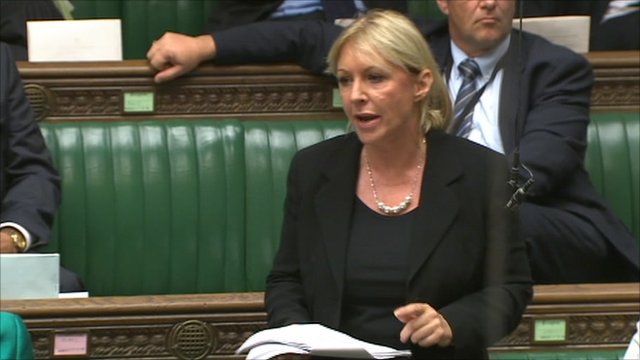
Nadine Dorries MP got her day in the headlines, her debate in the House of Commons, her face on TV, but surely she’s wasting her time.
Abortion is a settled issue in the UK. We don’t like it, there are too many, and women often regret them, but what can we do? We like banning it even less. Mrs Dorries can bang on all she likes, but the law isn’t going to change. Or is it?
This pro-choice doctor, who like everyone else also dislikes abortion, isn’t so sure. Mrs. Dorries found a chink in our pro-choice armour, the counselling, and chipped away to good effect.
The people who profit from abortion, the doctors who do it and the organisations they work for, also provide most pre-abortion counselling. They may do all they can to avoid being influenced, but they have an interest in the abortion going ahead. They cannot present the case for continuing the pregnancy, or having the baby adopted, with the vigour a pro-life counsellor would. Nor should they. It’s not their business to persuade people against abortion. They are supposed to be “non directive”, and they are.
The undecided woman who walks into an abortion clinic because she knows nowhere else to go, meets wonderful well-meaning doctors and nurses who’ve been trained not to persuade her. I know because I’m one of them! She tells them she wants an abortion, not because it’s necessarily her settled view, but because she’s in an abortion clinic, and she thinks that’s what she should say. Soon another frightened girl is gently, non-directively, propelled down the abortion route.
You’re right Mrs. Dorries. Insist the counselling is done by an independent person. You’ll cause trouble. Some women will have their abortions delayed. Some people will demonise you, David Cameron will patronise you, but the women who pause at the brink and pull back, and their babies, will thank you.
And when this battle has been won, get up a stink in parliament to ask why the government is subsidising abortion. The NHS pays the private sector about £34M per year to do about 80,000 abortions. The other 90,000 or so, done in the NHS itself, presumably cost about the same. About £70m a year for something everyone thinks there is too much of.
There’s no need to recriminalise abortion. We should just stop the government paying for it. The vast majority of people who really want one could easily afford it, and there are plenty of charities for the really poor.
There’s your next campaign.
Jim Thornton.
On 7 Sept an amendment to the Health Care Bill tabled by Conservative MP Nadine Dorries, which would have stripped non-statutory abortion providers Marie Stopes and BPAS of the ability to provide abortion counselling, was defeated by 368 votes to 118. However, the health minister Ann Milton has promised a consultation on the issue, and MPs will have another chance to vote when the results are presented to parliament.
My first Cochrane review
Oxytocin to speed up labour
Together with my colleagues George Bugg and Farah Sidiqui, my first Cochrane review was published in July. Access it here. I’ve just done a podcast to go with it. Here’s what I said.
“Oxytocin strengthens uterine contractions and is widely used to speed up slow labour. Many experts believe that it also reduces the need for Caesarean section, but this claim is controversial. Proponents of “natural childbirth” claim that it does more harm than good and may be dangerous for the baby. In much of the obstetric and midwifery world, opinions are polarised. Until recently there was not much evidence to back either view, but in 2008 two large trials, one from the UK and one from Denmark were published. These have now been combined with six other smaller and older studies in our Cochrane review.
It turns out the early use of oxytocin seems to have no effect on Caesarean section, instrumental delivery or any other important maternal outcome. However it does shorten labour by an average of about two hours. There were few bad outcomes for the baby in any of the trials, but as far as we could tell there appeared to be no substantial dangers to the baby.
The implications for parents are that if offered oxytocin to speed up labour they should not worry too much. Enthusiasts for natural childbirth can safely decline it in the knowledge that they are not missing out on a treatment which might reduce the need for a Caesarean section. People who want to get labour over with quickly, should go for it, in the knowledge that it “does what it says on the tin”, namely shortens labour, and as far as we can tell is safe for the baby.
In a scientifically ideal world, someone might wish to perform a really huge trial to measure baby safety more precisely, but we doubt if many parents would wish to participate in such an enterprise. However, the trials thus far have bundled together all types of slow labour progress, including early delay, late delay, delay where the contractions appear weak and delay where they appear strong. Future small trials might wish to evaluate the use of oxytocin for each of these subtypes of slow labour separately.”
Jim Thornton
 Ripe-tomato.org