Canoeing the Orne
Pont D’Ouilly to Thury Harcourt
This is a fine stretch of touring river, although some of the weirs are tricky. Hire customers in plastic self-drainers enjoy falling out, but traditional open canoeists need to take care.
0 km – Pont D’Ouilly. Weir and canoe club upstream of bridge. Glissade right.

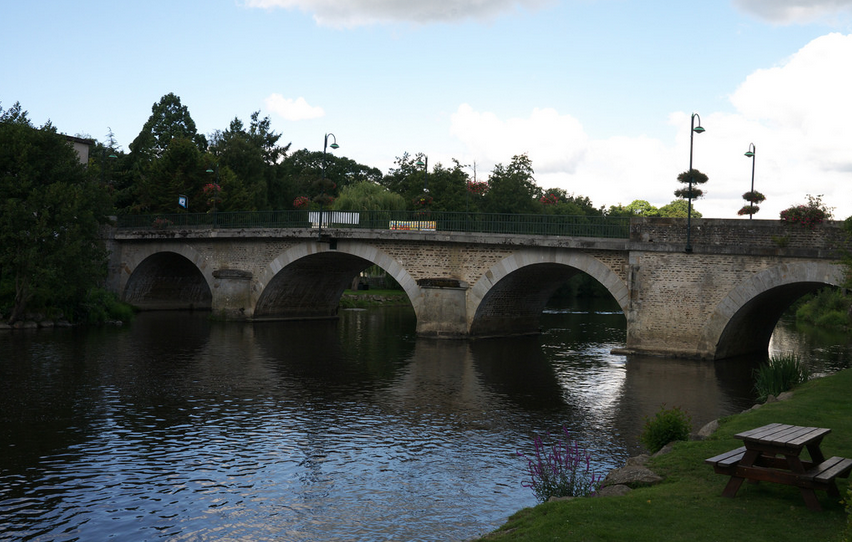
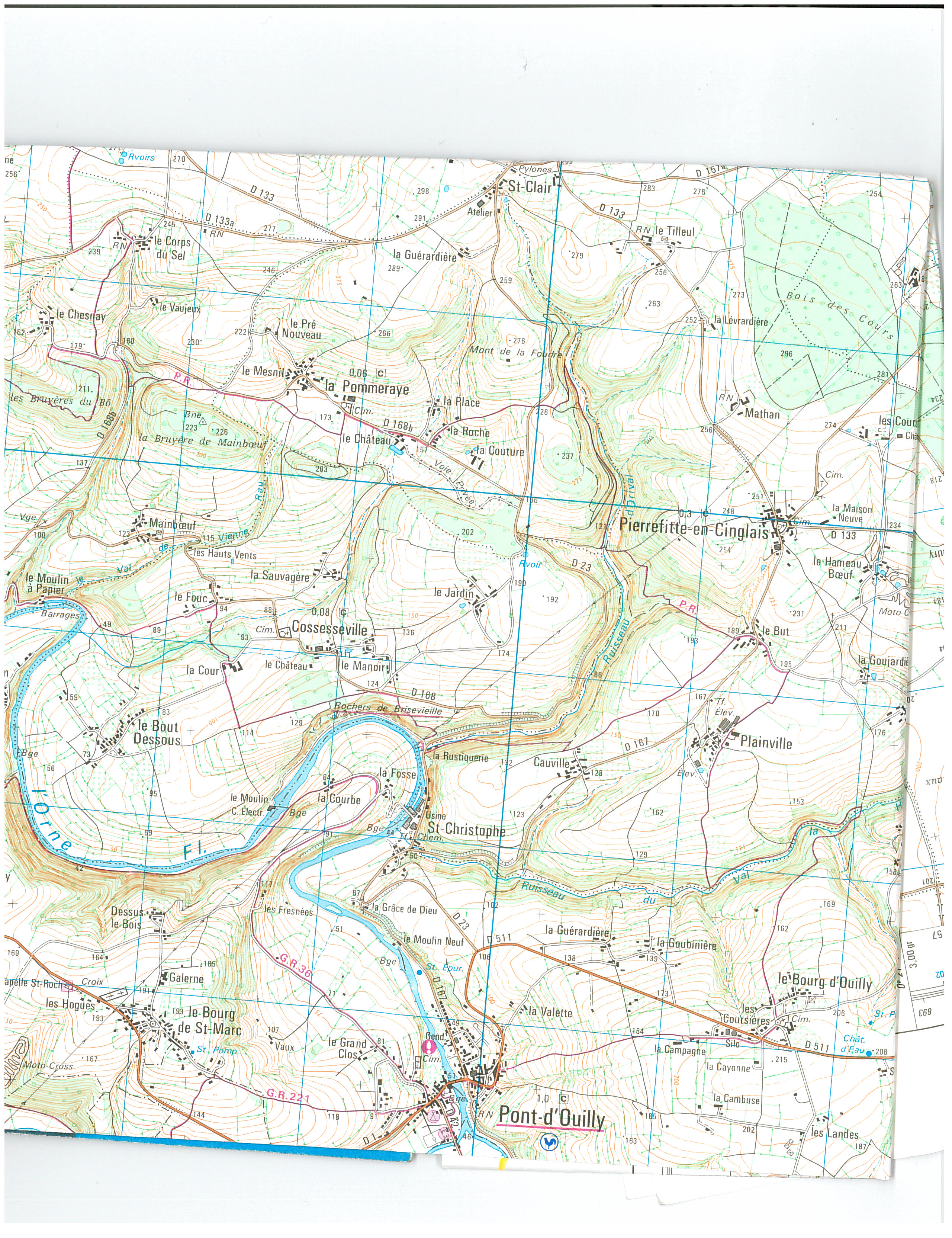
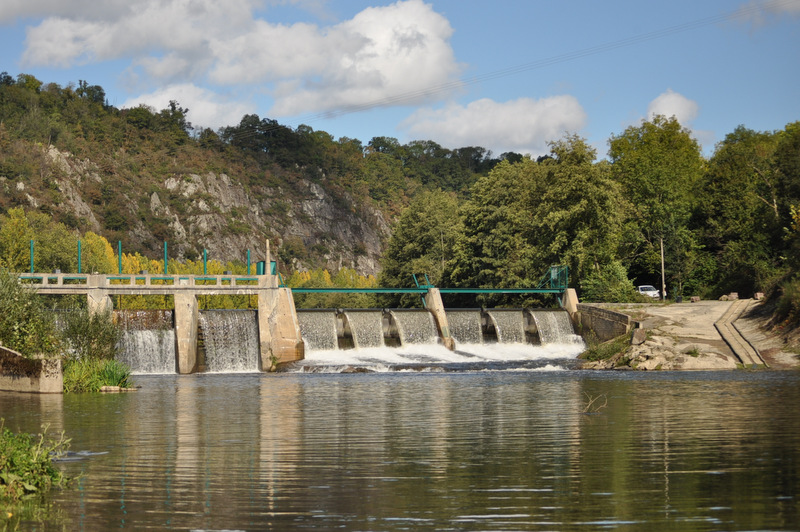
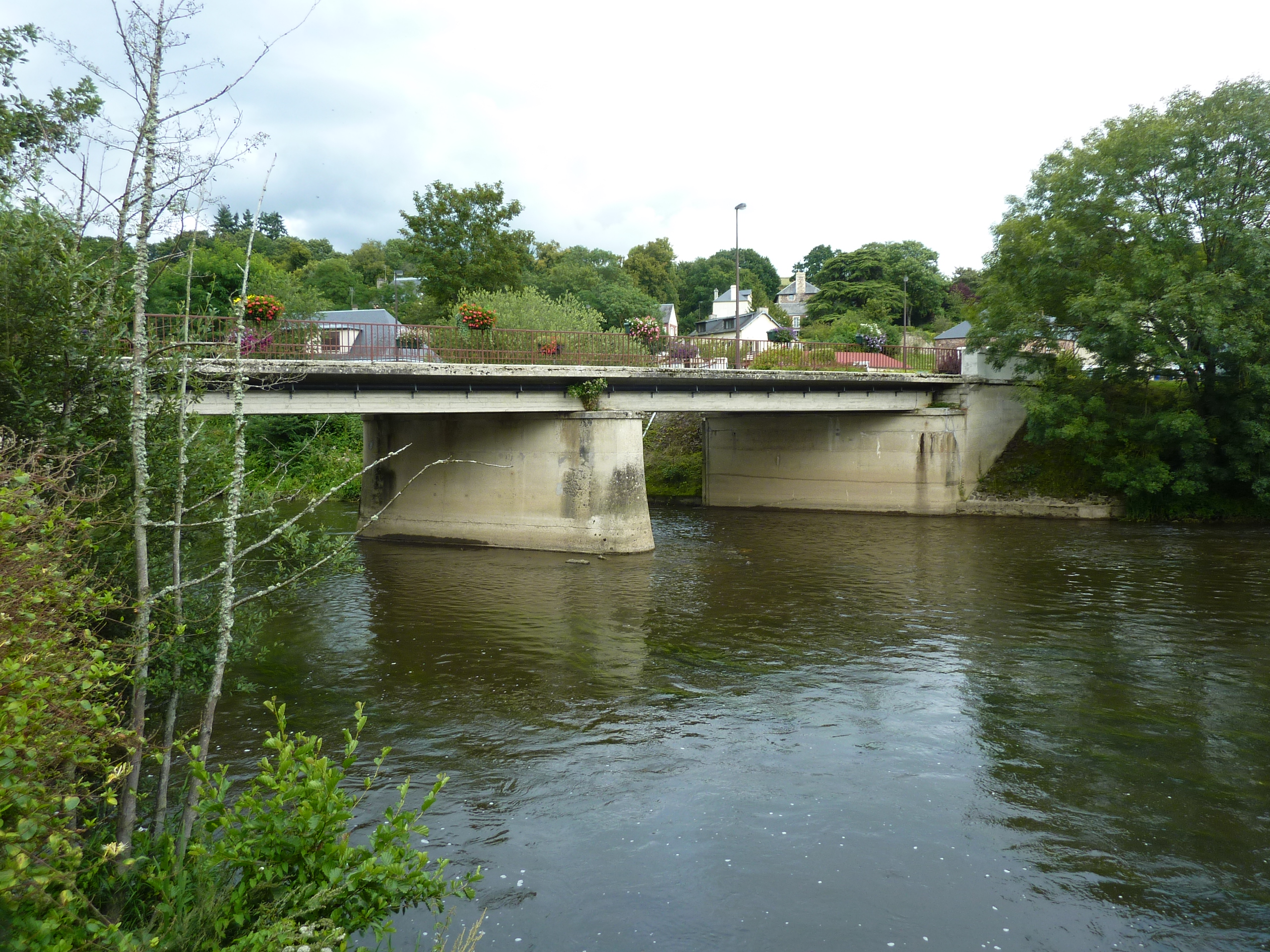
Launch right below the bridge. Alternatively launch in river Noireau, by the station road bridge, and shoot the weir pictured above.
0.75 km – Weir. Le Moulin Neuf. The shootable gap left runs into the bank, covered in rubber sheeting by the hire companies, but a too early break out has a high risk of capsize.
2 km – St Christophe bridge. Disused factory right. The line of the weir is marked on the map, and on the river by small buoys, but the weir itself has been flooded by the barrage downstream.
3km – Le Moulin barrage. Power station right. Not shootable. A log slide eases the portage left.
5 km – Broken weir. Minimal drop. Shootable. The footbridge shown on both the map and Google Earth a few hundred yards downstream, had disappeared in August 2014.
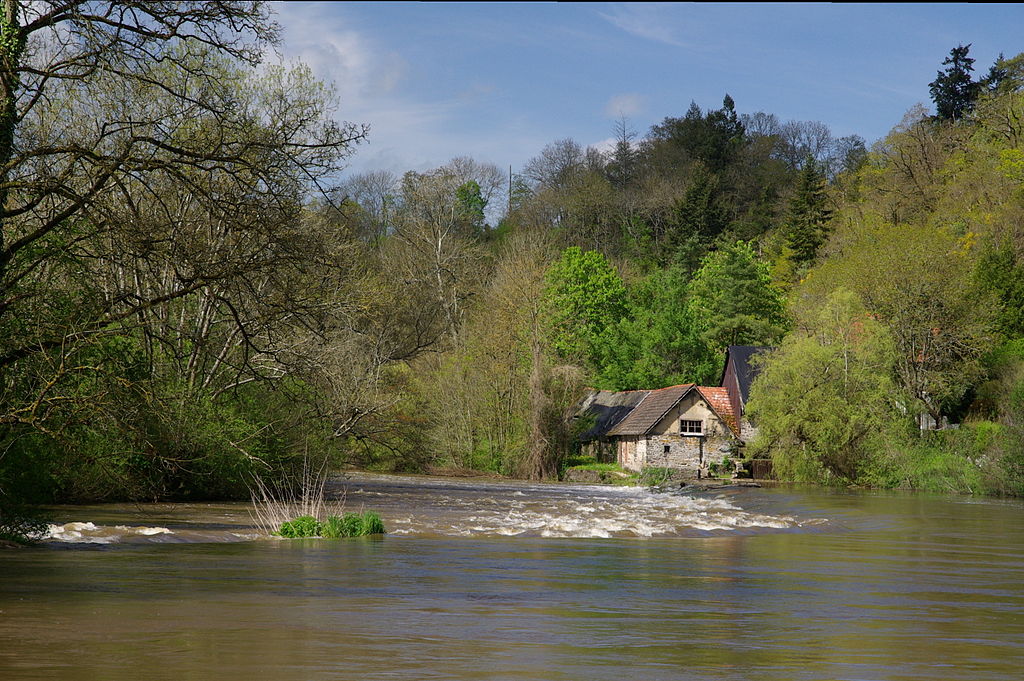
6 km – Le Moulin à papier right. Weir. Glissage left marked by buoys. The drop is about a metre and steep. Lots of hire canoe capsizes. We got swamped. The portage left is easy. The picture below is at moderately high water levels.

7.5 km – Barrage Le Bo. Despite an alarming sign on the right bank this is now just a broken weir with minimal drop.
8.5 km – Weir. La Bataille. The large gap left carries all the water at normal levels. Minimal drop. No problems. Shallows below.
9 km – Pont La Sauvegarde
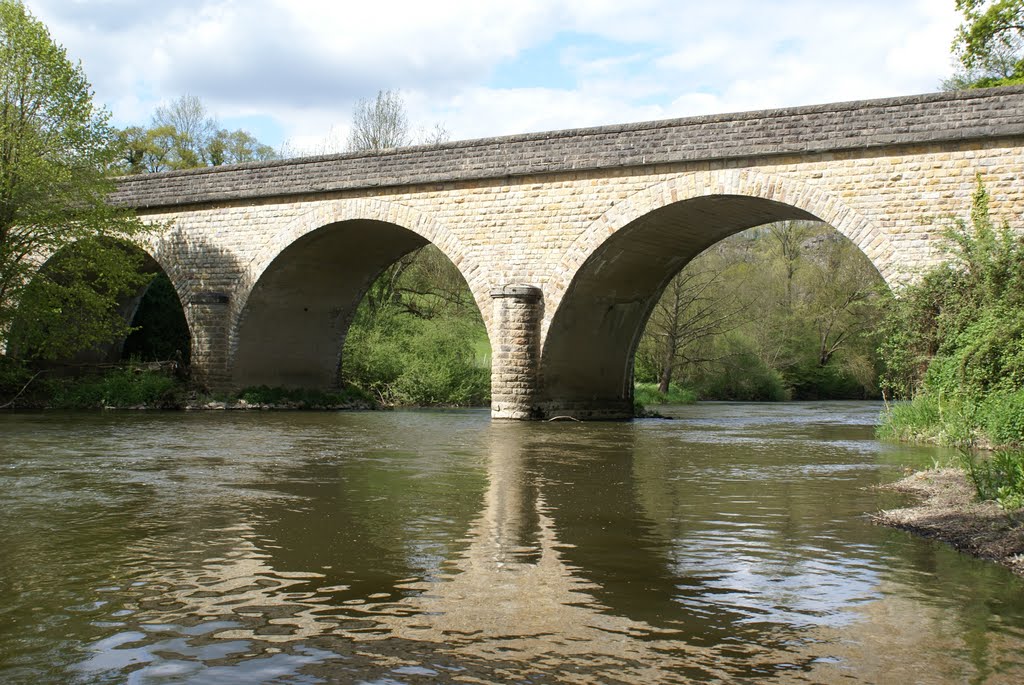
10.5 km – Weir. Two large gaps left. Minimal drop. Shallows below. Access left between weir and viaduct.
Clecy railway viaduct.
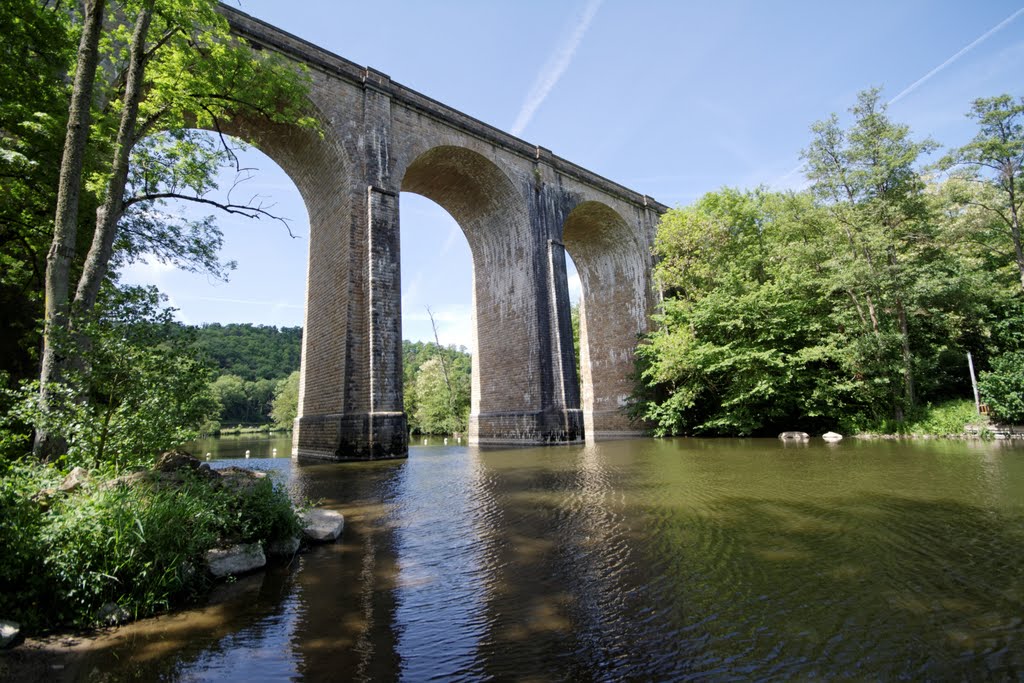
11 km – Clecy left. Tour companies, rock climbing, abseiling, coffee and ice cream, bars and restaurants. Camping right.
Weir. Tour boats shoot between the white buoys, but it’s a steep drop. I didn’t fancy it in my Canadian. Portage left.
11.5 km – Clecy road bridge. Toll house left. Excellent access just above the bridge on the right.

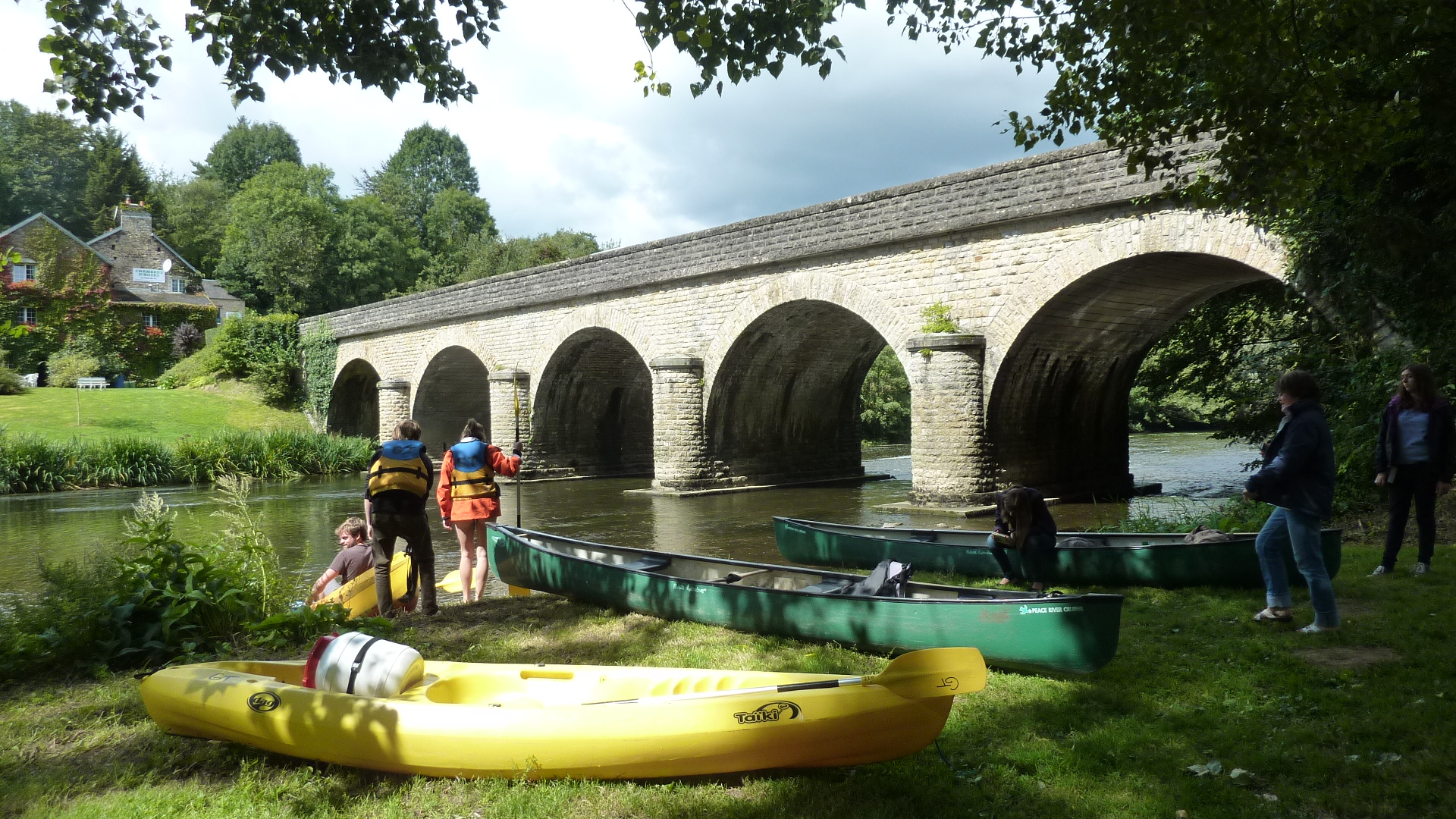
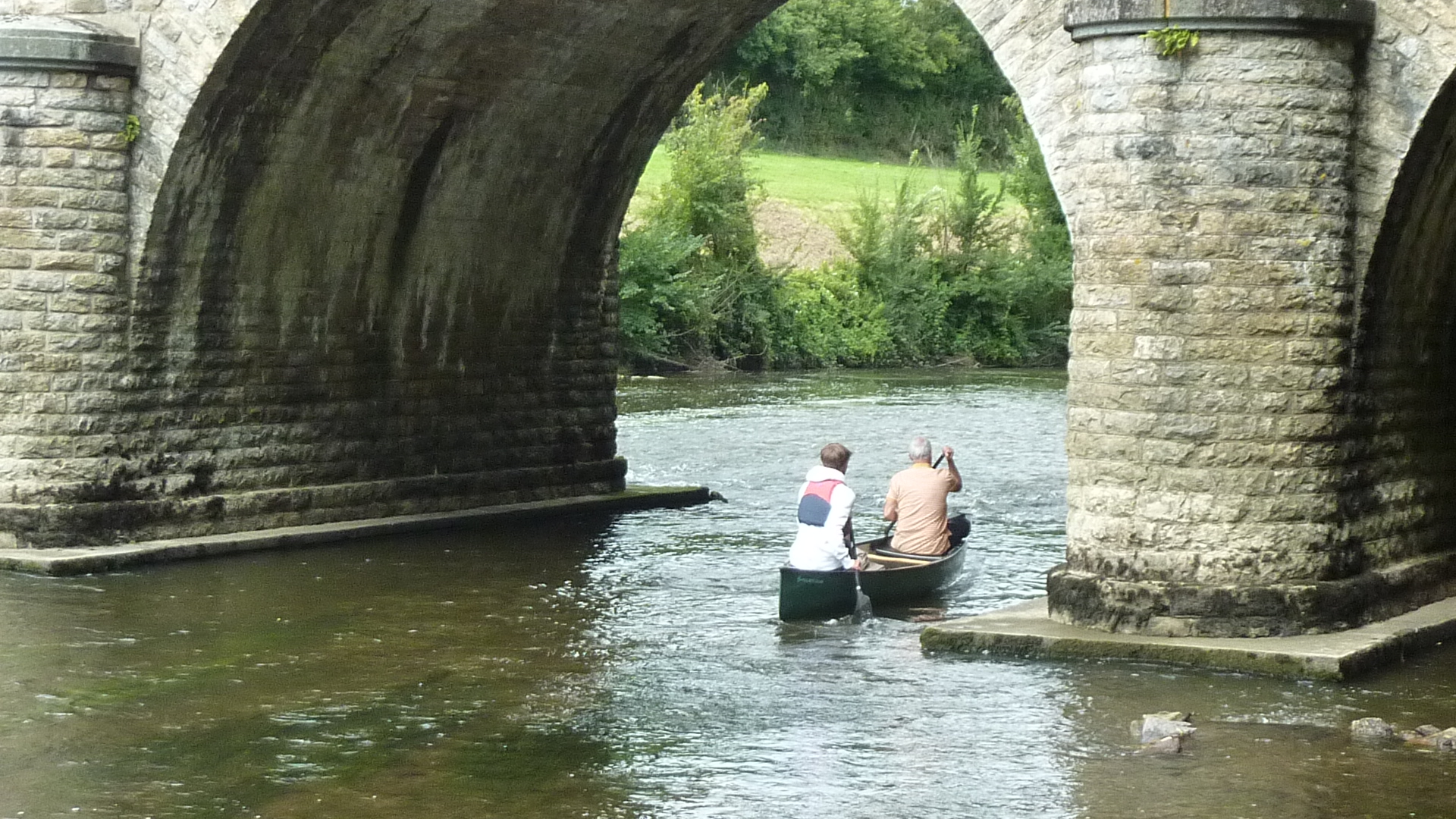
12.5 km – island. Shallows.
13 km – Cantepie bridge. Shallows and small rapids above

14.5 km – Les Maison Rouges left. Broken weir. Easy shoot left
15.5 km – D562 bridge
16 km – Island. Minor rapids. Pass left. Factory right. Until recently there was a large dam here. Click here for the story of its removal (in French).
18.5 km – Weir. Le Moulin du Pont left. Quite a big drop, but the slope on the angled glissade is shallow. Shootable for open canoes. The mill left is now a private residence; no chance of a portage through that garden.
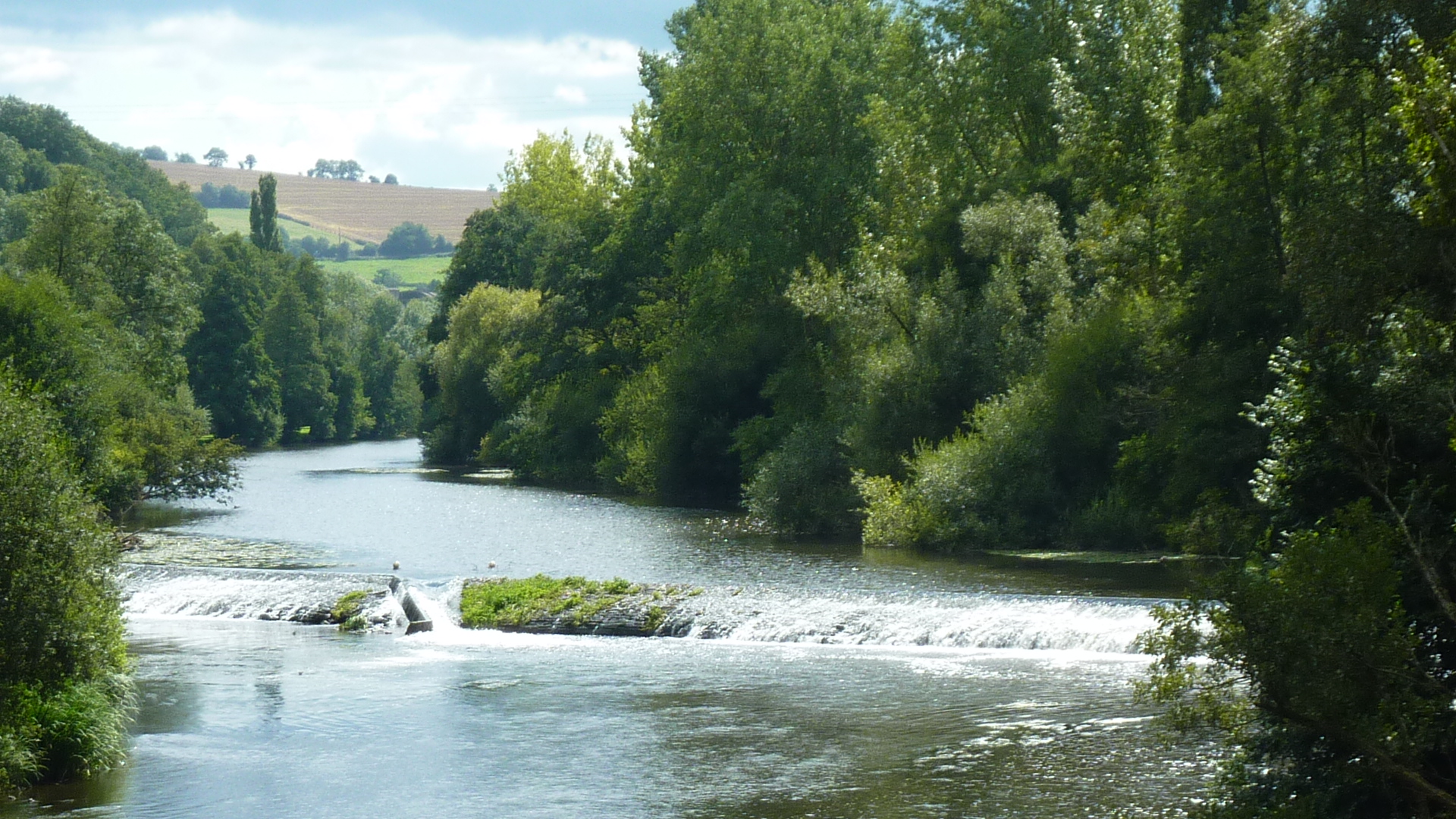
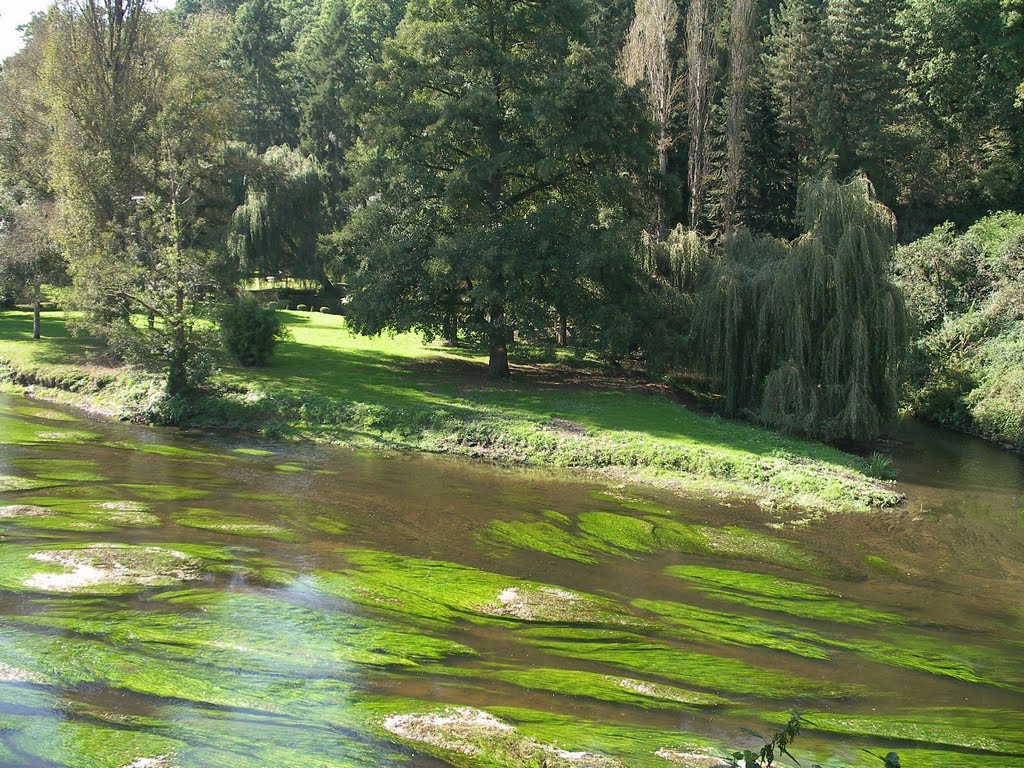
19 km – Pont de la Mousse
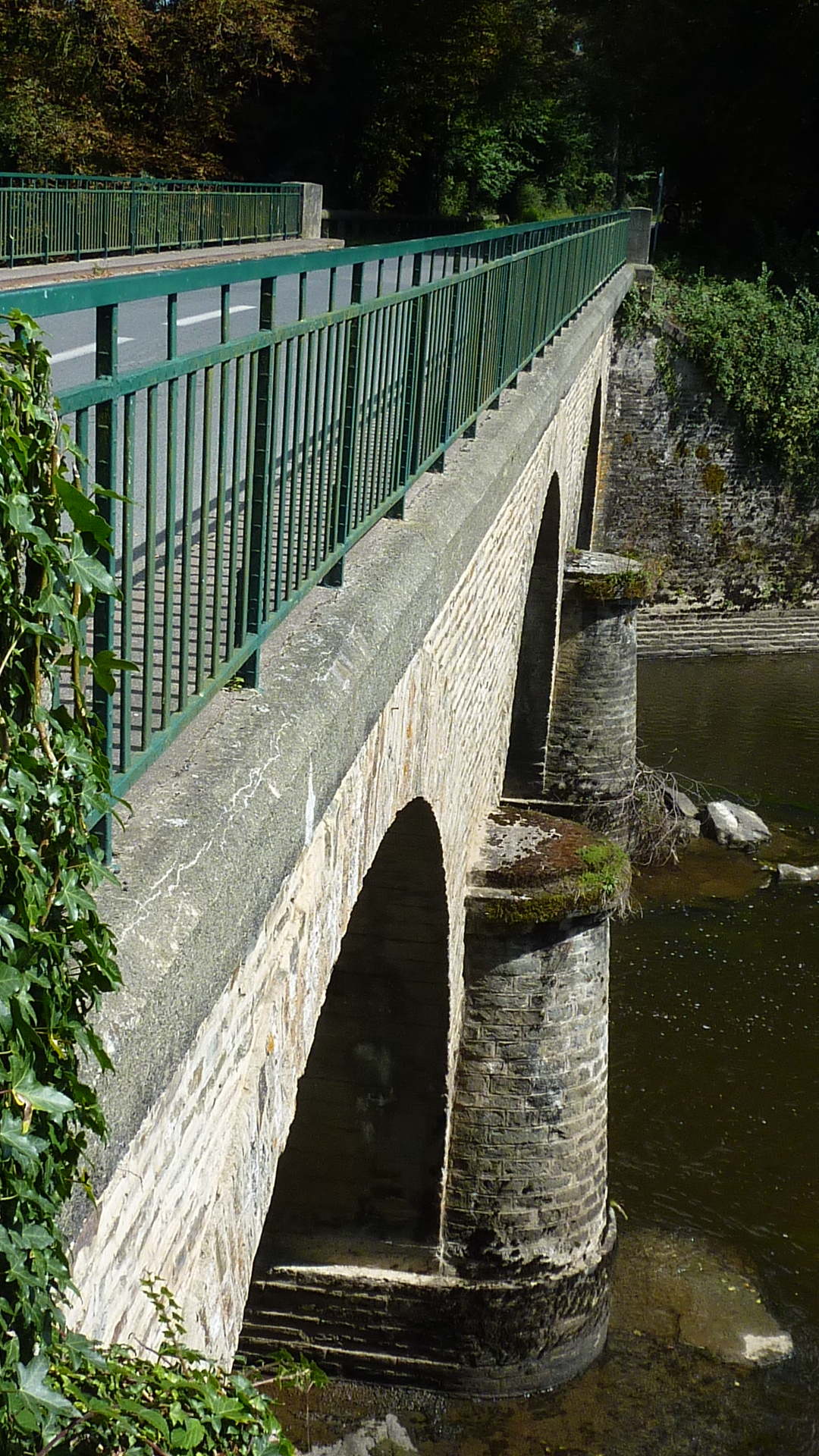
19.5 km – Railway bridge. Shallows below.
21 km – Barrage Les Rivieres. Decent drop but the high-sided concrete shoot in the middle is gently sloping. OK for open canoes.
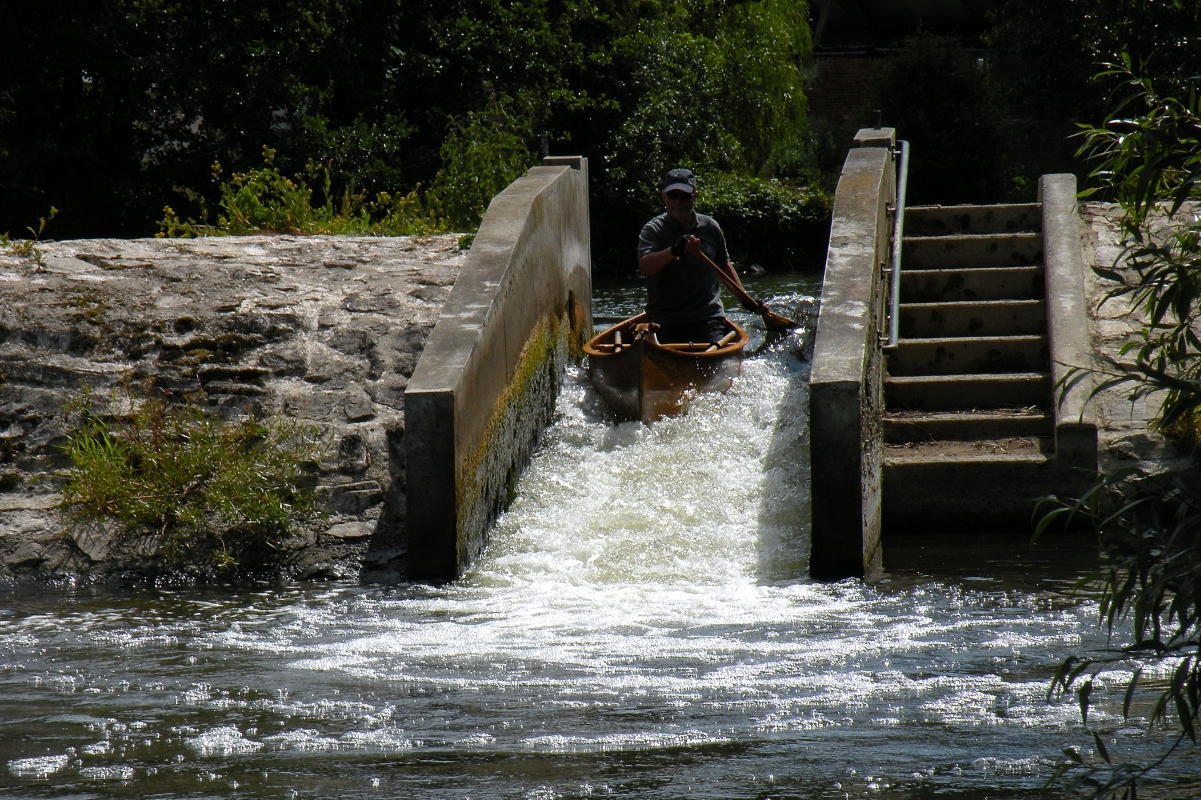
22 km – Broken weir. Minimal drop. Easy shoot left or right.
23 km – Railway bridge
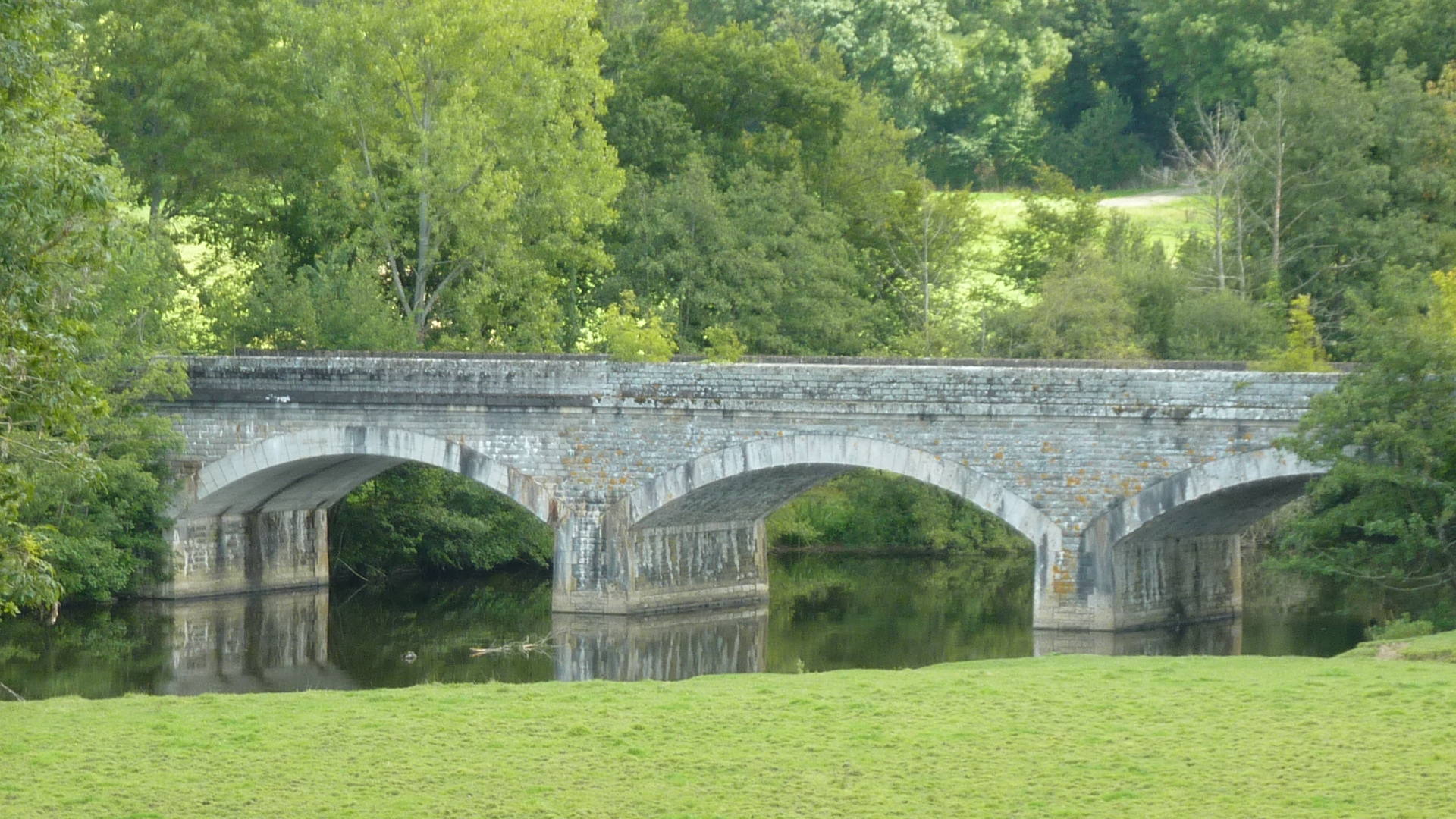
24 km – Camping left. Thury Harcourt canoe club right. Land left or right above the weir. We stopped here. The weir looked to be too steep to shoot safely in an open canoe.
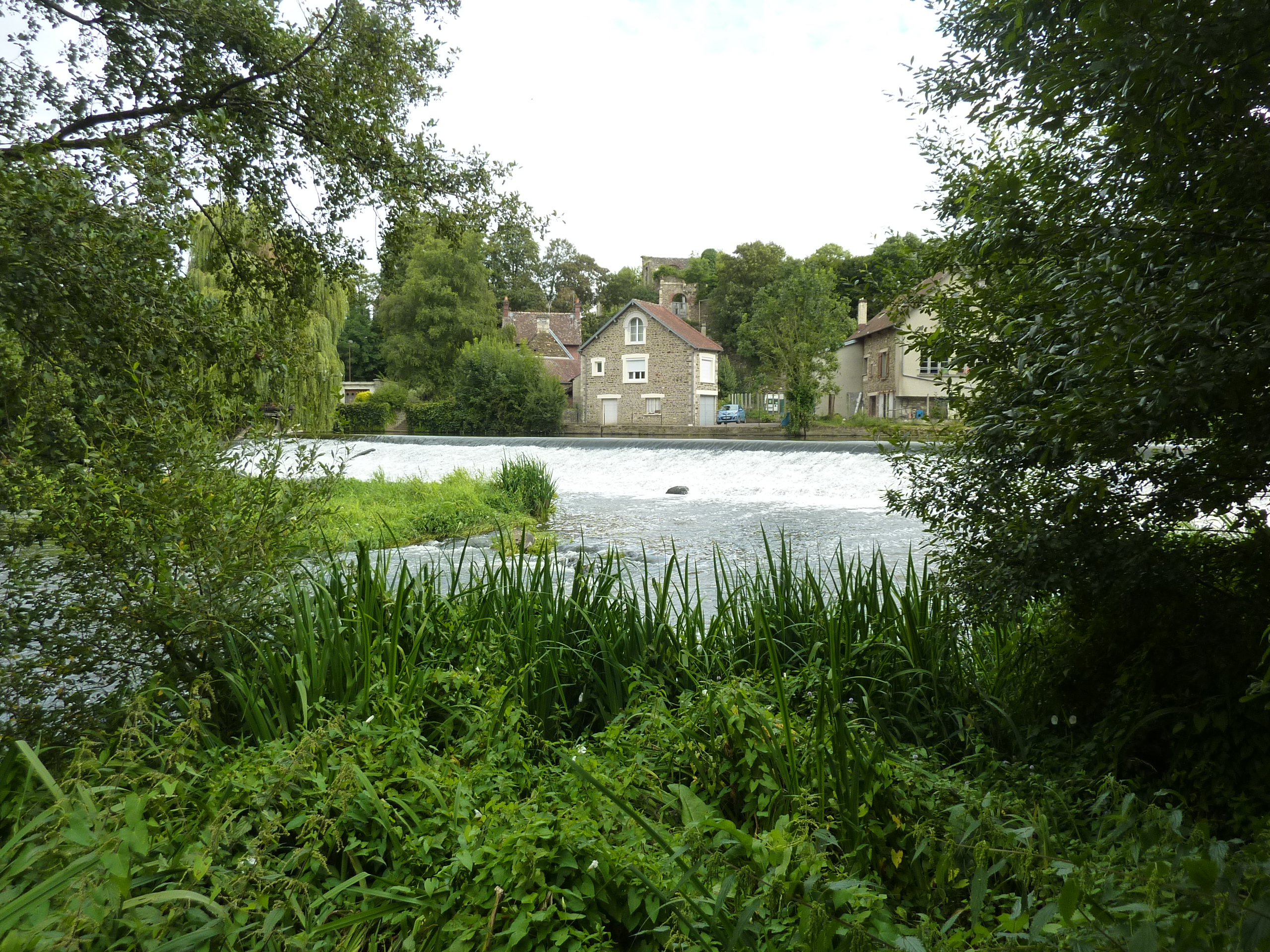
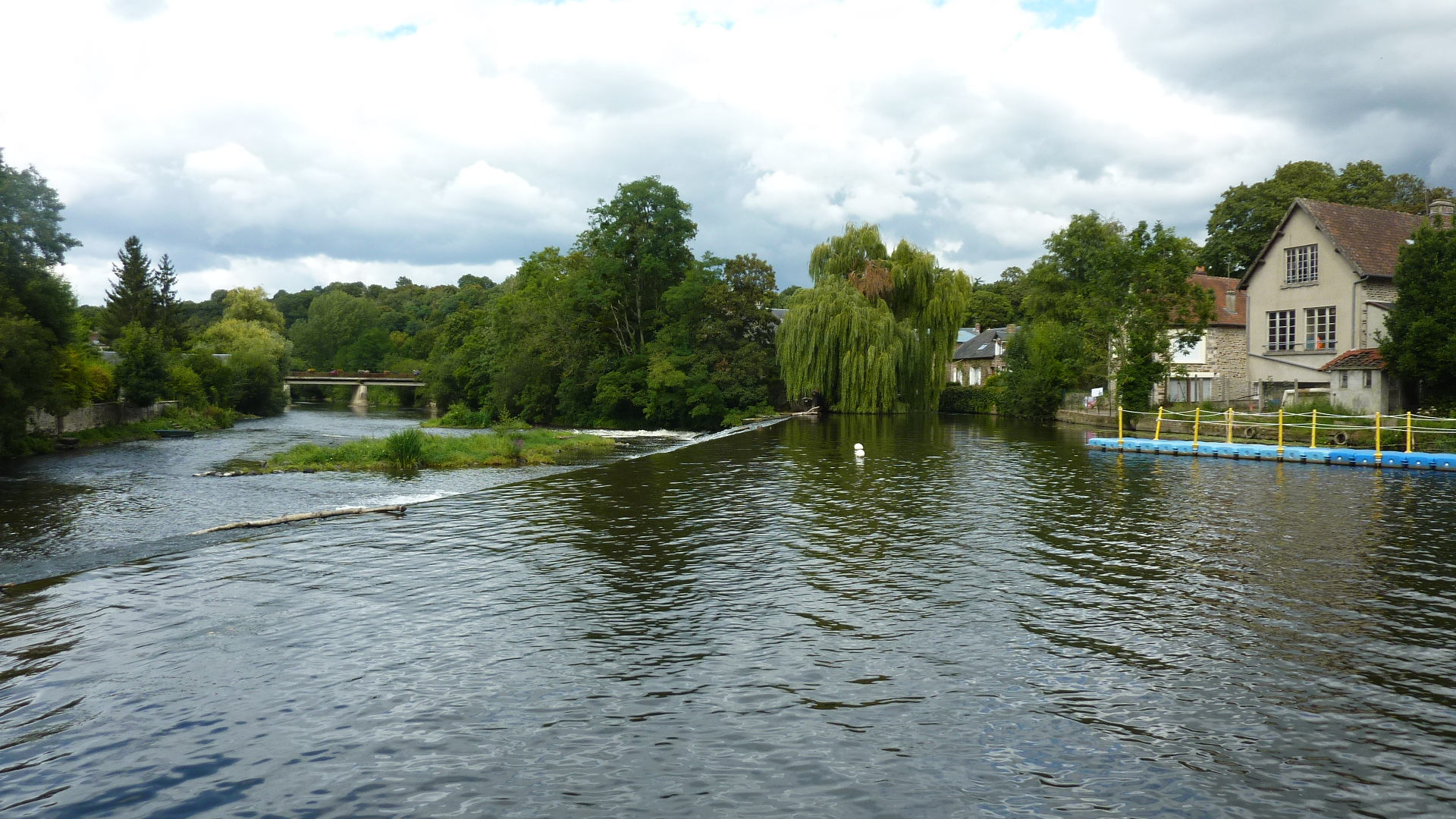
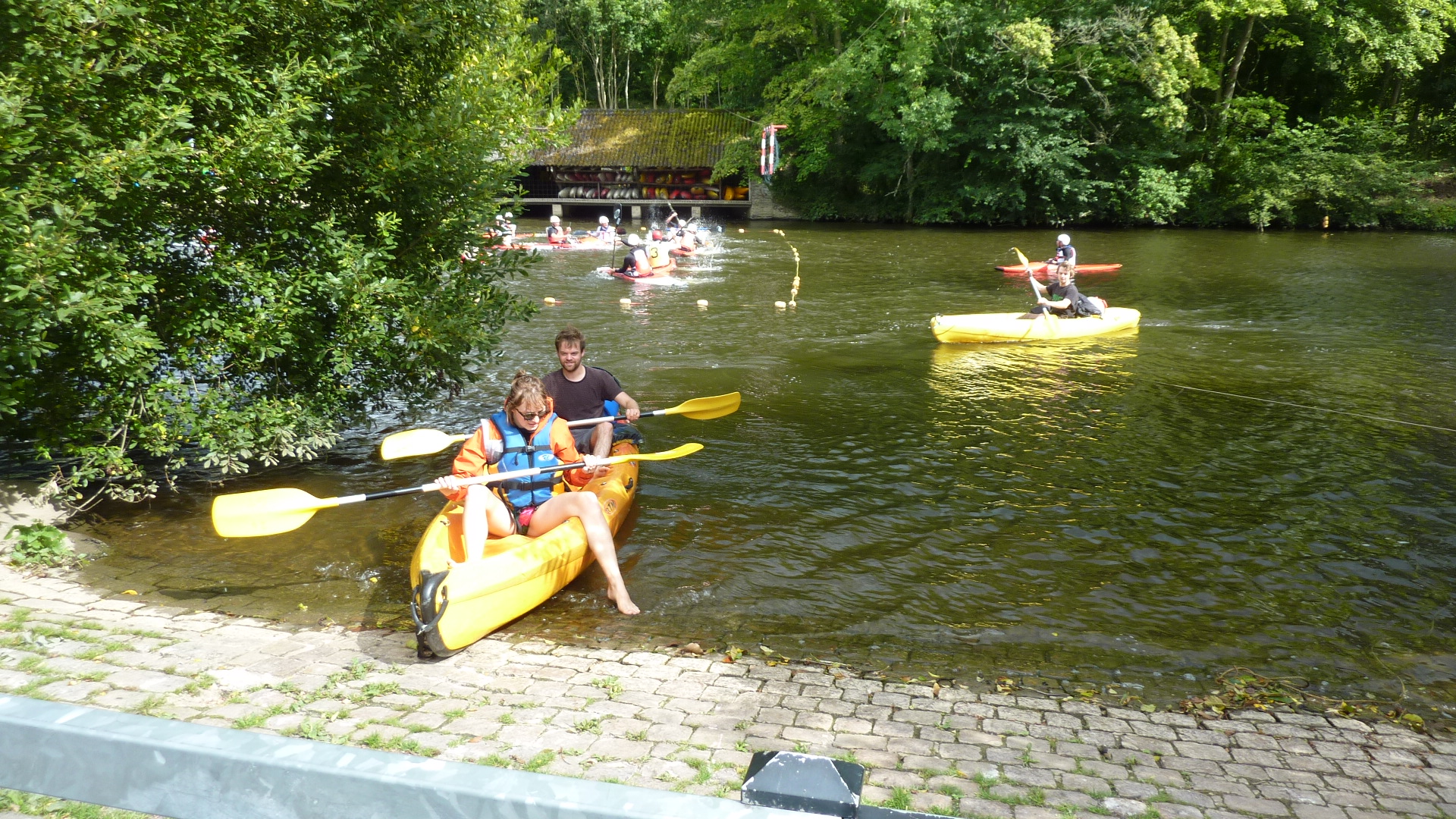
24.5 km – Thury Harcourt bridge
Jim Thornton. August 2014
Birth Trauma
Immediately after the event* best try to forget it and enjoy the baby
*First four words added 1 October 2014
Despite modern pain relief and liberal Caesareans, traumatic births still happen. Delivery sometimes has to be rushed, forceps don’t always go as planned, epidurals may fail, or the baby’s shoulders get stuck. Even births which appear normal to the midwife, may be perceived as traumatic by the mother.
Such women should be treated sympathetically, but should we do anything more? Should we talk about what happened, or offer extra counselling? Many people think so. But might talking do harm – perhaps by encouraging rumination and bad memories?
We shouldn’t just assume that talking/counselling does good. We should compare outcomes among women offered extra counselling and those who were not. The best such evidence comes from randomised trials and from systematic reviews of such trials. What does it say?
There does not seem to be a Cochrane review of the effect of counselling/debriefing after traumatic birth. But there have been other systematic reviews. One (click here) found 8 trials, six showed no effect, one possible harm and one possible benefit.
Another more recent evidence-based review (click here) found “midwife-led debriefing after an operative birth was ineffective in reducing maternal morbidity and the possibility of contributing to emotional health problems could not be excluded”. Or to put it another way, it doesn’t do good and might do harm.
Outside pregnancy the many trials of additional psychological support/therapy after other types of trauma, have been collected into two Cochrane reviews
The first (click here) showed no benefit from brief psychological support (BPS). If anything there was a non-significant trend for more post traumatic stress disorder (PTSD) after the BPS.
The second (click here) showed no benefit from multiple sessions of early psychological interventions. The authors concluded that “multiple session interventions, like single session interventions, may have an adverse effect on some individuals”.
All the above refers to preventive counselling/debriefing soon after the event. Psychological treatment for the minority who are unlucky enough to develop long-standing distress is a quite separate matter.
But this research is the reason that in the short term, parents who have experienced traumatic birth should be encouraged to get on with their lives and avoid special counselling. For most of them putting the birth behind them and enjoying the baby is good therapy. Talking to a counsellor about what happened is as likely to do harm as good.
Jim Thornton
Japanese Maple
By Clive James
Clive James, essayist, commentator and poet, is terminally ill with leukaemia, but he’s retained his faculties. This was in yesterday’s New Yorker.
Your death, near now, is of an easy sort.
So slow a fading out brings no real pain.
Breath growing short
Is just uncomfortable. You feel the drain
Of energy, but thought and sight remain:
Enhanced, in fact. When did you ever see
So much sweet beauty as when fine rain falls
On that small tree
And saturates your brick back garden walls,
So many Amber Rooms and mirror halls?
Ever more lavish as the dusk descends
This glistening illuminates the air.
It never ends.
Whenever the rain comes it will be there,
Beyond my time, but now I take my share.
My daughter’s choice, the maple tree is new.
Come autumn and its leaves will turn to flame.
What I must do
Is live to see that. That will end the game
For me, though life continues all the same:
Filling the double doors to bathe my eyes,
A final flood of colors will live on
As my mind dies,
Burned by my vision of a world that shone
So brightly at the last, and then was gone.
Clive James
Why is Miriam Stoppard pushing HT*?
Undeclared conflict?

The columnist and childcare expert hasn’t a bad word to say about post-menopausal hormone therapy (HT), which she calls hormone “replacement” therapy (HRT).
On her website (click here), advising about menopause management: “The single most effective tool available is HRT. […] [It] is more than 90 percent effective. If you feel your doctor isn’t being very helpful or sympathetic, or won’t let you try hormone replacement therapy, seek an opinion from another doctor.”
Referring to osteoporosis she writes: “Consider HRT once you are menopausal. Taking oestrogen in combination with progestogen for 10-13 days a month seems to optimise bone health and prevent fractures”. She fails to mention any risks, or that HT is only recommended for osteoporosis prevention in women at high risk who cannot tolerate alternatives.
In 2012 in an article entitled “Why HRT is safe to combat menopause despite past scare stories” she linked the increased risk of cardiovascular disease identified in the WHI trials with the MMR/autism scare, and claimed without reference: “it’s been shown that HRT cuts the risk of heart disease in younger women”. (Click here).
In 2011 (click here) in response to a question from a patient whose GP was reluctant to prescribe HT because of a strong family history of breast cancer (grandmother, aunt and cousin), she wrote: “HRT is better than any other menopausal remedy by a long stretch”, suggested getting a second opinion, and ended: “I’m hopeful your gynaecologist will find a way to give you HRT”.
This is biased advice. Since the Women’s Health Initiative trials confirmed that HRT increases the risk of breast cancer, heart disease and strokes, all governments have advised that it should limited to treating symptoms only, and used in the lowest dose, for the shortest time possible, and never for health promotion. The idea that it might reduce heart disease when started soon after the menopause is not born out by independent analysis of all the trial evidence, e.g. the latest Cochrane review here. It remains a fringe obsession of a few “experts” with ties to the HT industry. Dr Stoppard is entitled to her views but she also has a conflict of interest.
According to Debrett’s People of Today (click here) she worked for Syntex Pharmaceuticals Ltd between 1968 and 1981. She was associate medical director 1968-71, deputy medical director 1971-74 & 76 , and medical director 1974-76, & 1977-81. In 1991 she became a director of the Syntex Corporation and remains so to this day. Syntex manufactures and sells HT.
I wonder why she forgets to mention this on her website, or in any of her HT articles.
Jim Thornton
*Hormone replacement therapy (HRT) changed to hormone therapy (HT) Jan 2016
KEEPS trial results
Early postmenopausal HT* does not prevent vascular deterioration
There is good evidence that post-menopausal hormone therapy (HT) increases heart attacks and strokes. However, most of the patients in the randomised trials that provided that evidence started HT or placebo 10 years or so after the menopause, and some had pre-existing heart disease. Perhaps HT started earlier in healthy women is preventive. This “timing hypothesis” is popular with HT manufacturers.
The Kronos Early Estrogen Prevention Study (KEEPS) tested the timing hypothesis by studying healthy women within three years of the menopause. They were divided into three groups and treated for 48 months as follows:
1) oral conjugated equine estrogens (o-CEE), 0.45 mg/day, plus progesterone 200 mg for 12 days/month.
2) transdermal 17β-estradiol (t-E2), 50 mcg/day, plus progesterone 200 mg for 12 days/month.
3) placebo.
The primary endpoint was change in carotid artery intima-media thickness (CIMT), a measure of the vascular damage which precedes heart attacks and strokes. The trial was randomised, double blind, registered here before starting, and follow-up of the 727 participants was completed two years ago – I grumbled about the delay in publication here. The results have just been published in the Annals of Internal Medicine here, or Keeps trial report.
HT doesn’t protect the arteries. Here is the change in CIMT over time in the three groups. Larger change means more artery wall thickening, a sign of damage. Arteries in all three groups deteriorated over time but, although the deterioration was slightly greater in the two HT groups, the difference was not statistically significant.

The trial was too small to say much about substantive health outcomes – one woman died of an unspecified pelvic maligancy in the o-CEE group, and there was one non-fatal heart attack in the t-E2 group. There were no deaths or heart attacks in controls, and no strokes in the whole trial.
It’s a nice paper. It shows the power of good trial design – double blind, registered, sample size achieved, primary endpoint pre-defined and analysis by intention to treat.
The authors, mostly supporters of the timing hypothesis, were disappointed, but the many women who will avoid taking HT in the vain hope of preventing heart disease should not be.
The best advice remains – if you must take HT, take it for symptoms only, in the lowest dose and for the shortest time possible.
Jim Thornton
*Hormone replacement therapy (HRT) changed to hormone therapy (HT) Jan 2016
Private bypass
A431 toll road
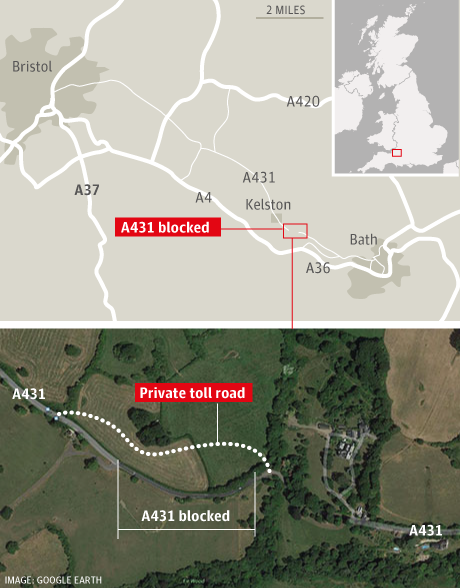
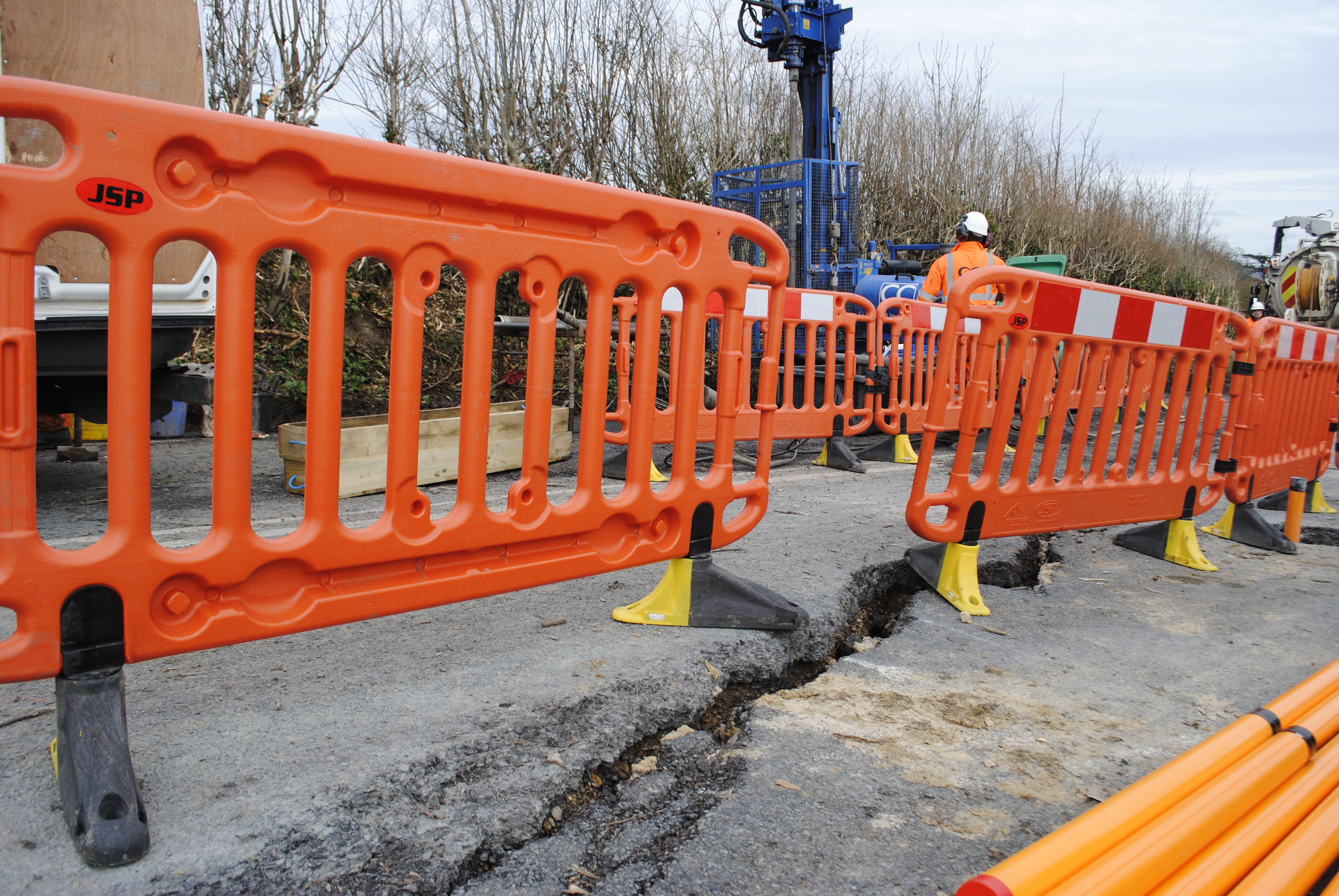
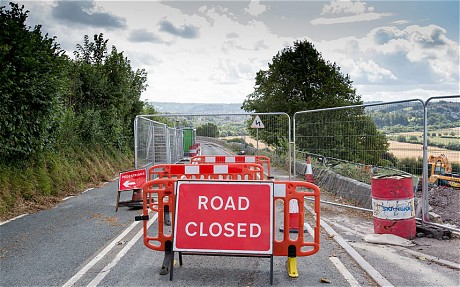
In February 2014 a landslip on the A431 between Bristol and Bath opened cracks in the road and forced a 14 mile diversion. It was tricky to repair; the council estimated it would be closed till the end of the year, and that a temporary bypass would cost £1.6M and take 16 weeks to build.
So in August local businessman, Mike Watts, took matters into his own hands and built a diversion a few hundred yards up the hillside. It took three men ten days, and £150,000; plus a further £1,000 per day to operate. So long as the council don’t speed up, £2 per car should pay for it.
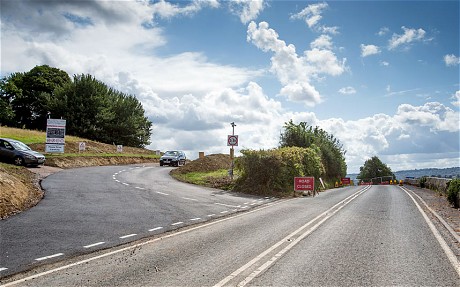
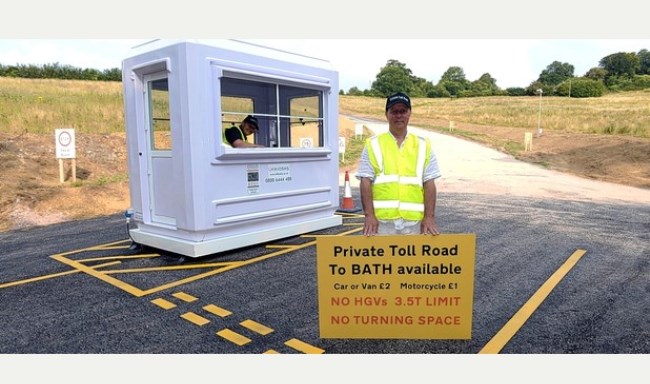
It’s the first new toll road in Britain since the M6 bypass, and the first privately built one for at least a hundred years.
We need more. Let’s replace the “free” tarmac we currently overuse with correctly priced alternatives. Imagine the pollution that could prevent.
Jim Thornton
Trial registration TIPPS
Heparin prophylaxis in pregnancy
Doesn’t work
The TIPPS trial, published online in The Lancet this week (click here), shows that among high risk women, heparin thrombo-prophylaxis does not reduce adverse pregnancy outcomes, and increases rates of bleeding. The researchers did a great job, and their findings will protect many women from these toxic drugs. In passing they also reminded us of the importance of trial registration.
Did unregistered trials get it wrong?

Figure 3 (above) shows the results of all seven heparin thrombo-prophylaxis trials to date. The top four, Rey, Gris 2010, Gris 2011, and Mello, were unregistered and all showed an implausibly large beneficial effect. The bottom three, Martinelli, De Vries, and Roger, (Roger = TIPPS) were registered in advance so the researchers could not stop early, decide not to publish, or alter their primary outcome, without someone noticing. None showed a benefit.
The TIPPS authors half suggest that the truth lies somewhere between the two groups, namely the “combined (random effects)” relative risk line at the bottom of the figure. I doubt it! More likely the top four trials got their false positive results by repeatedly peeking at their data, selective choice of endpoints or selective publication. The bottom three show the truth.
TIPPS researchers also silently altered sample size
It seems churlish after all that, to question the TIPPS trial methods, but “needs must”. In the published paper the authors claim to have “aimed for a sample size of 284”. Recruitment ran from 28 Feb 2000 to 14 Sept 2012 and the trial was first registered with Clinicaltrials.gov (click here) on 29 May 2009. Between then and 23 April 2013 the Clinicaltrials.gov archives (click here – variable 27) recorded anticipated recruitment of 385 – that’s 101 more than they claimed in the paper! This was altered to 284 on 23 April 2013, and changed again to the actual recruitment number of 292 on 16 May 2013. None of this is mentioned in the published paper. Tut tut!
The TIPPS results were negative, so perhaps this doesn’t matter. Presumably the authors stopped early because they ran out of money, rather than because they had peeked at the data and discovered a nominally significant result. But imagine if TIPPS had been positive. Readers would have assumed that they had cheated.
Jim Thornton
Canoeing the Weser
The third German river
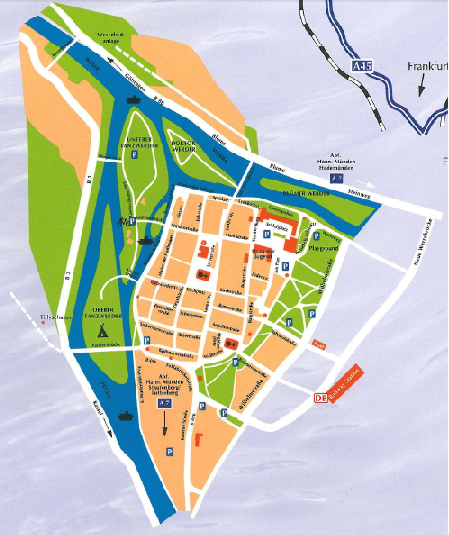
Unlike the Rhine and Elbe, the Weser can be canoed from its origin. It starts not as a tiny stream, high in the hills, but fully formed at the junction of the rivers Werra and Fulda at Hann. Munden. The sea at Bremerhaven is 450km away, but the lower sections, below the junction with the Mittleland canal at Minden, have much heavy shipping – scary.
The section from Hann. Munden to Hameln, the home of the Pied Piper, has no locks, plenty of campsites and perhaps two barges and a few tourist boats a day. It is fast flowing – five easy days paddle – and about a days driving from Dover. I used the Hann. Munden – Cuxhaven Radwander-karte (click here) .
0 km – Launch from the car park on the island at the junction of the Werra and Fulda at Hann. Munden, or from the campsite on the Fulda island 100 yards upstream. http://www.fahrrad-kanu-touren-weser.de/
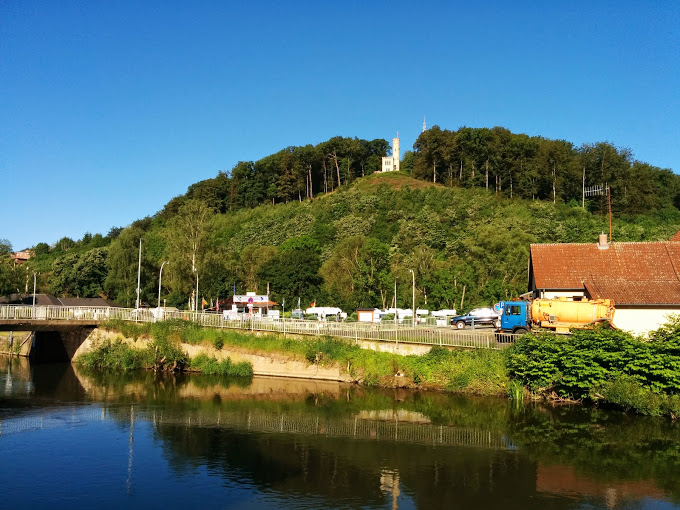
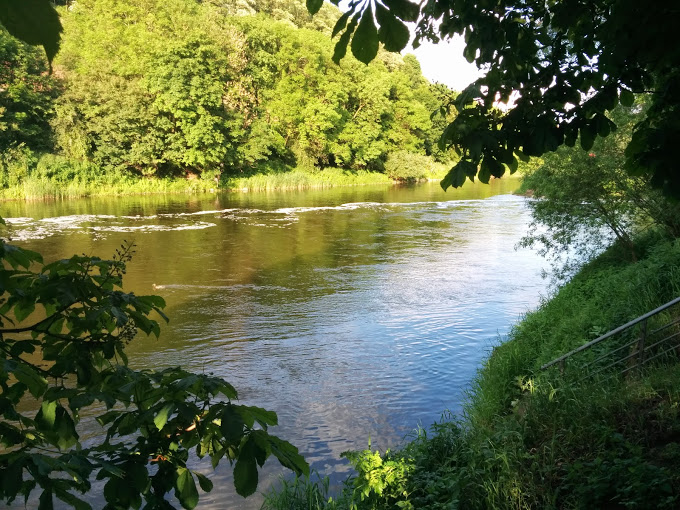
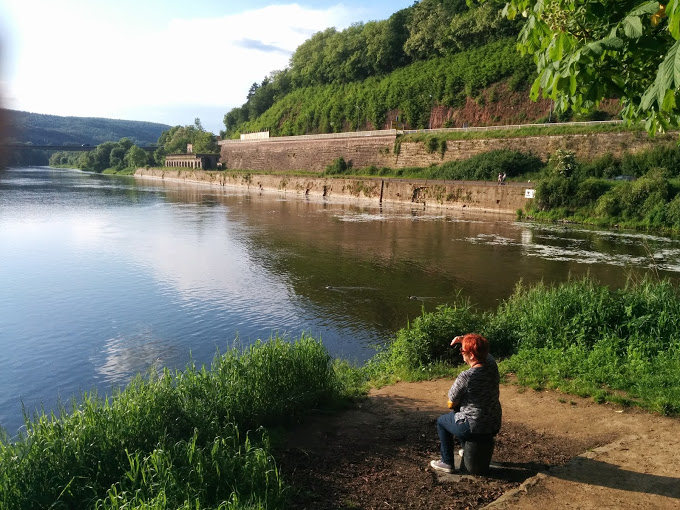
Or launch into the Fulda above the lock and paddle to the right of the island. The weir, with its hydro-electric power station right, has a canoe shoot left.
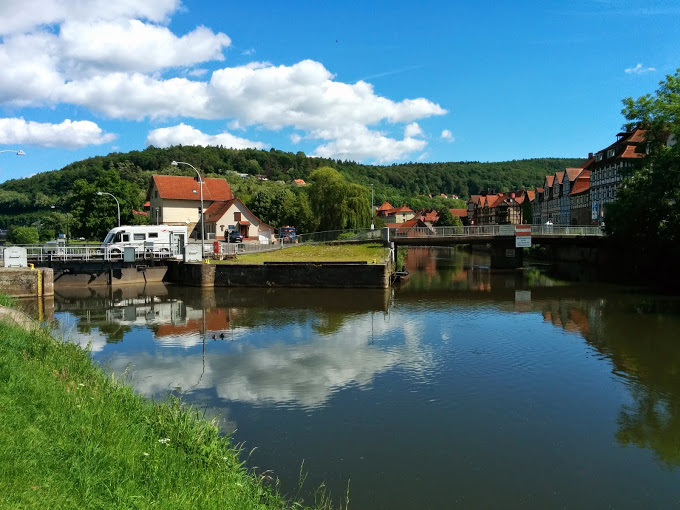
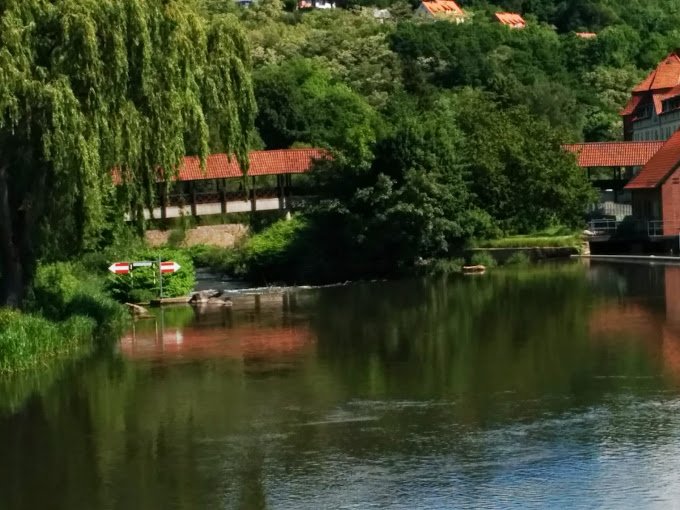
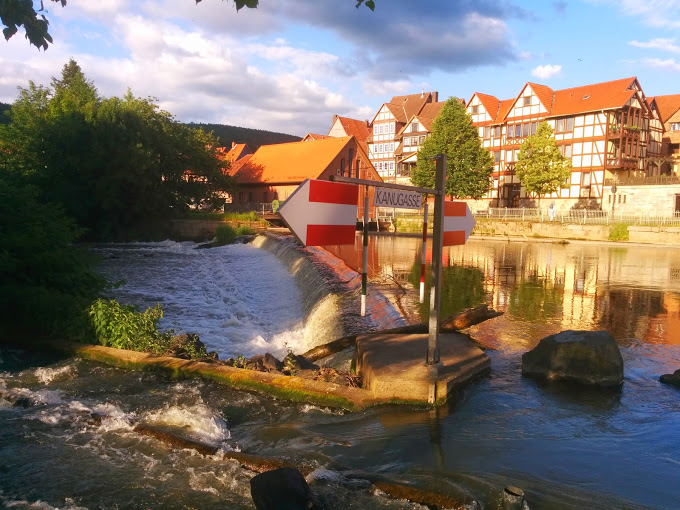

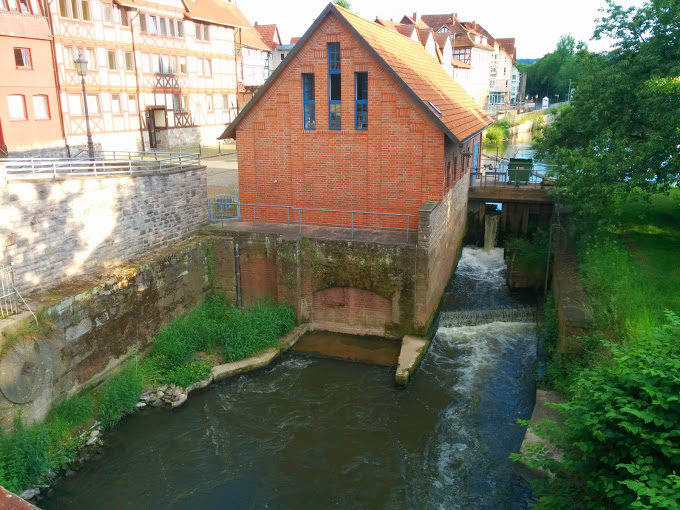
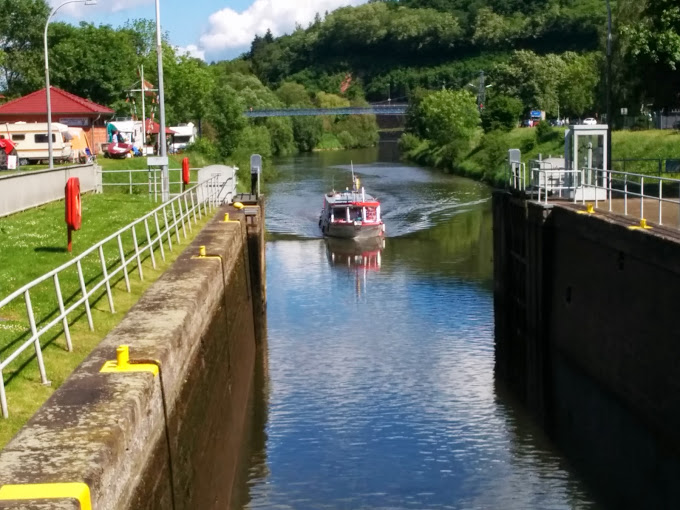
Good landing stage/launch spot just below the last Fulda lock by the campsite.
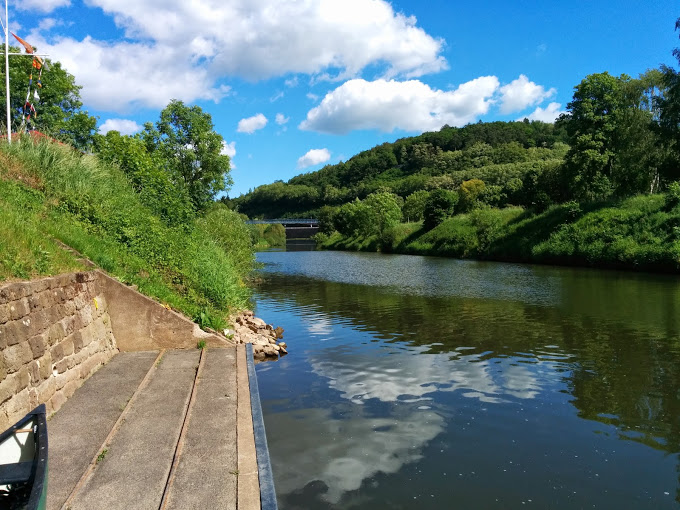
0.5 km – road bridge B3/B80
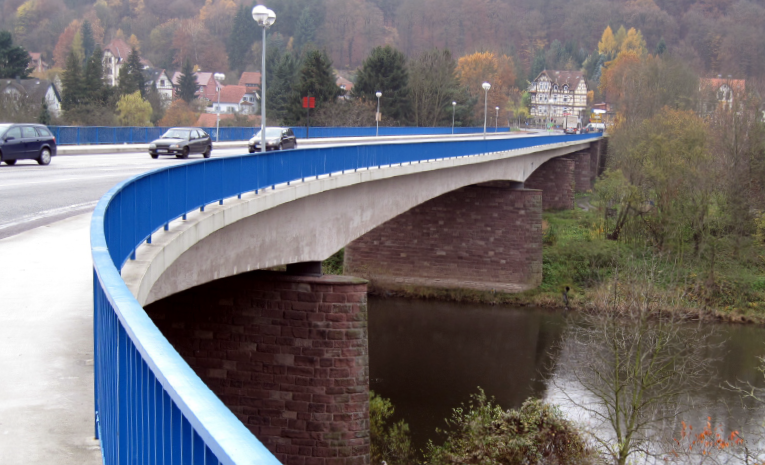
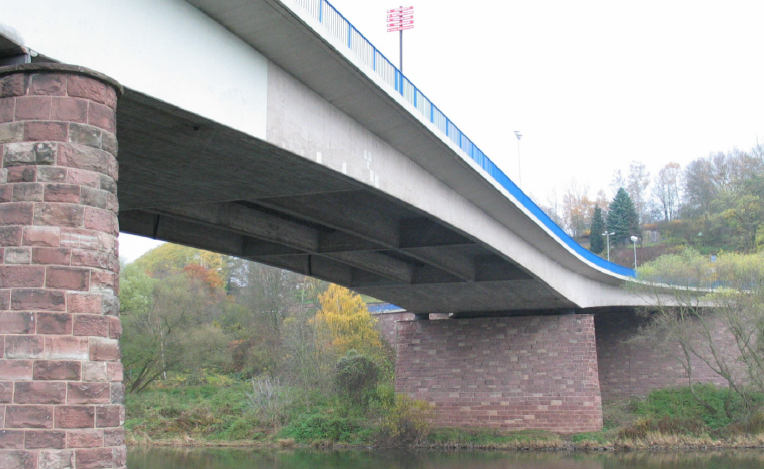
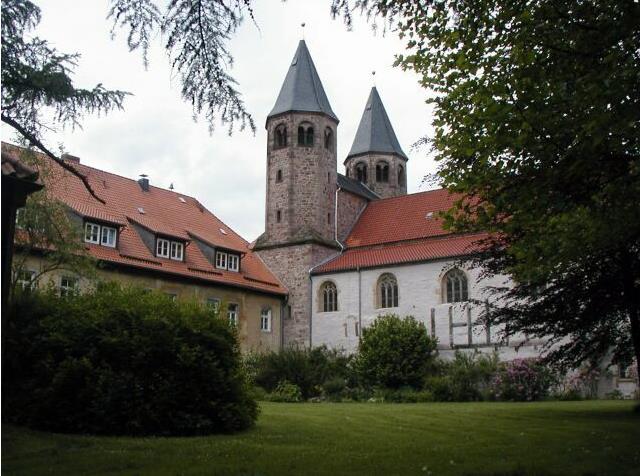
5 km – Hilwartshausen Abbey left
5.5 km – gravel pits right
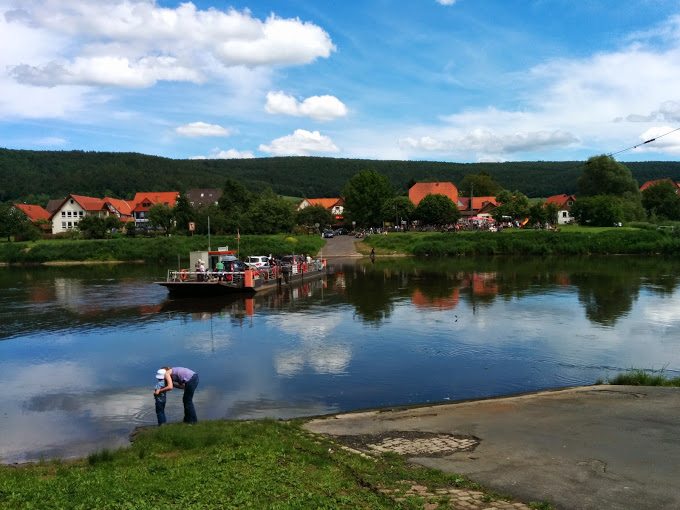
11 km – ferry. Reinhards-hagen left. The small village of Hemeln right is not the home of the Pied Piper. That’s at 133 km.
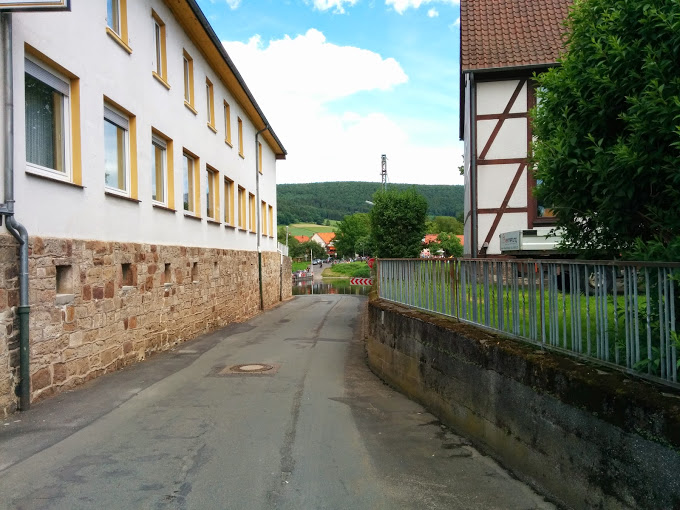
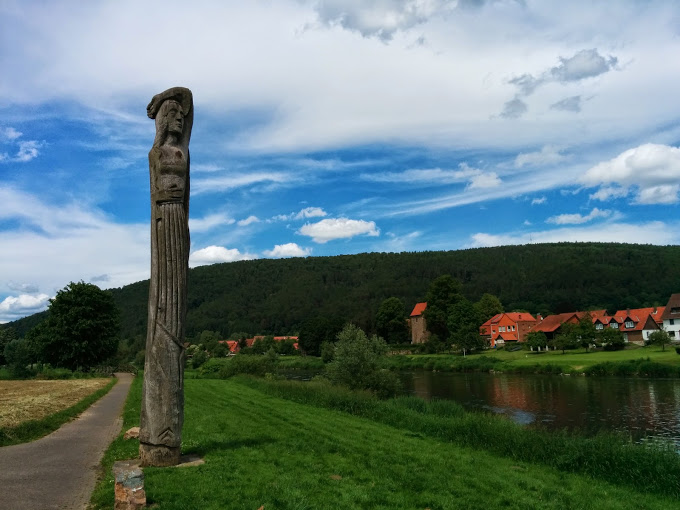
Statue of the legendary giantess Brama on the left bank downstream of the town.
Wesercamping Hemeln http://www.wesercamping.de/ The main site is set back from the river but they allow camping on the bank.
17 Km – Glashutte. Youth campsite right
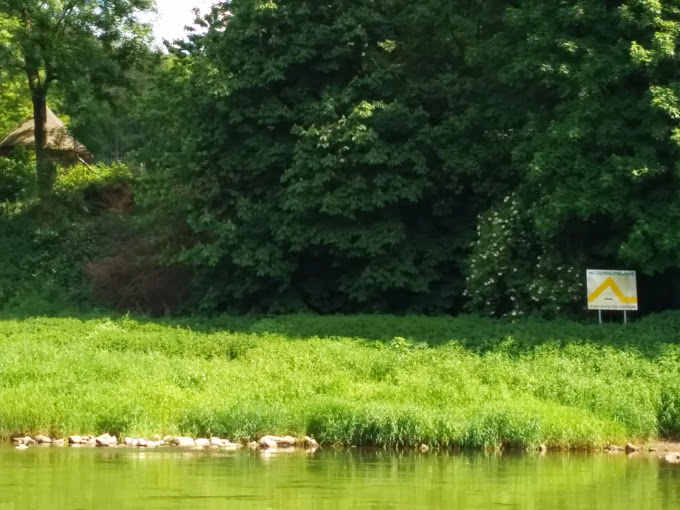
19 Km – River Nieme joins right. Bursfelde Abbey right
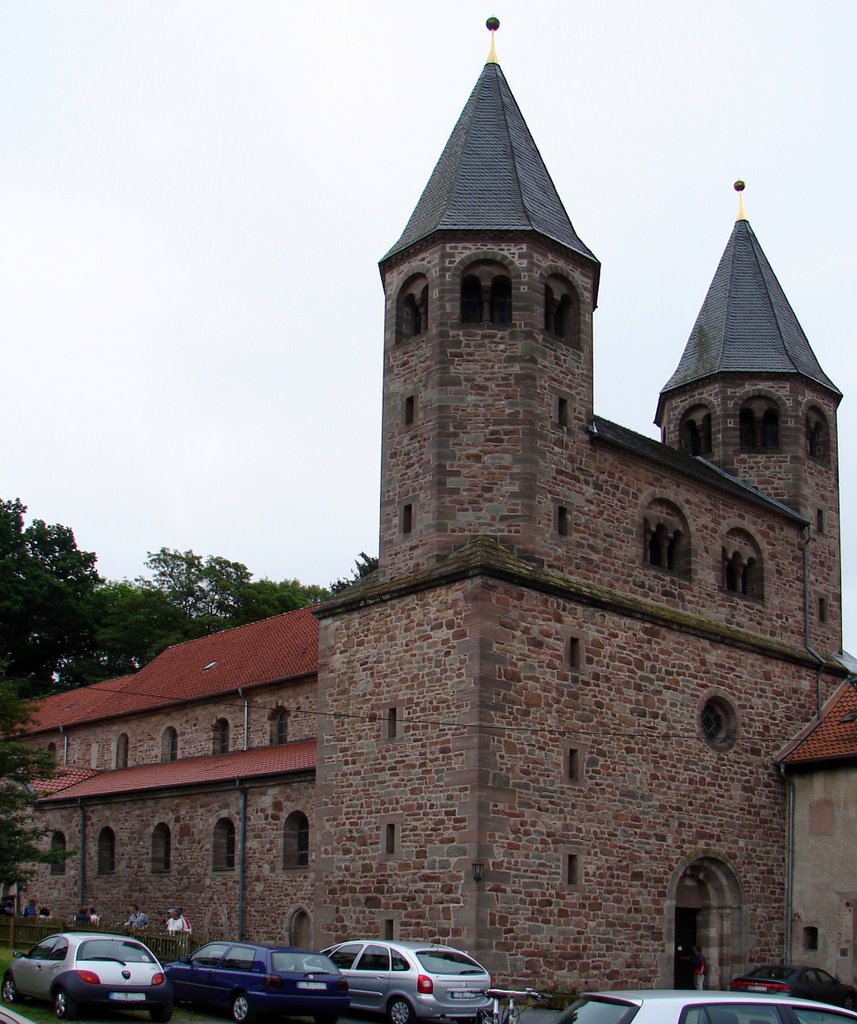
22 km – Weisse-hutte camping left
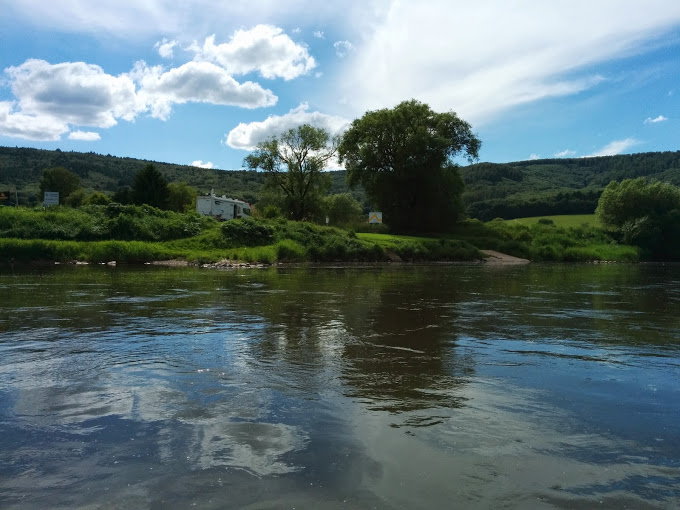
25 Km – Ferry. Oedelsheim right.


25.5 km – Camping right. http://www.campen-am-fluss.de/ Lovely site. Kanu Shumacher trips launch from here.
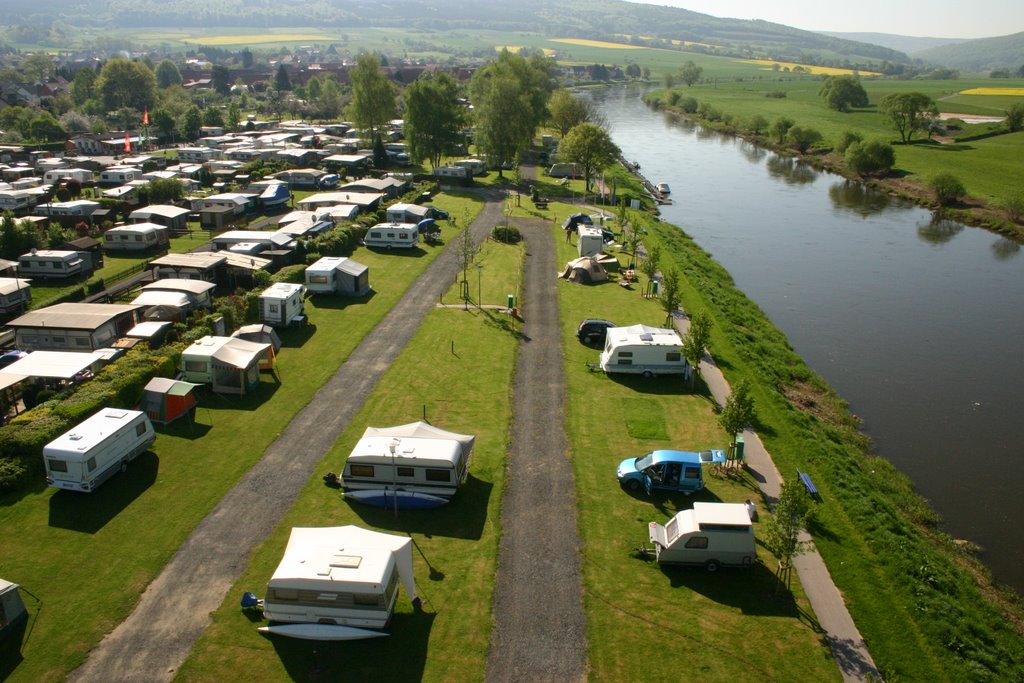
28 km – Camping left
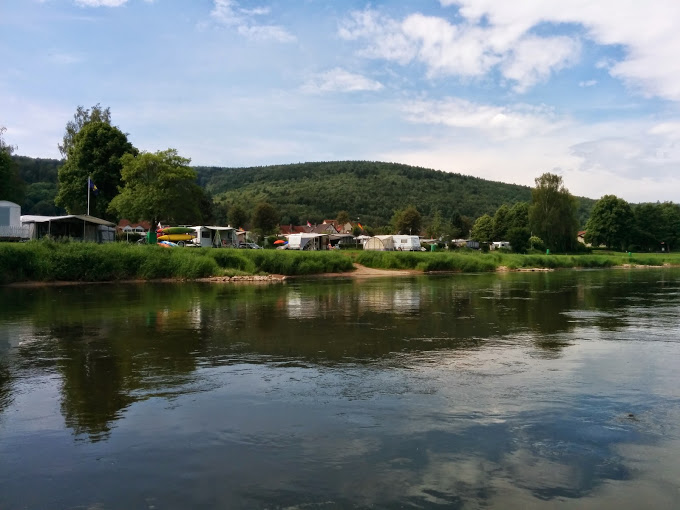
29 km- Bridge. Gieselwerder left
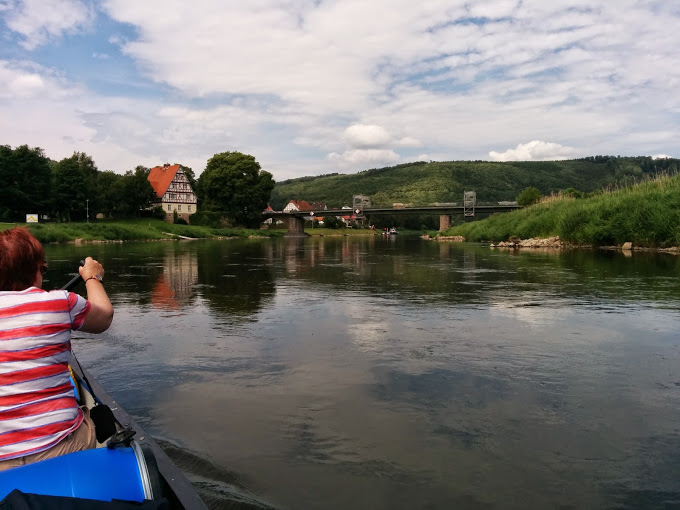
33 Km – Ferry. Lippoldsberg right

34 km – Bodenfelde right.
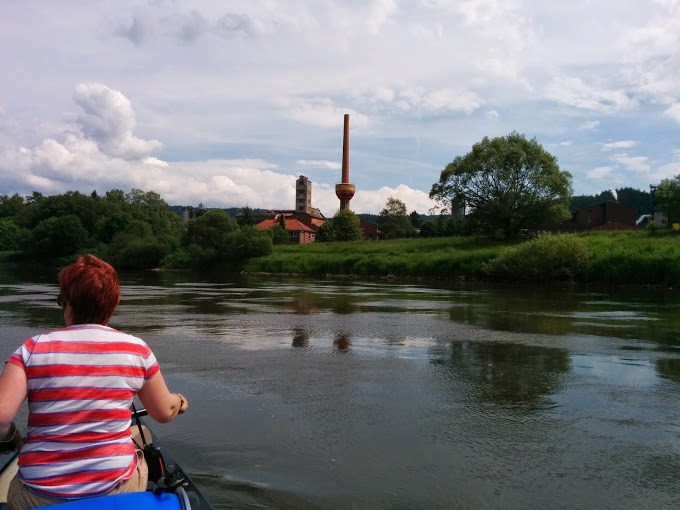
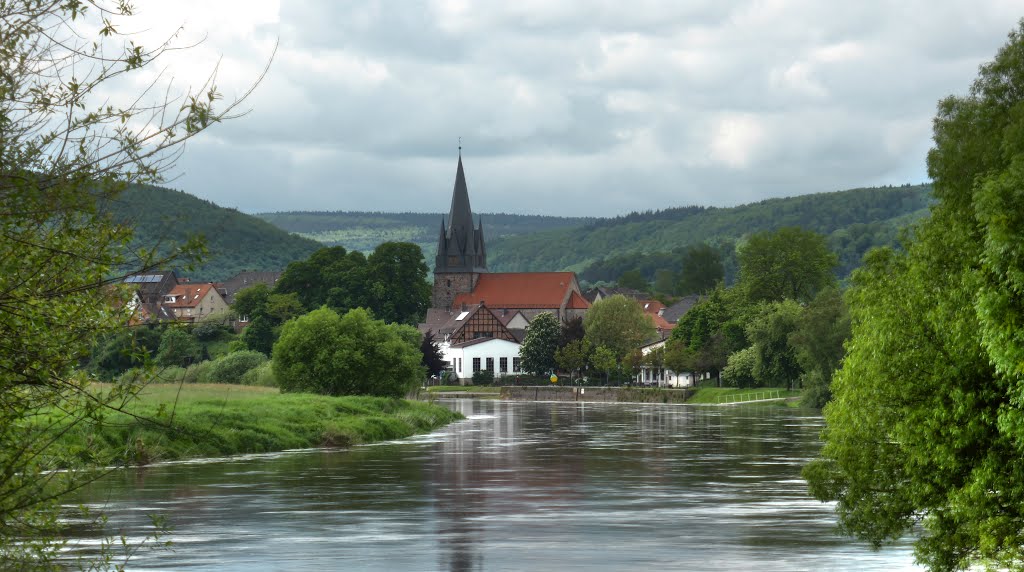
35 km – Wahmbeck ferry

Look out for this structure on the left, just before Bad Karlshafen bridge .
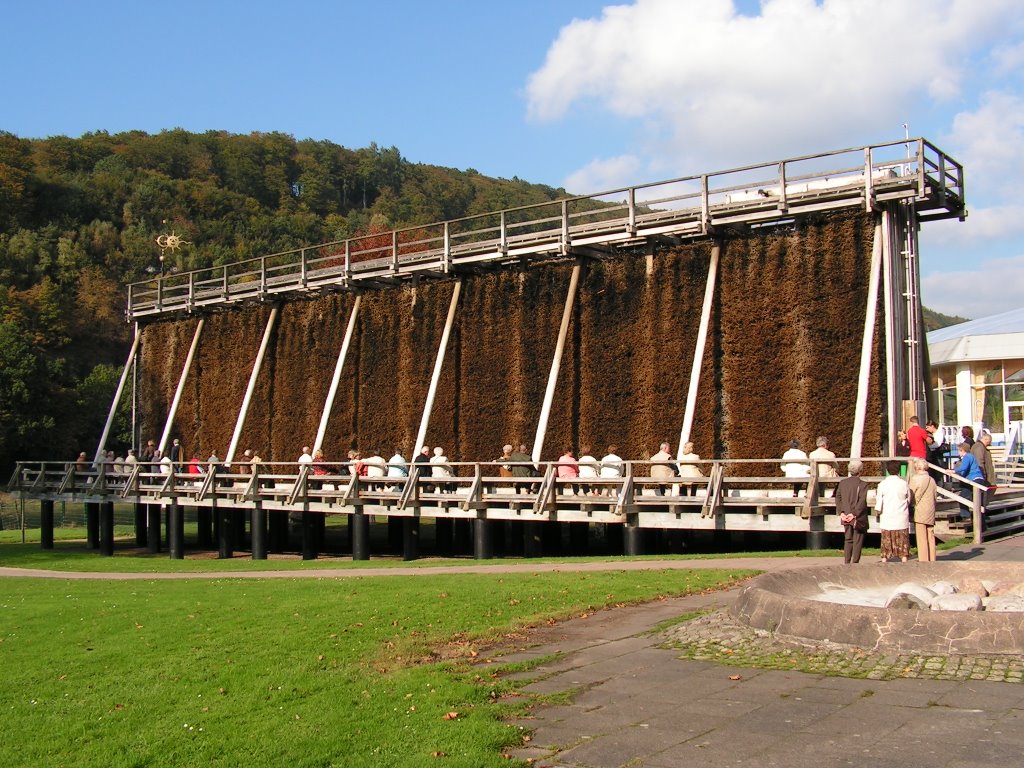
It filters the local mineral water through a network of twigs, creating a briny vapour which is supposed to have health giving properties. Probably does as much good as most alternative therapy. At least if you’re sitting next to it, no-one’s operating on you, or filling you with harmful drugs.
43 km – bridge. Bad Karlshafen left.
Camping below bridge on right. http://www.campingplatz-bad-karlshafen.de/
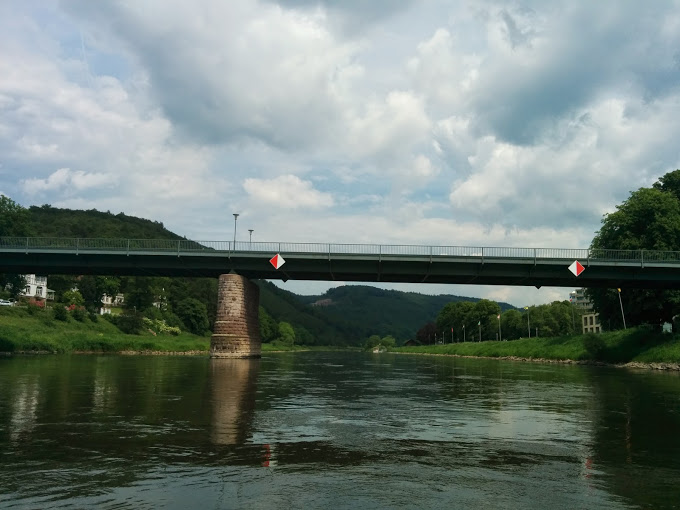
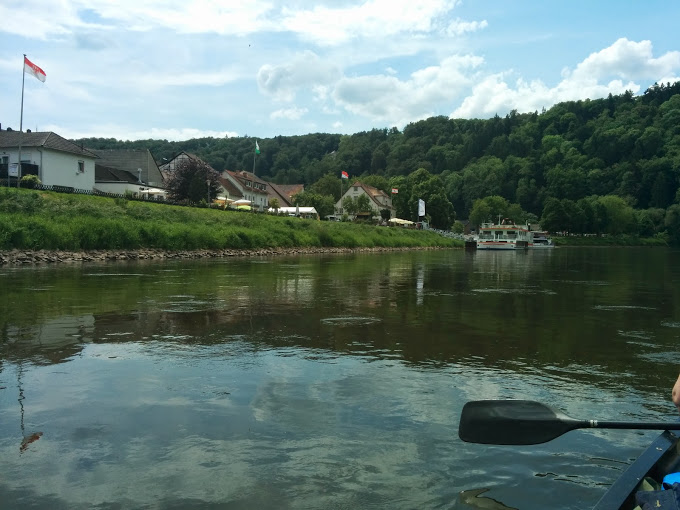
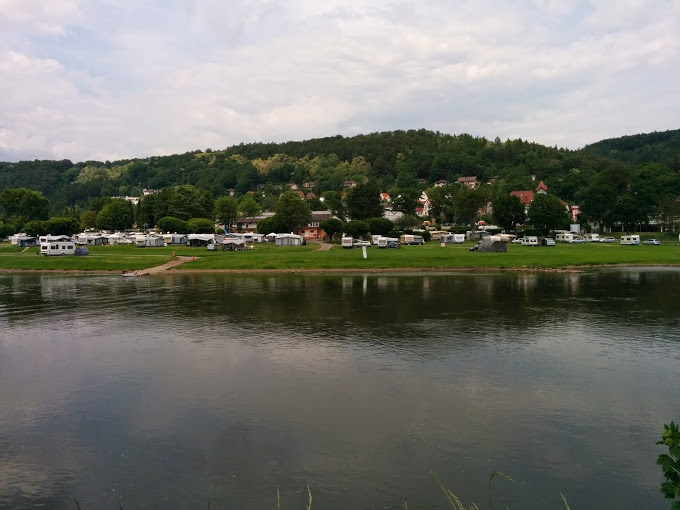
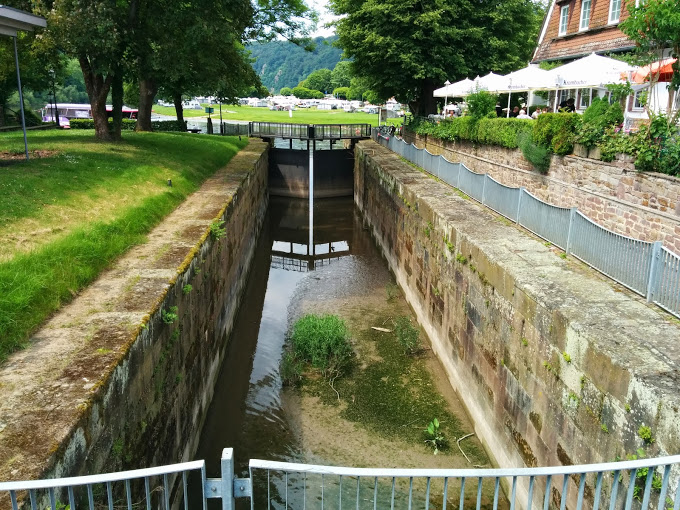
The harbour and locks connecting the Diemel navigation to the Weser are now disused.
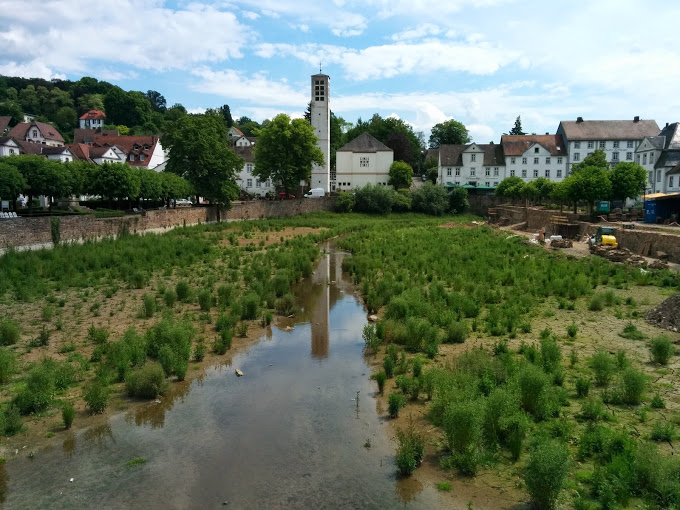

44 km – Diemel river joins left
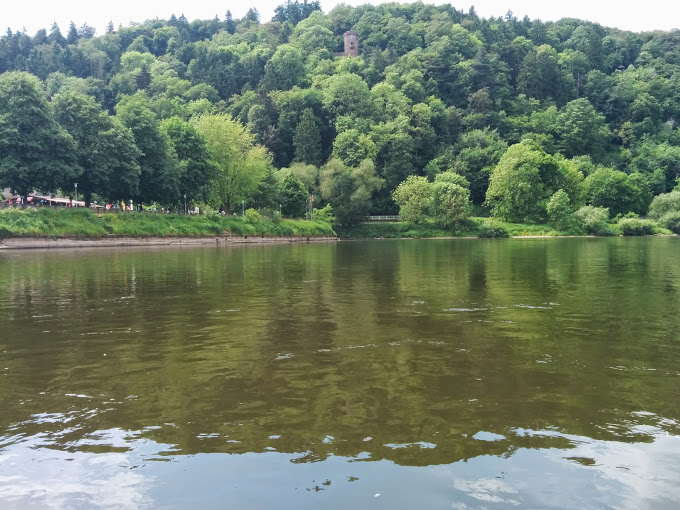
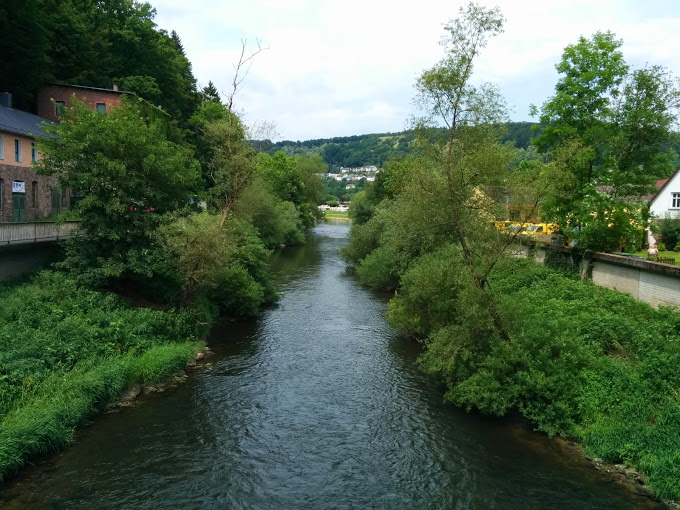
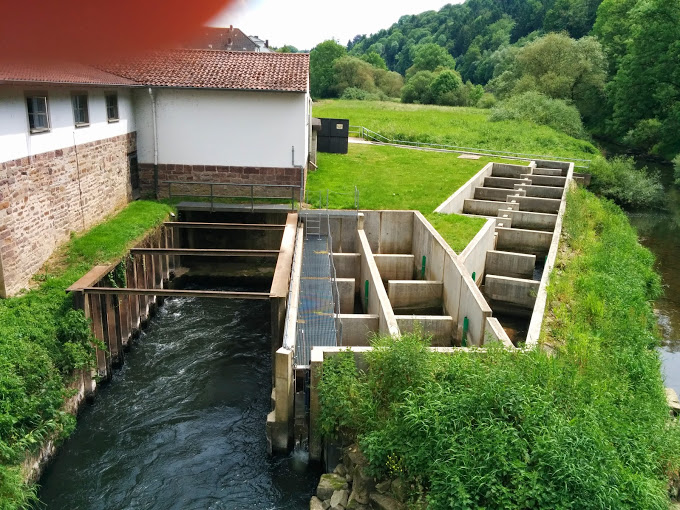
46 km – ferry. Herstelle left. Wurgassen right
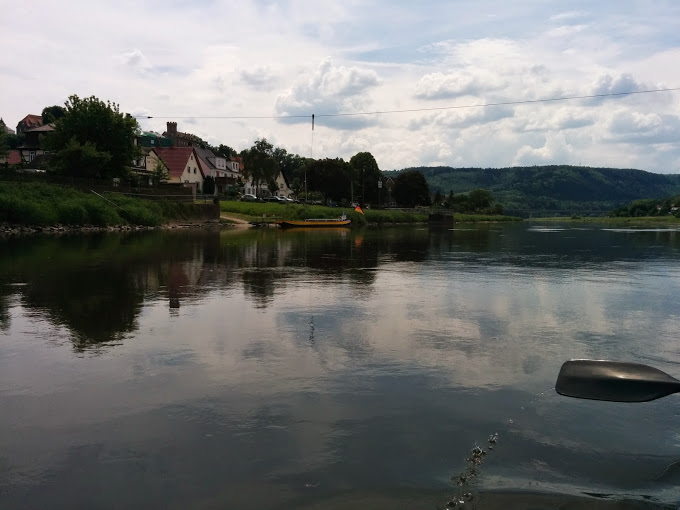
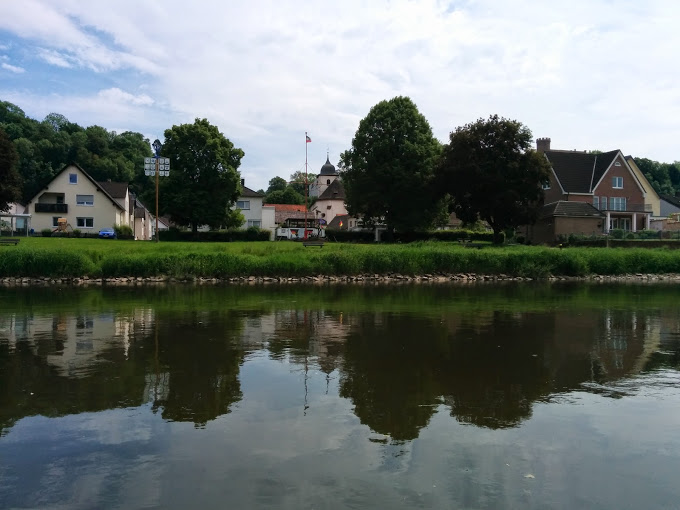

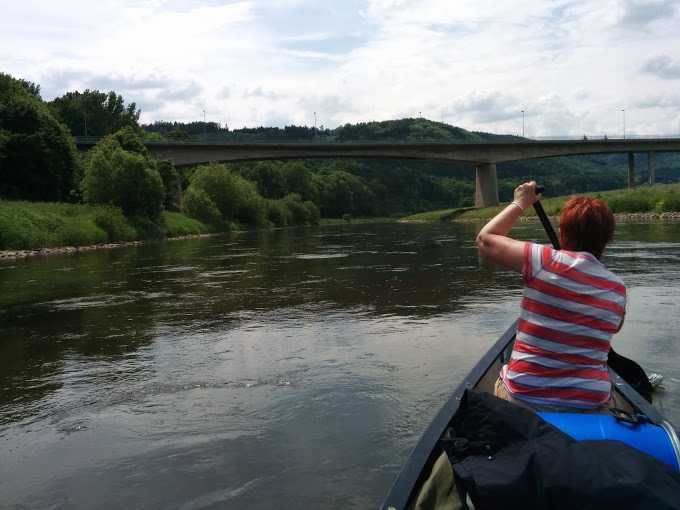
48 km – road bridge. L763
50 km – Wurgassen nuclear power plant right
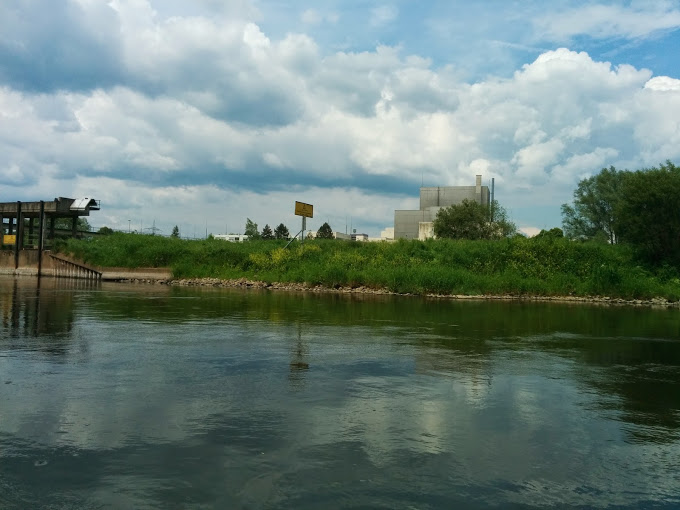
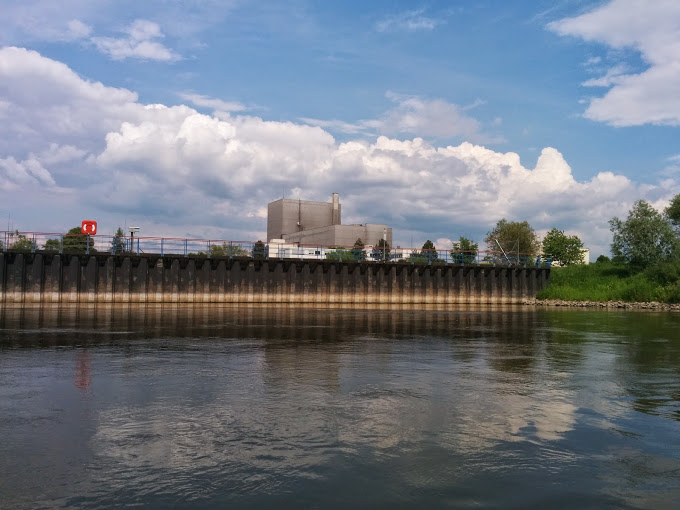
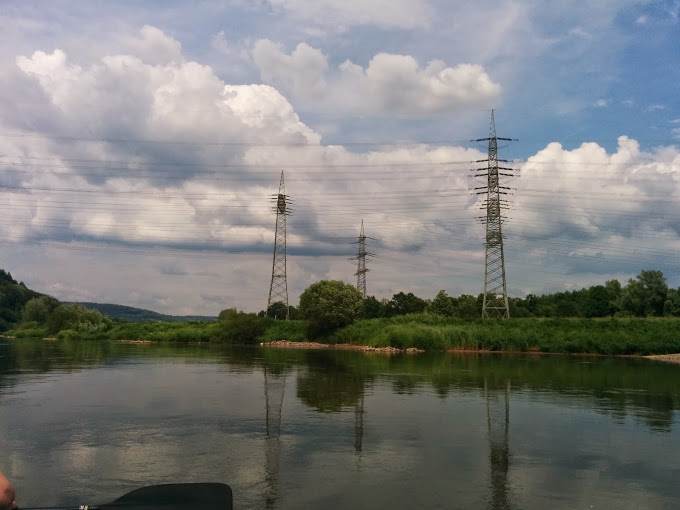
Built in 1968, with an output of 640MW, Wurgassen was one of Germany’s first commercial nuclear power stations. It was shut down in 1995 because cracks had been detected in the steel reactor container. Precautionary, there had been no leak. It is currently being dismantled.
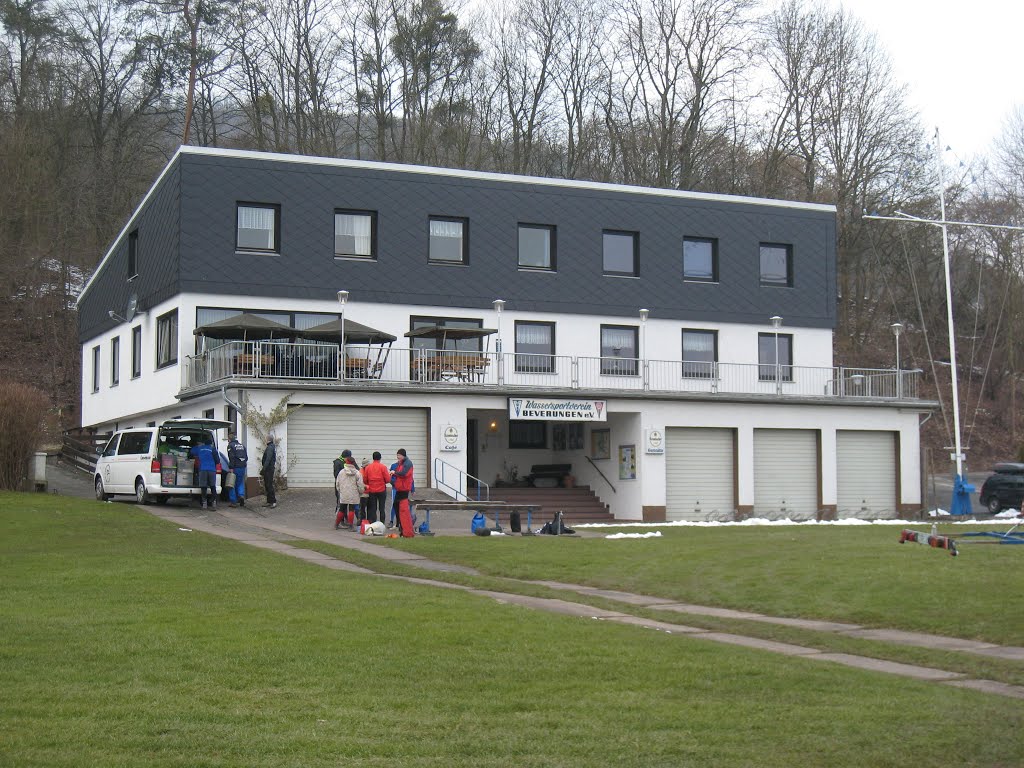
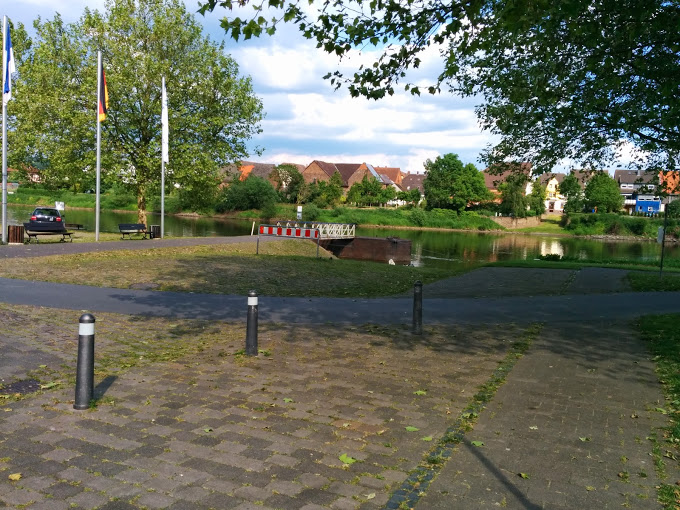
52 km – Beverungen boat club left allows camping. Excellent facilities.
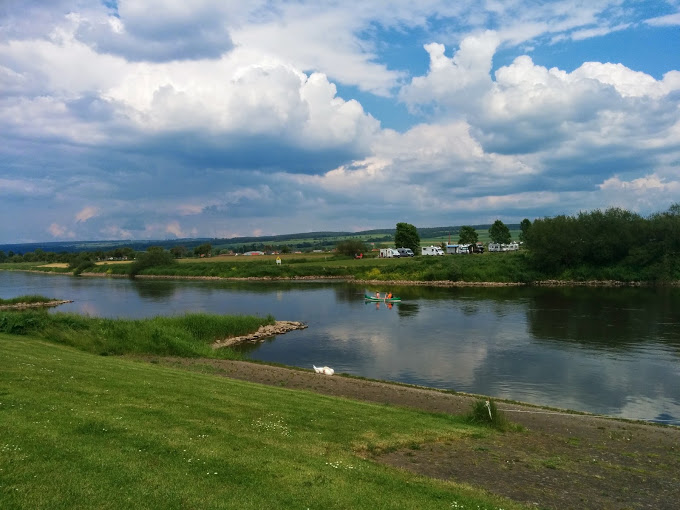
There is also a campsite on the right bank opposite, albeit set back from the river bank
53 km – road bridge. Beverungen left
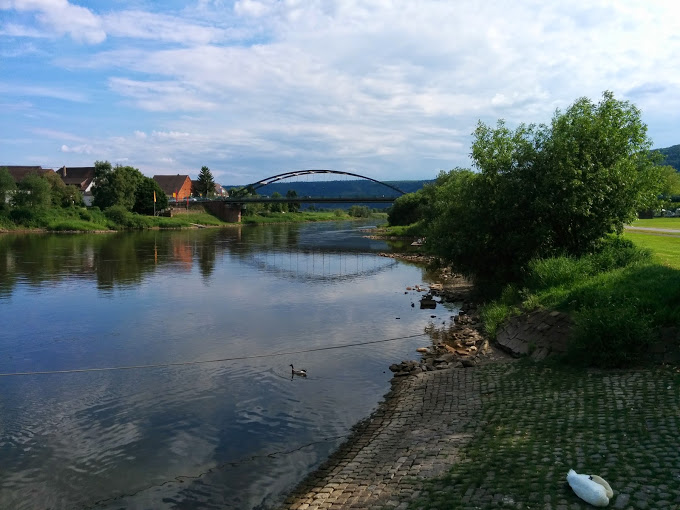

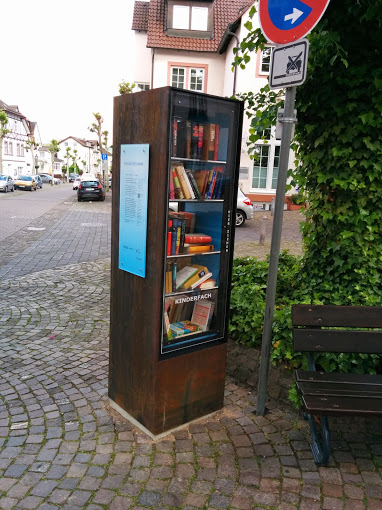
Honesty book exchange in centre of town. Take one leave one.
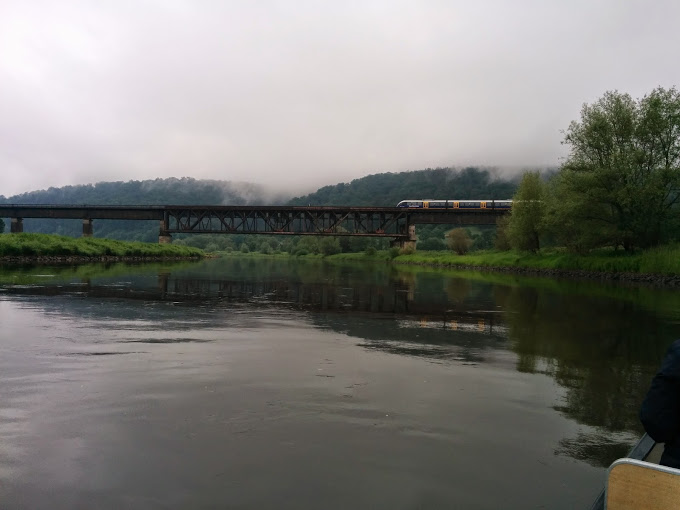
57 km – railway bridge
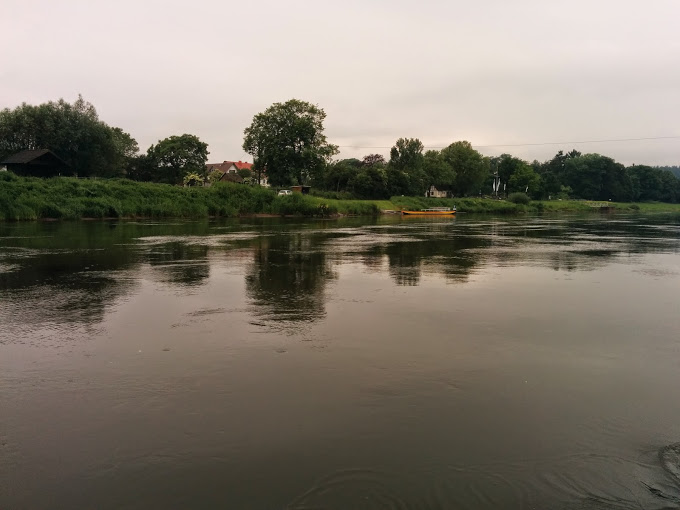
25 miles – ferry. Wehreden left
Schloss Furstenberg right bank at the end of a straight reach. Famous for porcelain. Look how the cliffs have wooded over in the last 100 years.
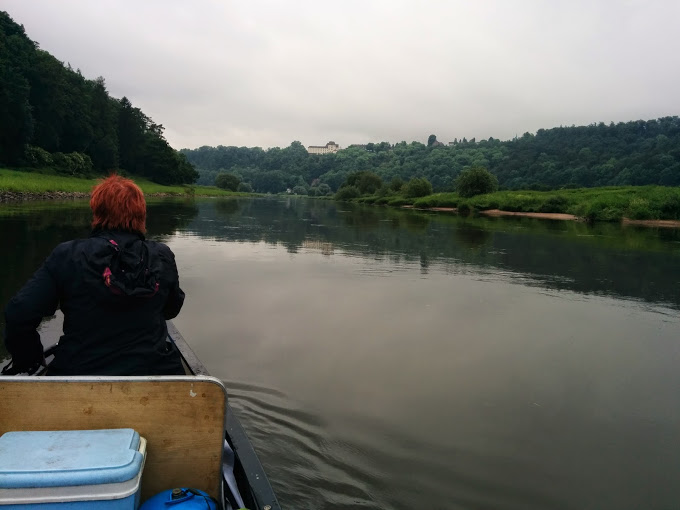
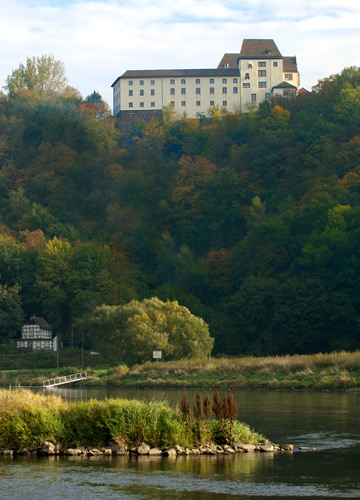

63 Km – railway bridge. River Nethe enters left just downstream

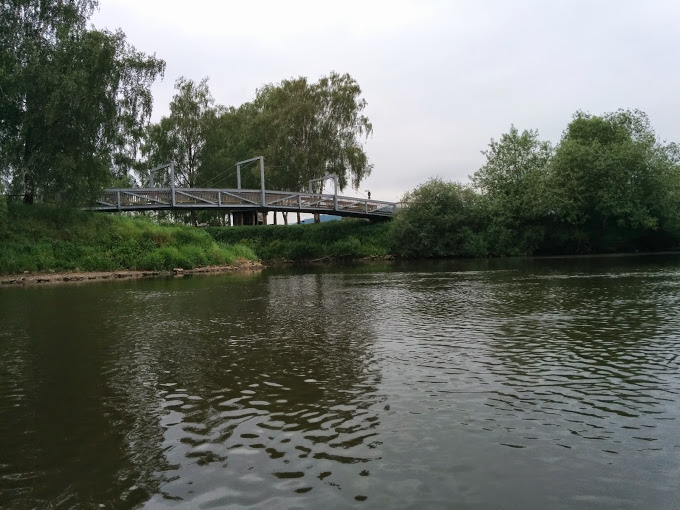
Camping right Wesercamping Hoxter
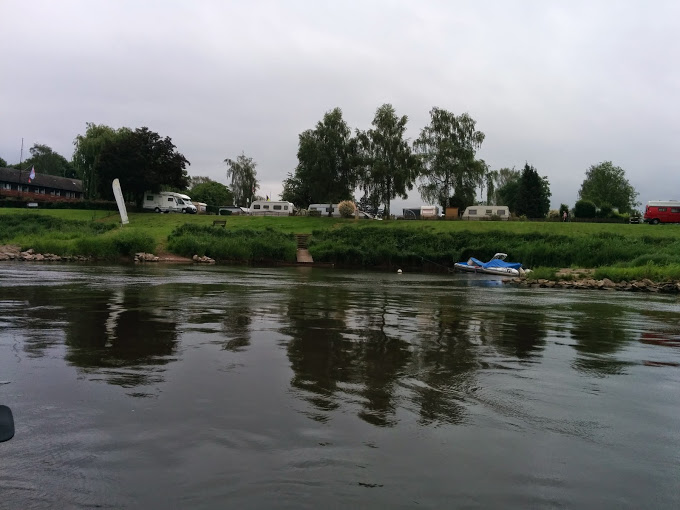
27.5 miles – bridge. Hoxter left
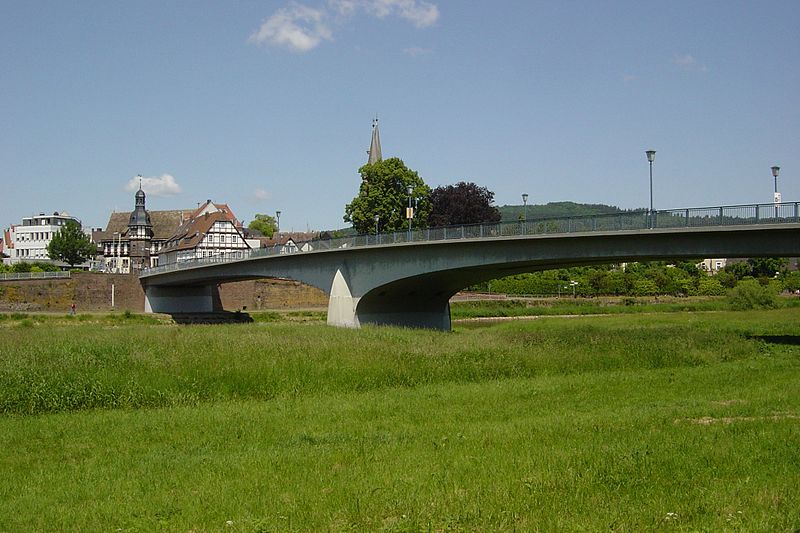
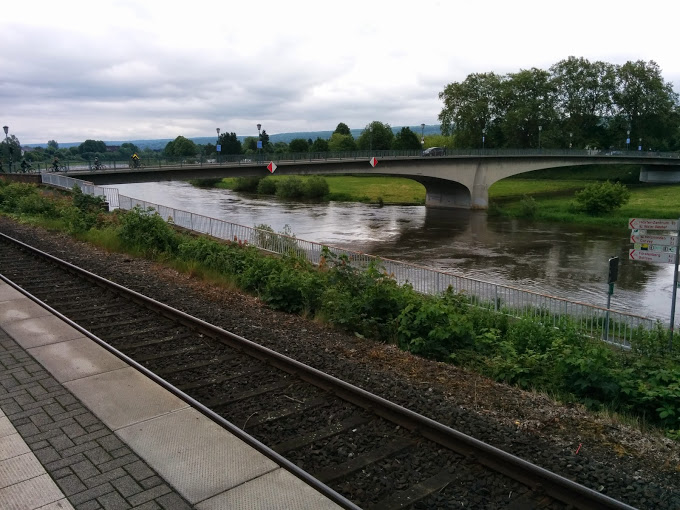
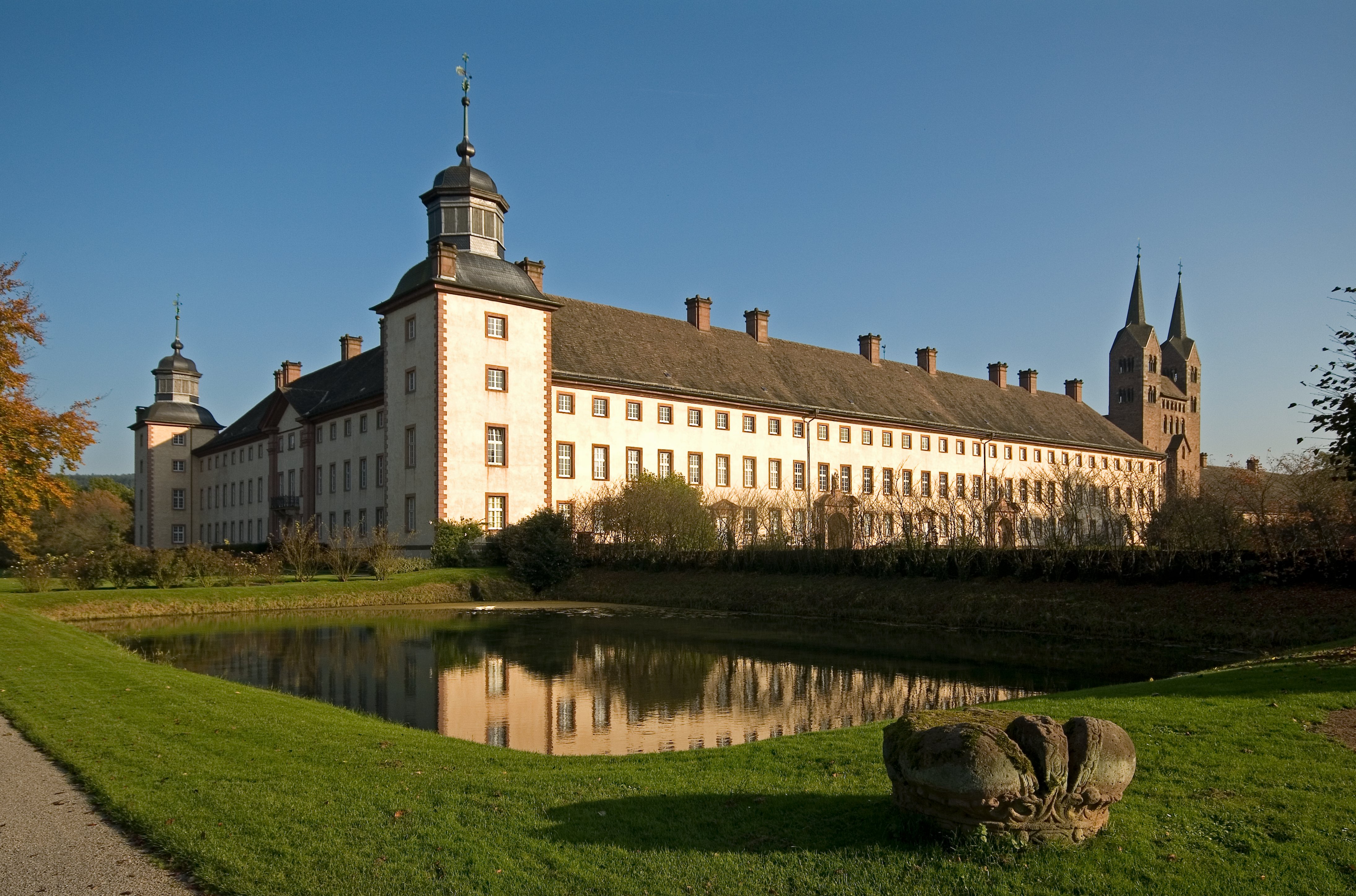
28.5 miles railway bridge. Schloss Corvey left immediately after the bridge, previously a Bendictine monastery, and now a UNESCO world heritage site, is hardly visible from the river. Camping left in the castle grounds (click here)
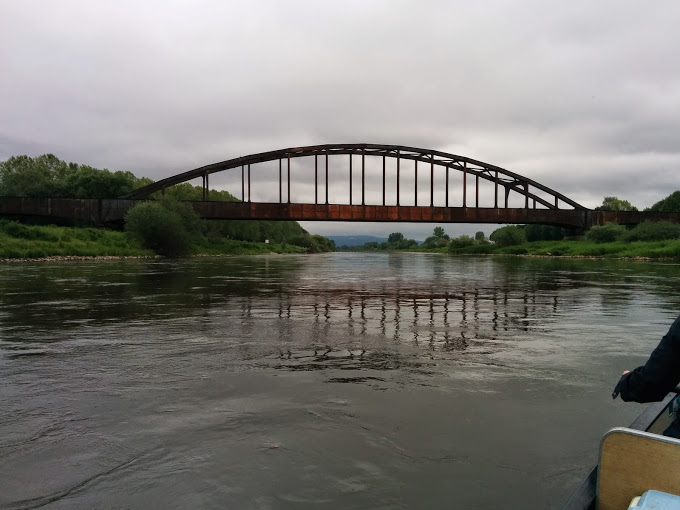

73 Km – bridge. Luchtringen right
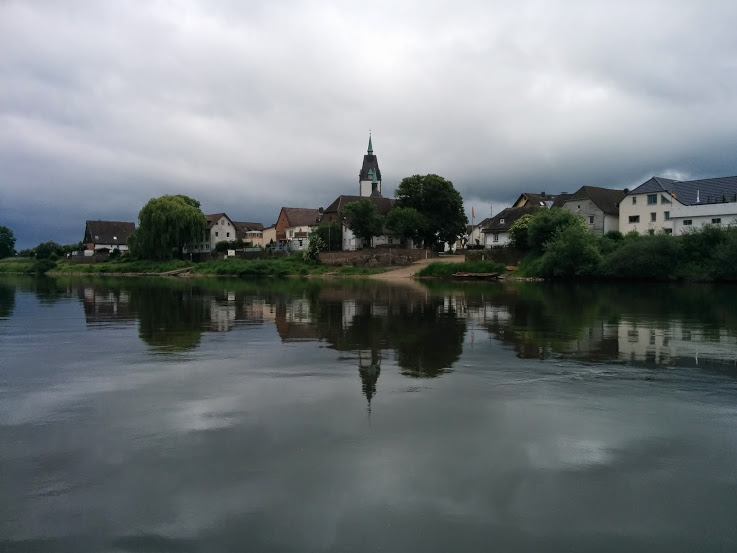

80 km – Holzminden bridge. Camping left before bridge. Holzminden right

The old harbour right just before the bridge. Landing spot. Youth hostel adjacent.

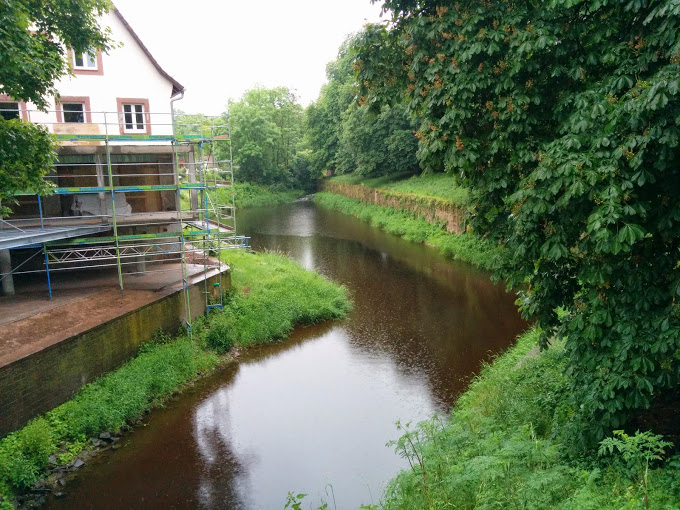

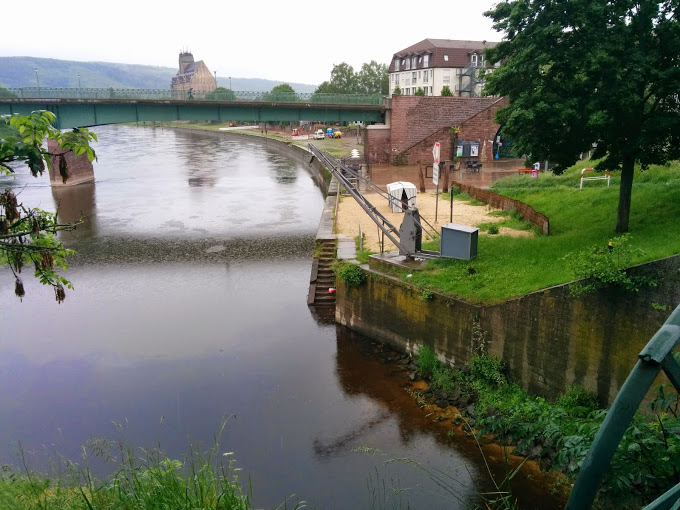
81 km – Holzminden by pass bridge

91 km – Weserbergland camping left http://www.weserbergland-camping.de/ Heisen left. A very scenic village.


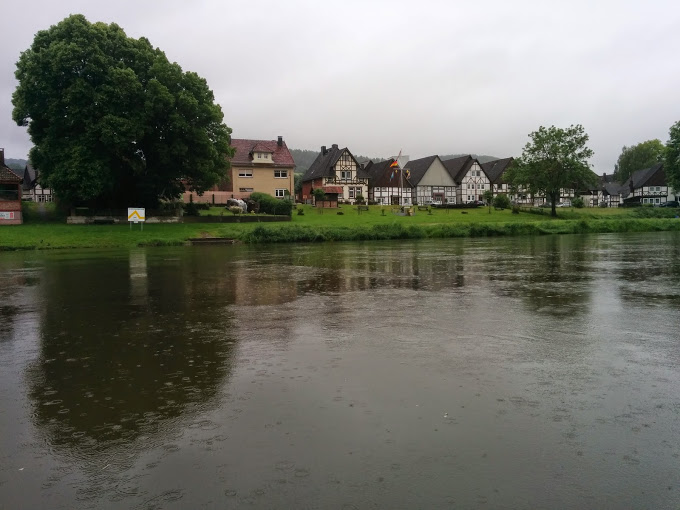
93 km – Eversteiner castle left. Allegedly the home of Cinderella’s prince. Hmm? Ferry. Polle left. Campingplatz Weserterrassen left http://www.weserterras

94 Km – Brevorde left

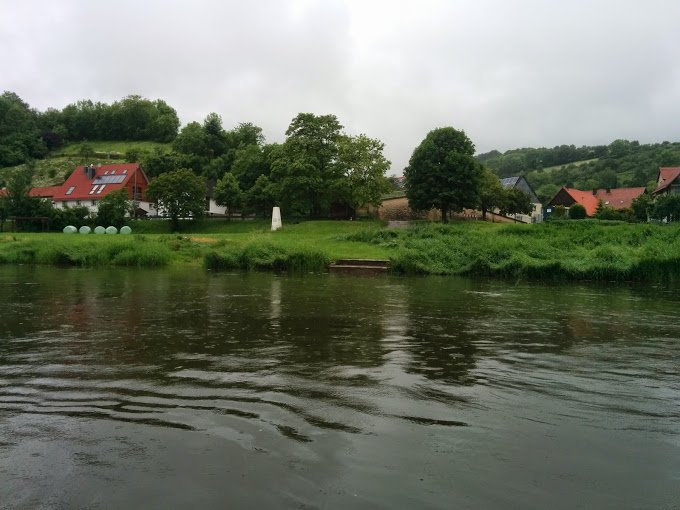
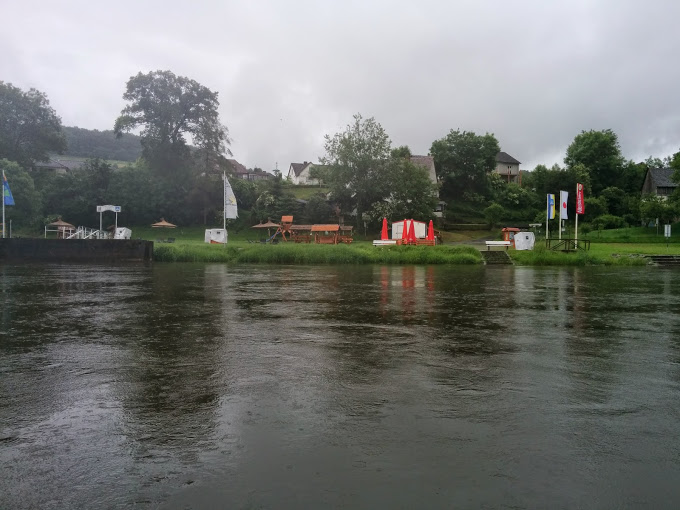
97 km – Solar Ferry. Grave left.
99 km – Dolme right. Steinmuhle cliffs left
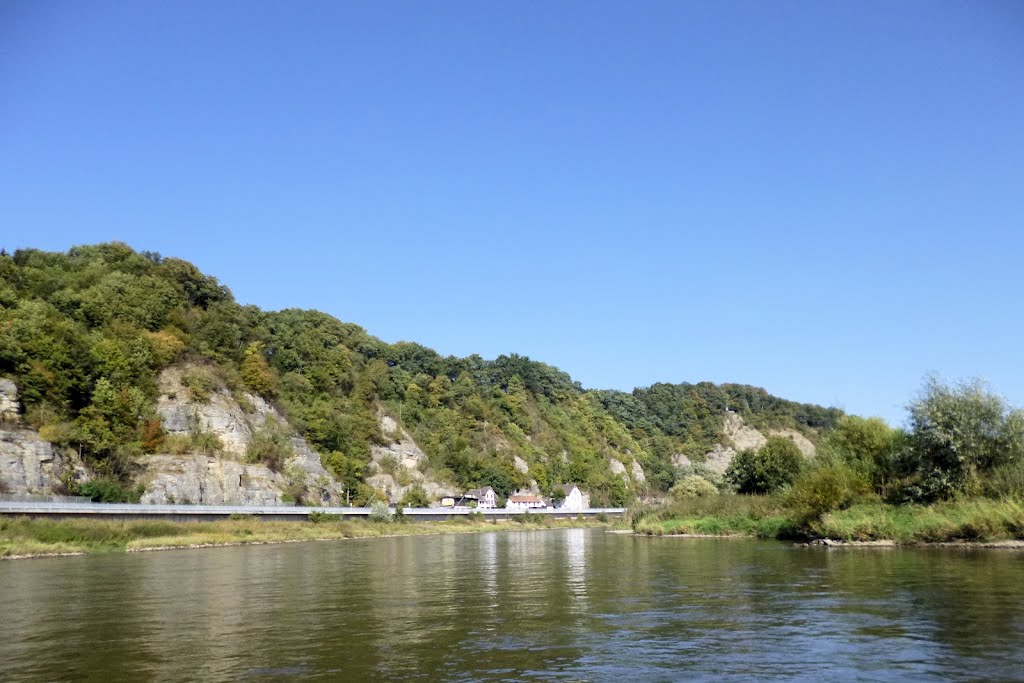
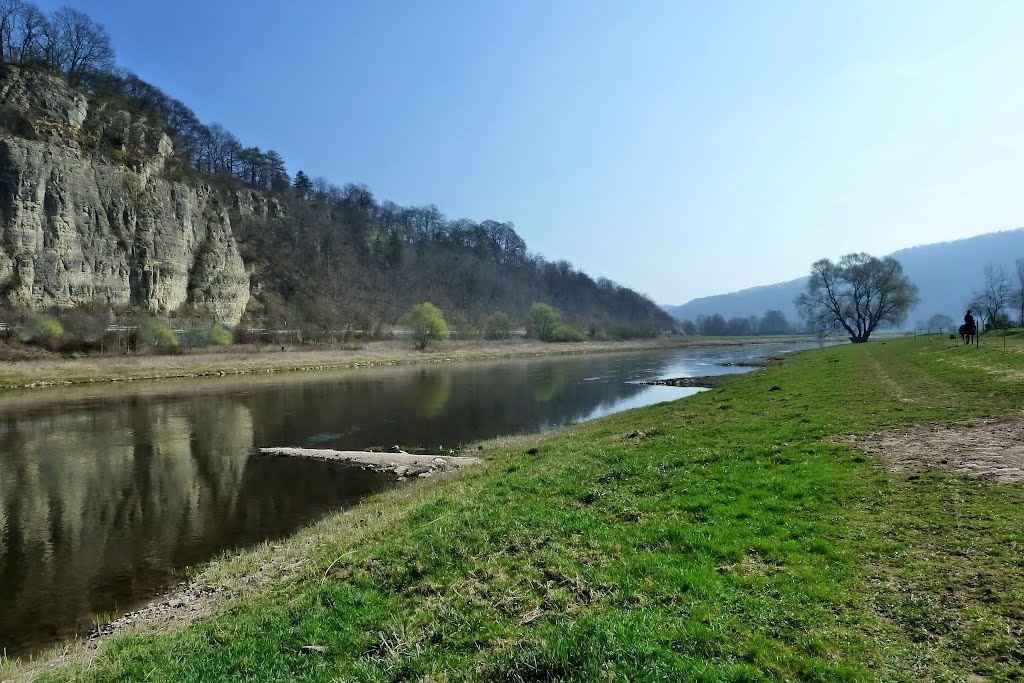
102 km – Pegestorf left. The harbour is long disused, and the campsite marked on the map on the left bank just downstream didn’t exist in May 2014. But no worries – two lovely sites on the right bank soon after Rühle.
103 km – Ruhle right Click here for the cemetery
104 km – Campingplatz Rühler Schweiz right. http://www.brader-ruehler-schweiz.de/campingplatz-ferienwohnung-bodenwerder.htm


106 km – Campingplatz Himmelspforte right. http://www.camping-weserbergland.de/
109 km – Bridge. Bodenwerder left.
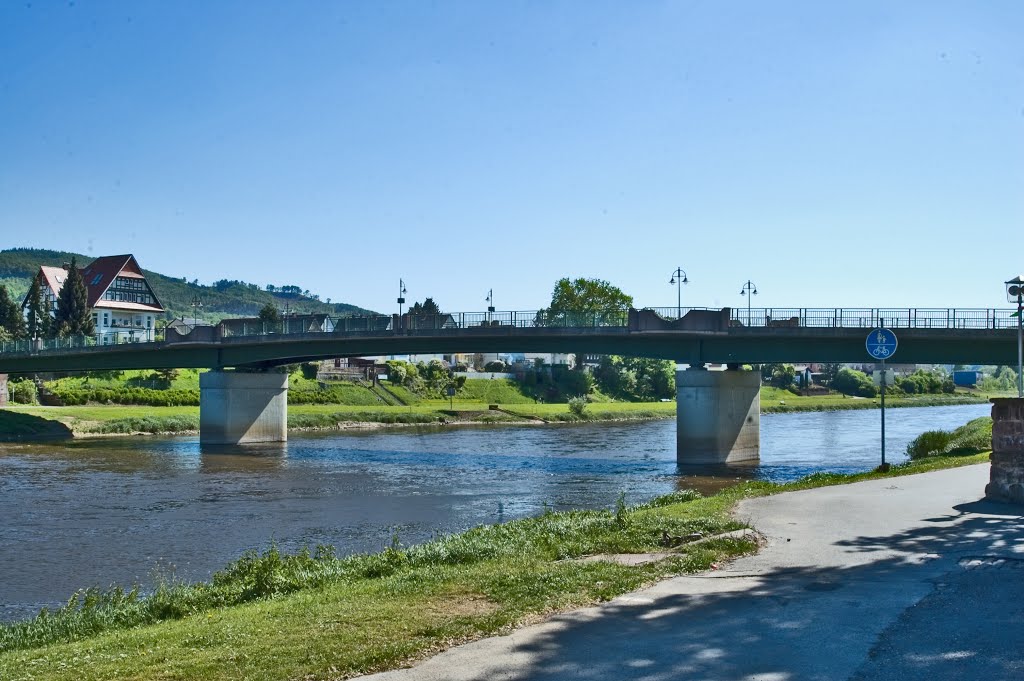

109.5 km – Bodenwerder railway bridge
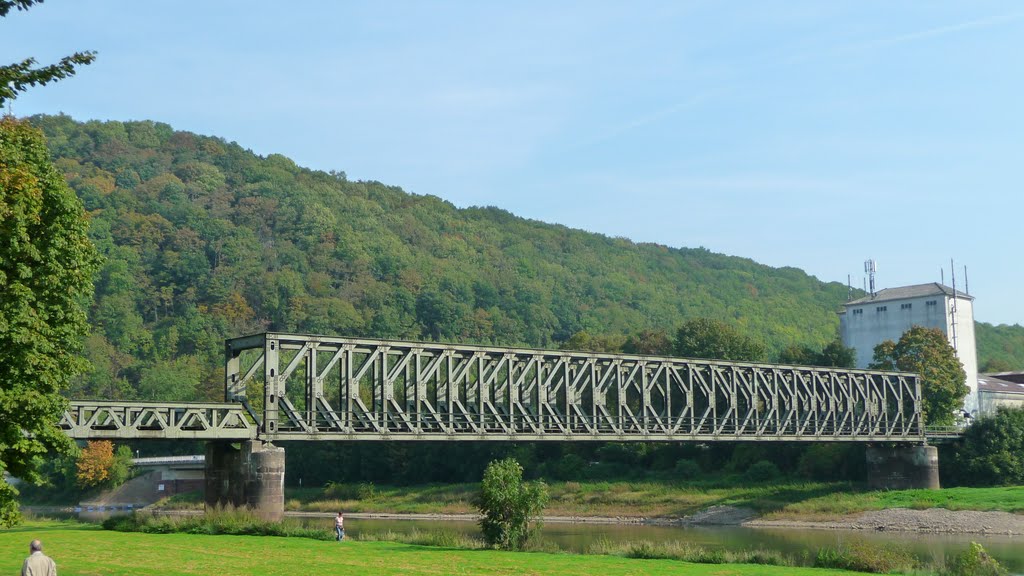
110 km – Bodenwerder bypass bridge
114 km – bridge. Daspe right. Hehlen left.
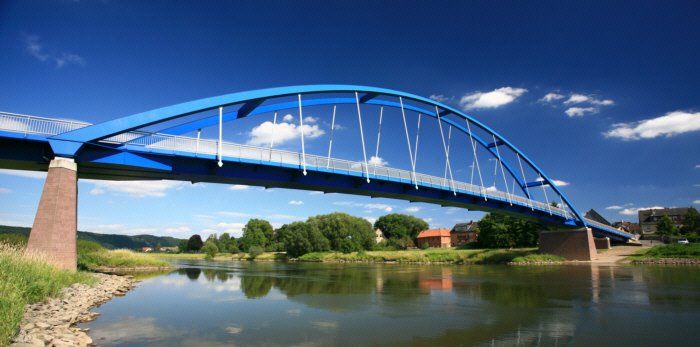
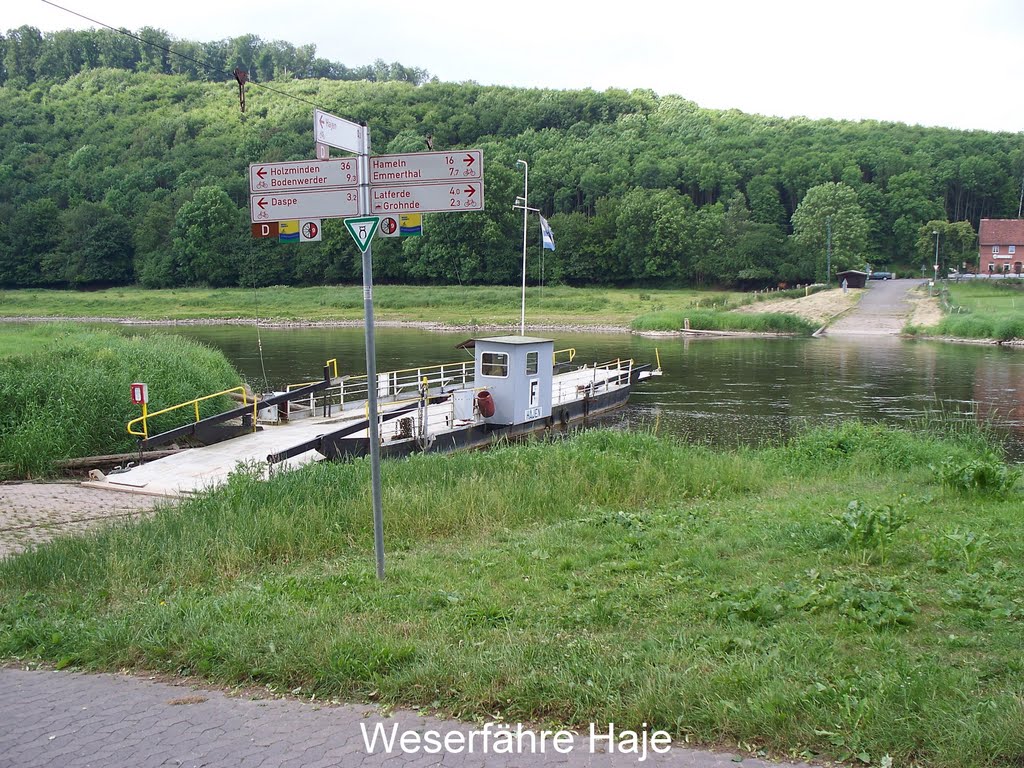
118 km – Ferry. Hajen right
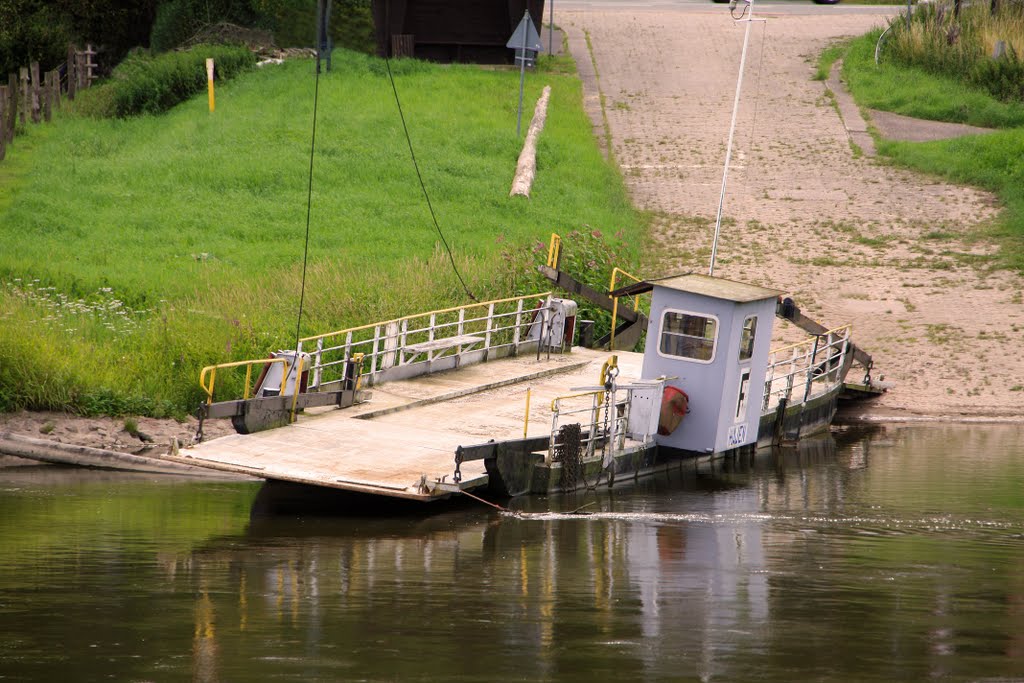
120 – Ferry. Grohnde left


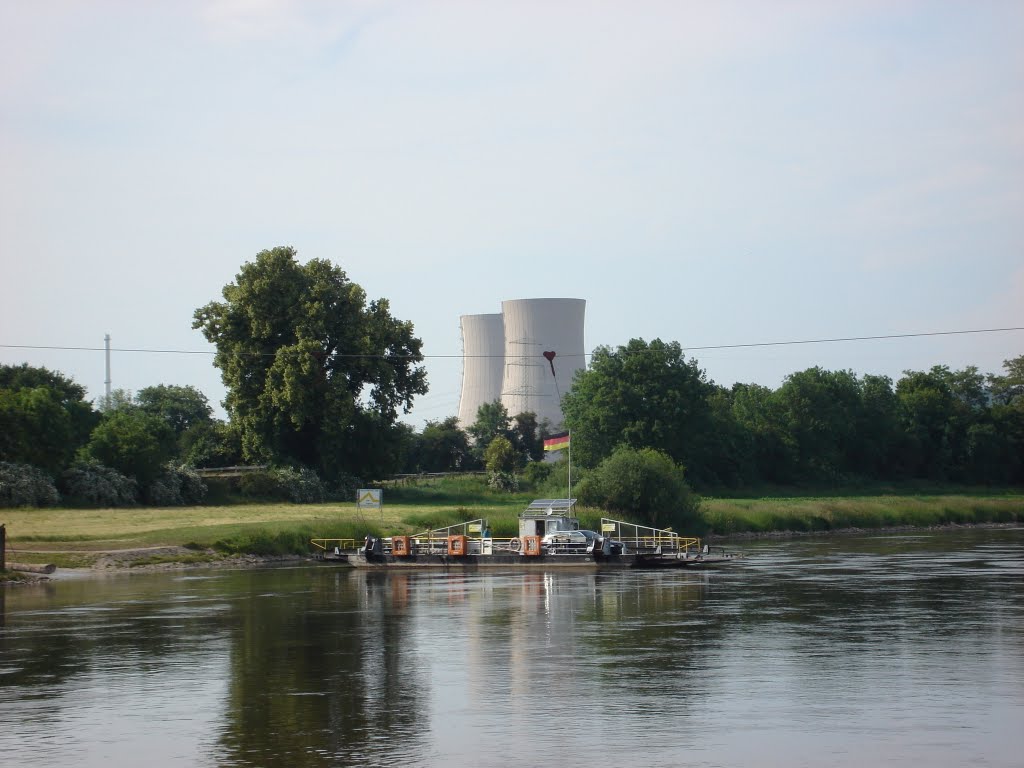
122 km – Latferde right.
123 km – Grohnde nuclear power plant left.

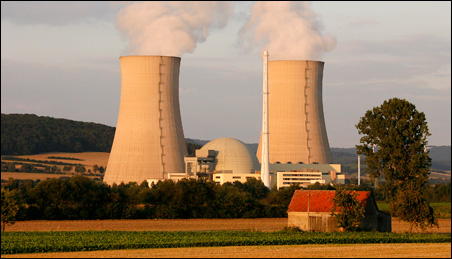
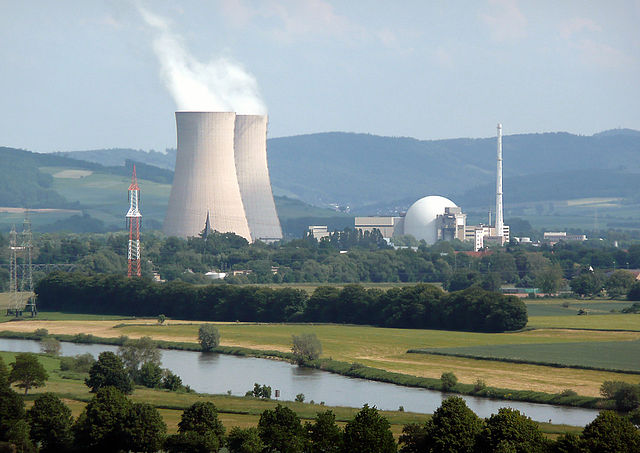
This beautiful 1430MW pressurised water reactor, built in 1984, and operated by EoN, runs on both normal uranium and reprocessed MOX fuel from Britain and France, making it one of the most efficient in the world; eight times it has produced more electricity in a year than any other nuclear power station.
In a panic after the Fukushima nuclear leak in 2011 the Germans decided to phase out all nuclear power by 2022, and unless someone sees sense, Grohnde will go.
124.5 km – bridge. Emmerthal left. Hagenohsen right
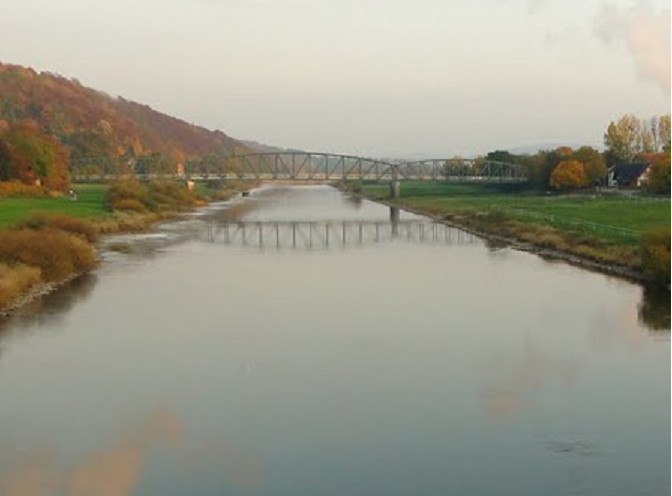
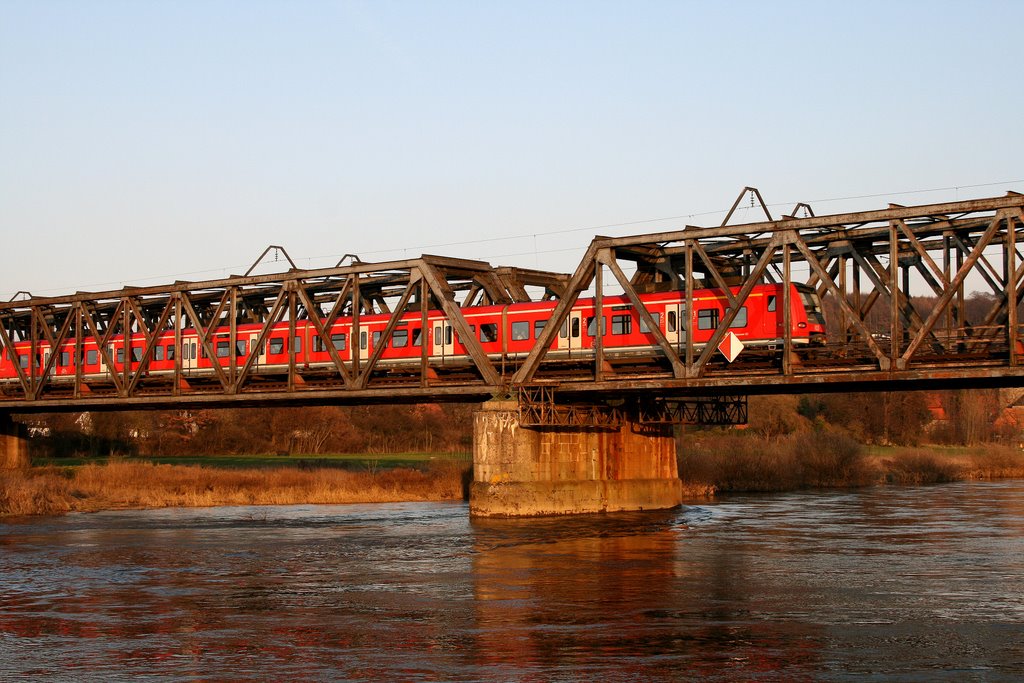
125 – railway bridge
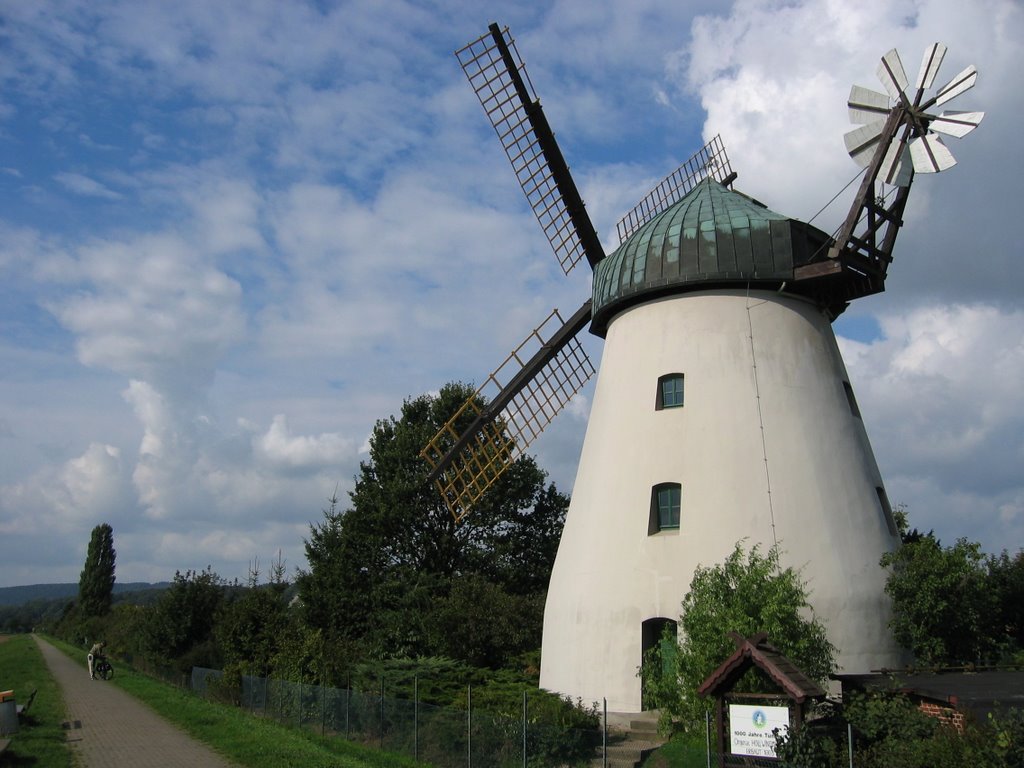
126 km – Tundern windmill set back from the river right
127 km – Ferry. Ohr left
132 km – camping right
133 km – bridge Hameln right. Home of the pied piper

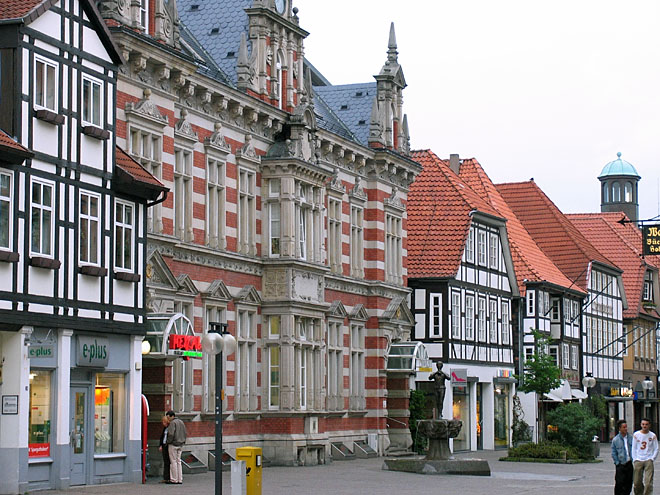

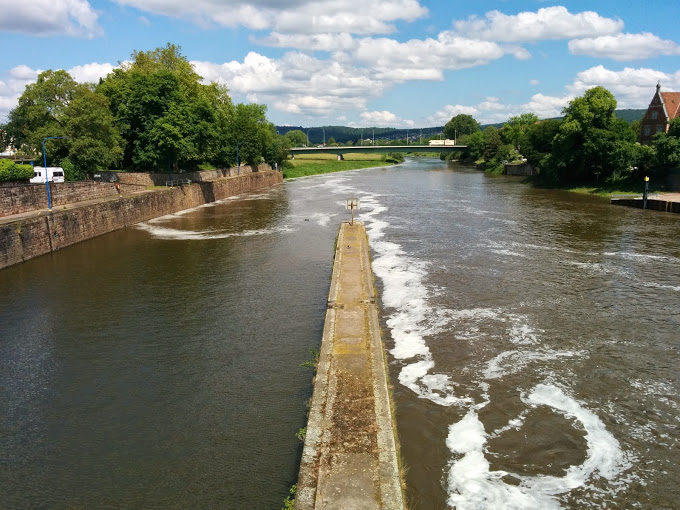
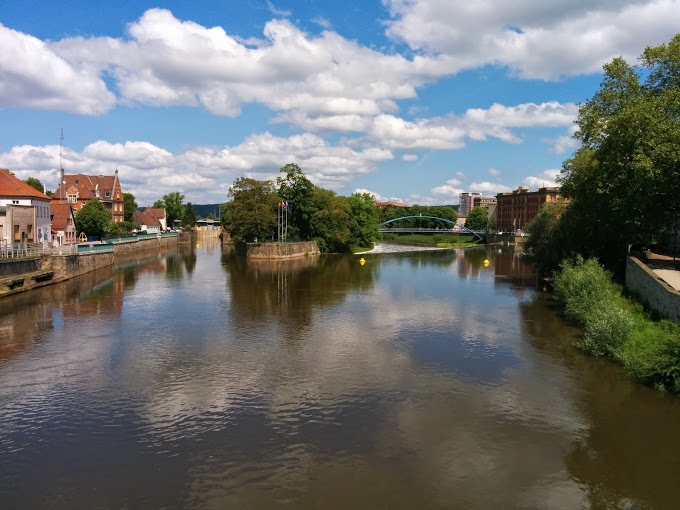
134 km – weir. Lock left. Island. Canoe shoot. Weir. Bridge. Island. Lock. Weir. Hydroelectric power station.
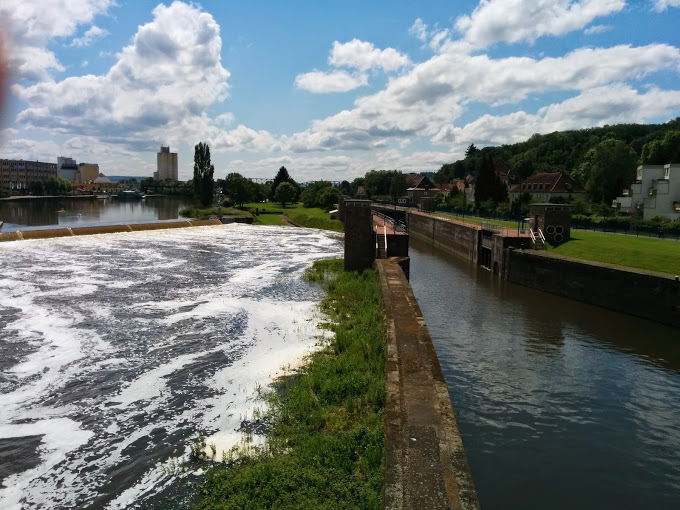
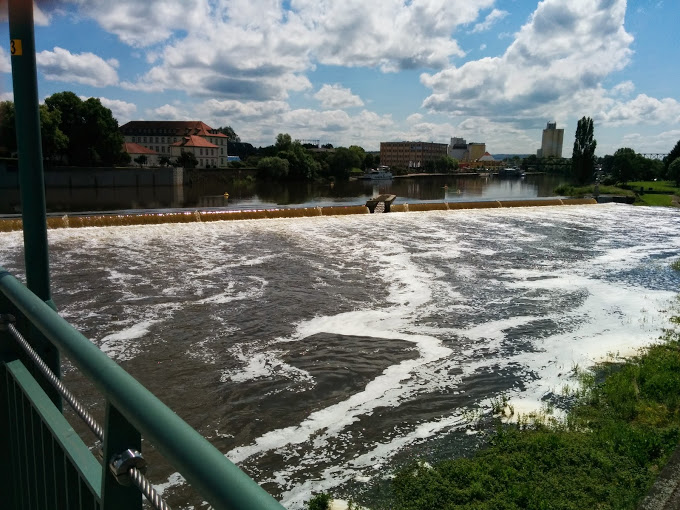
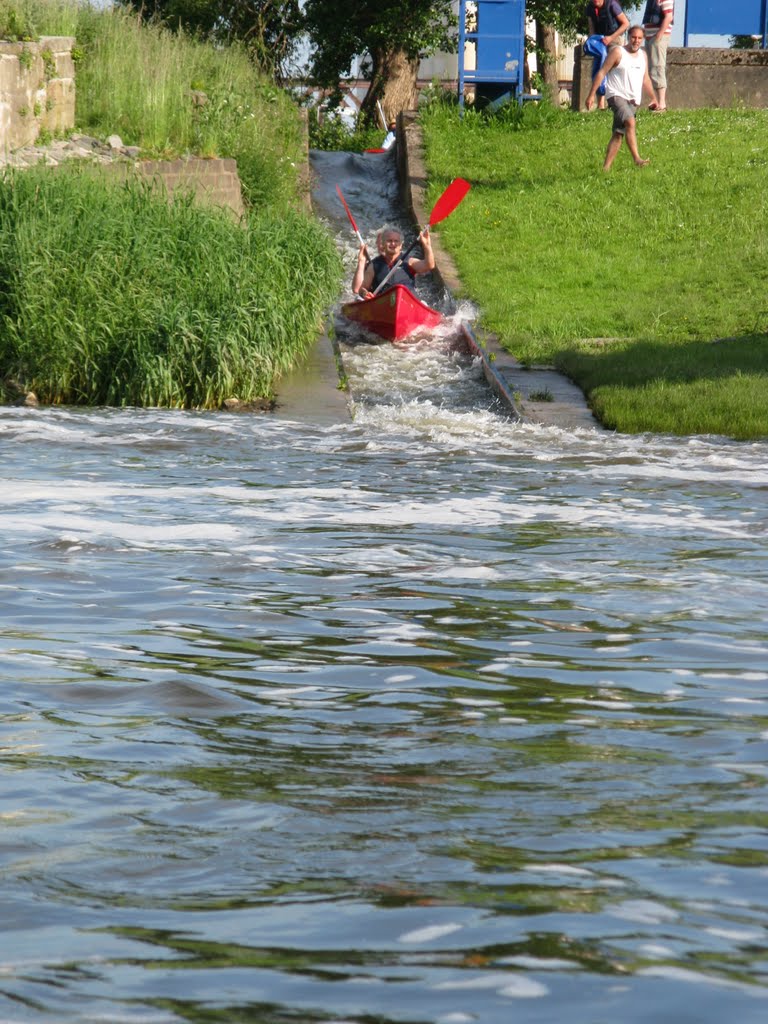
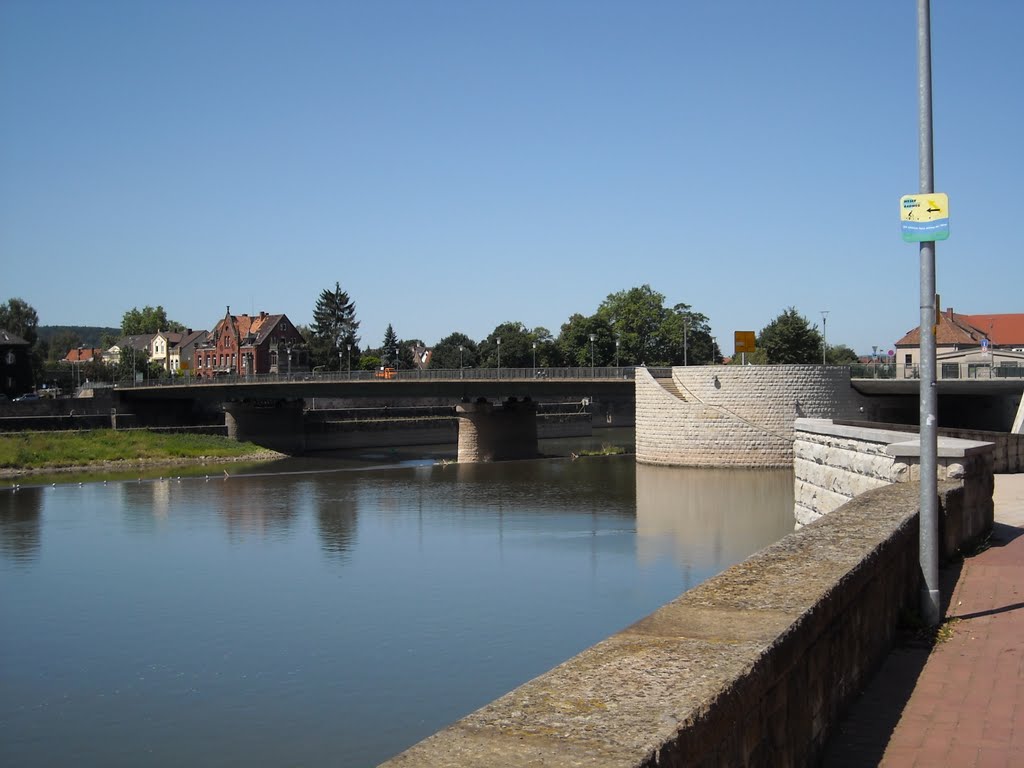
The main road bridge in Hameln crosses the weir
Jim Thornton
The Barbeque by DM Thomas
D. M. Thomas, author of The White Hotel, the best-selling erotic novel about Freudian psychoanalysis and the holocaust, has had a complicated love life.
Soon after marrying his first wife Maureen he got a job at a teacher training college and started seducing his students. One of them, having became a teacher herself, wanted a child. Denise would have lost her job if she’d become a single parent, so Thomas divorced Maureen and married her. He claimed it was a temporary marriage of convenience, and for a period divided his time between the two women. Eventually Maureen remarried and Thomas went through with his plan, and divorced Denise, but he never quite ended the relationship.
After the publication of The White Hotel in 1981, Thomas was rich and famous. He ran erotic writing courses, and had more affairs. Eventually Denise got cancer and when they looked into what provision they had made for their son they discovered the divorce papers had never been properly filed. They were still married, and remained so, till Denise died in 1998. The following year he married the poetry therapist Victoria Field, and in 2005 moved on to wife number four, Angela Embree.
Does knowing all that help us understand this poem? I’ve no idea, but the final three lines are good.
The Barbeque
My soon-to-be fourth wife
is preparing for our first barbecue,
while my third wife
is taking out and packing books
she’d interwoven with mine
in alphabetical order.
Why is there always so much confusion?
My fourth wife is saying she brought twelve steak knives
from Canada, but now there are only nine.
I was hoping a certain poetry book
was mine, not my third wife’s. I think
the barbecue tongs we will be using
are really hers.
I wish my third wife could stay for the barbecue
but my fourth wife would object,
and maybe my third wife would too.
I wish my first wife’s second husband
would let her come to the barbecue,
and bring himself. My fourth wife
would be fine with that. Why are people
so unreasonable? I wish my second wife
wasn’t dead, but could come too.
But then she wouldn’t be happy with my third wife,
and my first wife not happy with my second.
I know my first wife would like my fourth wife.
Many hands make light work,
and I’m hopeless at this kind of thing –
getting the charcoal to light and
cooking chops, sausages and stuff.
by DM Thomas. From Flight & Smoke
 Ripe-tomato.org