Canoeing the Oxford Circuit with Iris Murdoch
River Thames & Oxford Canal
Iris Murdoch lived in or near Oxford for over 50 years, and almost all her novels involve some sort of ordeal by water, albeit none in the upper reaches of the Thames. She knew the river and canal well.
On November 3rd 1952, at the height of their brief love affair – he died 16 days later – she walked in Port Meadow with the anthropologist Franz Steiner (more about him here). In June 1953 she moved to a basement flat at 24 Southmoor road, the house owned by the controversial radiation and cancer epidemiologist Alice Stewart (more about her here), and acquired a canoe; she surely paddled this route. Later still she and her husband John Bayley skinny dipped near the A34 bypass bridge.
The free car park, between Wolvercote village and Godstow has access to the eastern channel below the weirs. Paddle past the Trout Inn channel to turn up the main stream and enter Godstow lock.
0 miles – Port Meadow car park

0.2 miles – Godstow lock
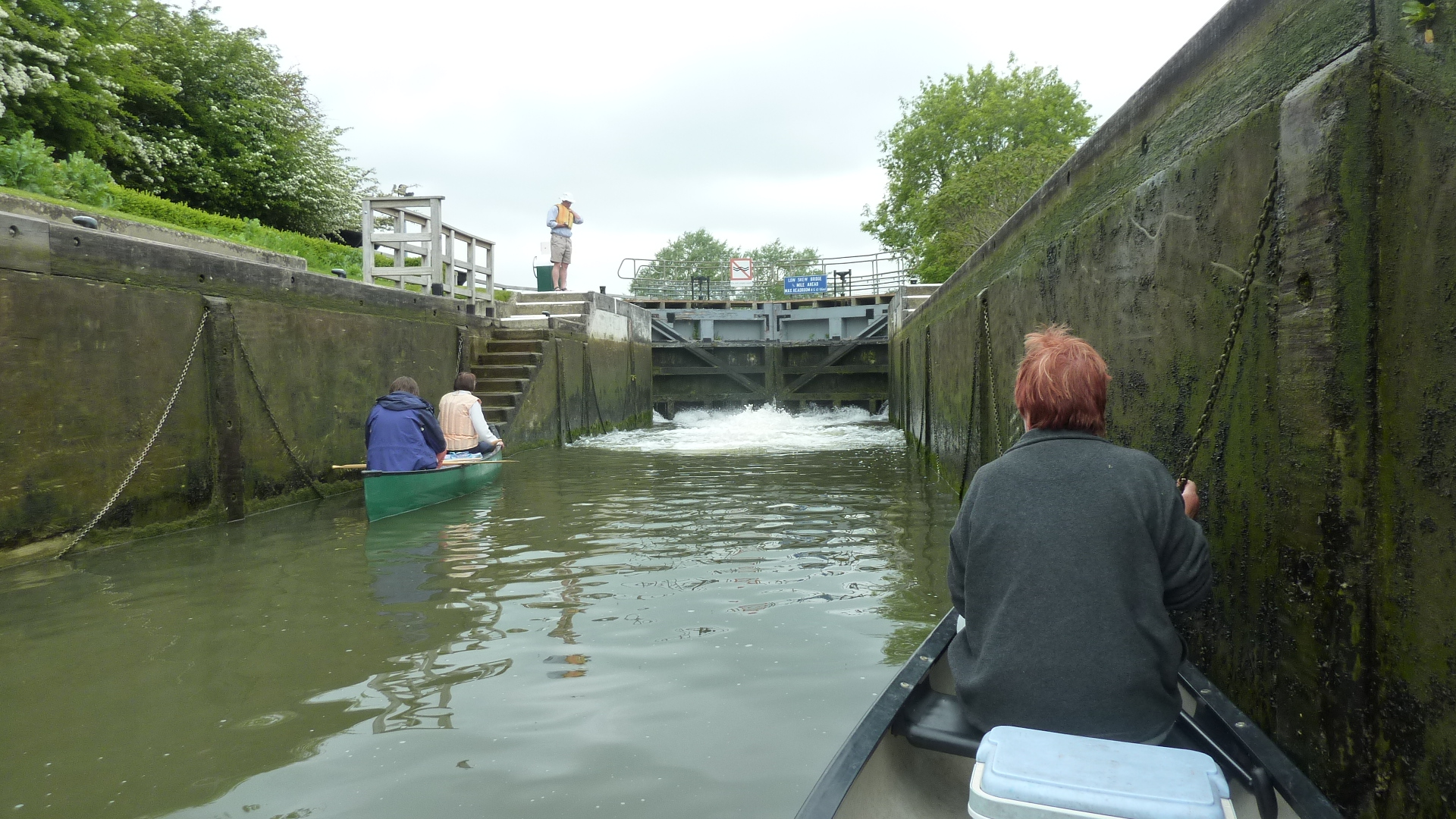
0.25 miles – Godstow bridge. Scarred by motorboat collisions! Abbey left.
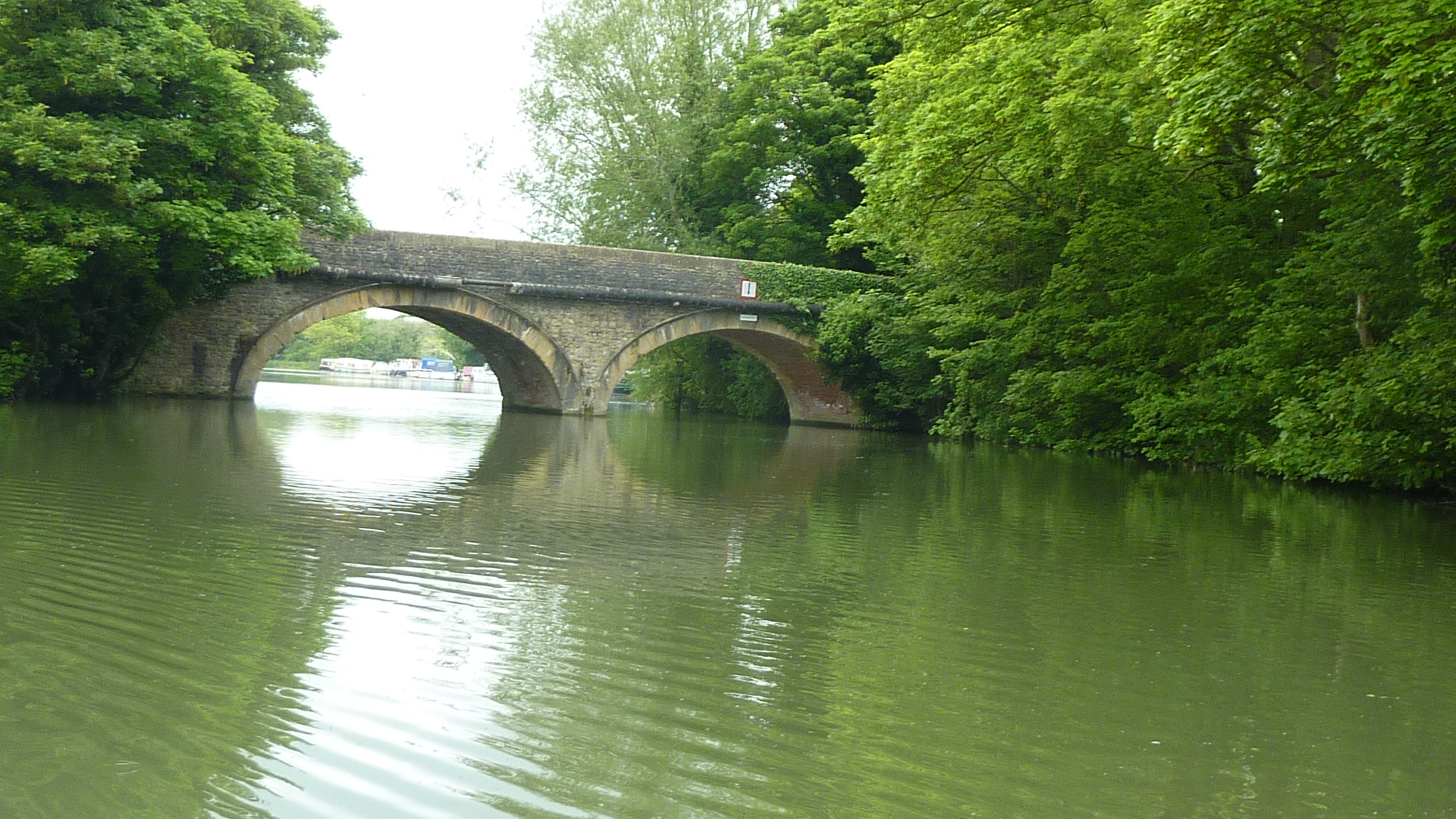
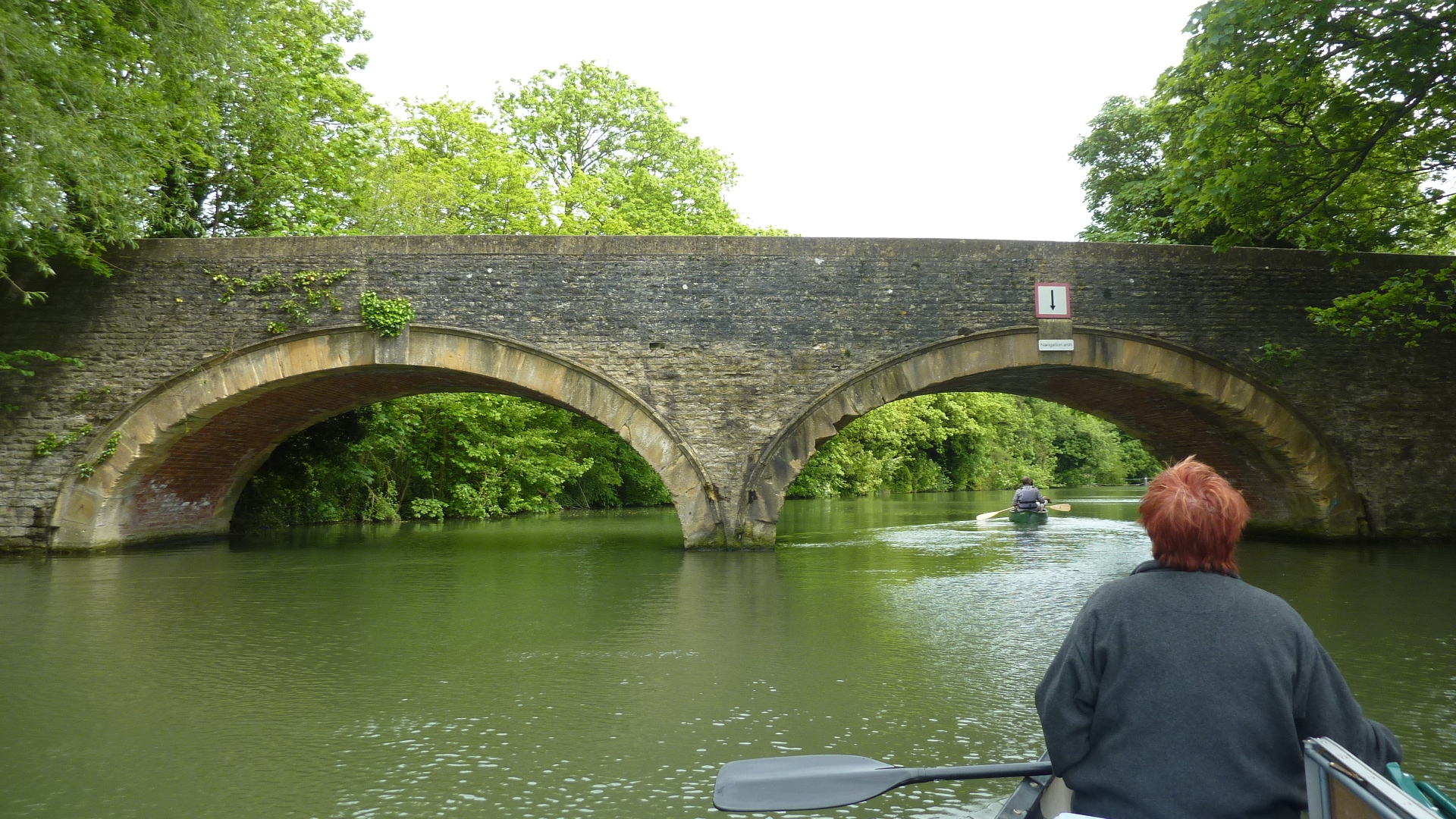

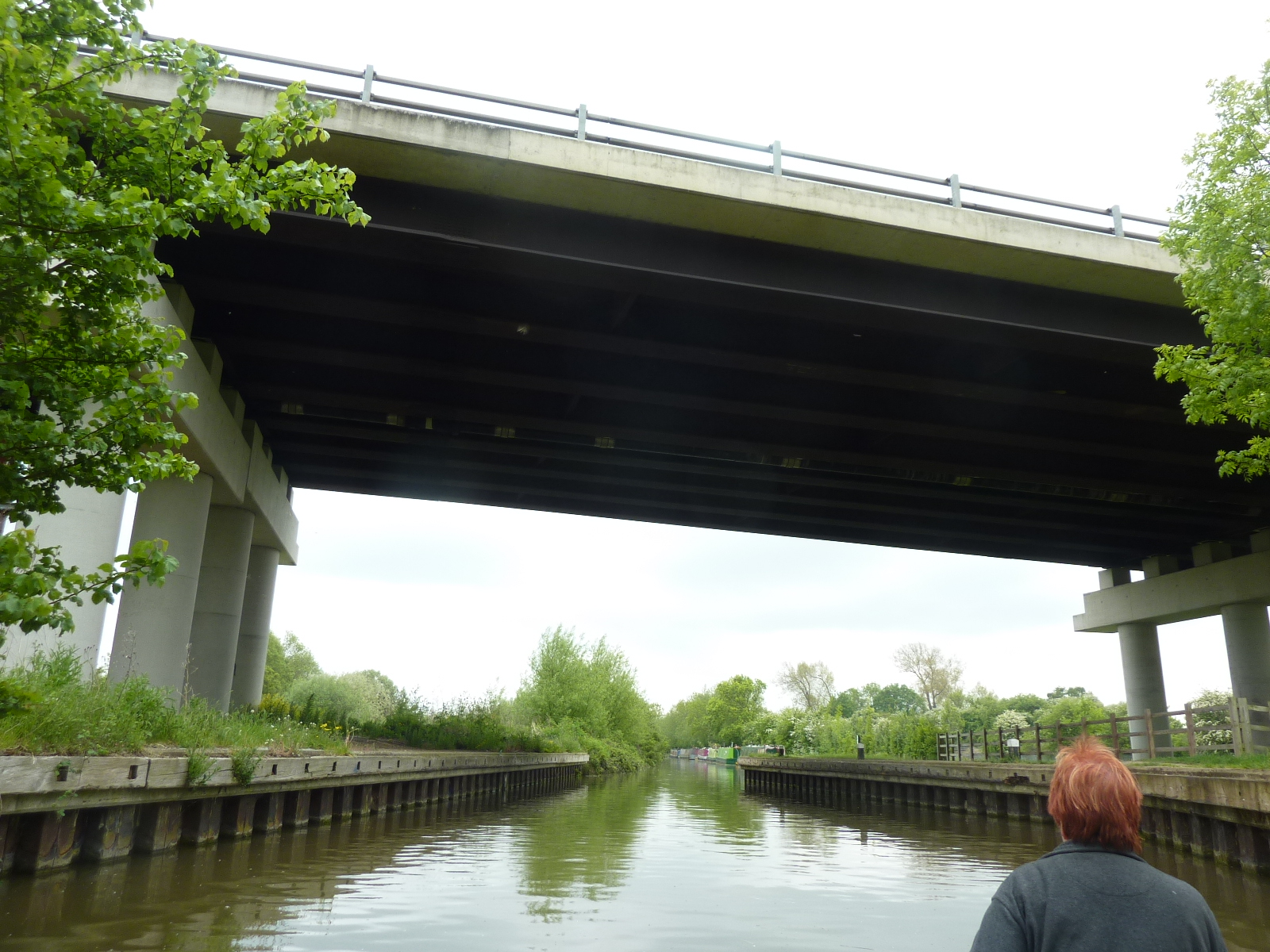
0.4 miles – A34 bypass bridge
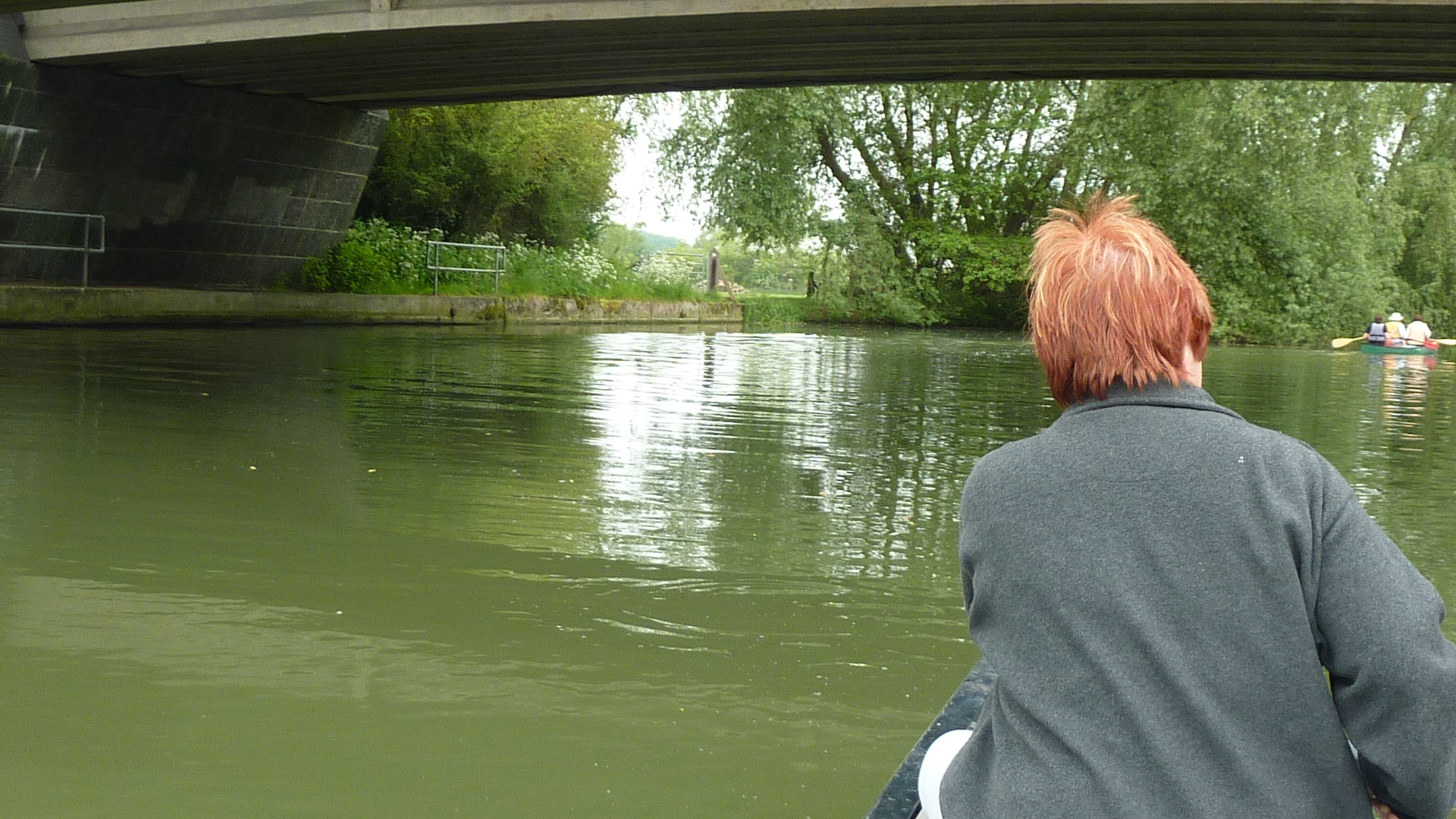
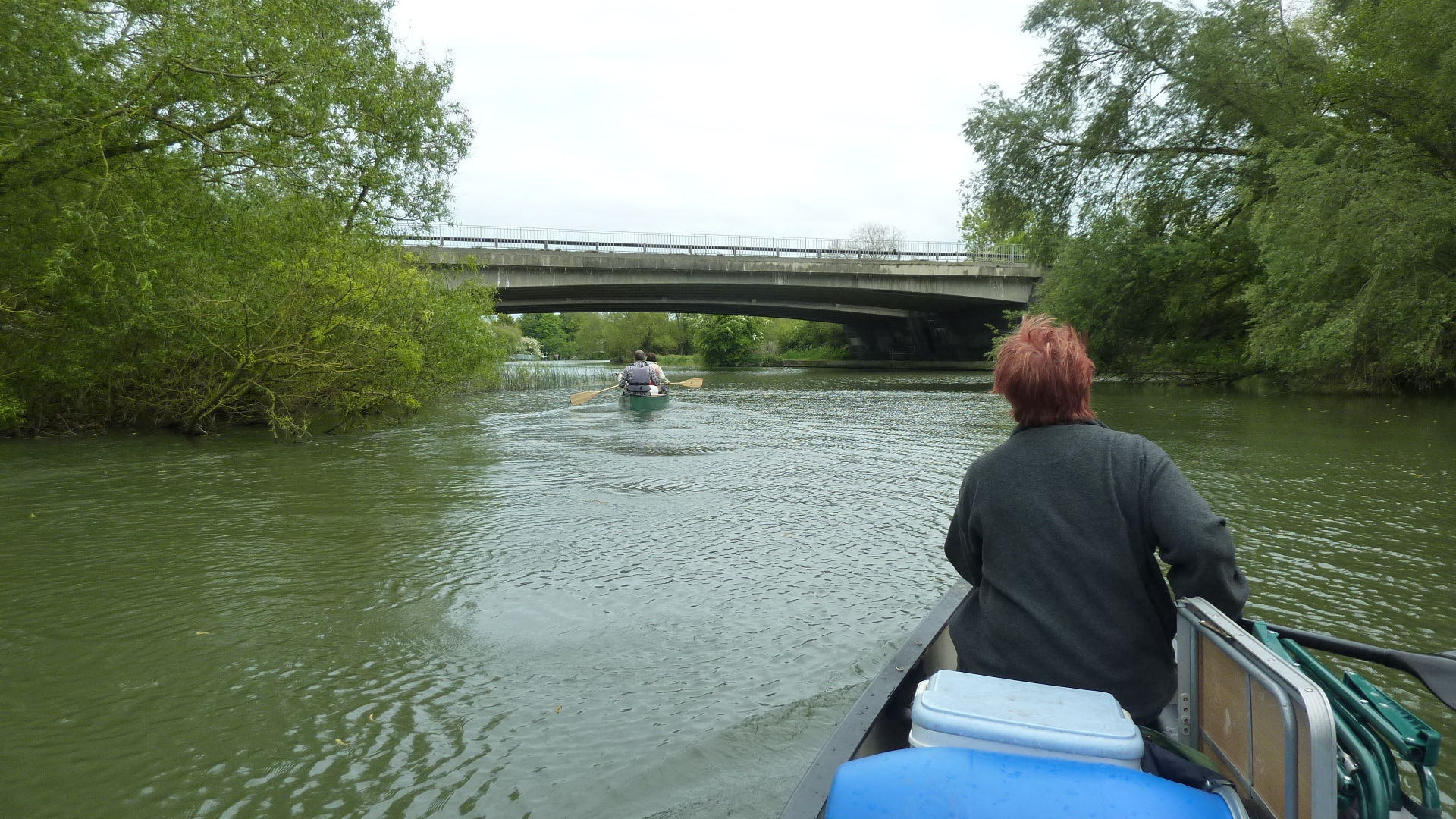
Elegy for Iris, (p1) by John Bayley:
“For years now we’ve usually managed a treat for ourselves on really hot days at home in the summer. We take the car along the bypass road from Oxford, for a mile or two, and twist abruptly off onto the verge – quite a tricky feat with fast-moving traffic just behind. Sometimes there are hoots and shouts from passing cars which have to brake at speed, but by that time we have jolted to a stop on tussocky grass, locked the car, and crept through a gap in the hedge.
I remember the first time we did it, nearly forty-five years ago. We were on bicycles then and there was little traffic on the unimproved road. Nor did we know where the river was exactly; we just thought it must be somewhere there. And with the ardour of comparative youth we wormed our way though the rank grass and sedge until we almost fell into it. Crouching in the shelter of the reeds, we tore our clothes off and slipped in like water rats. A kingfisher flashed past our noses as we lay soundlessly in the dark, sluggish current. A moment after we had crawled out and were drying ourselves on Iris’s half slip a big pleasure boat chugged past within a few feet of the bank. The steersman, wearing a white cap, gazed intently ahead.Tobacco smoke mingled with the watery smell at the foot of the tall reeds.”
Possible spots?
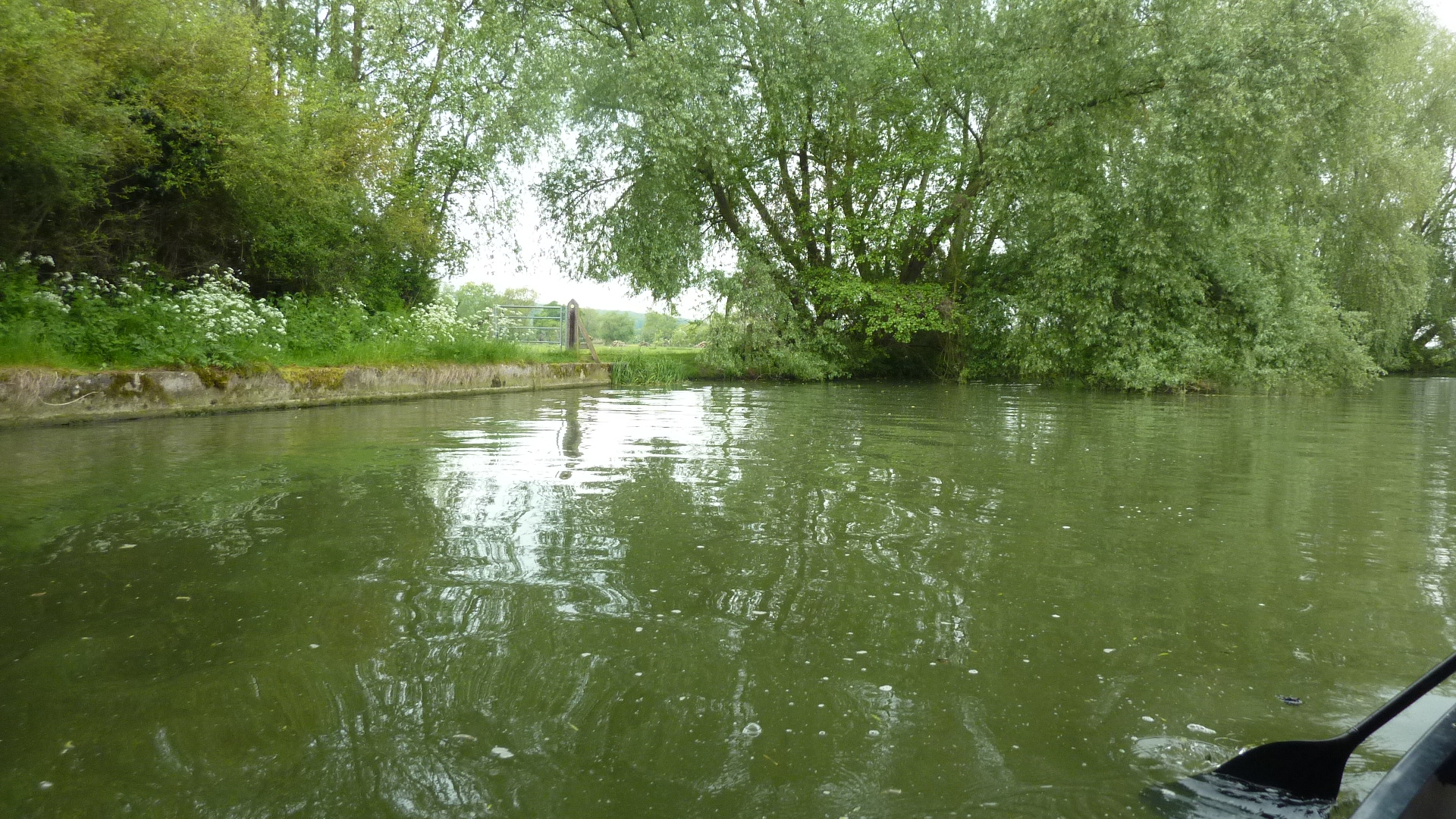
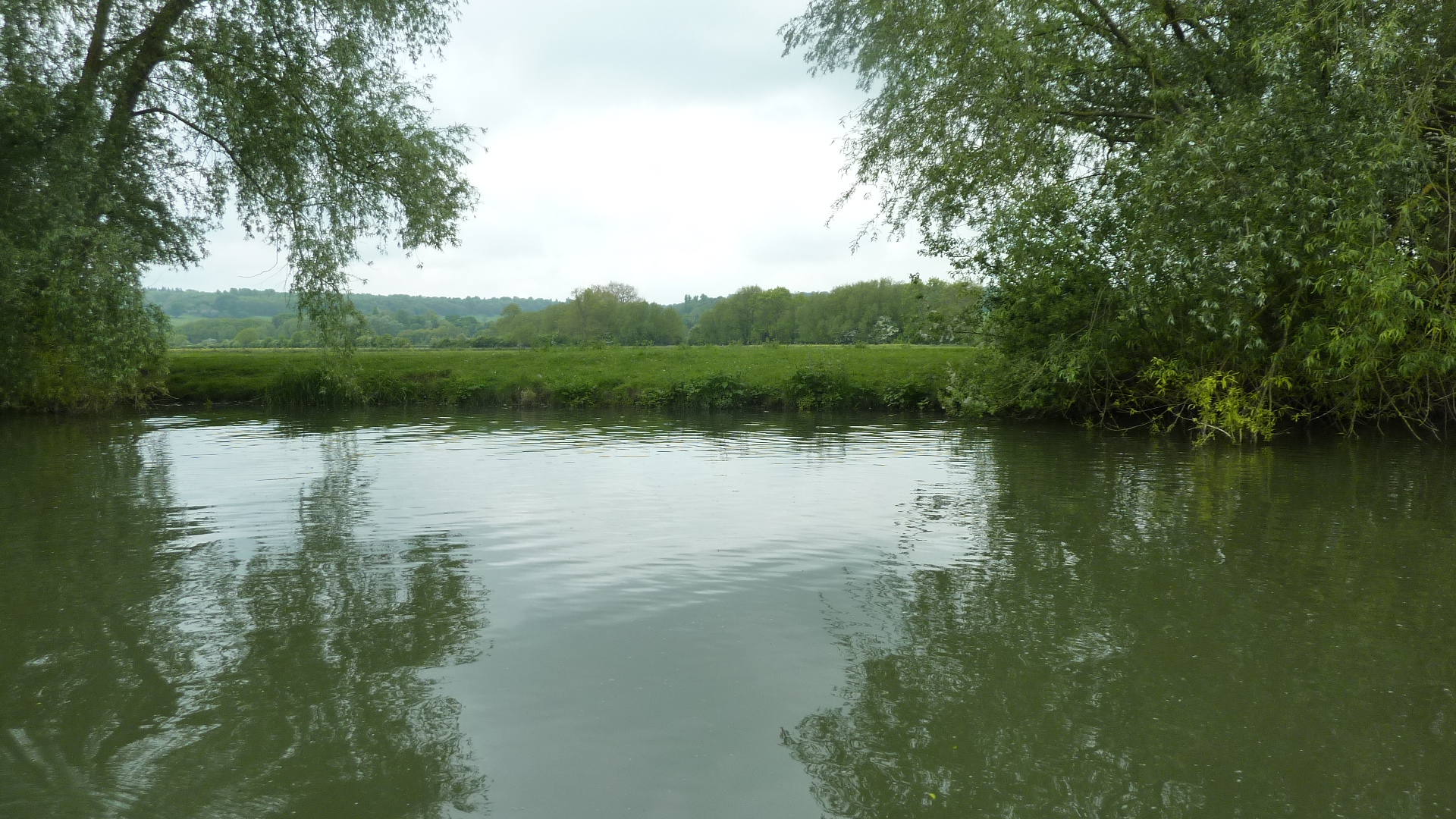
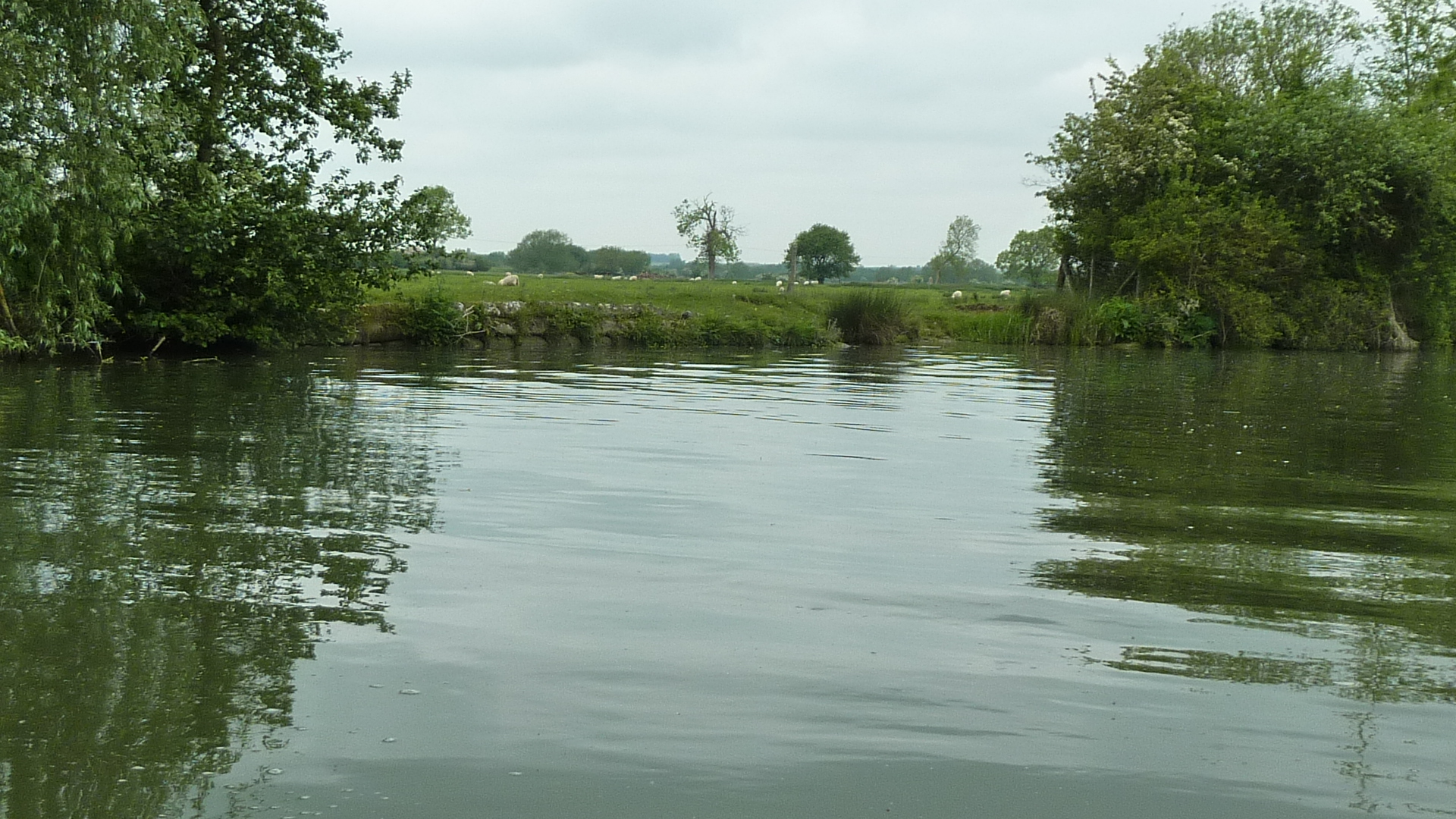
1 mile – Kings lock
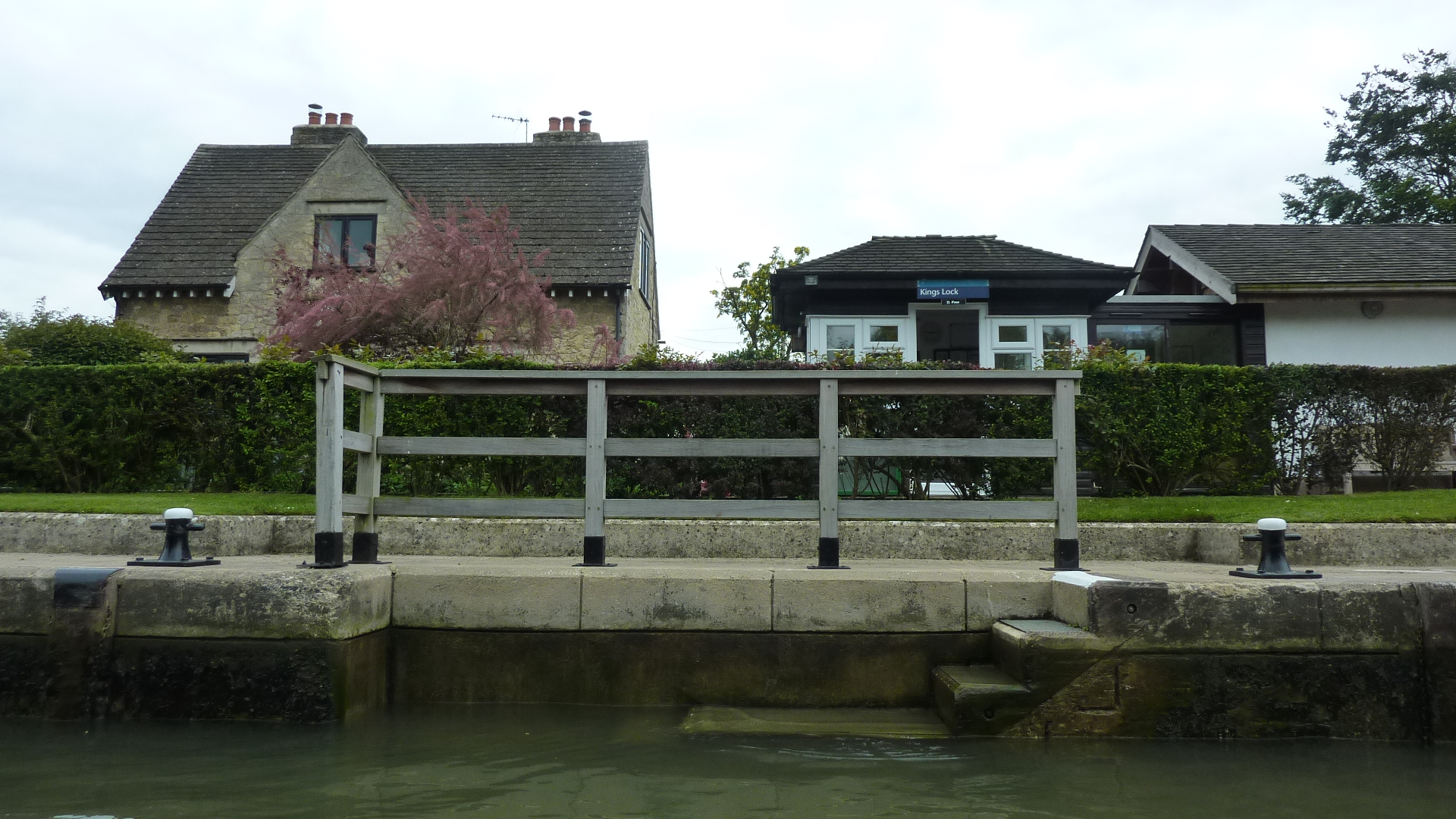
Just upstream of the lock, “Duke’s cut” leaves right.
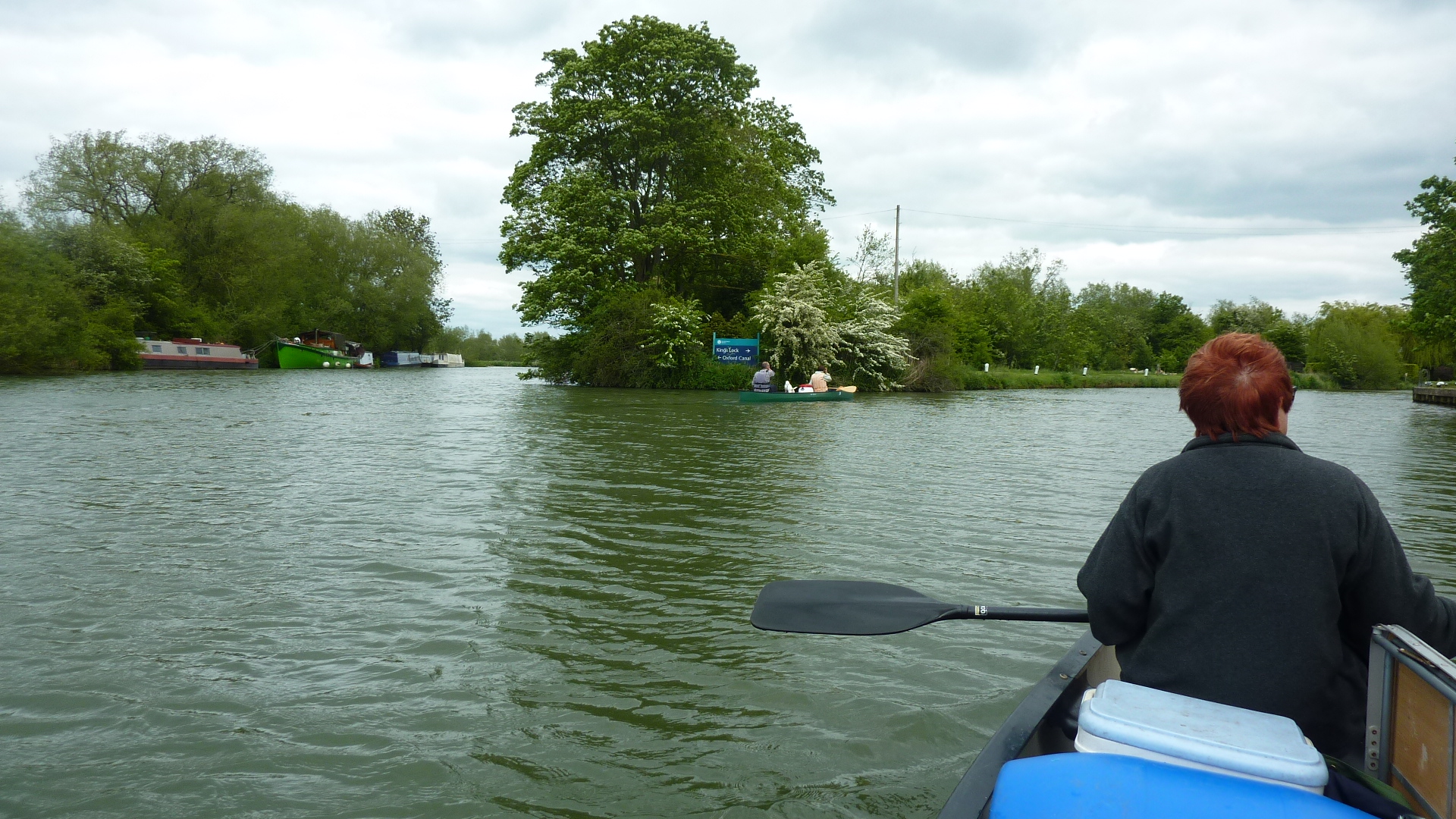
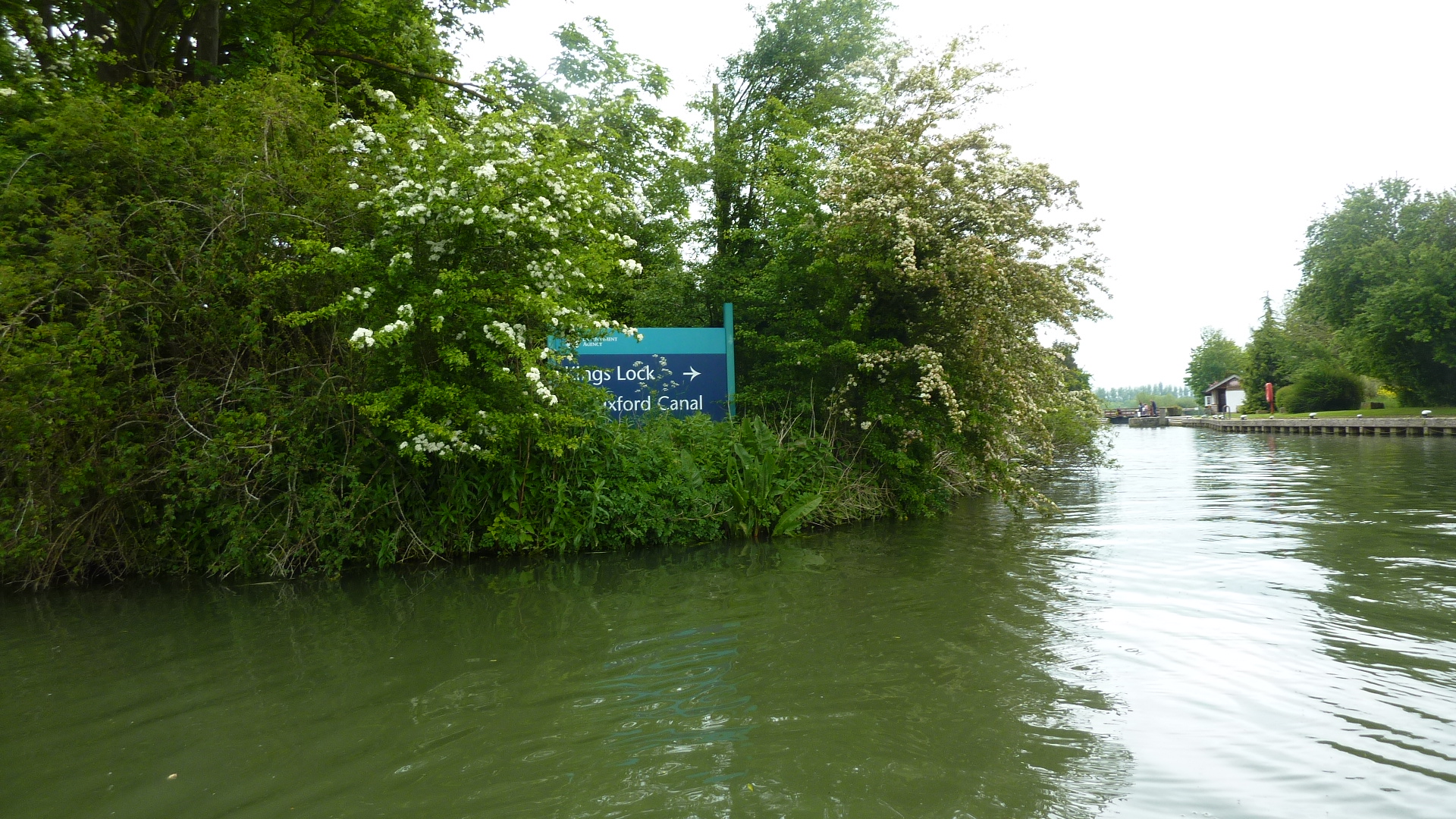
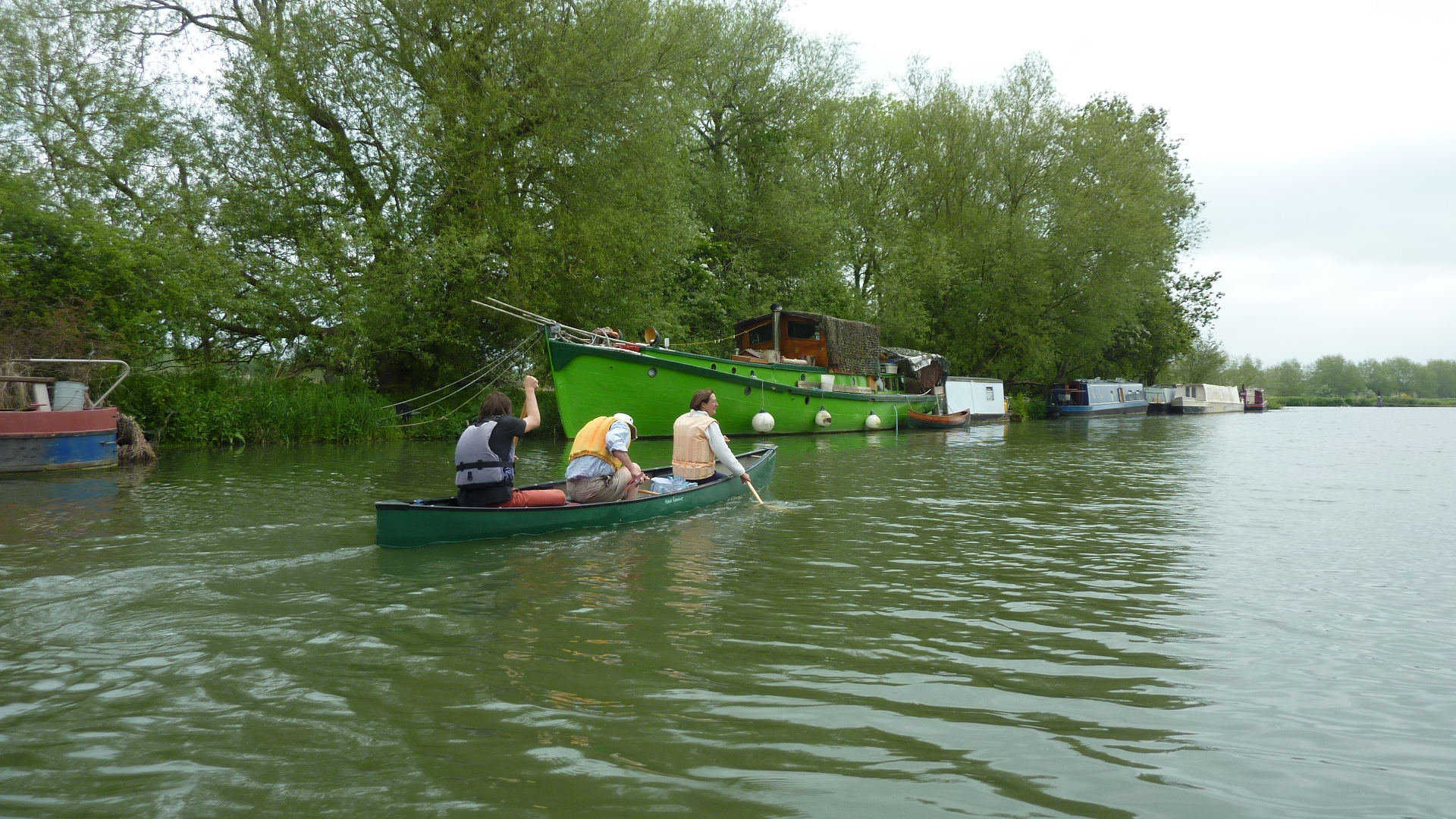
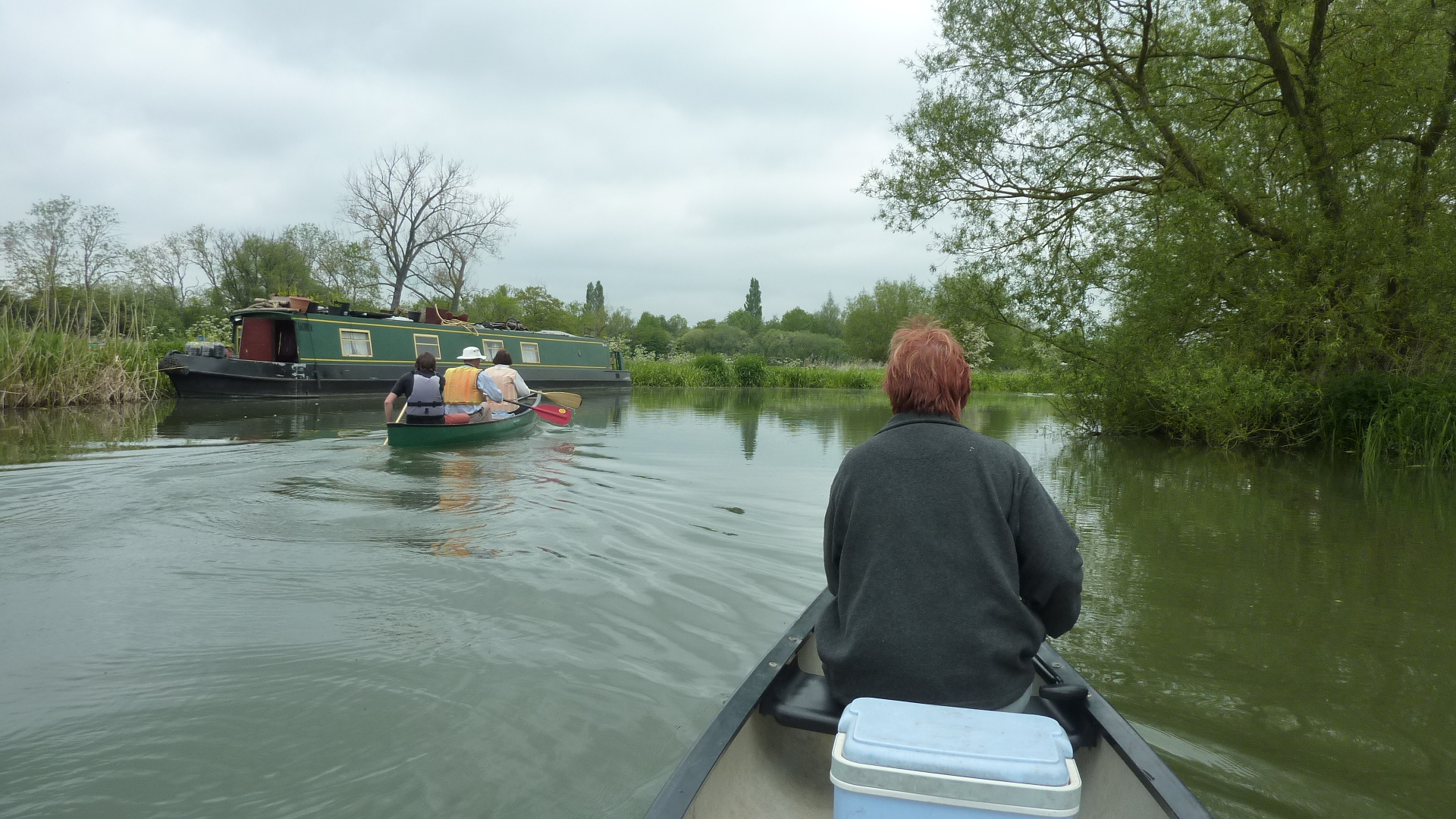
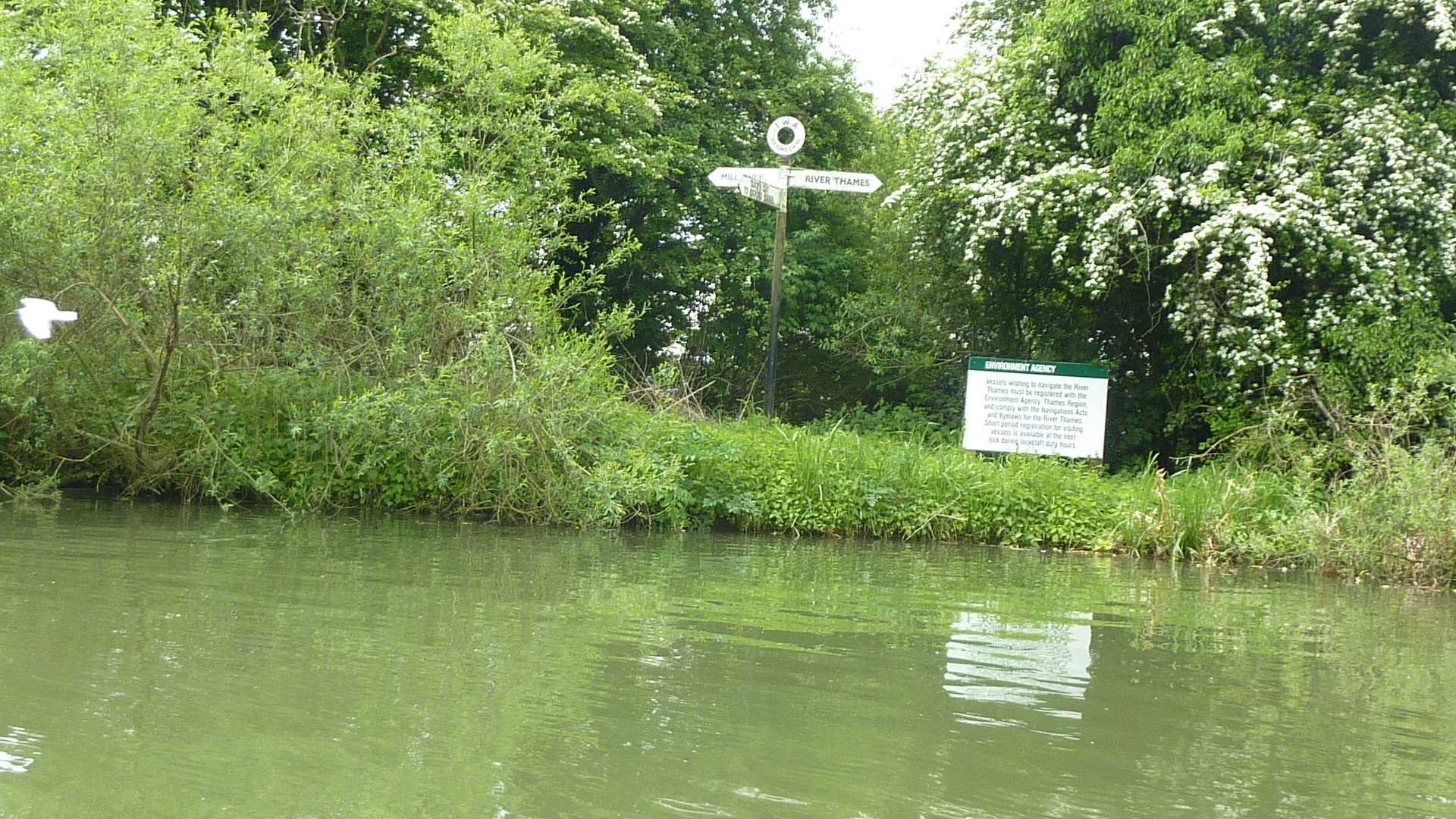
1.5 miles – junction with the eastern Thames stream. Keep left. Follow the signpost.
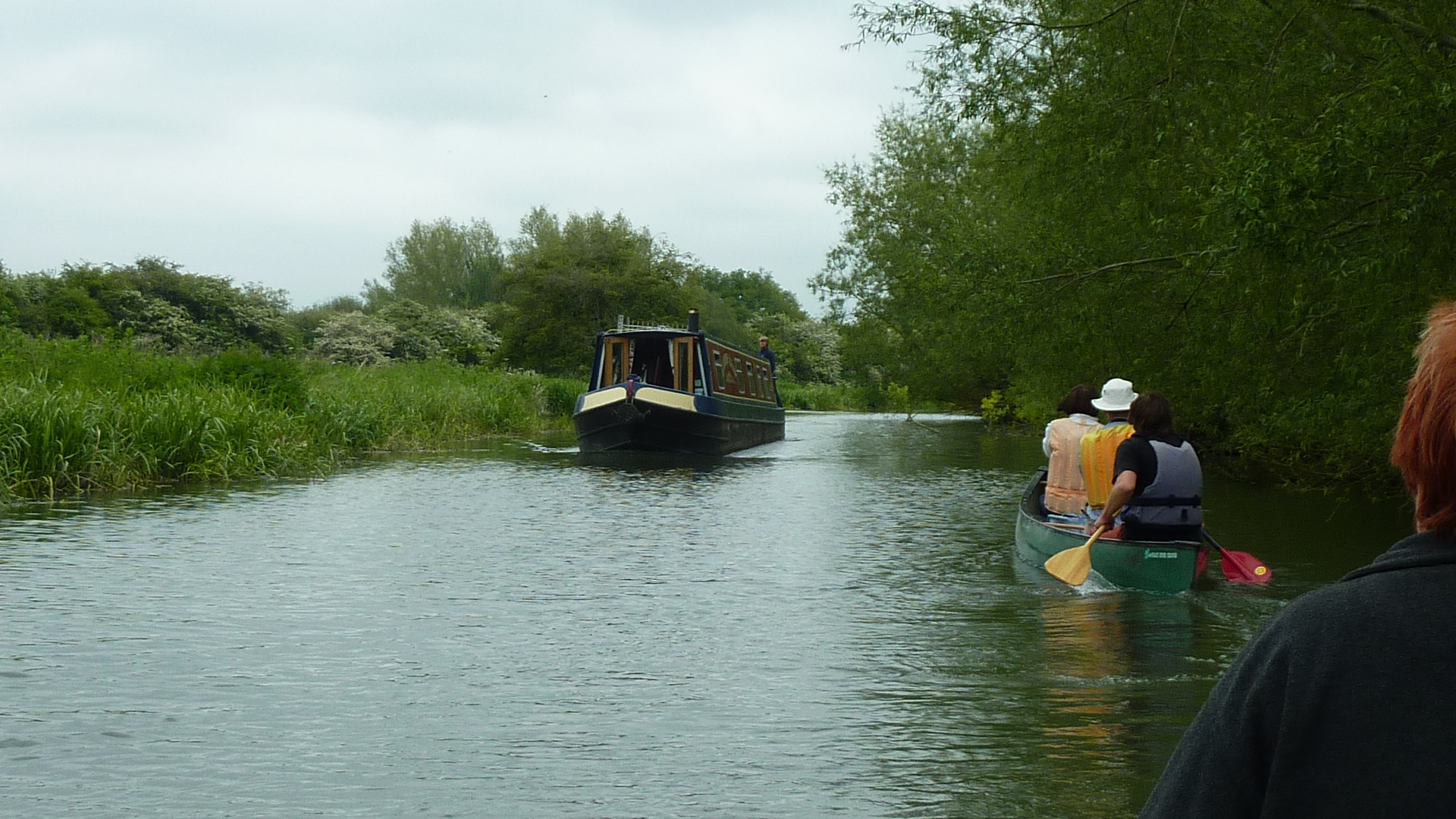
1.7 miles – A40 bridge followed by railway bridge over Duke’s cut lock
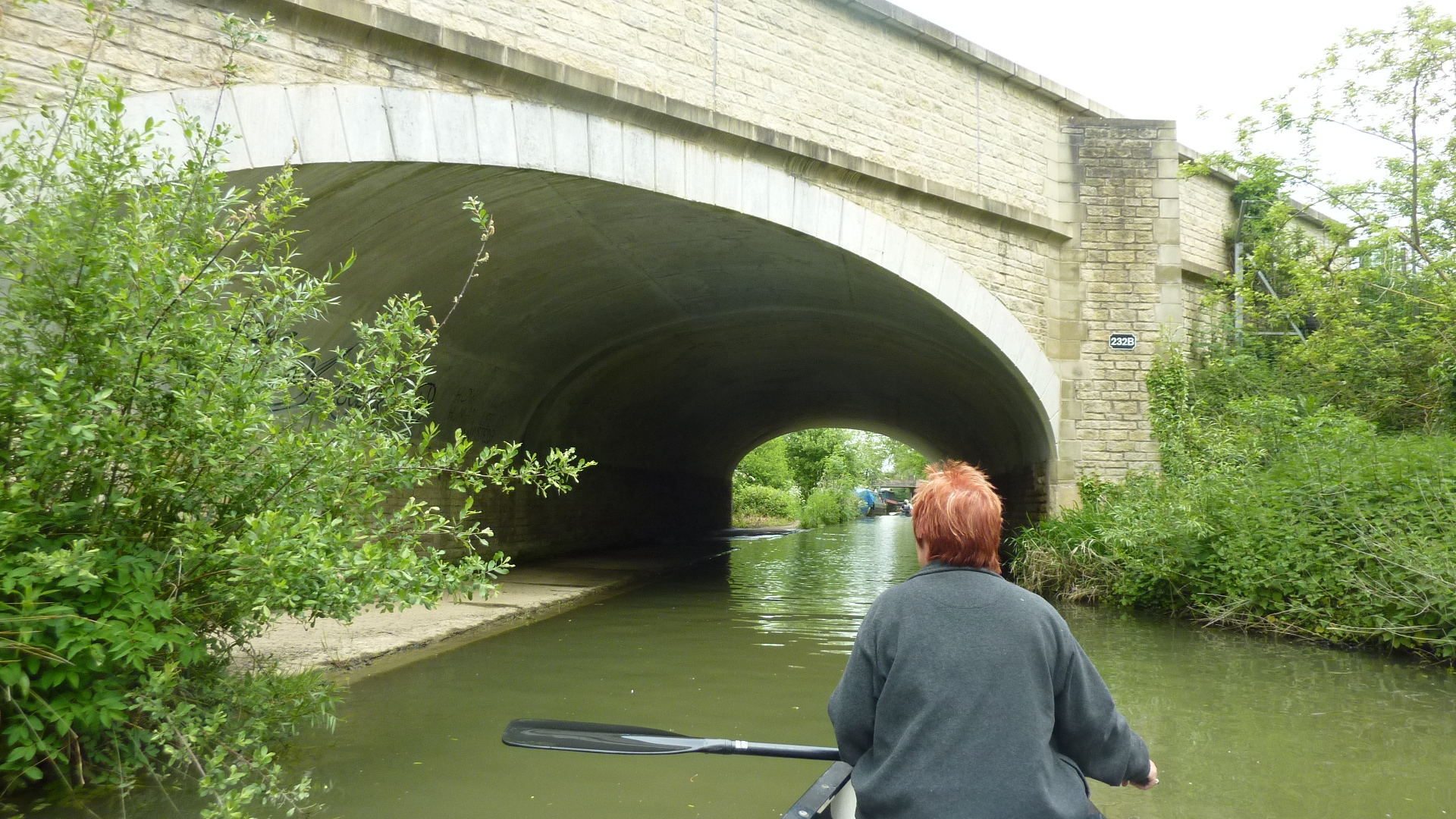
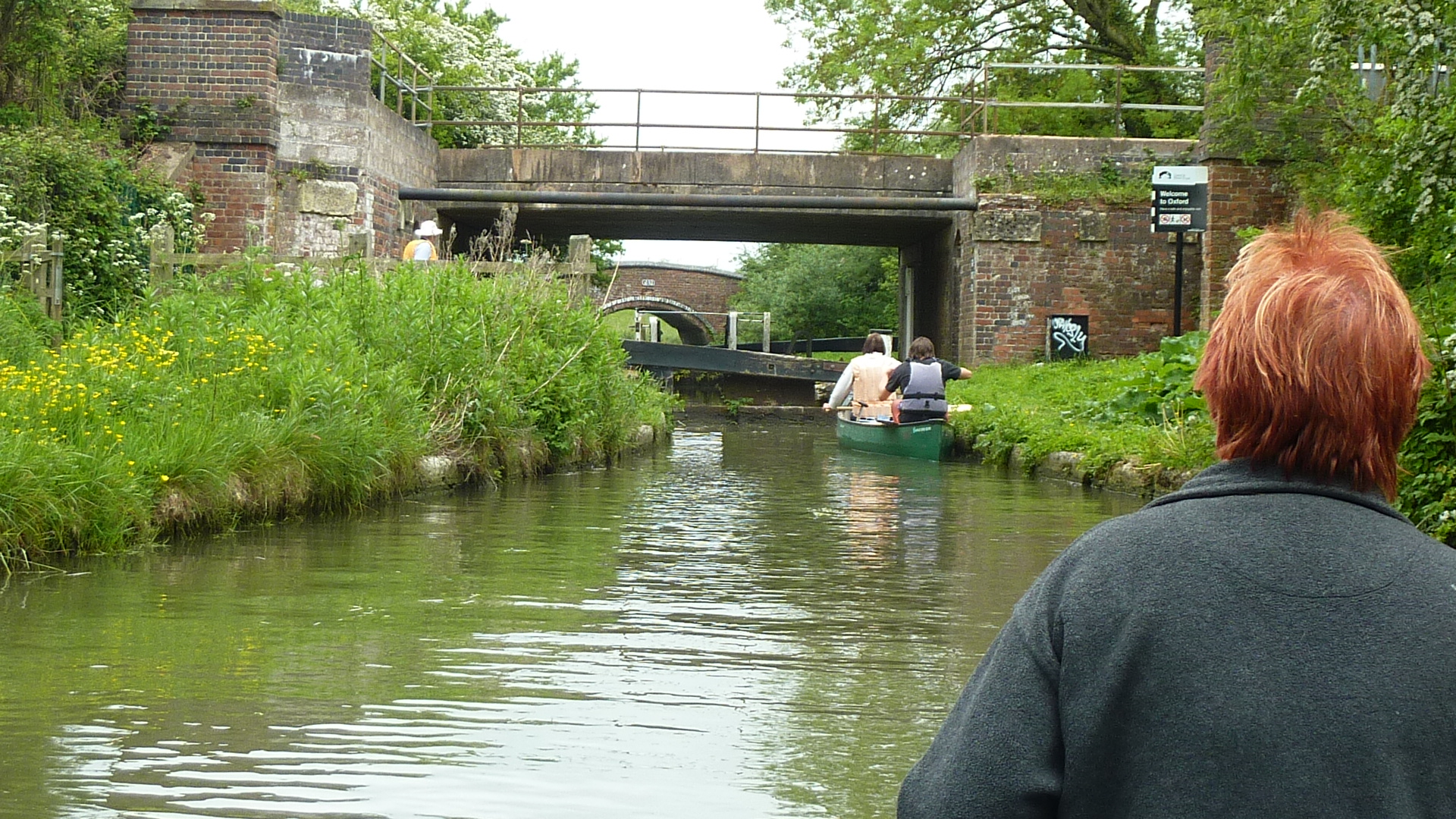
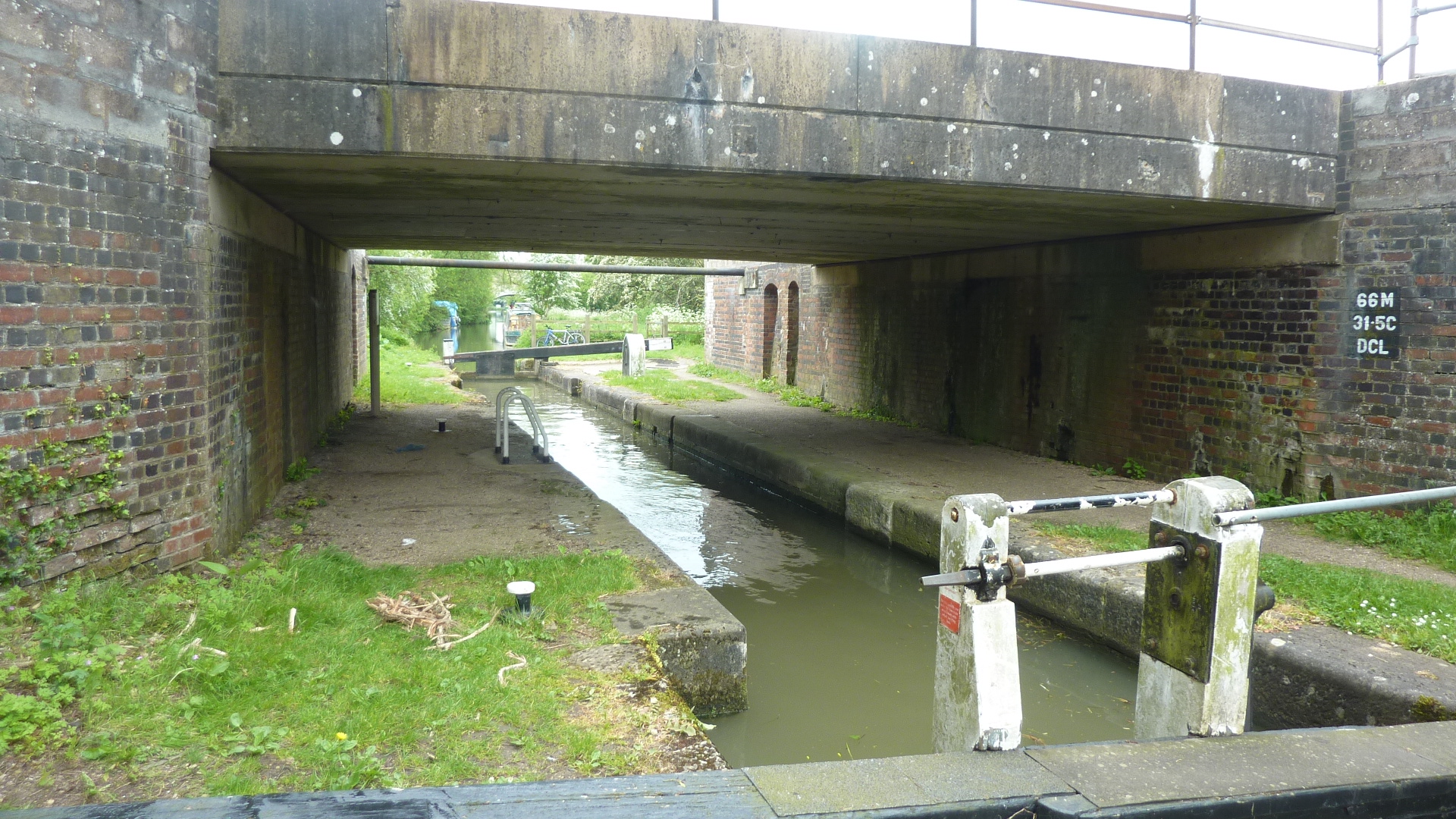
1.8 miles – towpath bridge followed by junction with the Oxford canal. Turn right.
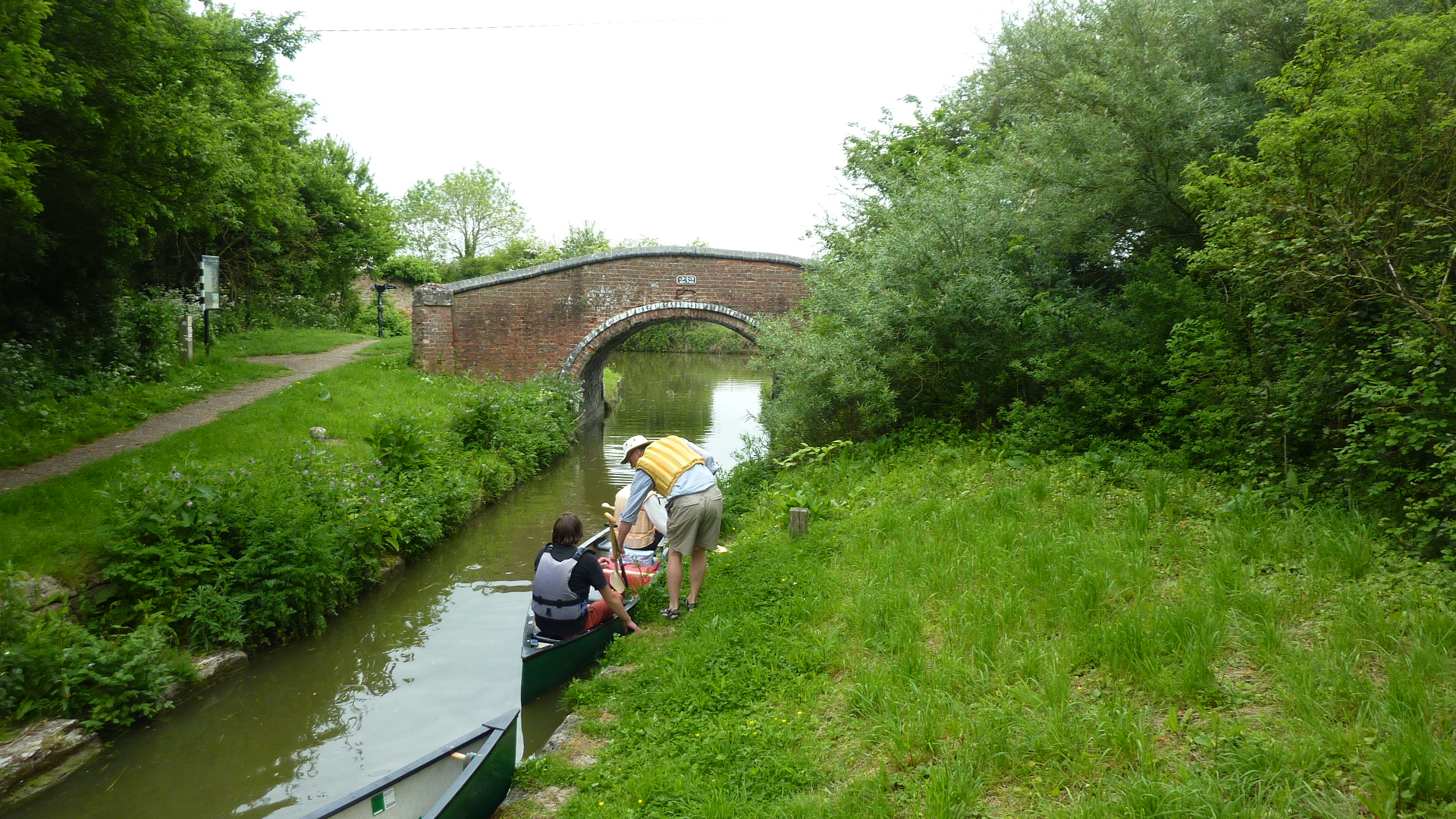
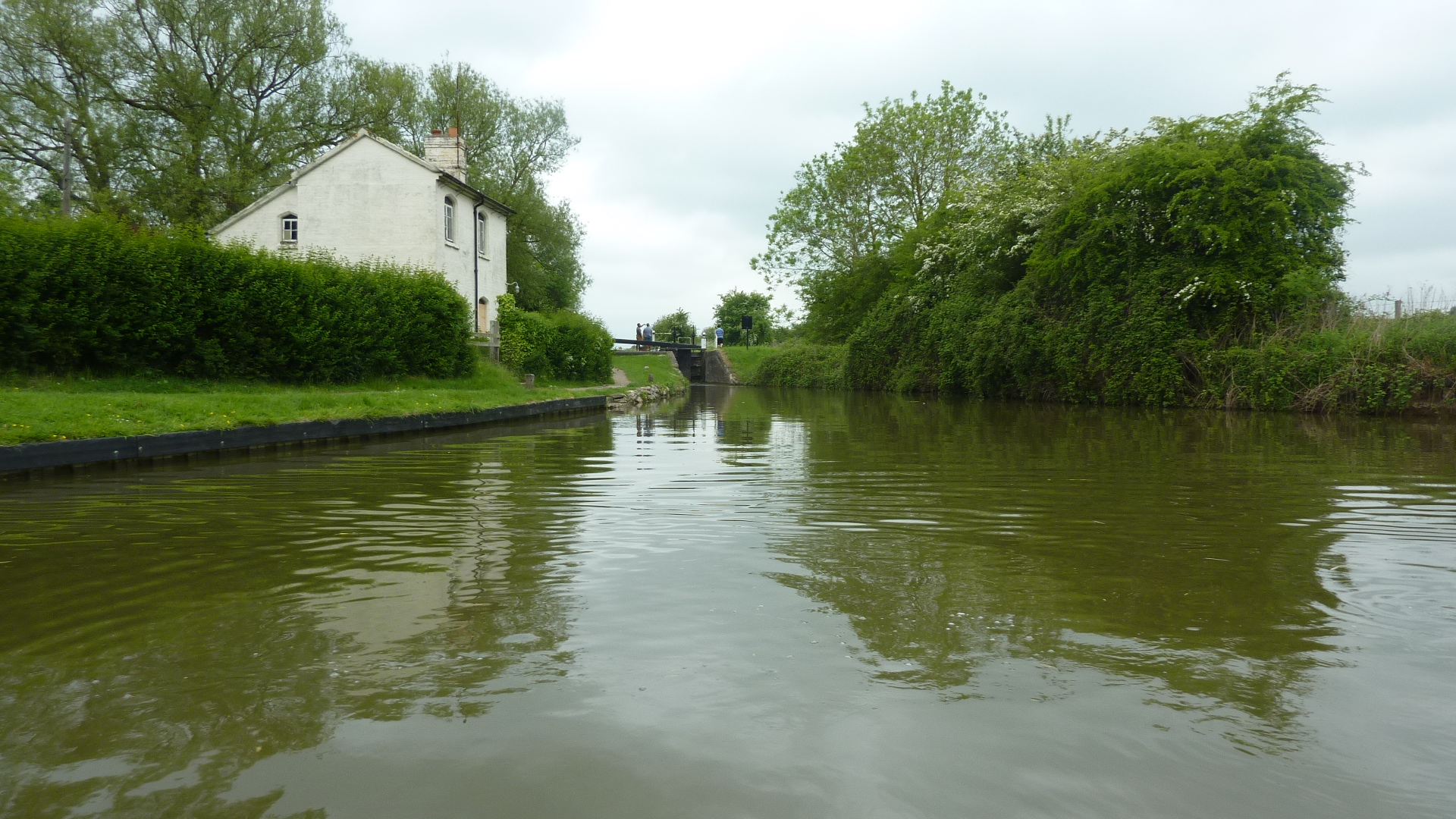
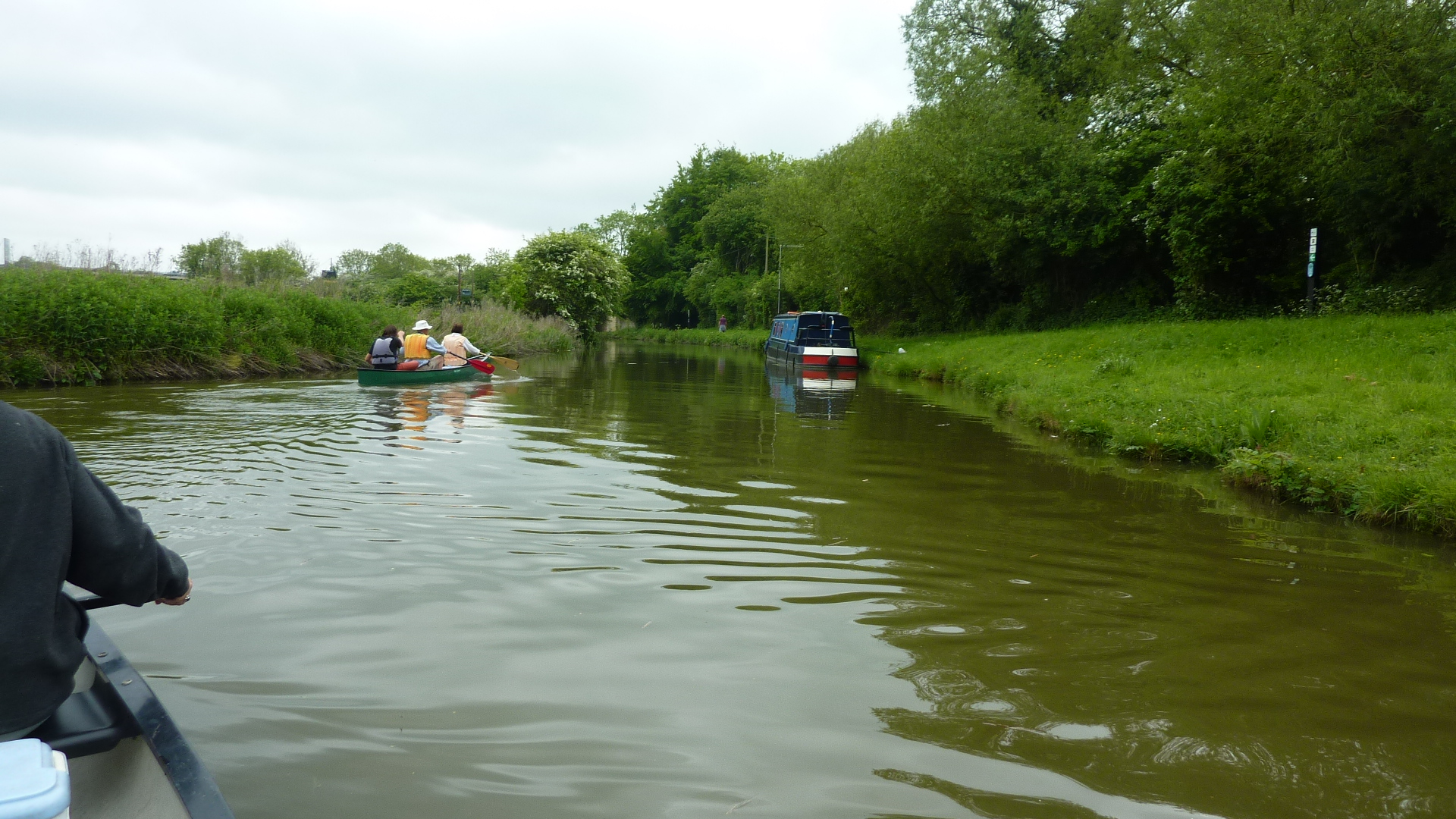
1.9 miles A40 bridge followed by the first of three lifting footbridges
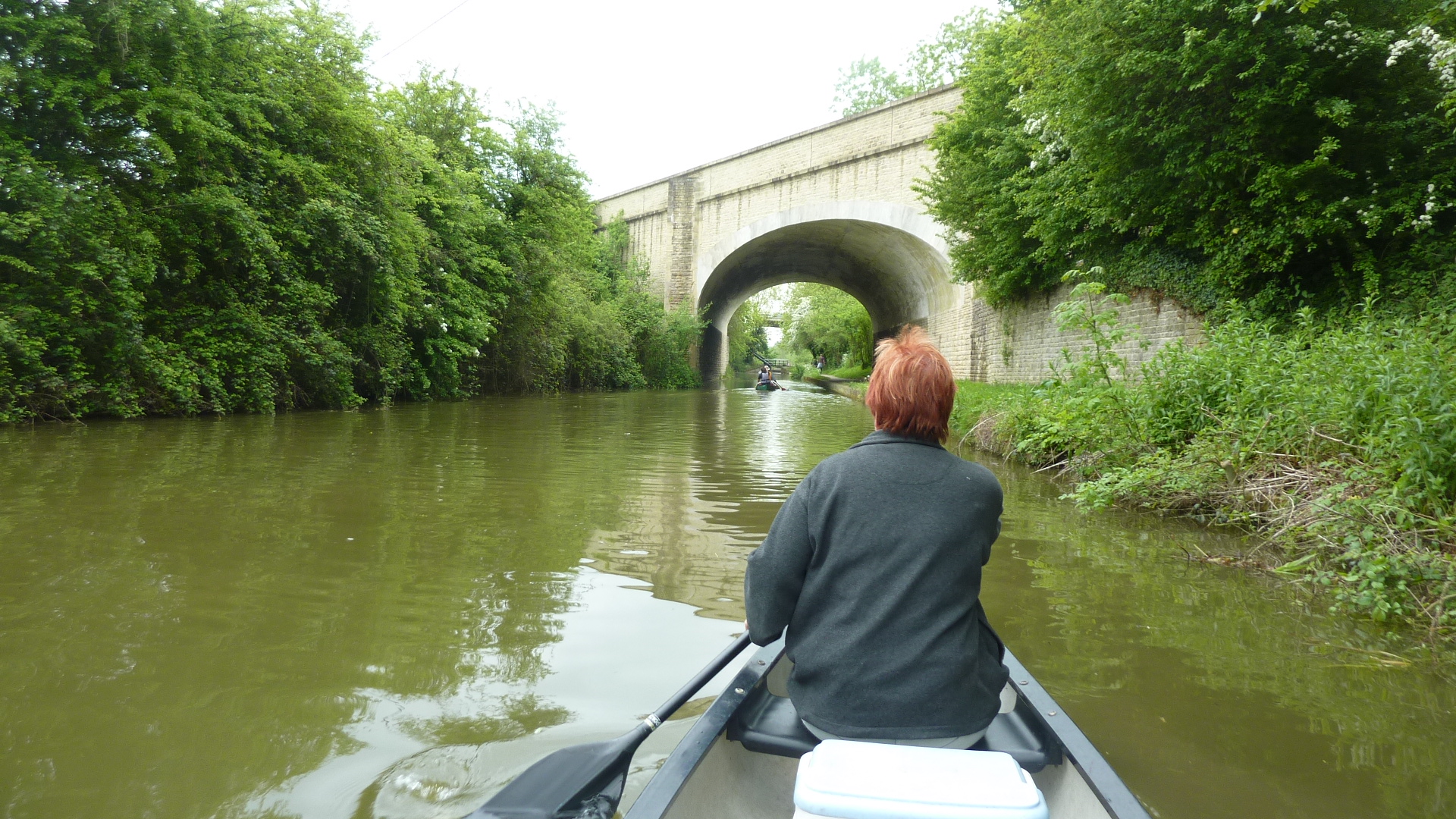
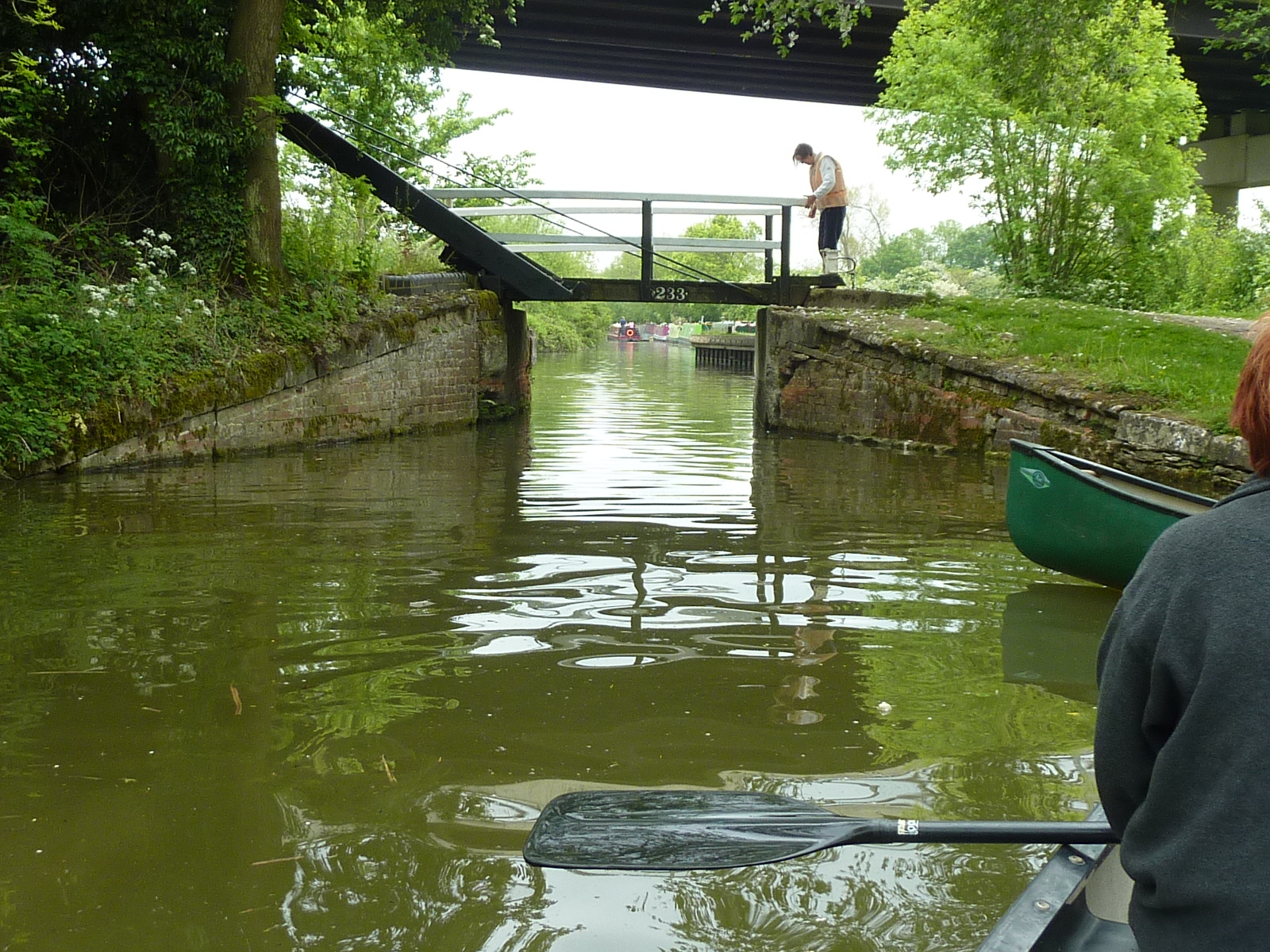
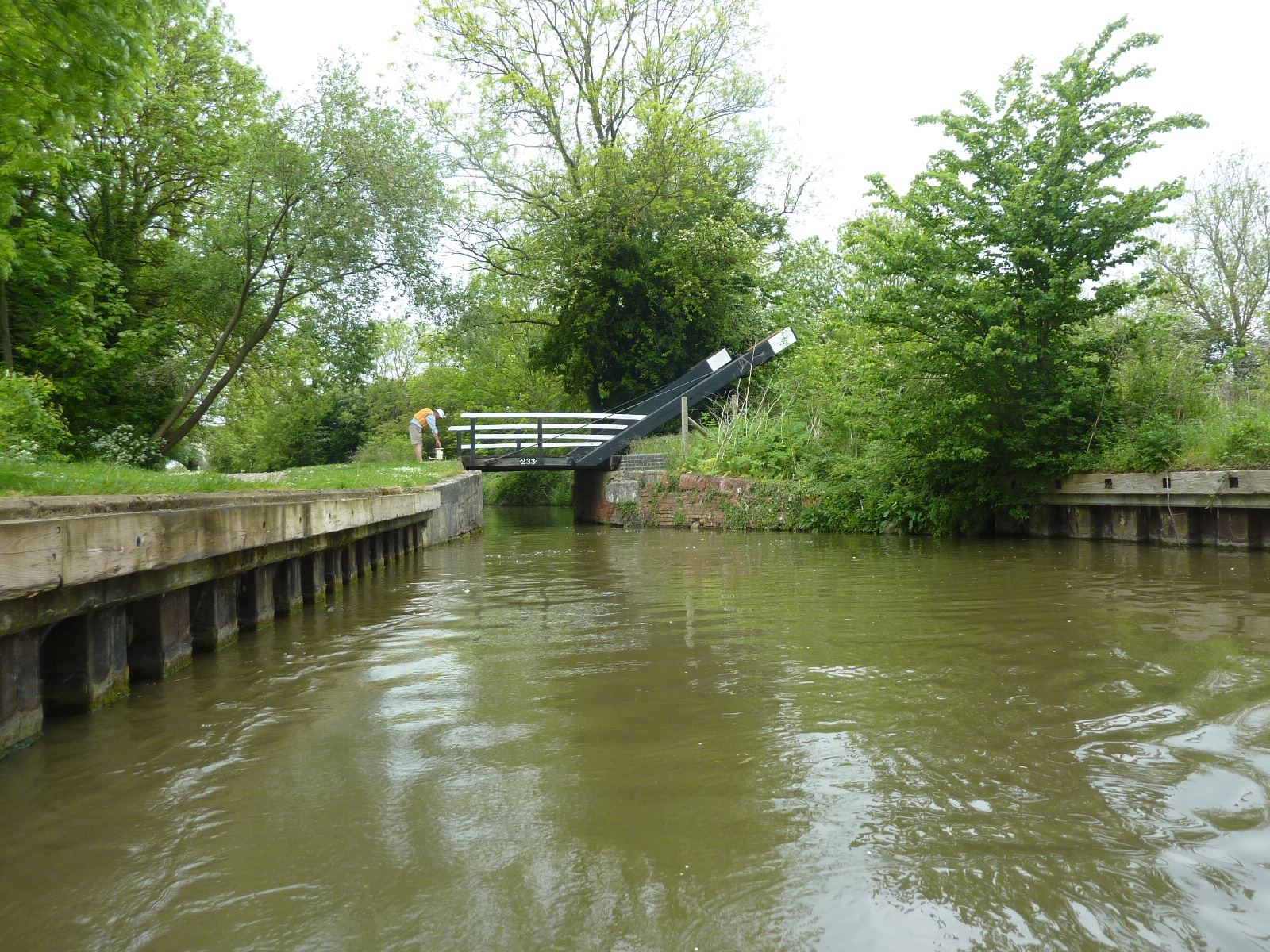
2 miles – A34 bypass bridge.


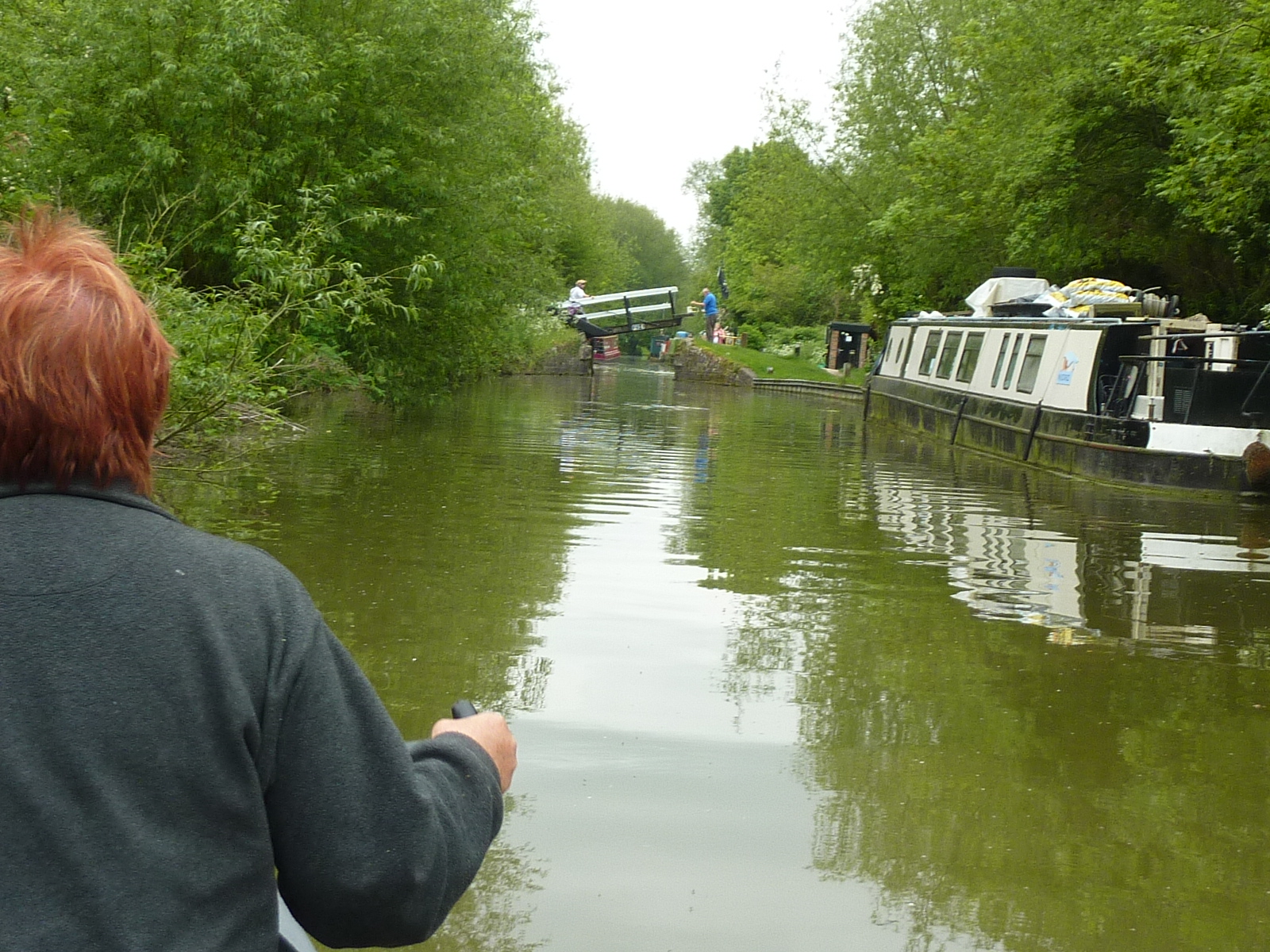
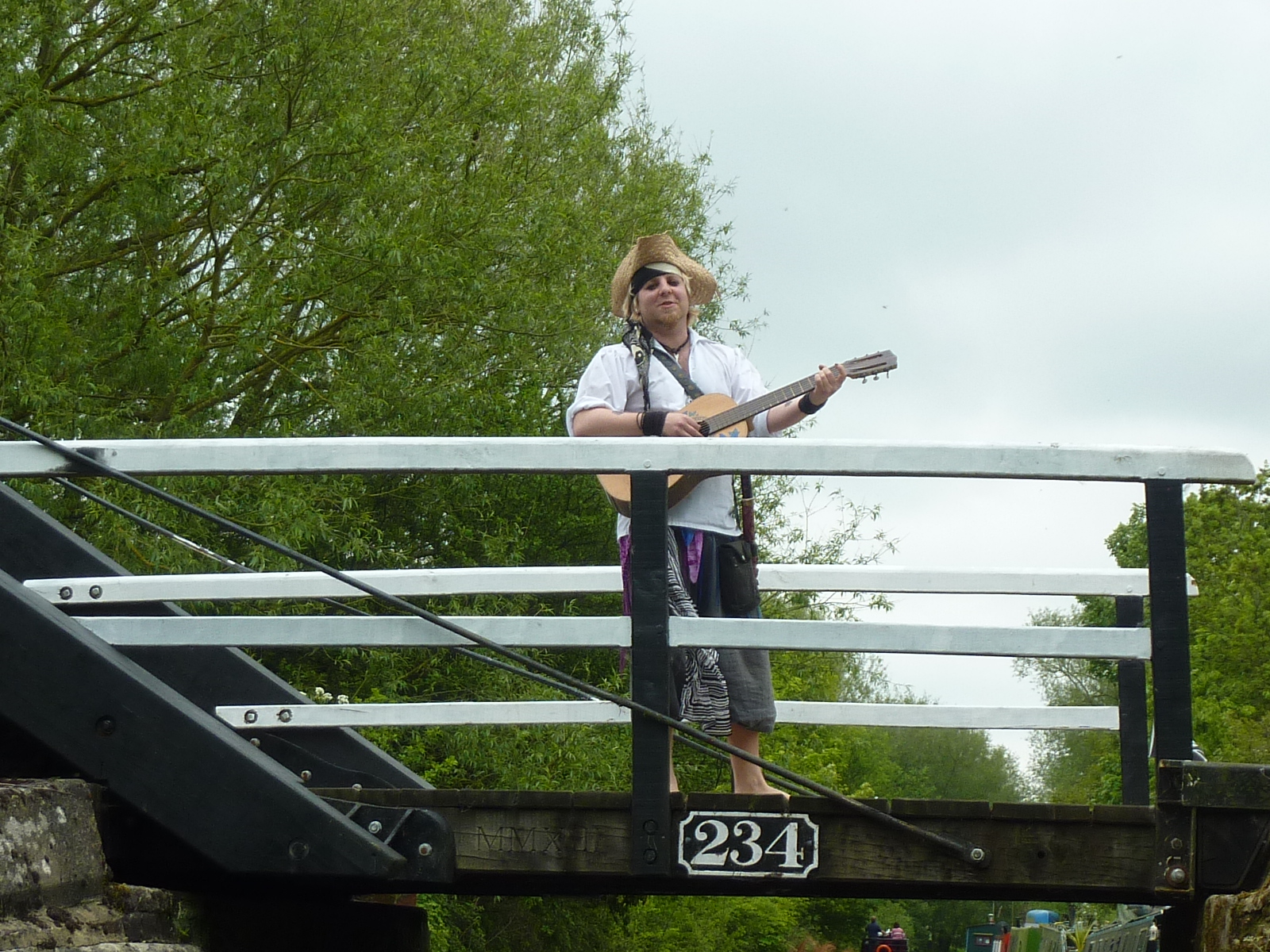
2.4 miles – lifting footbridge 234. This one had a minstrel on it.
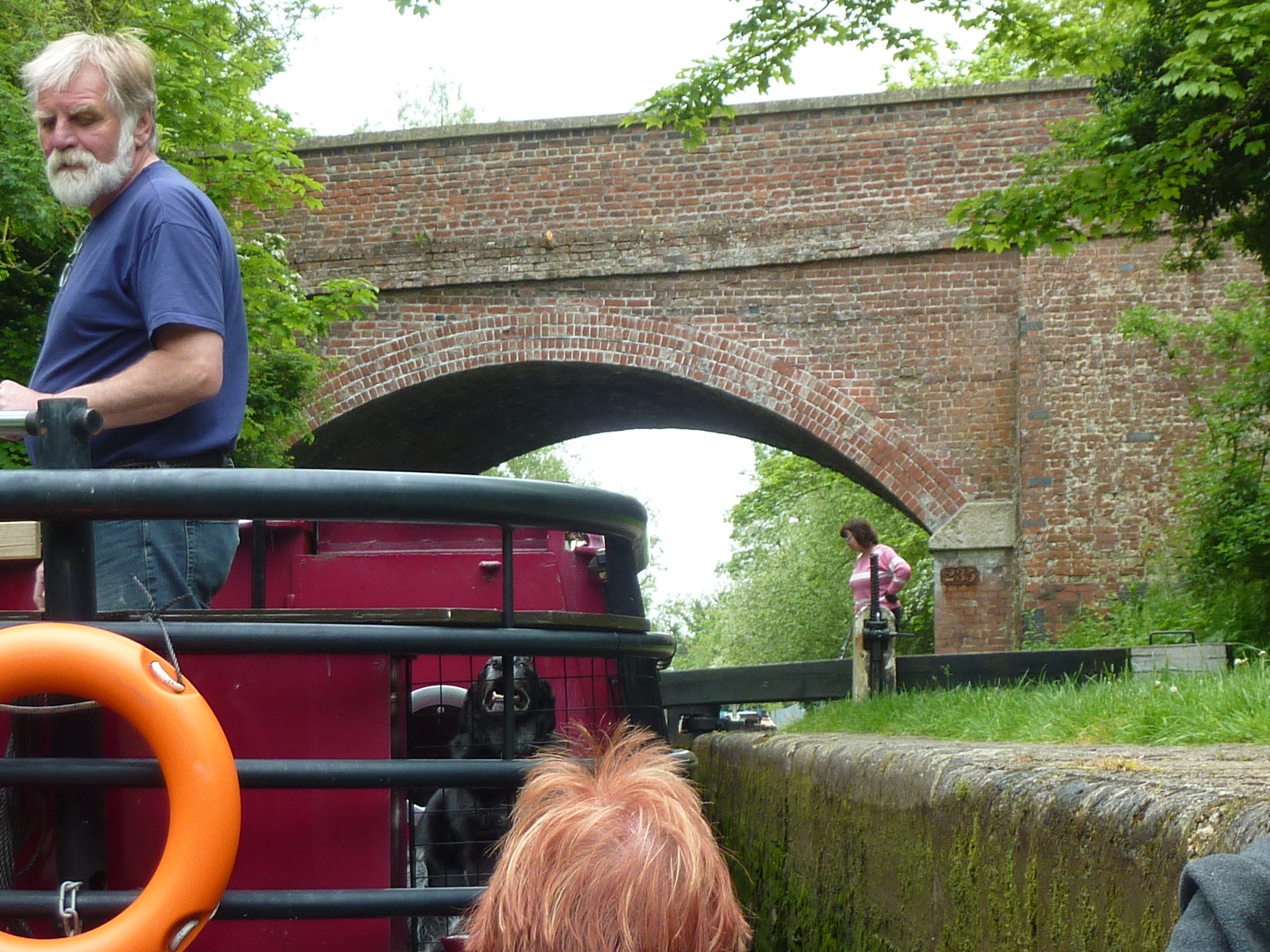
2.5 miles – Wolvercote bridge and lock. Followed immediately by the adjacent Wolvercote footbridge
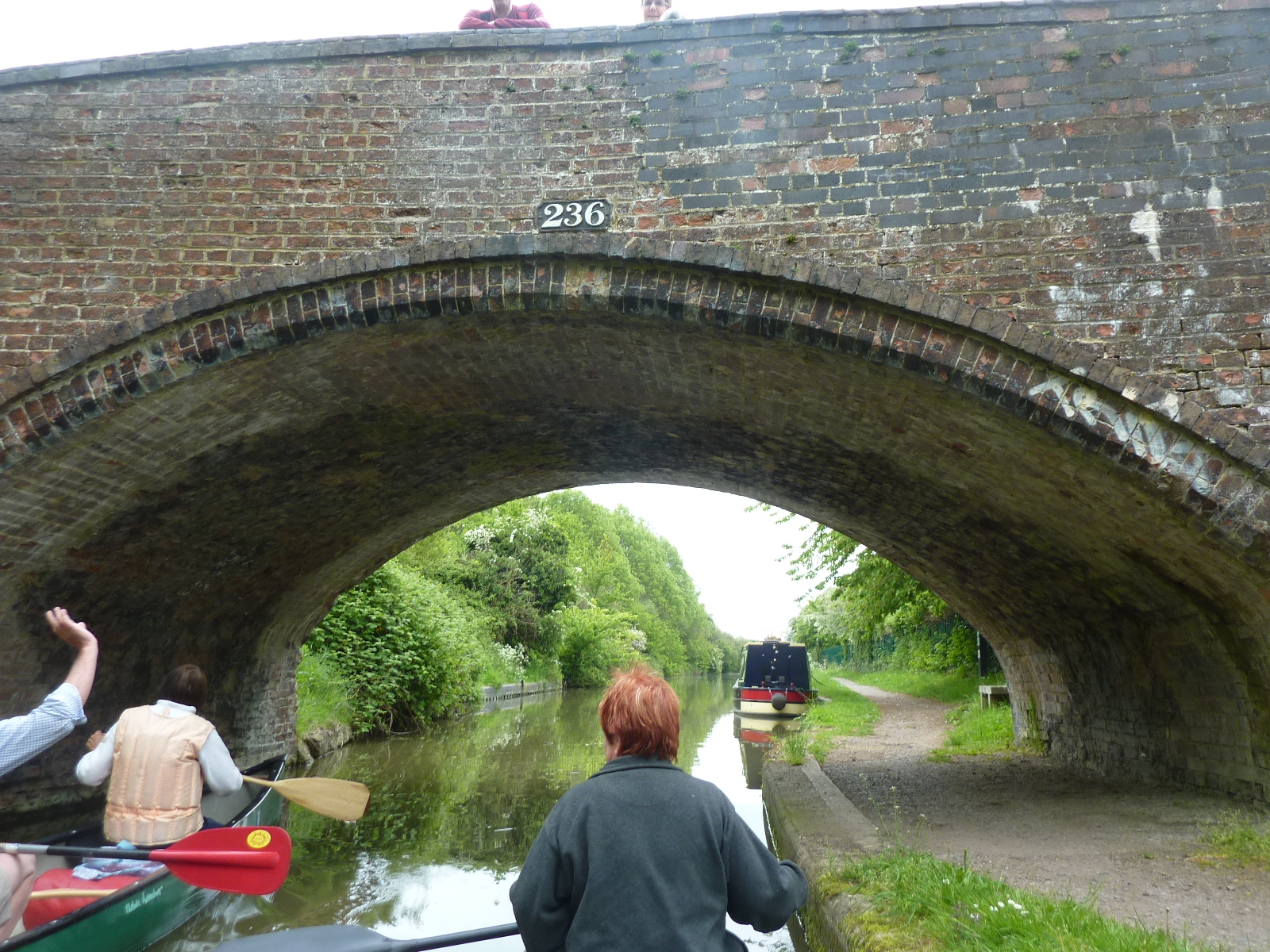
2.75 miles – Wolvercote Green Field bridge. The Plough left.
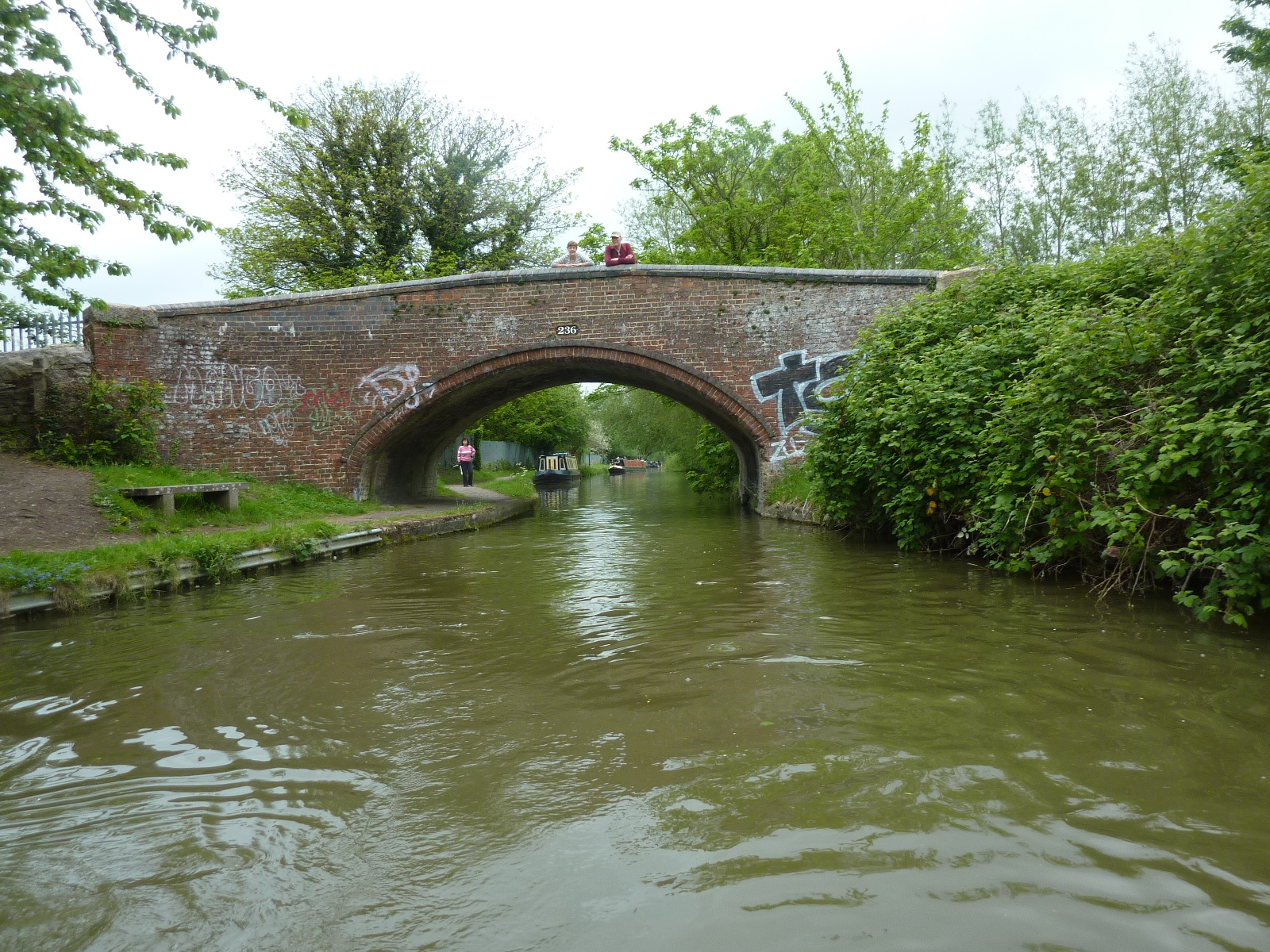
3.25 miles – Wolvercote railway bridge
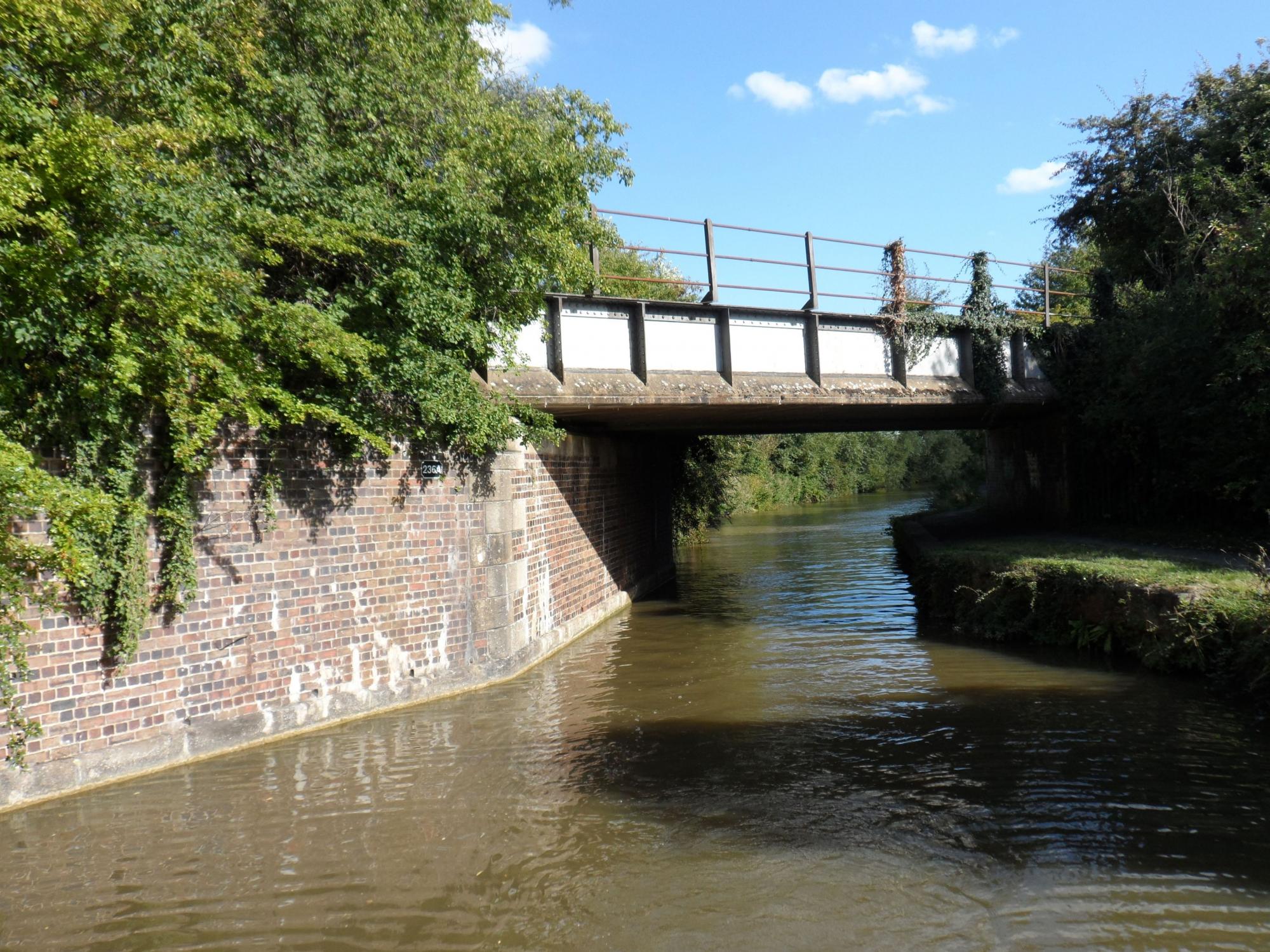
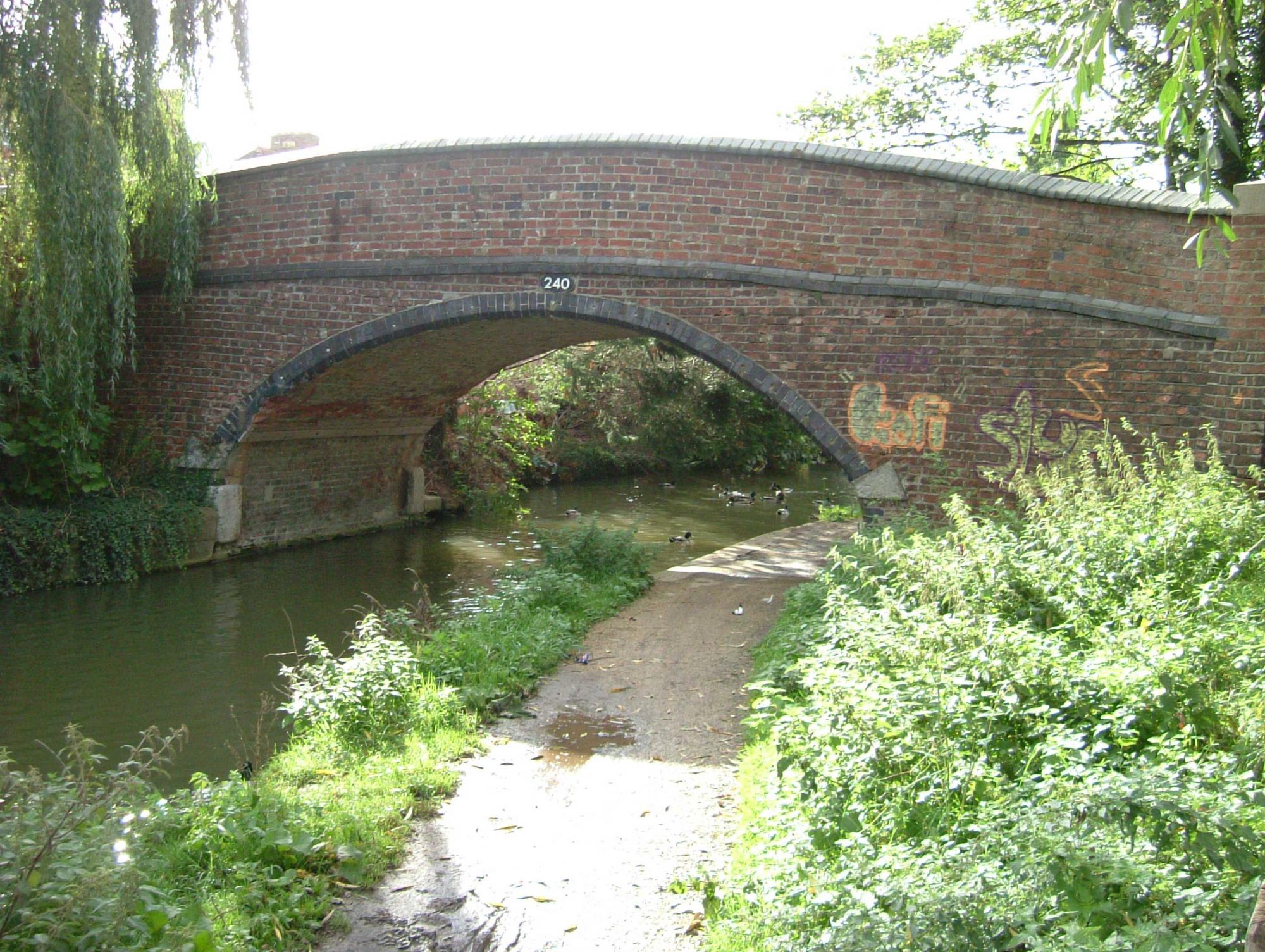
3.5 miles – St Edward’s lifting footbridge. No 238.
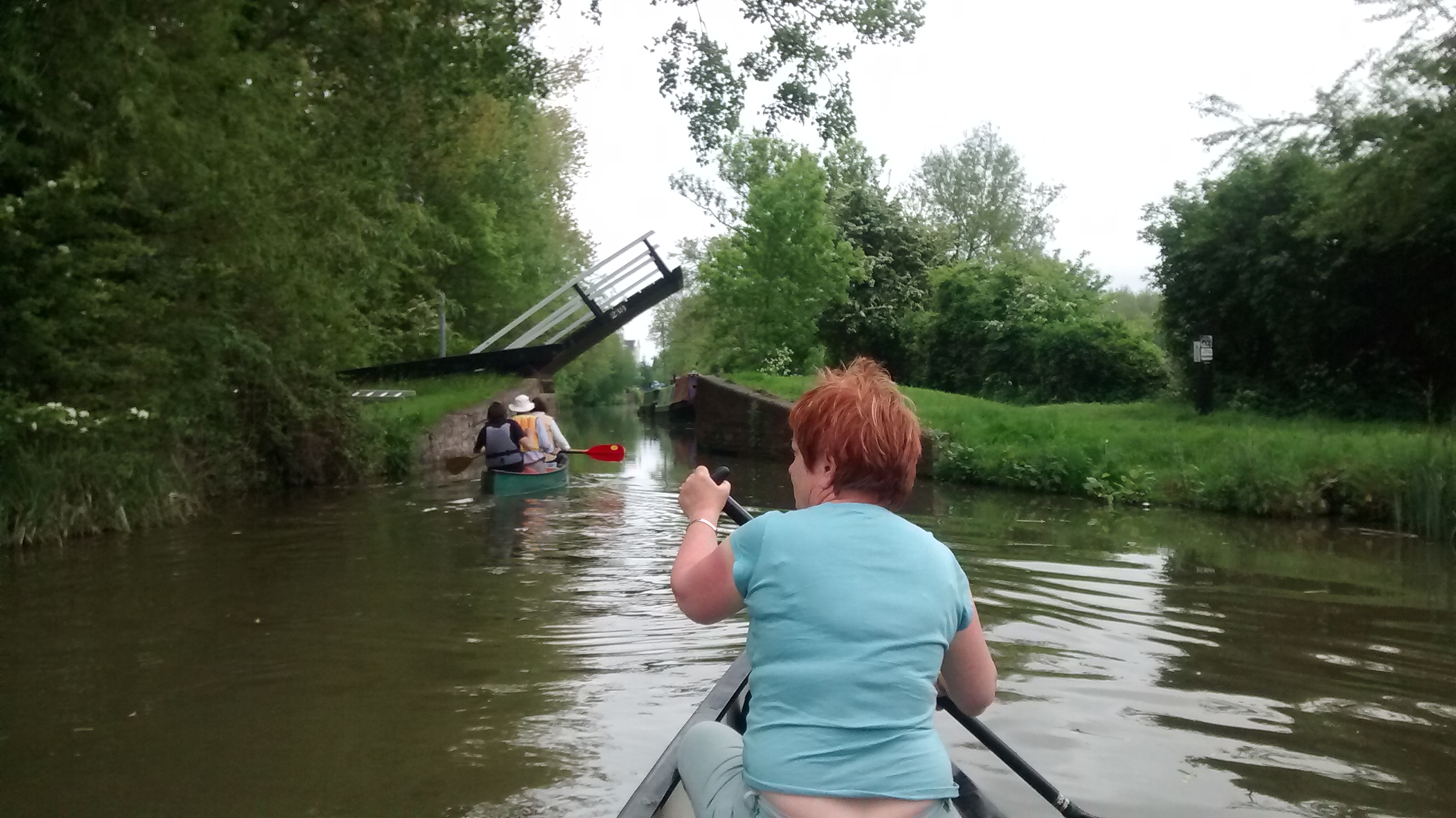
4 miles – bridge 238B Elisabeth Jennings Way bridge
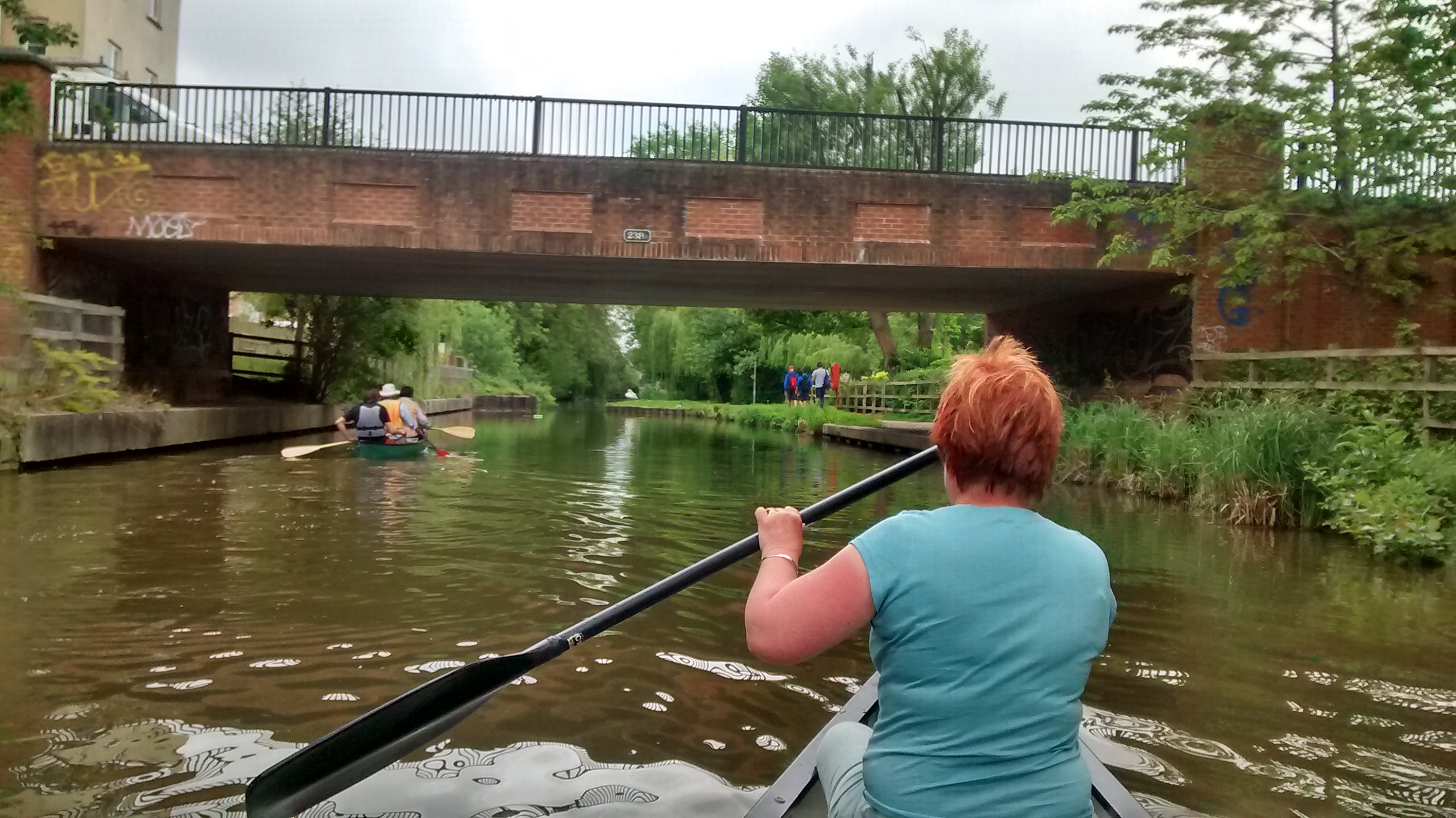
4.2 miles – Frenchay Road bridge
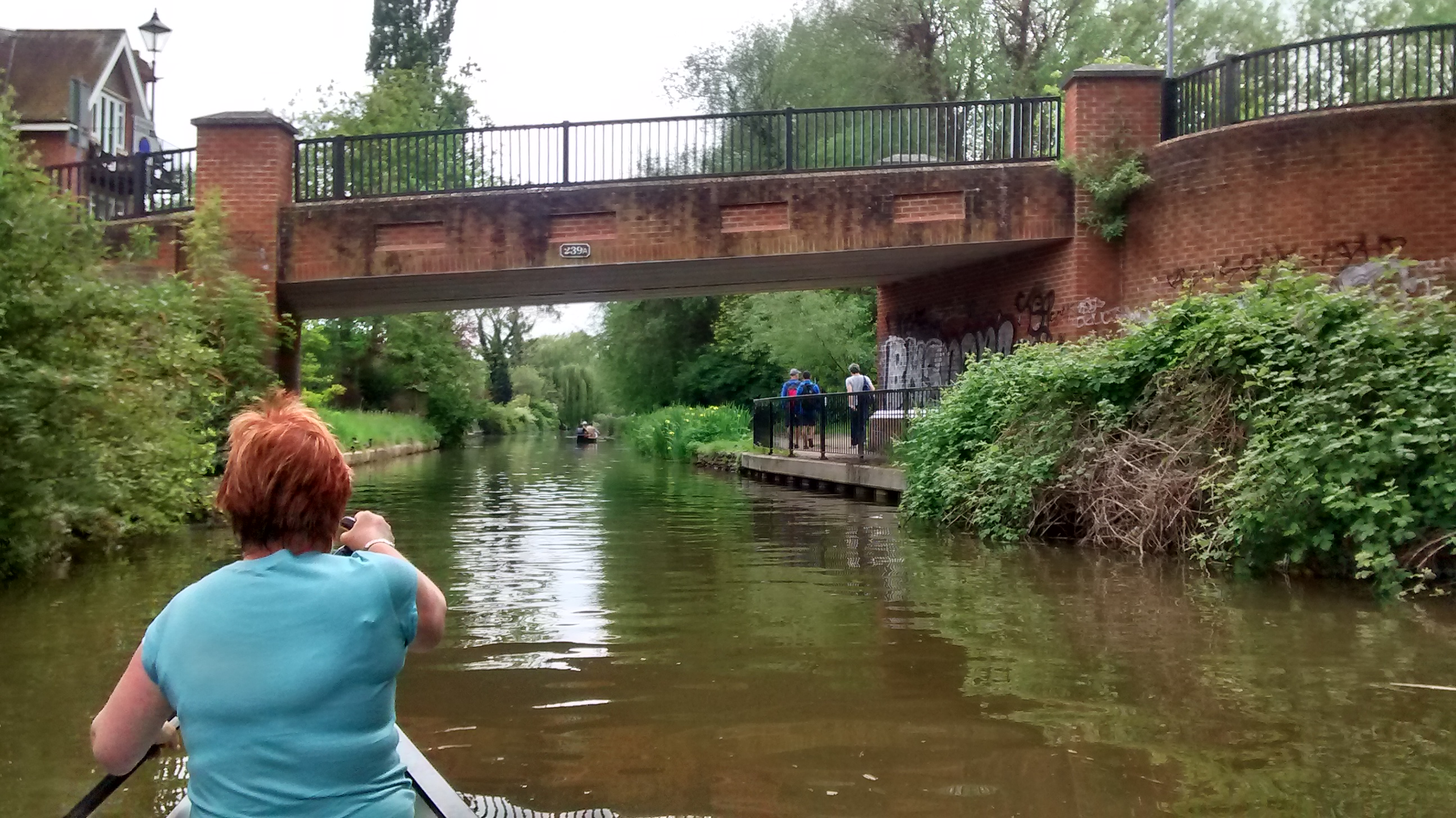
4.4 miles – Aristotle bridge
After a few hundred yards the houses and back gardens of Southmoor Road line the left bank.
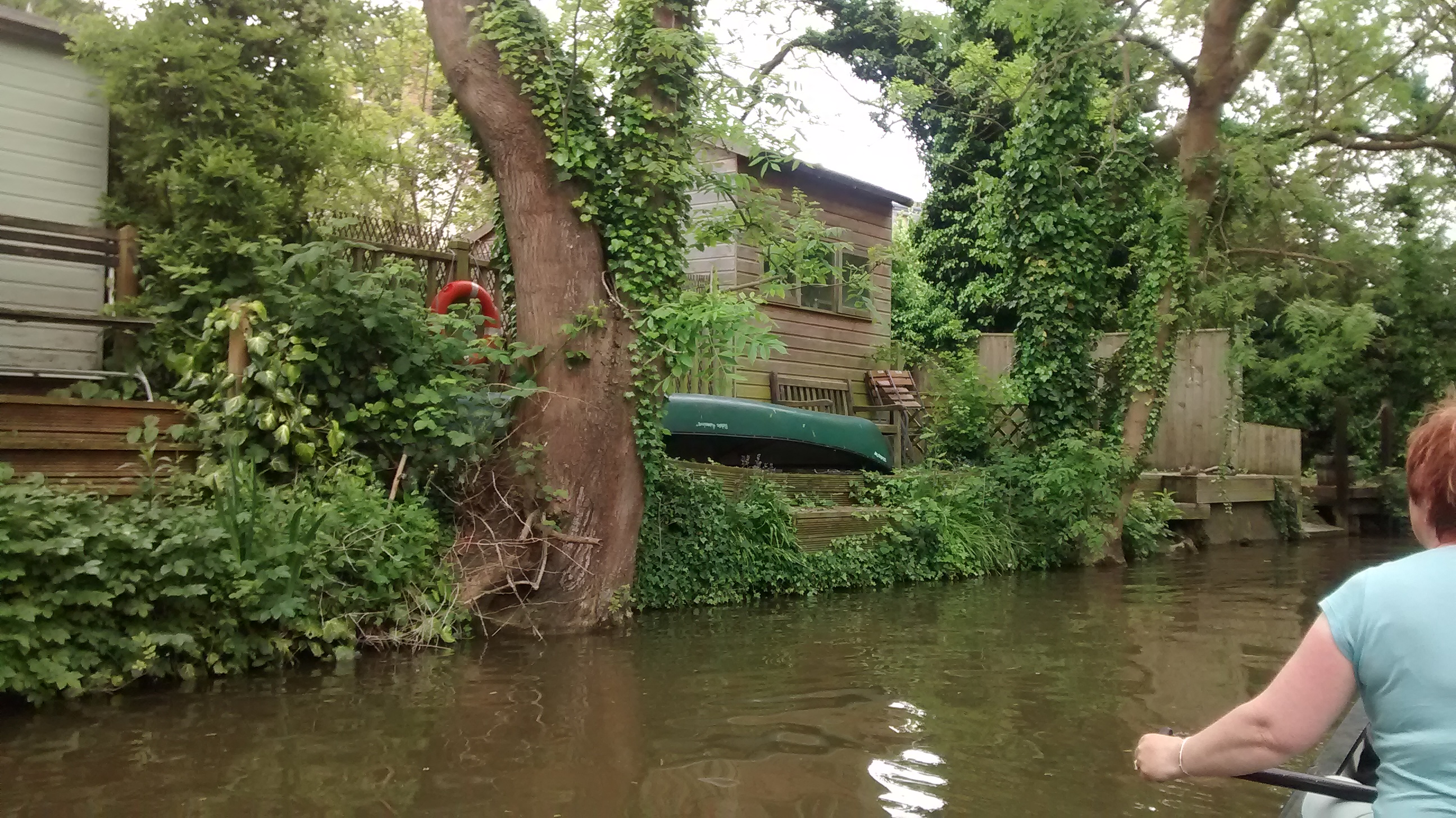
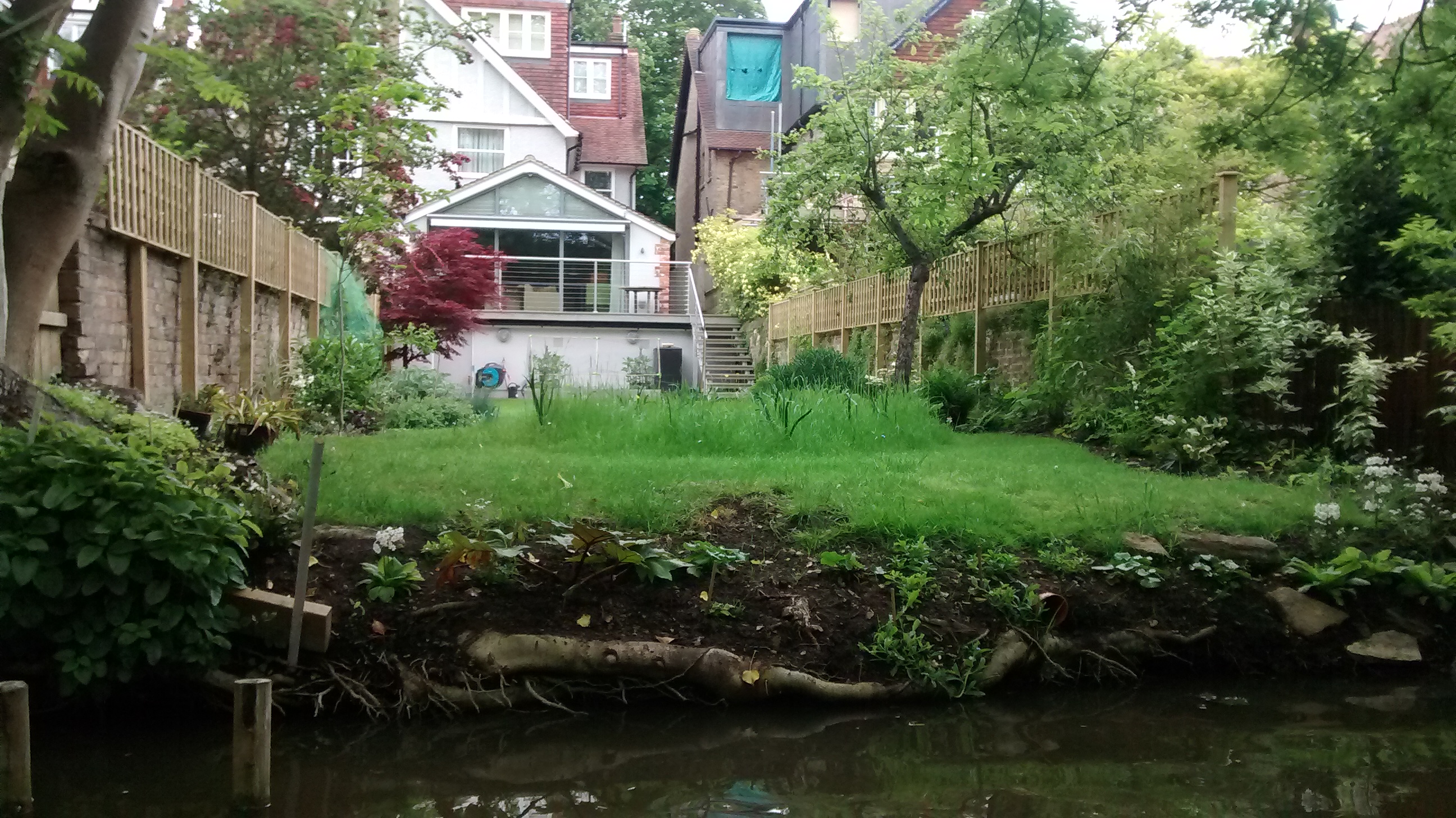
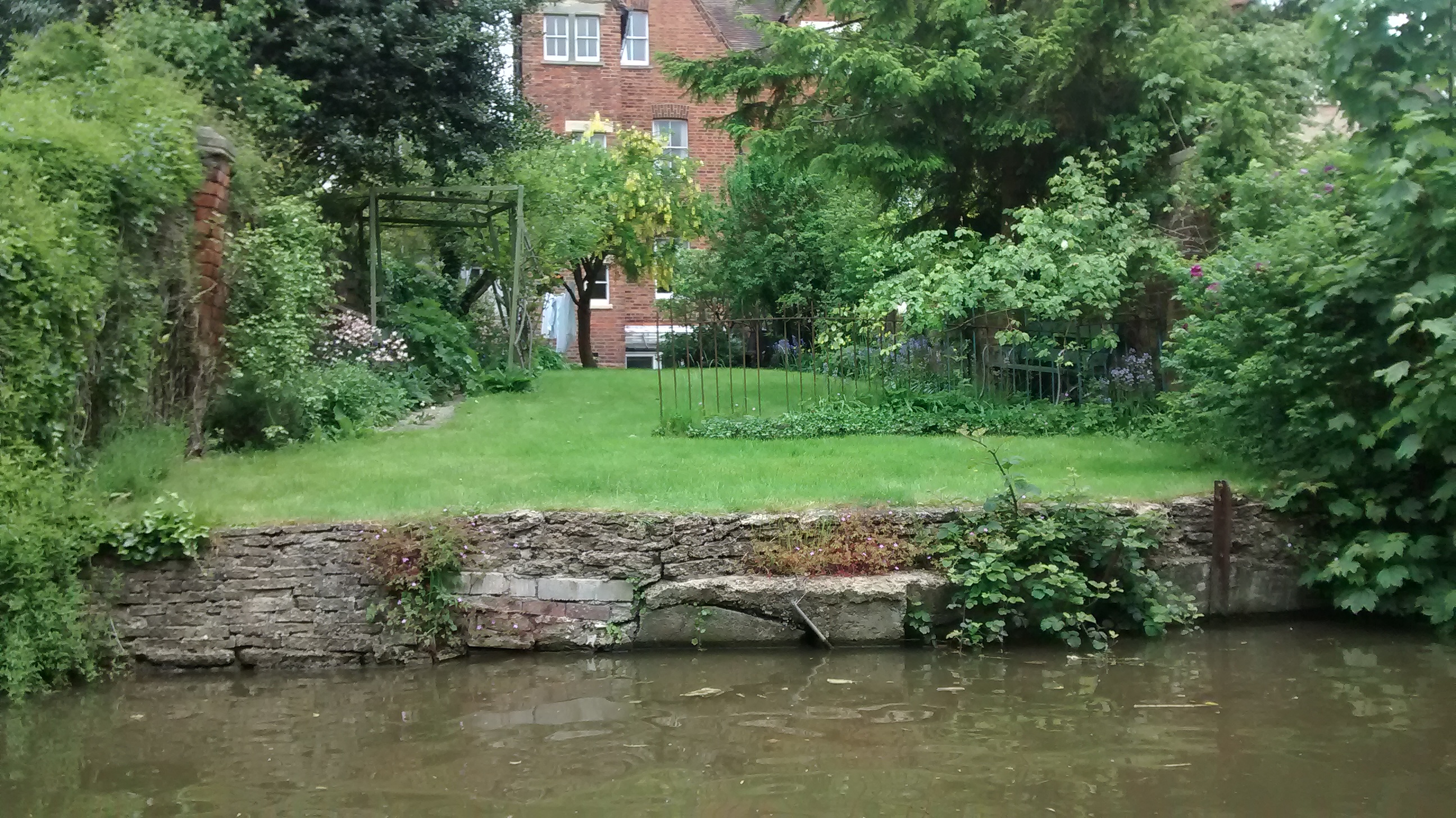
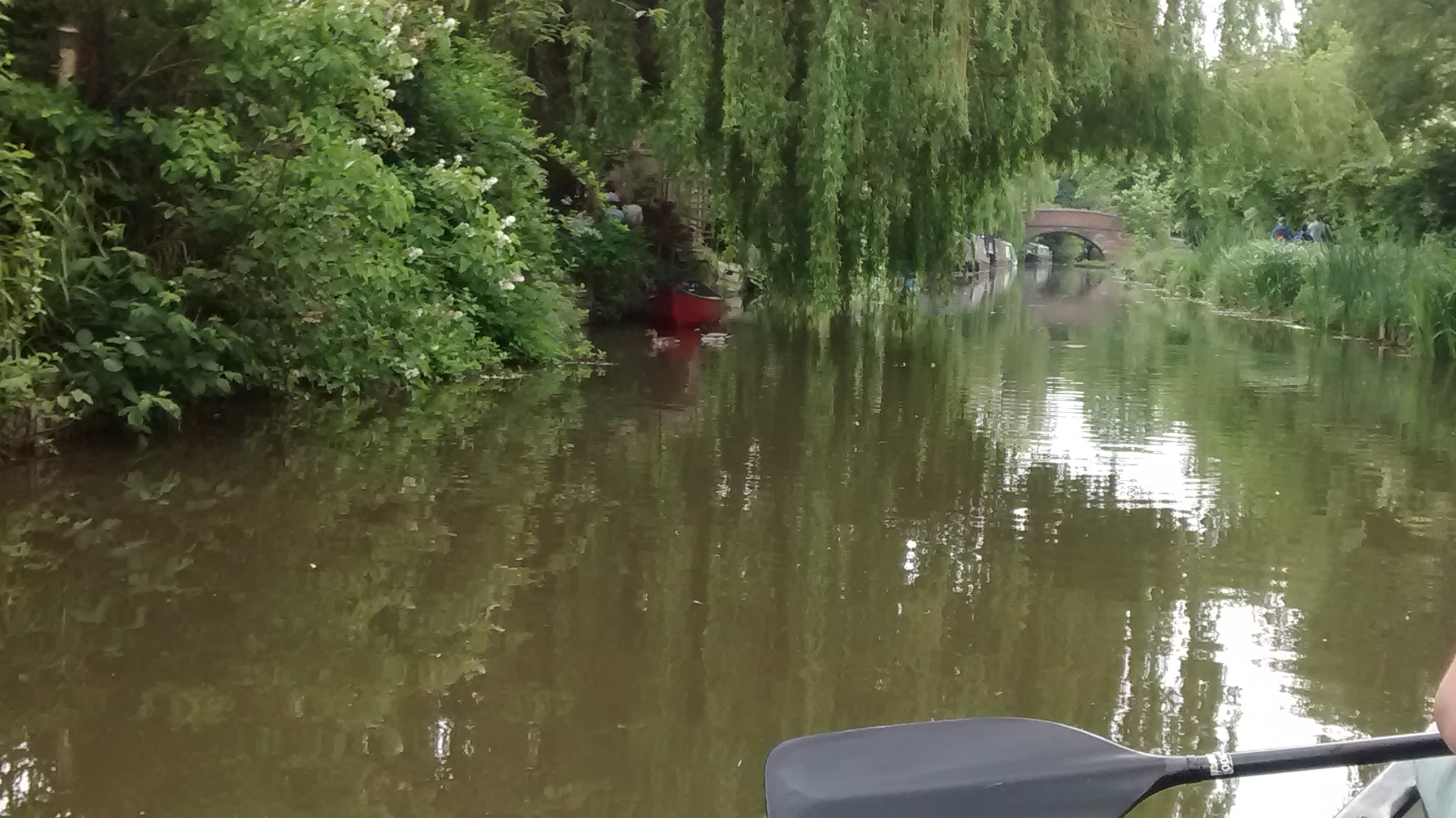
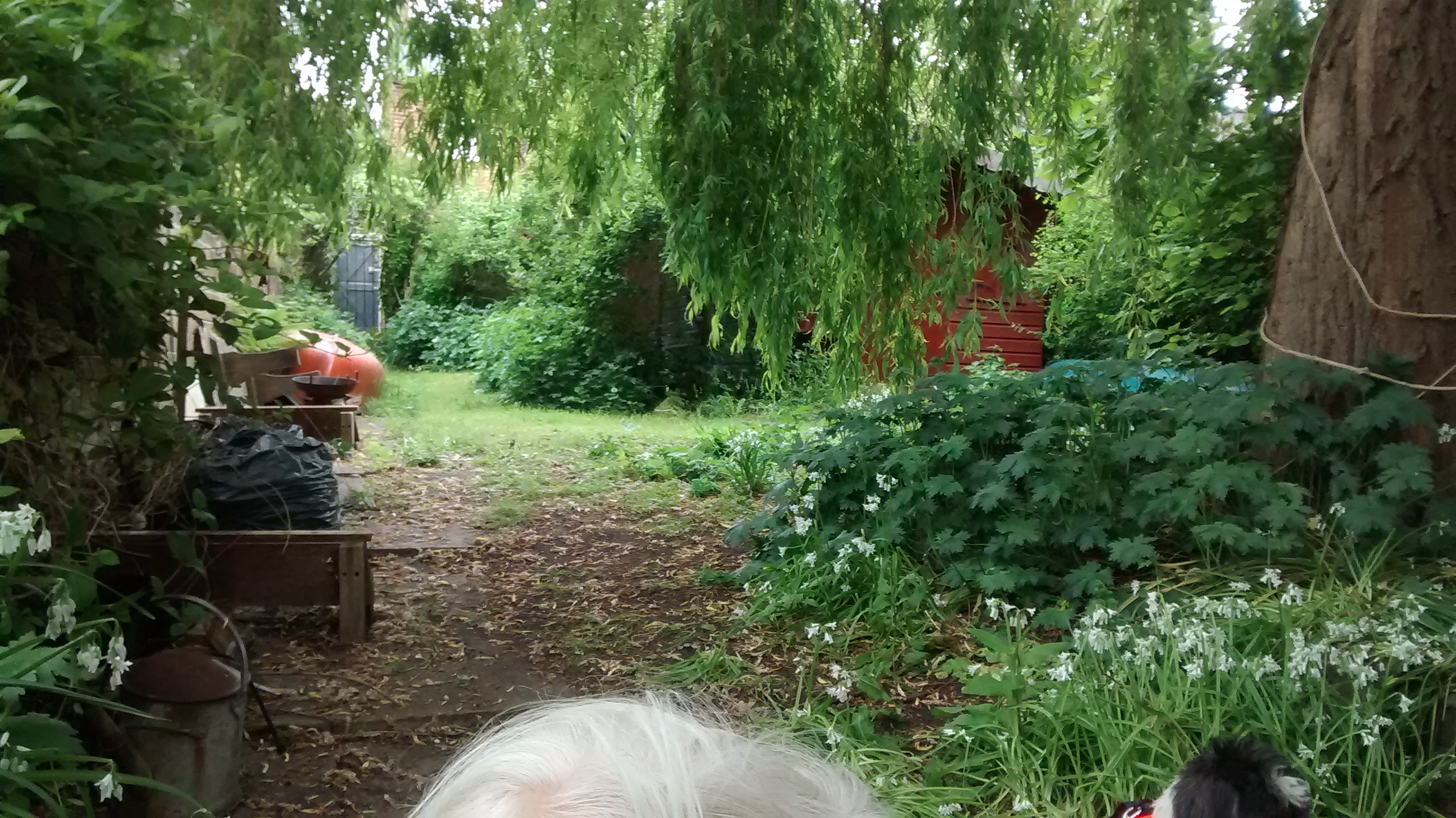
No. 48 is about 500 yards after Aristotle bridge as the canal kinks very slightly left, marked by two large weeping willows. We found two old Oxford ladies launching their canoe from an adjacent garden. They didn’t know that Murdoch had once lived nearby.
4.75 miles – Walton Well Road bridge
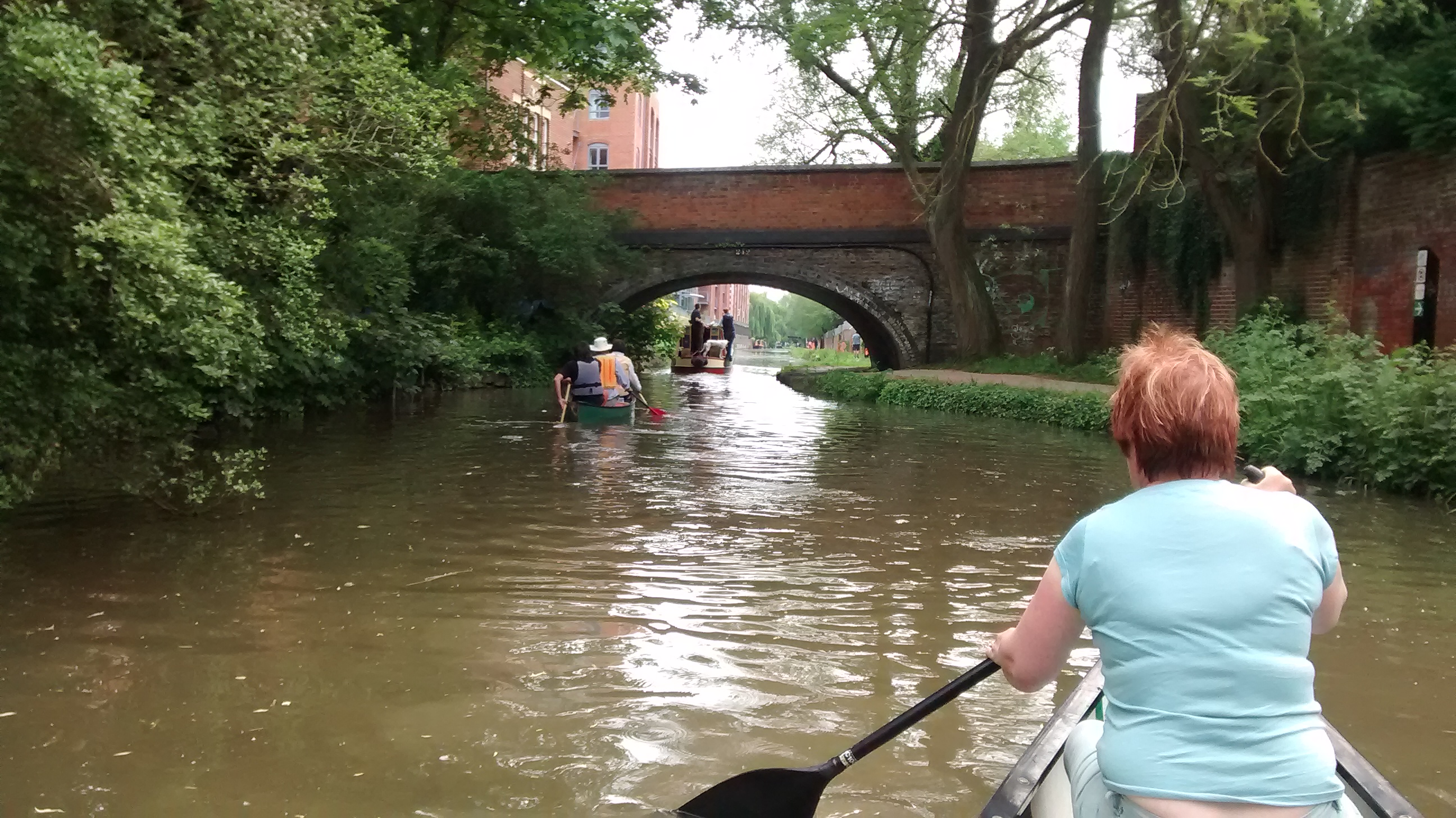
5 miles – Mount place footbridge
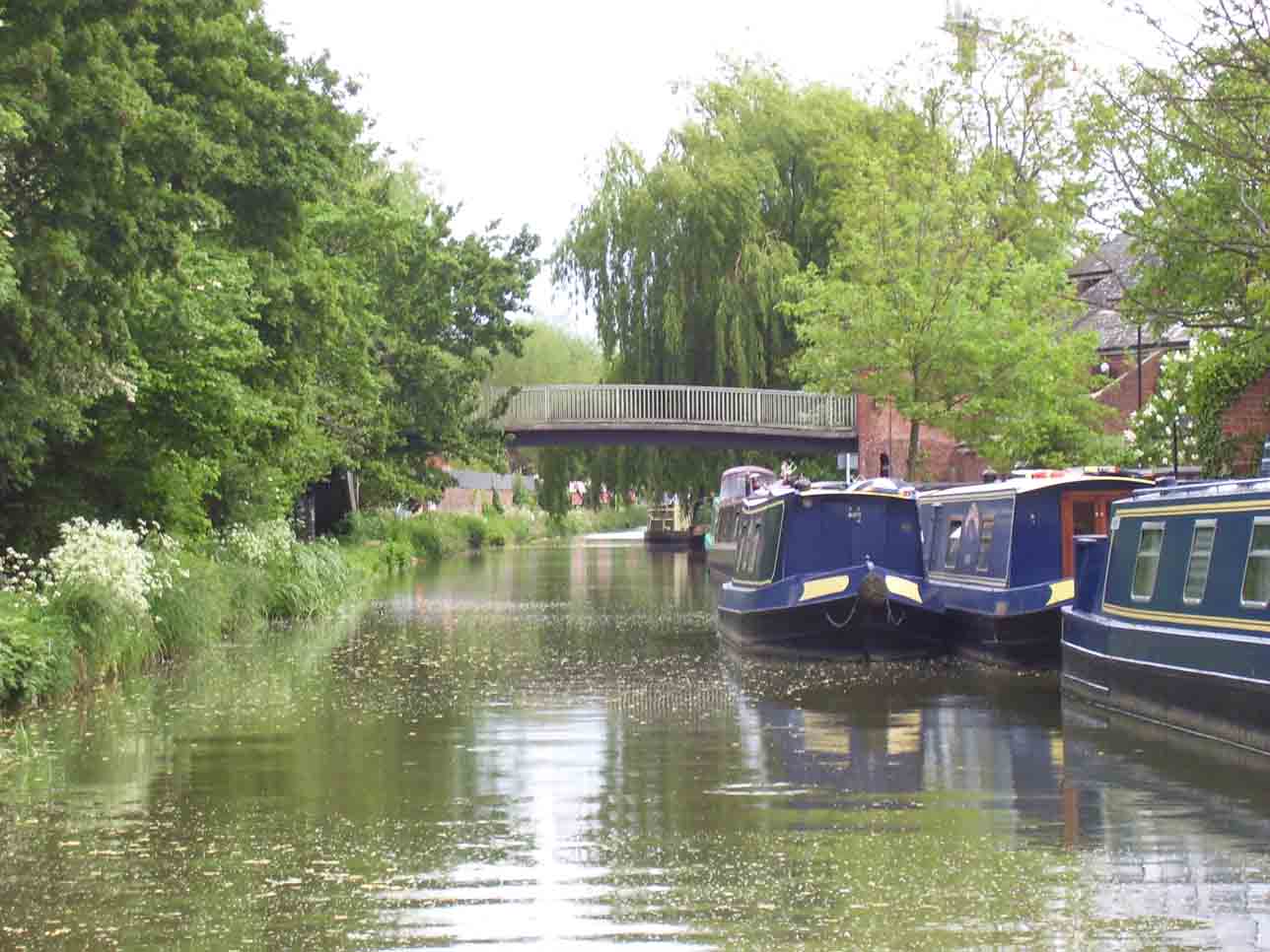
5.5 miles – Footbridge over Isis lock. Land right and portage over the bank into the Castle Mill stream. Turn right in the pool below the lock to enter the Sheepwash channel, which immediately passes under Rewley Road bridge and a railway bridge, before joining the Thames
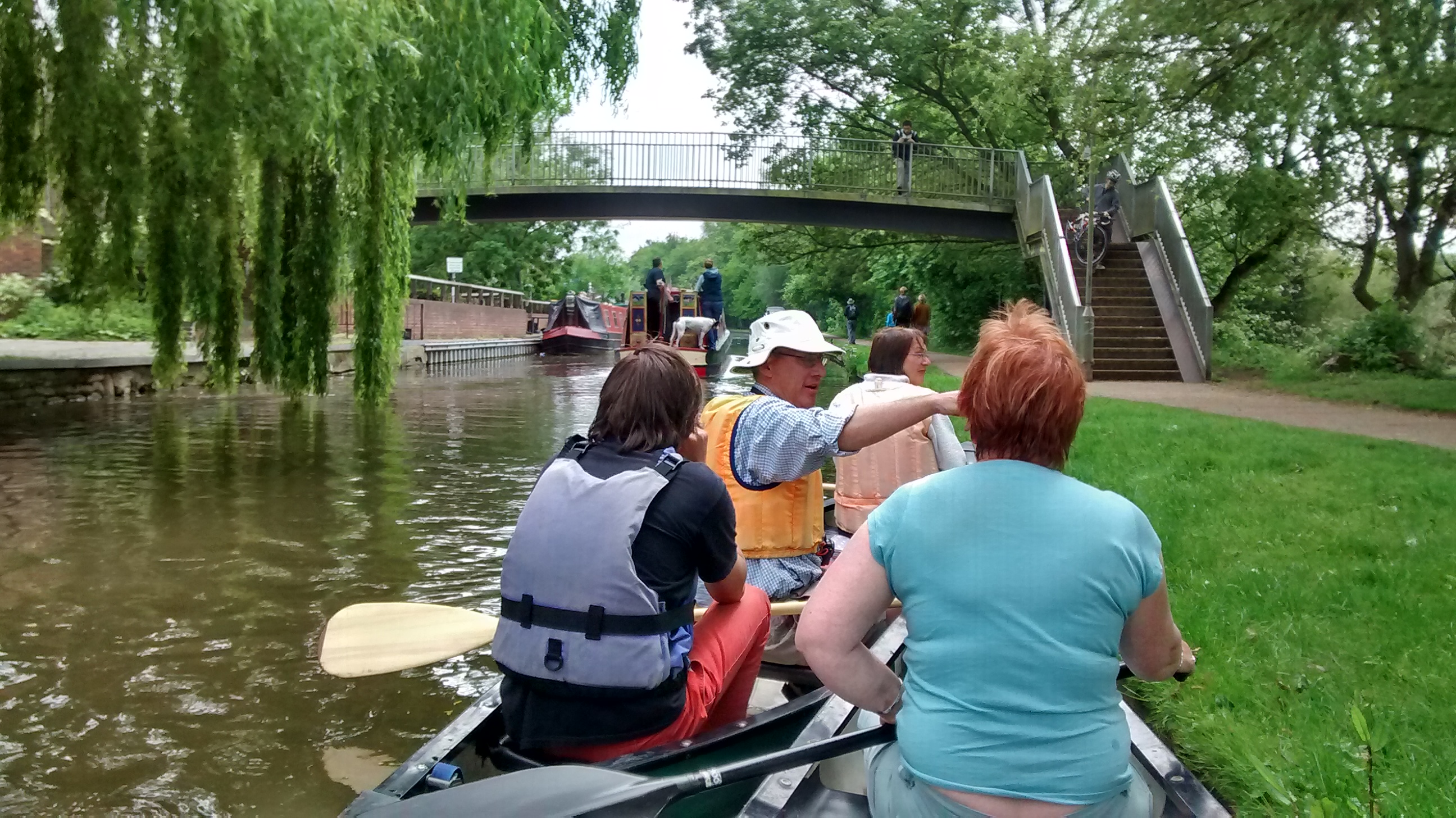
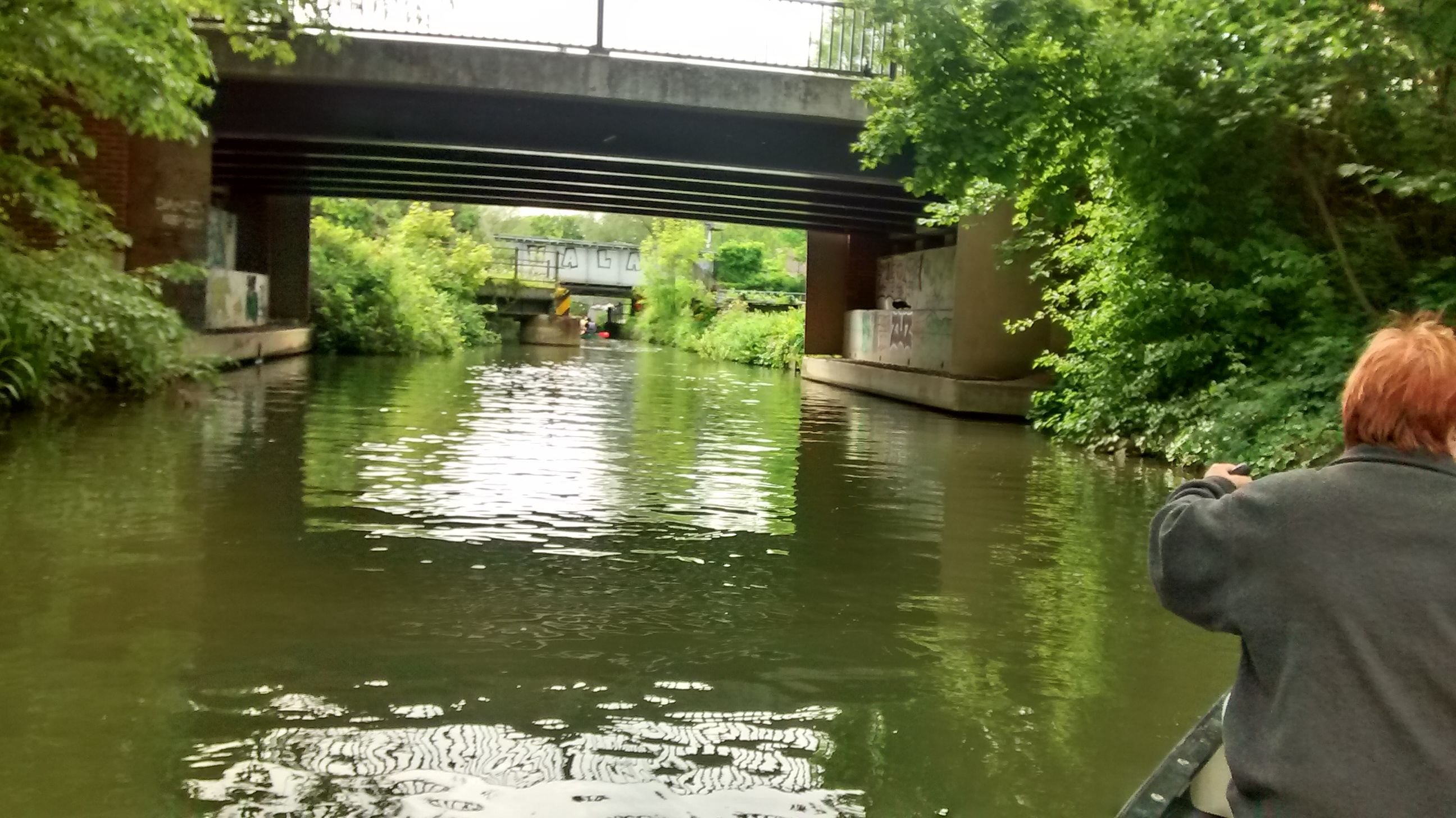
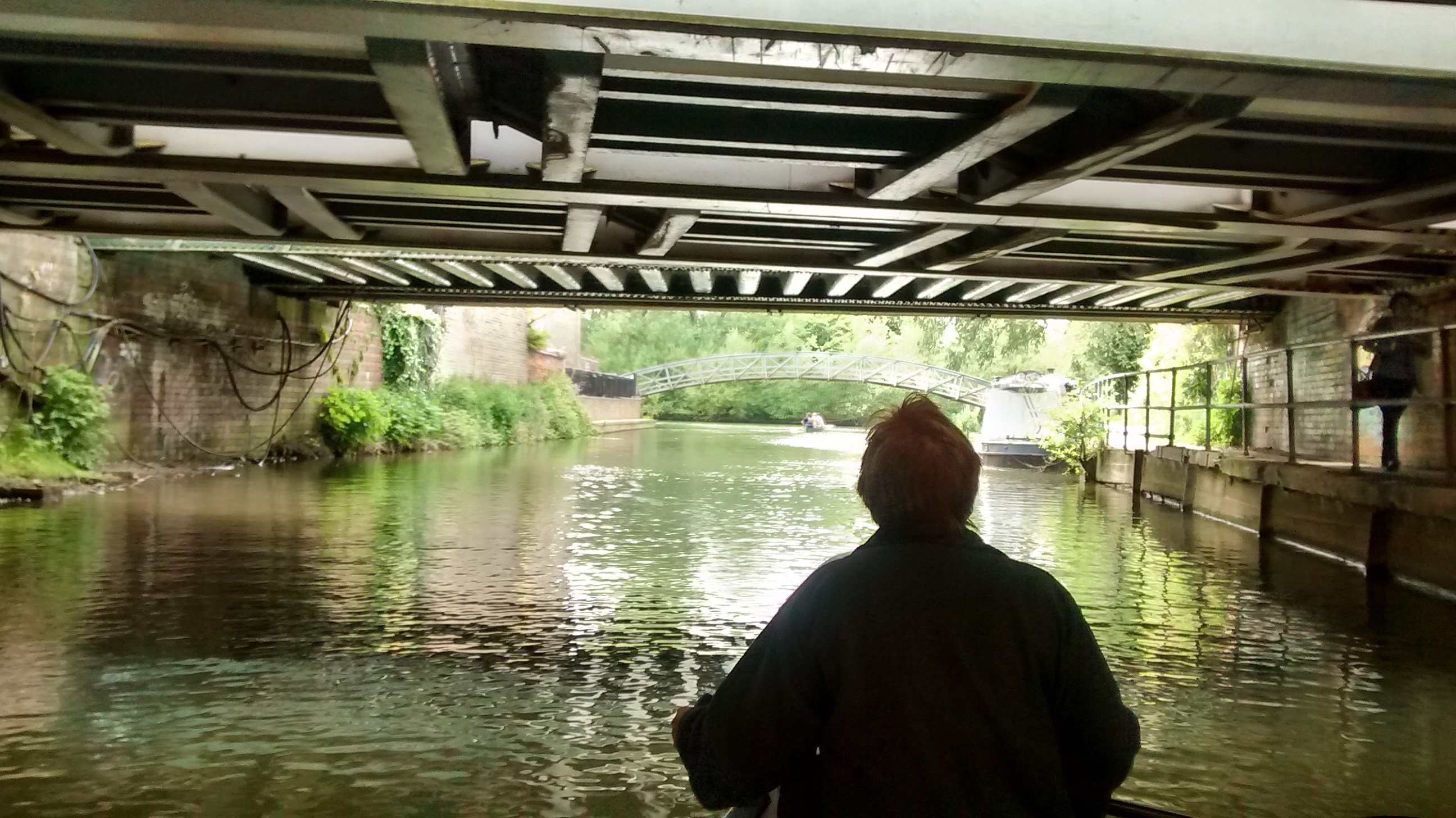
5.75 miles – Footbridge and junction of the Sheepwash channel with the Thames. Turn right upstream. Mark the channel entrance if paddling this trip in reverse.
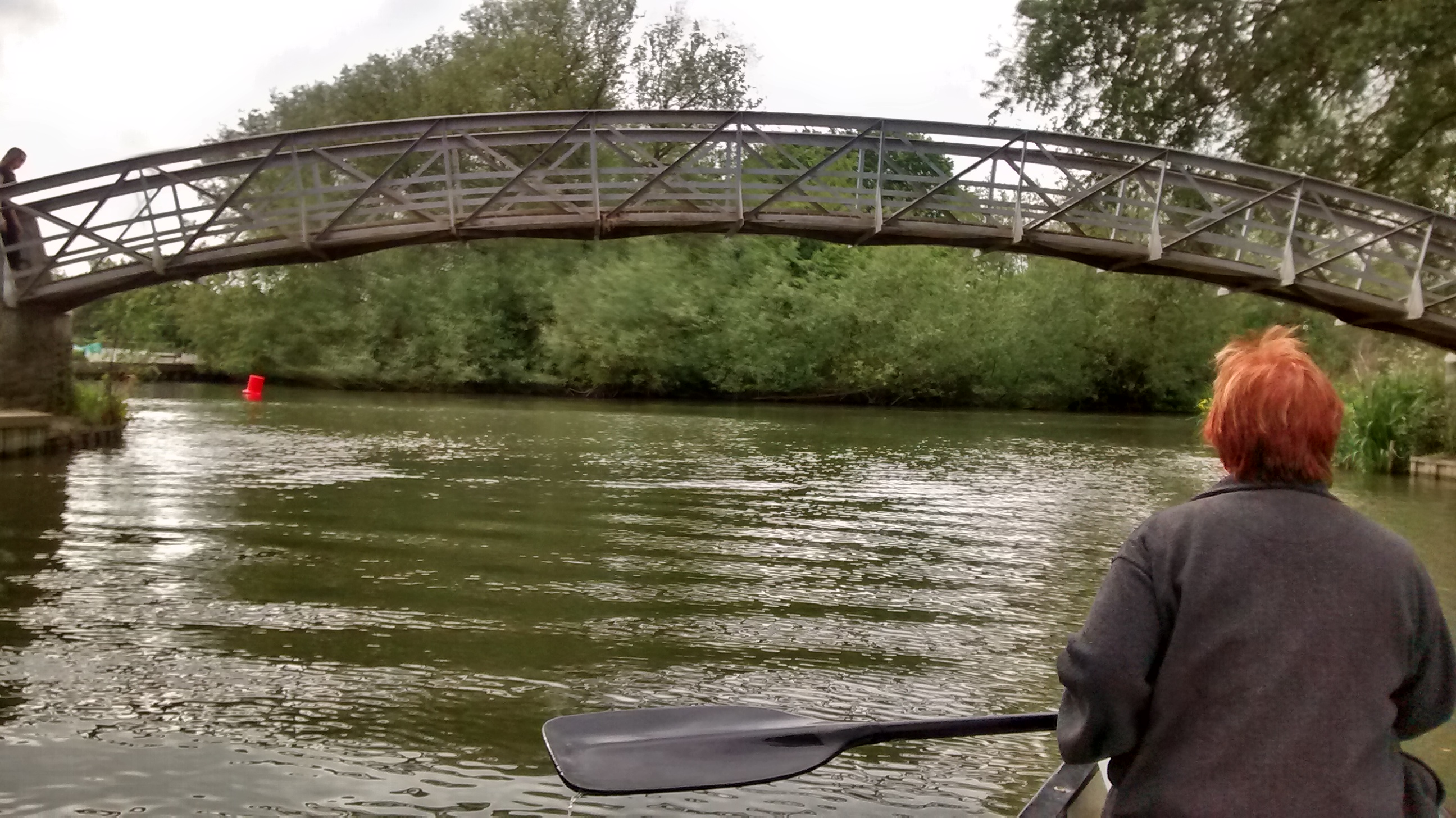
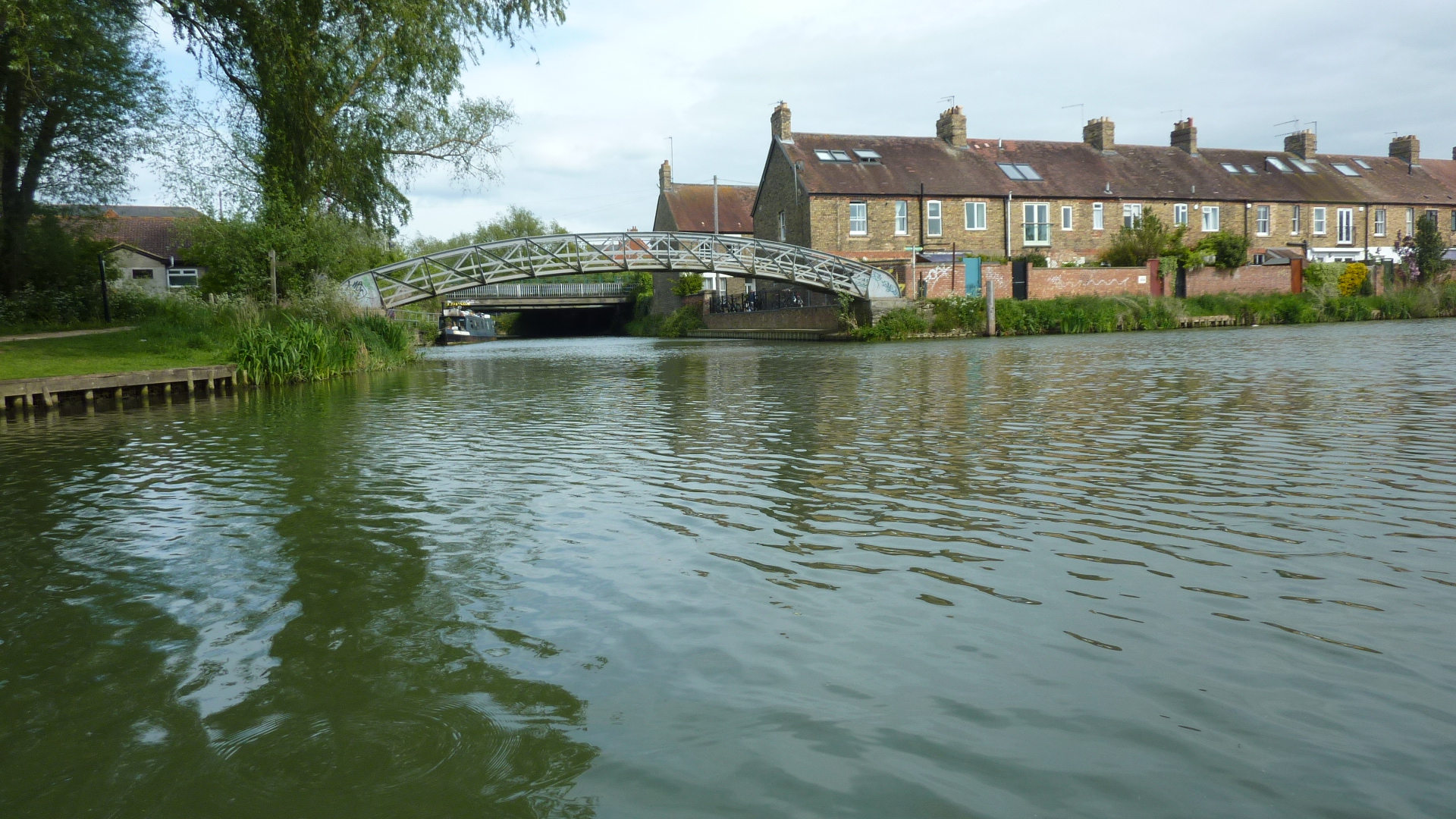
The riverside path passes over various other side channels
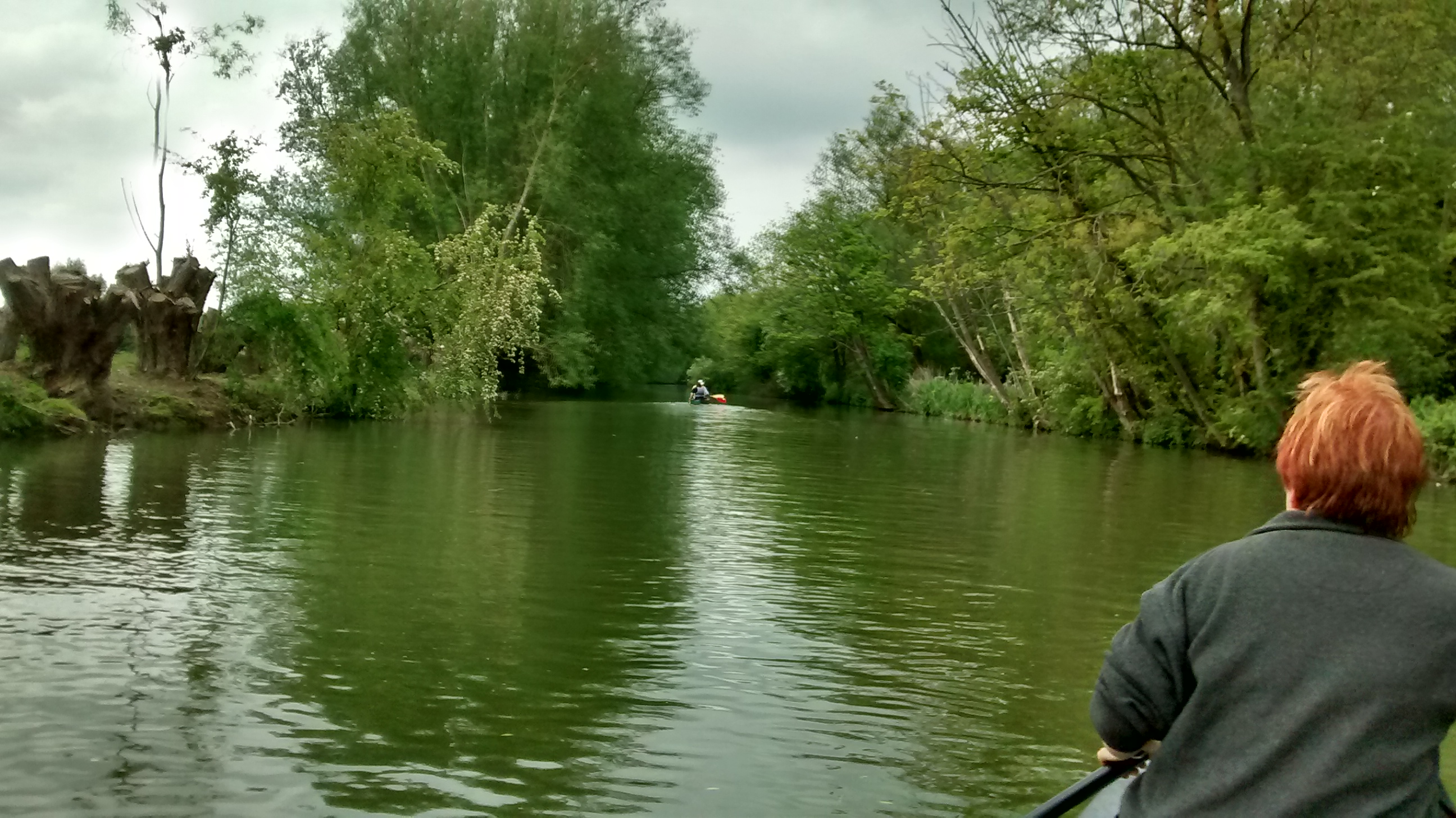
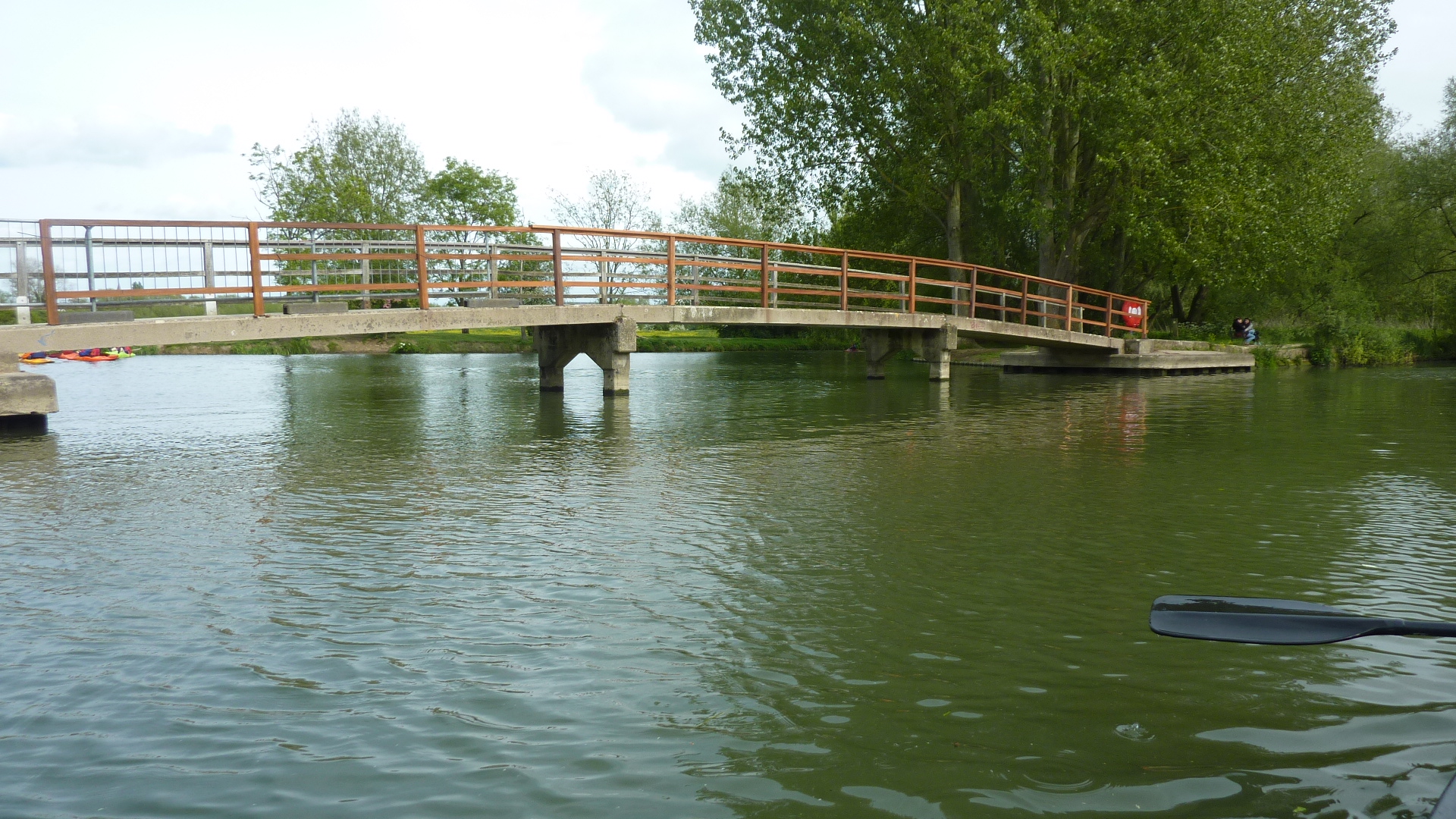
6.5 miles – Medley footbridge. Port Meadow right.
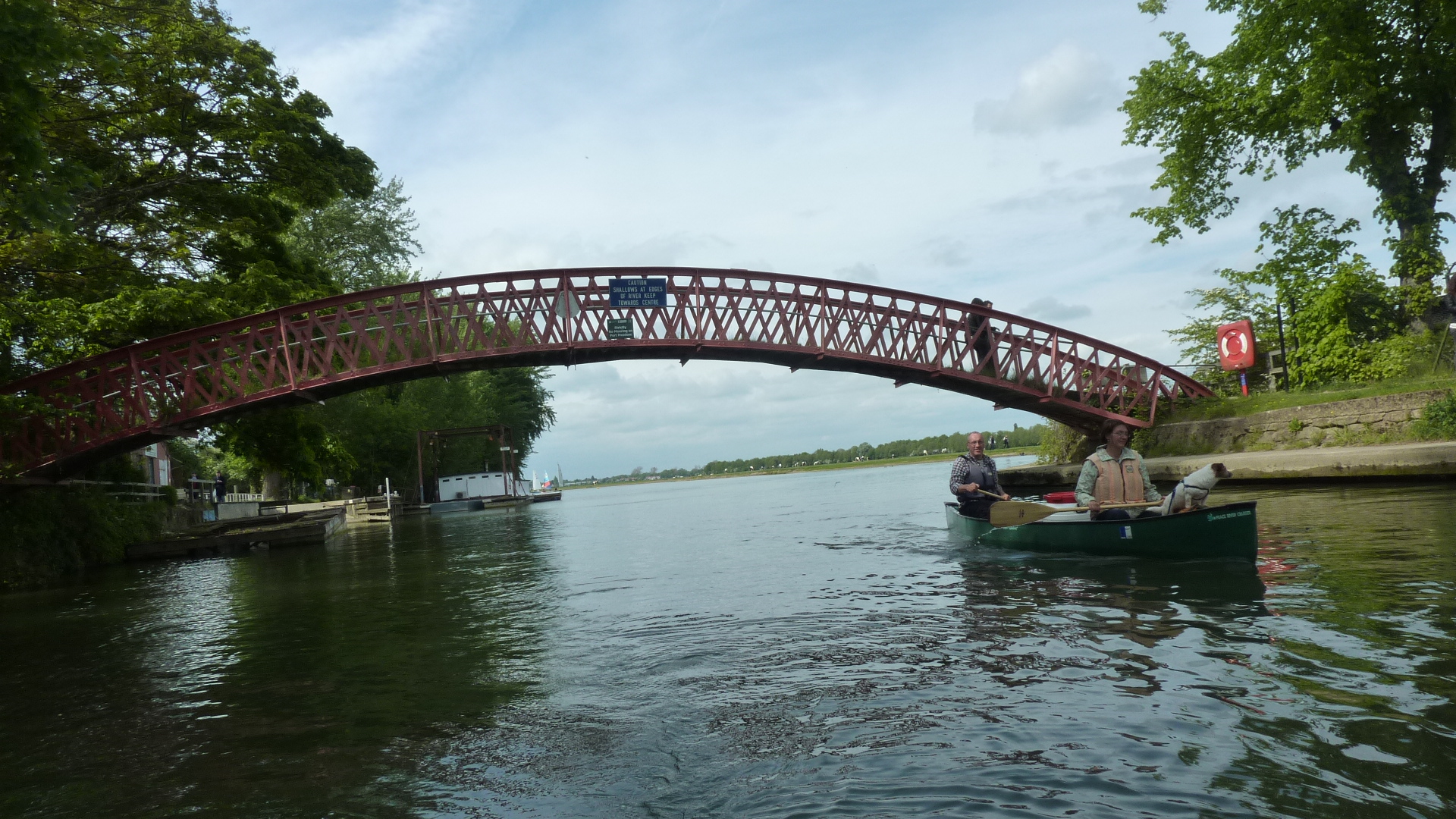
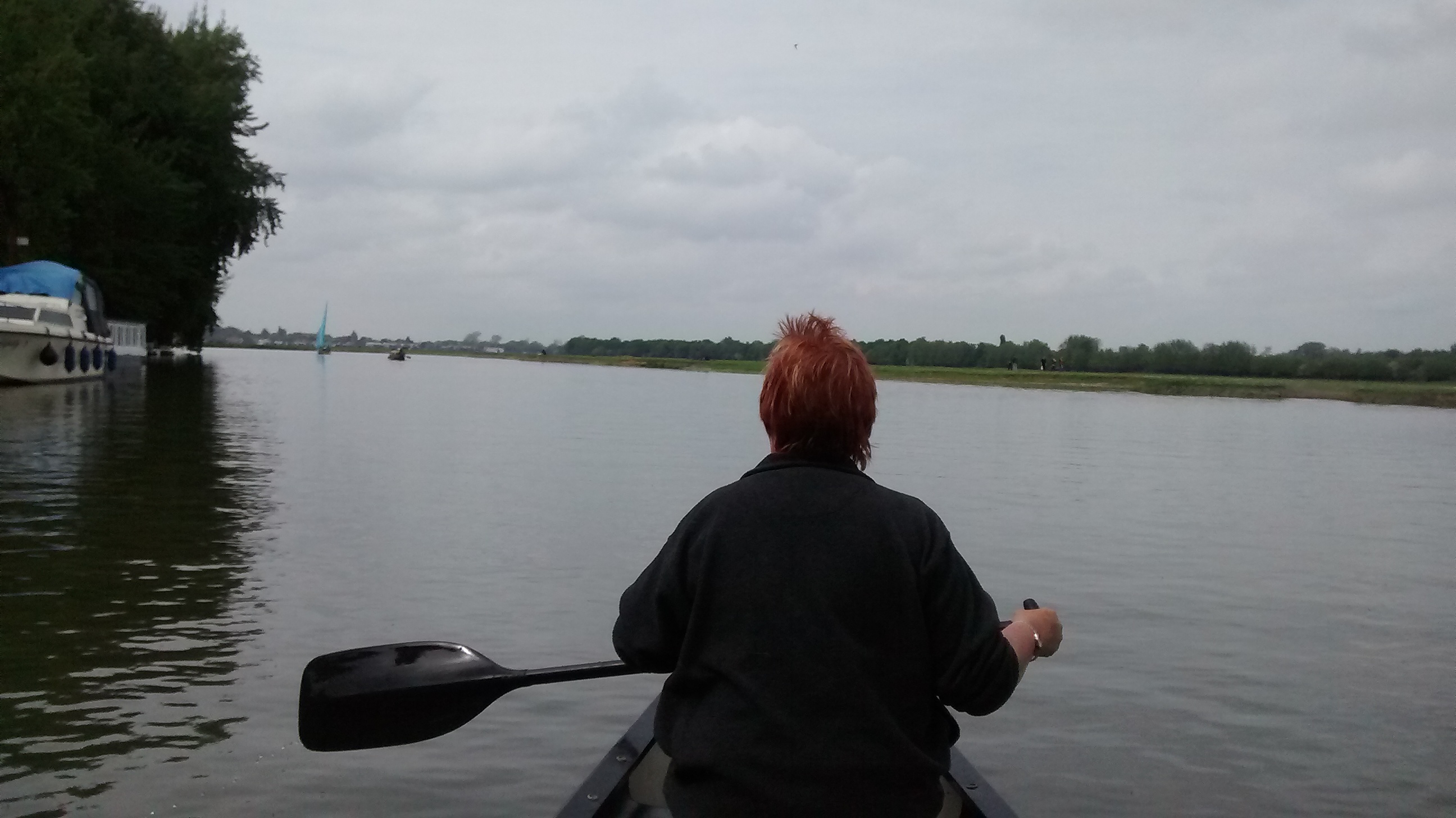
8 miles – At the upper end of Port Meadow take the right channel back to the car park. Or better still the middle one past a boat house, and under a wooden footbridge to the Trout Inn.

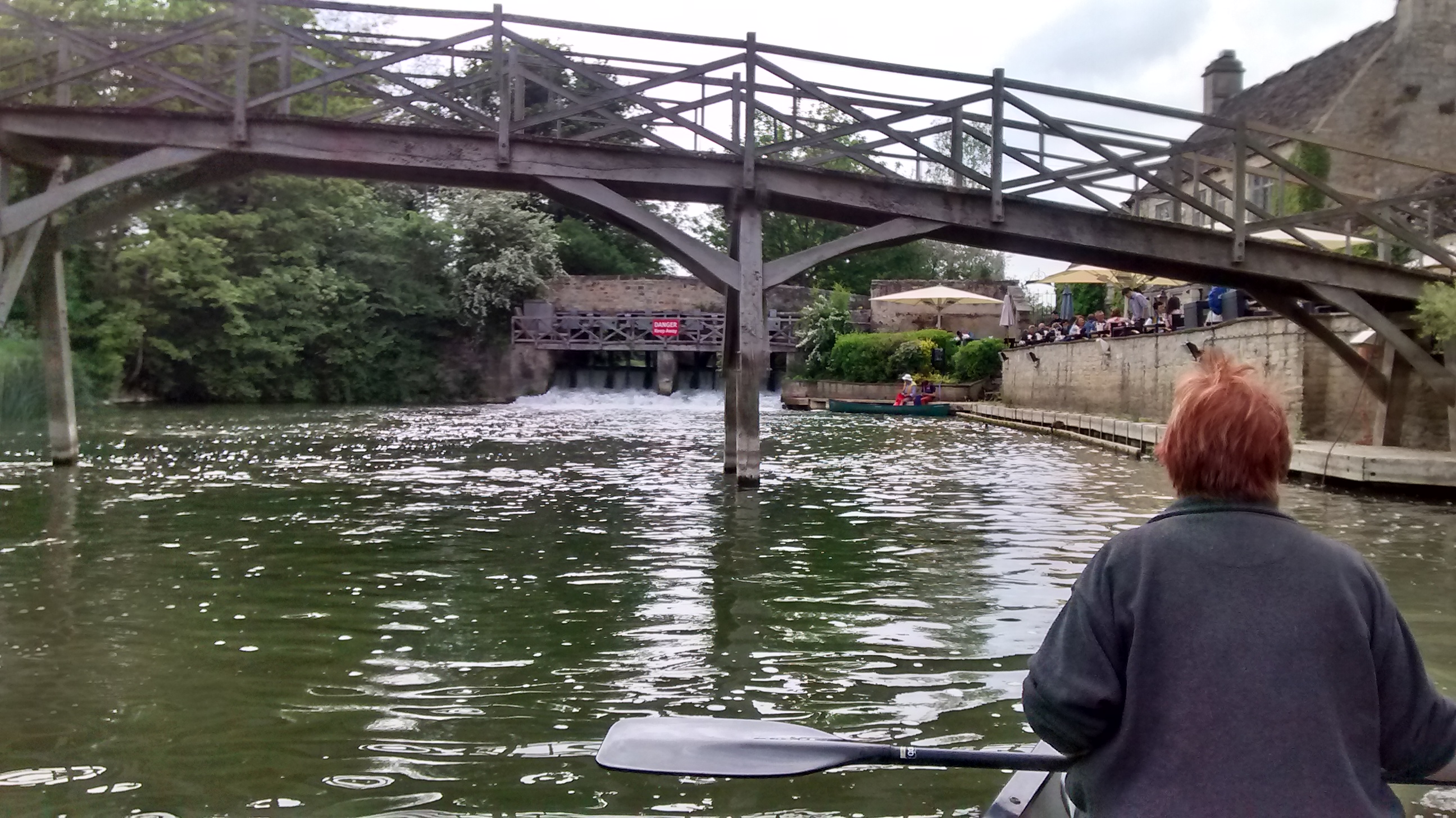
Iris loved pubs and must have visited this one. It’s famous now as one of Inspector Morse’s drinking holes. Finally, don’t miss Wolvercote community orchard (click here).
Jim Thornton
Wild swimming in Herefordshire
Rivers Lugg & Teme
The Lugg
Park at the B4362 bridge at Mortimer’s Cross layby. Cross the bridge and take the footpath over a stile, across two fields and a low hill into which the river cuts. About half a mile downstream the path descends into a water-meadow, and the river meanders between shingle banks. There are few deep pools – it’s impossible to get out of your depth – but it’s private. We met no-one on a sunny Saturday in June. Grid reference SO428634


The stretch of Lugg upstream of the A4110 bridge (around SO420656) is also allegedly good, but the river in front of the Riverside Inn didn’t look enticing and I couldn’t get access from the north bank.
The Teme
Just upstream of Leintwardine bridge at the junction of the Teme and Clun is a well-known spot (click here), but I didn’t know about that. The pool below the weir and road bridge looked enticing, but public.


Instead I followed the minor road downstream past “The Sun”, a traditional pub. Immediately after passing a small factory right, a footpath runs to the river. The deep pools in the meanders, easily accessible from shingle banks, are very private. Grid reference SO478736



This stretch is labelled on the Ordnance Survey as Leintwardine Fishery, but we saw no fishermen in June. Downstream of Ludlow there is said to be a good spot at SO532687, accessible from the footpath from the A456, but not personally tested.
Jim Thornton
Philip Larkin at Poets’ Corner
Which poem?
Britain’s most popular 20th century poet is long overdue his place in Poets’ Corner. The nincompoops who fret that he liked a bit of porn and wrote some letters that don’t pass muster with today’s thought police, have been pushed aside by admirers of Wedding Wind, Church Going and The Whitsun Weddings. Not to mention the millions who know the first line of This be The Verse.
The unveiling will be on Dec 2 2016. Surely there won’t be a service; not for the man who called religion “that vast moth-eaten musical brocade/Created to pretend we never die”. But which poem will they read? Not one of the “Weddings”. Not High Windows; it’s a little soon for the “F word” in Westminster Abbey. Perhaps Church Going. But I’d vote for the one that ends with Larkin’s most puzzling line; the one read out at funerals, and quoted by Anthony Lane after the Twin Towers fell on 9/11. The line that was almost meant and almost true.
An Arundel Tomb
Side by side, their faces blurred,
The earl and countess lie in stone,
Their proper habits vaguely shown
As jointed armour, stiffened pleat,
And that faint hint of the absurd–
The little dogs under their feet.
Such plainess of the pre-baroque
Hardly involves the eye, until
It meets his left hand gauntlet, still
Clasped empty in the other; and
One sees, with sharp tender shock,
His hand withdrawn, holding her hand.
They would not think to lie so long.
Such faithfulness in effigy
Was just a detail friends could see:
A sculptor’s sweet comissioned grace
Thrown off in helping to prolong
The Latin names around the base.
They would not guess how early in
Their supine stationary voyage
Their air would change to soundless damage,
Turn the old tenantry away;
How soon succeeding eyes begin
To look, not read. Rigidly they
Persisted, linked, through lengths and breadths
Of time. Snow fell, undated. Light
Each summer thronged the grass. A bright
Litter of birdcalls strewed the same
Bone-riddled ground. And up the paths
The endless altered people came,
Washing at their identity.
Now, helpless in the hollow of
An unarmorial age, a trough
Of smoke in slow suspended skeins
Above their scrap of history,
Only an attitude remains:
Time has transfigured them into
Untruth. The stone finality
They hardly meant has come to be
Their final blazon, and to prove
Our almost-instinct almost true:
What will survive of us is love.
Philip Larkin
SHIP
The third recent negative self-hypnosis in labour trial
Self-hypnosis is a popular method of pain relief in labour; it sounds like a good idea, it’s cheap, could probably be taught to many women, and is unlikely to have serious adverse side effects. But until recently there were only poor quality trials. Now suddenly there is a glut of good ones.
In 2014 we commented on two, a Danish trial (click here) and the Australian HATCH trial (click here). Both were prospectively registered, with a predefined primary endpoint, (epidural in the Danish trial, epidural or opiates in HATCH), hit their predetermined sample size and analysed everyone in an unbiased way, by intention to treat. Both were negative.
Now my friend Professor Soo Downe from Preston in Lancashire has reported on a third one, the Self Hypnosis in Pregnancy (SHIP) trial. Click here for the full report.
Again it was beautifully designed and conducted. Prospectively registered here. (The link states it was retrospective, but this seems to be a fault with the recently updated website; SHIP was registered well before any codes were broken or analysis was done.) The primary outcome was epidural use, and the planned sample size 300 per group. 680 women were eventually randomised (343 to self-hypnosis and 337 to control) and all were followed-up. Epidural use was 94/343 (28%) in the self-hypnosis group v. 101/337 (30%) in controls, odds ratio (OR) 0.89, 95% confidence interval (CI) 0.64–1.24. i.e. the self-hypnosis does not work.
The authors also measured 29 allegedly predetermined (only 10 were listed on the trial registration site) secondary outcomes of which 27 were not statistically significantly different. For some reason they were placed in a supplementary appendix; come on you BJOG editors, get your act together! Some slightly favoured self-hypnosis, e.g. breast feeding 44% v 39% OR 1.23, 95% CI 0.82 – 1.86, or prolonged neonatal admission 6.2% v 6.6%. OR 0.94, 95% CI 0.50-1.74). Others slightly favoured controls, e. g. Caesarean deliveries 25% v 23 %, OR 1.11, 95% CI 0.78-1.58), and three of the 4 stillbirths were in the self-hypnosis group. But none were statistically significant. Nor were there any significant differences in anxiety, depression or “impact of events” scores at 2 and 6 weeks postnatal. This is a clearly negative trial.
However, the authors (or BJOG) provided a tweetable abstract:
“Going to 2 prenatal self-hypnosis groups didn’t reduce labour epidural use but did reduce birth fear & anxiety postnatally at < £5 per woman”.
This is misleading. Self-hypnosis did not reduce fear & anxiety postnatally. It may have made a difference in the change in anxiety level between before and after labour and in the change in fear of birth between the two time periods, but these are very odd trial outcome measures. You can’t be anxious or fearful about birth after it has occurred. More importantly the change measures were not pre-specified among the secondary outcomes, they are dependent on a low postnatal response rate which was higher in the intervention than the control group, and the baseline scores for both measures were non-significantly higher in the hypnosis group at baseline, so some of the change is likely to be due to regression to the mean, i.e nothing to do with the treatment. At best the change scores are hypothesis generating for future studies.
Here’s a better tweetable abstract:
SHIP is the 3rd well-designed RCT to show that self-hypnosis is ineffective for pain relief in labour. But it is cheap & harmless.
Jim Thornton
Maternal death in Stockholm
At BB Sophia, a private maternity hospital
When BB Sophia, Stockholm’s second private maternity hospital, opened last year I applauded the increase in diversity, and anticipated competition driving up standards (click here). However, last week the Swedish TV channel 4 programme, Cold Facts, aired some serious allegations about safety there*.
The trouble stems from a birth on 24 August 2014. Gegie Boden had a difficult delivery, complicated by shoulder dystocia, and collapsed shortly afterwards. Recognition of her collapse was allegedly delayed, perhaps because staff were more concerned about the baby. She was soon transferred to the nearby state-run Karolinska hospital, where she died a week or so later. Doctors interviewed on the programme, none of whom apparently worked at BB Sophia, alleged that intensive care facilities were substandard, and that the rules for the levels of intensive care required in private maternity units had been made less stringent to allow the clinic to open.
BB Sophia’s owners reject these claims and state they not only had adequate facilities for short term intensive care, but also a formal agreement with the Karolinkska to transfer patients needing longer term care. The Inspektionen för vård och omsorg (IVO), the Inspectorate for Health and Social Care, is investigating, but has not yet reported.
About five mothers die, out of the 100,000 or so who give birth in Sweden each year, one of the lowest rates in the world, so one death in a unit delivering 4,000 babies annually, while tragic, is not in itself evidence of poor care. But a TV programme about it, quoting doctors publicly alleging substandard care, and aired before the official report is complete, suggests that private hospitals are under closer scrutiny than their government counterparts.
This may be a good thing. Unlike government hospitals, which are often “too big to fail”, private ones cannot afford to ignore public safety concerns. I hope I’m not naive, but I remain optimistic that independent health care providers will drive up standards in the long run.
Jim Thornton
The Silken Tent
By Robert Frost
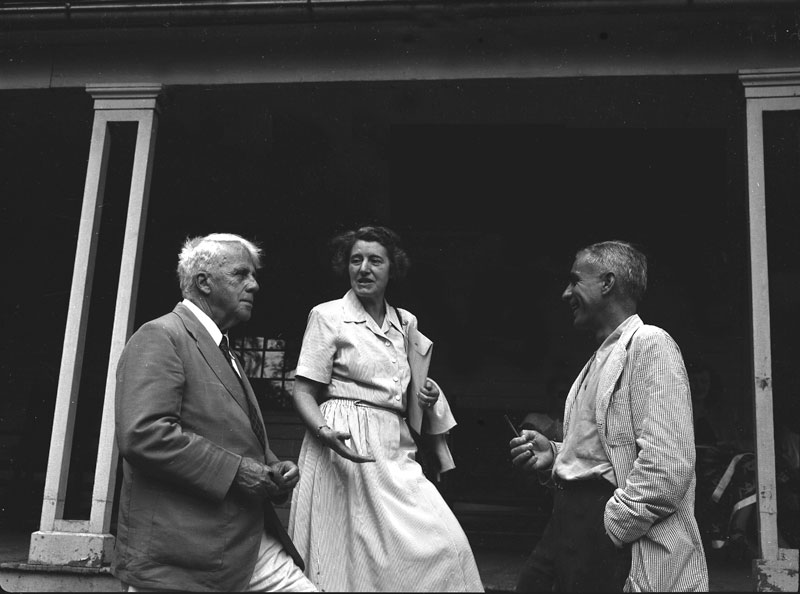
Frost had been a faithful husband for 47 years but when Elinor died in 1938 the famous poet became fair game. Kay Morrison, the wife of a colleague, seduced him within the year. Frost, smitten by the contrast between Kay’s public persona – respectable wife, two children – and her passionate sexuality, urged marriage, but she would not leave Ted. Over the 25 years till Frost’s death the tangle became ever more complicated. This famous sonnet was written when it was fresh.*
The Silken Tent
She is as in a field a silken tent
At midday when the sunny summer breeze
Has dried the dew and all its ropes relent,
So that in guys it gently sways at ease,
And its supporting central cedar pole,
That is its pinnacle to heavenward
And signifies the sureness of the soul,
Seems to owe naught to any single cord,
But strictly held by none, is loosely bound
By countless silken ties of love and thought
To every thing on earth the compass round,
And only by one’s going slightly taut
In the capriciousness of summer air
Is of the slightest bondage made aware.
*Myers J. An Earring for Erring: Robert Frost and Kay Morrison. American Scholar (Spring 1996); 65 (2):219-41. Available here.
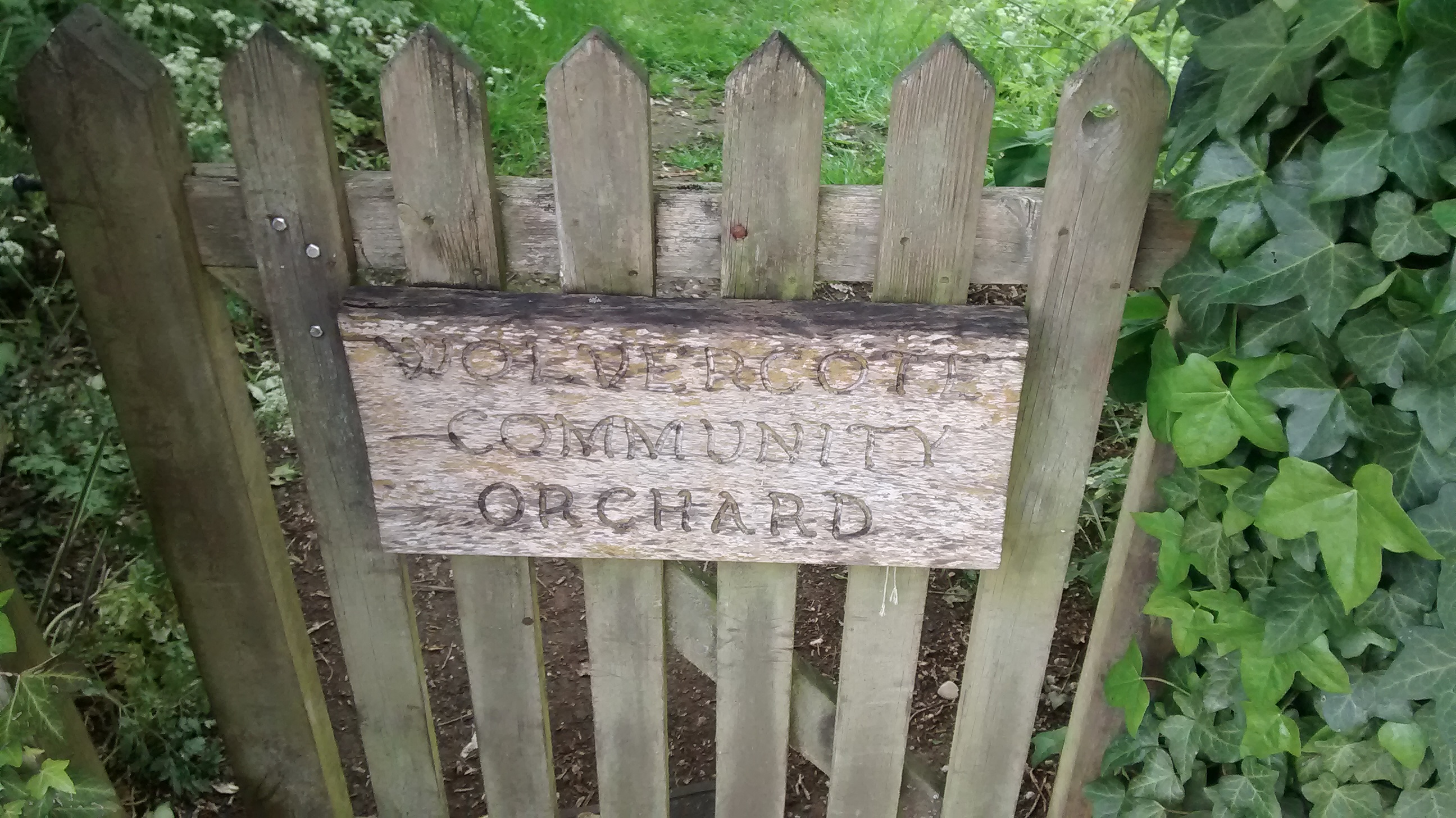
Wolvercote community orchard
Opposite the Trout at Godstow
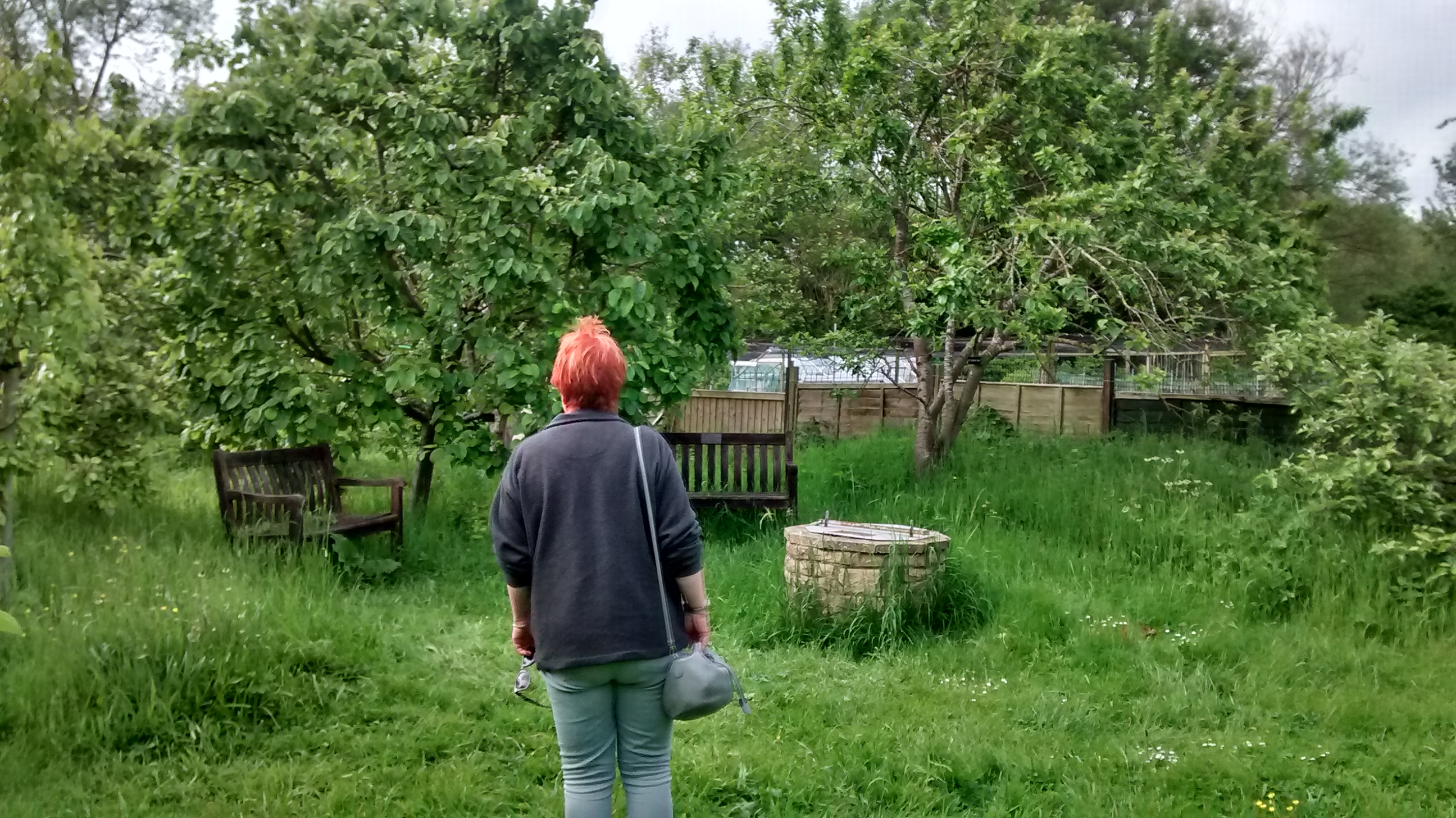
Overgrown but still loved and tended.


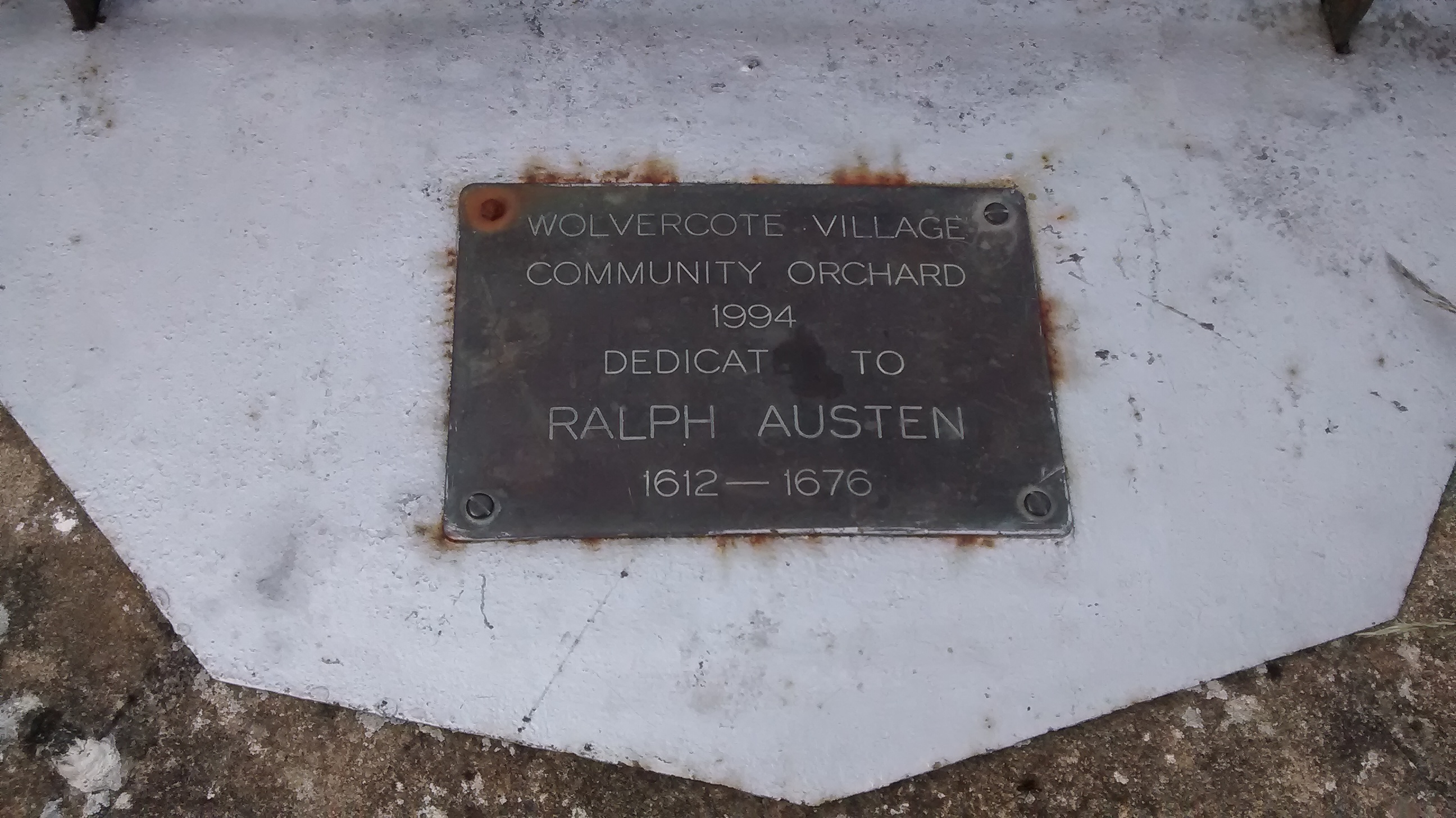
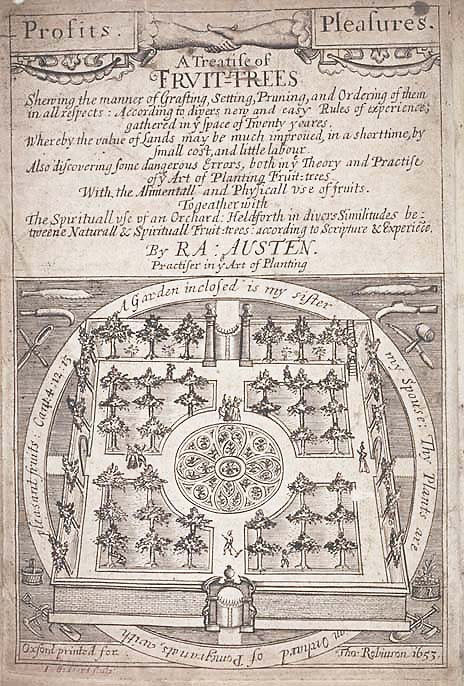
The well in the centre with a plaque to Ralph Austen.
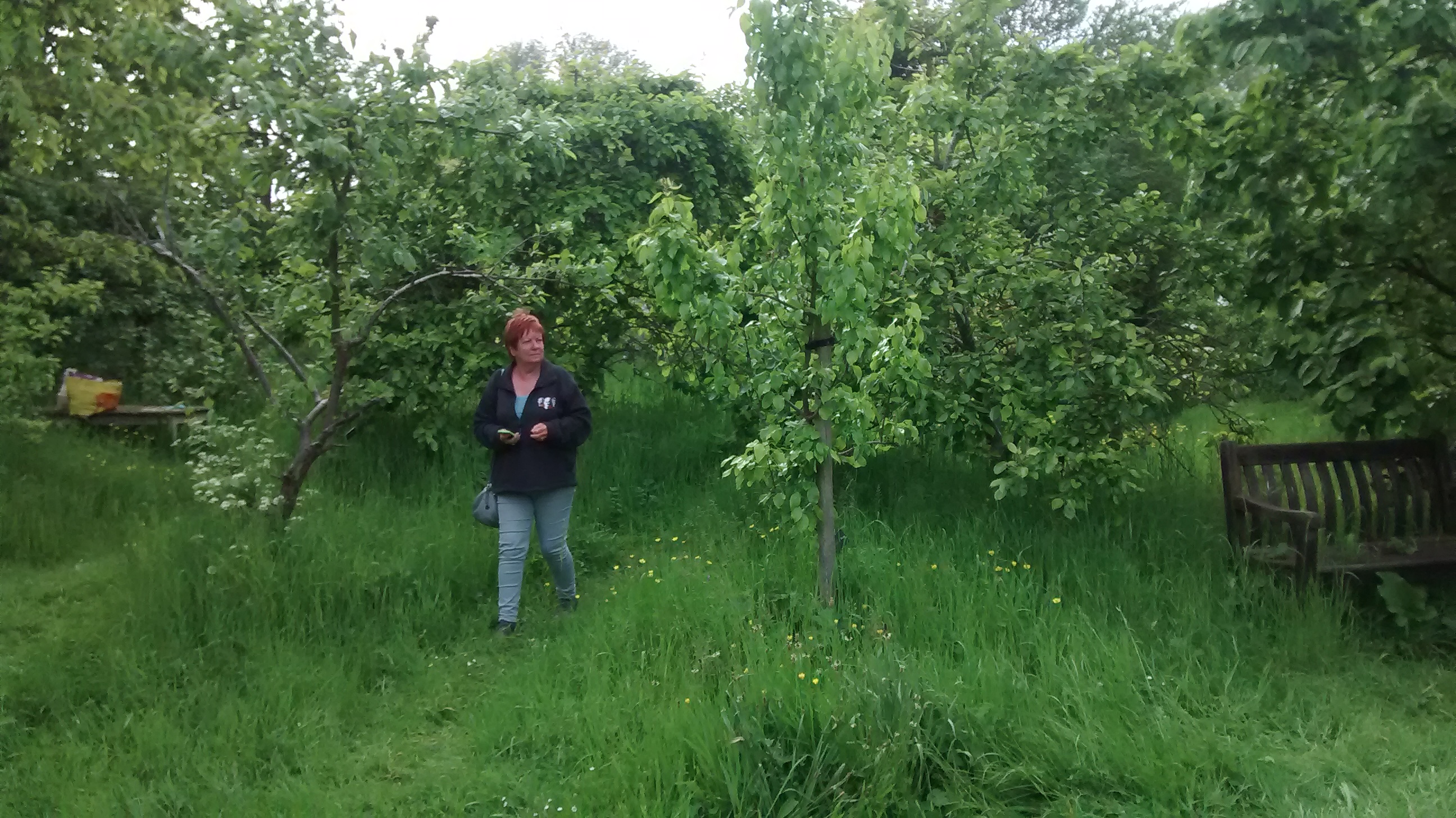
Most trees labelled.





Next door the allotment from which the orchard was created, and at the back some beehives.
Ralph Austen was a 17th century nurseryman, cider maker, and early environmentalist from Oxford.
Take a walk here when you next visit the Trout at Godstow (click here). Click here for the orchard website.
Jim Thornton
Conflicted hormone therapy* “experts”
Updated list in HealthWatch
My list of “experts”, who repeatedly publish articles and give talks extolling the benefits of post-menopausal hormone therapy (HT) without mentioning their associations with the companies who manufacture and market such drugs, has just been published in HealthWatch newsletter 97. Here is a copy. Spring 2015 issue 97 optimized (2) My article is on page 3. Click here for HealthWatch itself. Click here and here for earlier lists. Click here for the original Cancun Conflicts list, and here for the Hot Flash Havoc list.
The official advice, from both the UK Medicines & Healthcare devices Regulatory Authority (MHRA) and the US Federal Drug Administration (FDA), remains:
Take HT for symptoms only, in the lowest dose and for the shortest time possible, and never for health promotion.
If you come across any “expert” saying different, check out who’s paying them.
Jim Thornton
*Hormone replacement therapy (HRT) changed to hormone therapy (HT) Jan 2016
For You
By Maureen N. McLane

I’d never heard of Maureen N. McLane – Wikipaedia says she’s Associate Professor of English at New York University – but this love poem, in this week’s New Yorker, hits the spot.
For you
It’s been a long while since I was up before you
but here I am, up before you.
I see you sleeping now that I am up before you.
I see the whole morning before you.
How dare the sun be up before you
when the moon last night promised to hold off the sun just for you!
I hear the church bells ring before you.
Most days it’s true the birds are up before you.
I should make the coffee, as I am up before you.
I might just lie here though before you
wake up. Let me look at you, since I am here before you.
I am so rarely simply quiet before you.
The orange cat who’ll soon wake you is always up before you.
In Morocco or Lamu the muezzin would be up before you.
And yes it’s true most days the sun is up before you—
long before me and a while before you.
Shall I make it a habit, to be up before you?
To see your soft cheek and feel your breath if I am up before you?
Shall I prepare the mise-en-scène for you?
Hold the shot of the sun in my eye just for you?
Go back to sleep my love for you
are only dreaming I am up before you.
Safety of home birth
Important, and reassuring, new evidence from the Netherlands
Evaluating the relative safety of home and hospital birth is tricky; most home births are low-risk and many hospital ones high risk, so comparing outcomes for babies born in either place is hopelessly biased. And it’s difficult to adjust for risk status after the event, so until recently most researchers have ended up concluding that home birth might be safe, or might be a bit more dangerous, but they can’t be sure. This has left the field clear for partisans to shout at each other across the barricades.
To answer the question properly we need to identify, before labour starts, low-risk women who plan to deliver at home and low-risk women who plan to deliver in hospital, and compare outcomes by the planned, not the actual, place of birth. Unfortunately such data are rarely recorded.
Until 2011, when the UK Birthplace Study (click here), registered 17,000 women planning to deliver at home, and 20,000 planning to deliver in hospital, recorded their risk status before they went into labour and compared outcomes by planned place of birth. For the low-risk women who had already had a baby, home birth was as safe as hospital. But for low-risk women giving birth for the first time, “there were 9.3 adverse perinatal outcome events per 1000 planned home births compared with 5.3 per 1000 births for births planned in obstetric units, and this finding was statistically significant”. Hence current UK advice that hospital is slightly safer for first births.
However, some Birthplace “adverse perinatal outcomes”, like encephalopathy and meconium aspiration, while undoubtedly serious, are things from which most babies eventually recover, and their diagnosis could also be influenced by knowledge of the intended place of birth. Perinatal death is a harder outcome, but rare. Among low-risk women giving birth for the first time in Birthplace there were only six deaths out of 4,500 deliveries in the planned home birth group and five out of 10,000 in the planned hospital group. These raw numbers favour hospital, but they are hardly conclusive. We need larger numbers, and this month the Dutch have provided them.

Professor Ank de Jong (above) from the Department of Midwifery Science at the Free University in Amsterdam, and her obstetric colleagues, combined three Dutch registries to do a Birthplace type analysis; namely one based on planned place of birth among women judged at low risk before the onset of labour. The 750,000 women planning home birth dwarf all previous similar studies, so her conclusions matter. The paper is in this month’s BJOG (click here) or for those with access problems Jonge_et_al-2015.
There was no difference in perinatal death between planned home and planned hospital births among low-risk women. The lack of difference applied to both first and later births. For first births the rates were 1.02/1000 for planned home births v. 1.09/1000 for planned hospital births, (adjusted odds ratio 0.99, 95% confidence interval 0.79–1.24).
In summary, and in contrast to the UK Birthplace results, home appears to be safe for first births in Holland. This is important news.
The BJOG editor obviously realised the topic was controversial and commissioned not one, but two commentaries.

The first (click here) (or Chervenak_et_al-2015) was led by Frank Chervenak (above) a respected New York obstetrician. (Full disclosure Dr Chervenak is a well-known opponent of home birth. I’ve known him for years, and coincidentally I debated this topic with him at an obstetric conference a few weeks ago. I wasn’t aware of de Jonge at that time!)
Read it for yourself, but in my, perhaps biased, opinion he made five weak points in his commentary, and one good one.
- He cited a quite different, much smaller, and much criticised, single centre Dutch study (click here) to suggest that the data on intended place of delivery was inaccurate.
- He grumbled about the high rate of missing data on neonatal deaths after one week of age, while ignoring the fact that this was probably random. The fact that some neonatal units did not report any data at all to the national registry is a pity but hardly likely to introduce bias. The authors’ sensitivity analyses did not alter the conclusions.
- He suggested that home birth recording of Apgar scores may be inaccurate. This may be correct, but it has no bearing on risk of death. You can misrecord an Apgar, but dead is dead!
- NICU admissions were higher among babies of nulliparous women planning to deliver at home, as compared with multiparous women planning to deliver at home, but this is also irrelevant to the question at hand.
- Finally he found a Dutch language article in which one of the authors, professor Jan Nijhuis from Maastricht, had apparently recommended that all nulliparous women should deliver in hospital. I don’t have access, and can’t read Dutch, but surely the fact that Nijhuis was not a reflex supporter of home birth, but happy to stand behind de Jong’s paper strengthens her conclusions!
However, Chervenak made one good point.
- Even if home birth is safe for low risk women in the Netherlands, a small country with well-trained midwives, and well-regulated systems in place, it may not be safe in the US where home births are often supervised by untrained self-styled experts.
He is surely right about that! Although whether this means US obstetricians should campaign for better midwifery support for home birth, or for everyone to deliver in hospital, is another matter!

The other comment piece (click here) was by Marion Knight (above), one of the Birthplace researchers. She agreed that the Dutch data were reassuring, but worried about the same missing deaths which had concerned Chervenak; although they were probably random and probably wouldn’t have altered the conclusions, there were rather a lot of them. Since Birthplace had more complete data, she suggested it may more accurately reflect the relative safety for low-risk women giving birth for the first time in the UK.
I agree with Dr Knight. For low-risk women in their first pregnancy I will continue to advise that in the UK hospital is probably safer. But if they wish to go ahead and deliver at home, these new Dutch data suggest there’s no need to make a fuss.
Of course none of this applies to women with significant risk factors (click here); they would be much safer in hospital.
Jim Thornton
 Ripe-tomato.org